- Vardzia is open in 2026. Since the rockfall of May 2026, only a small section is closed: the stretch by the Secret Tunnel where the old one-way route ended, so visitors now return along the cliff path.
- In 2026 adults paid about 15 GEL (about $5.50) to enter, the minibus up from the ticket office was about 2 GEL (about $1), and a guide in a foreign language was about 45 GEL (about $17). Children under 6 go in free.
- The gates are usually open from about 10:00 until 19:00 in summer, with shorter hours in the cold months. The heritage agency's page shows Mondays as closed while visitors report daily opening, so check before a Monday visit.
- Give the caves and the Dormition church 2 to 3 hours, wear shoes with grip, and cover shoulders and knees for the church.
- Vardzia is ~60 km from Akhaltsikhe, ~110 km from Borjomi and ~265 km from Tbilisi, so a night in the area beats a 10 to 12 hour day trip from the capital.
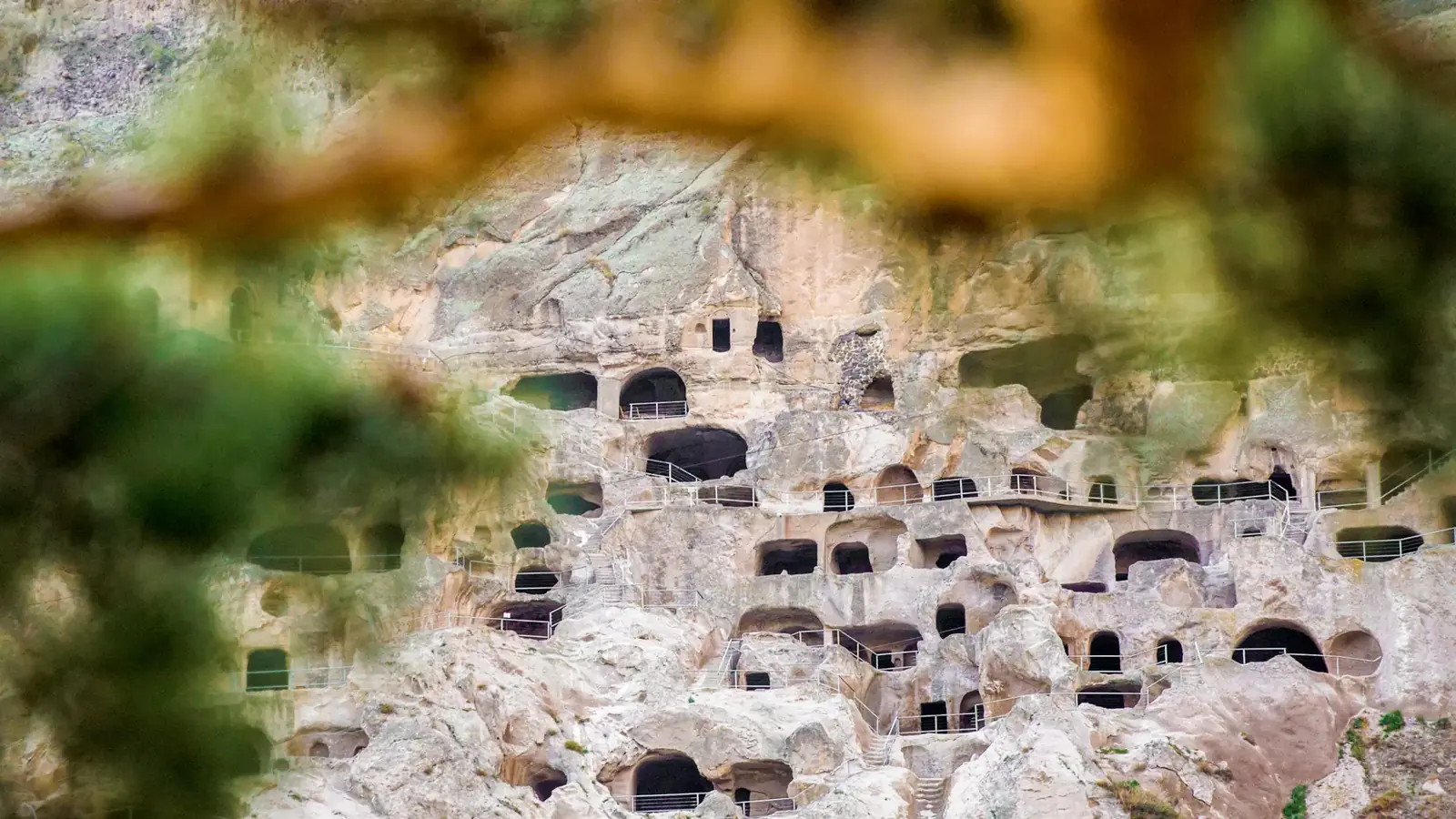
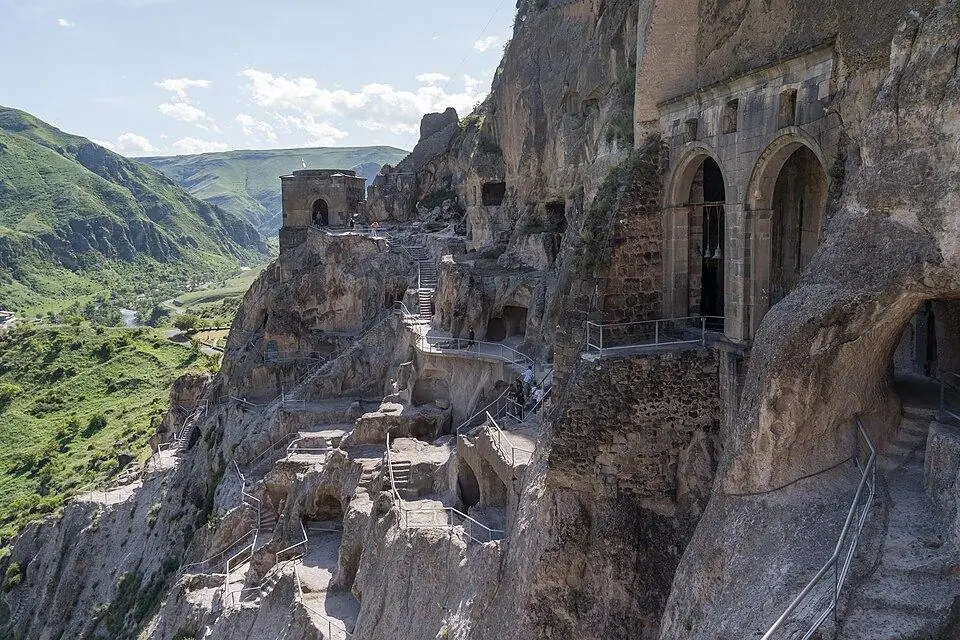
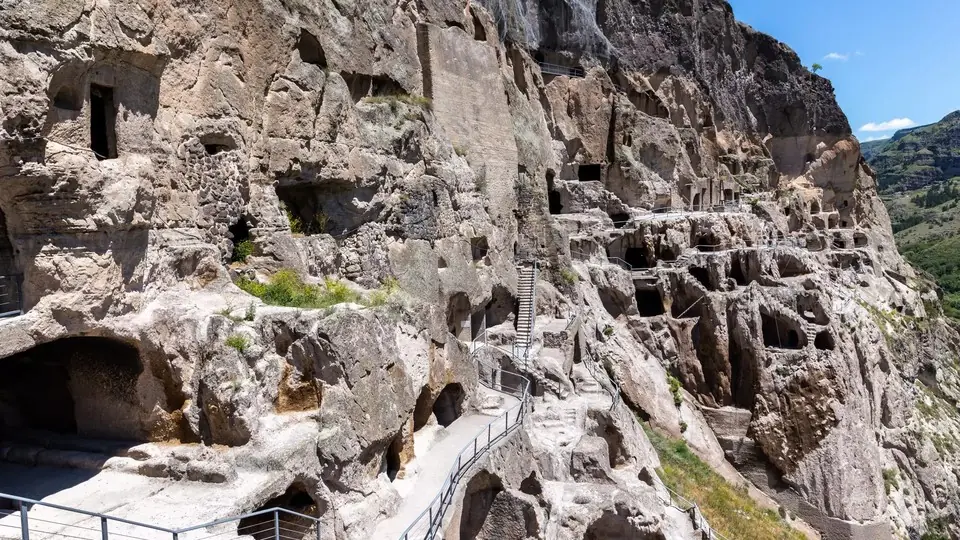
Vardzia is a monastery town cut into a cliff of the Erusheti mountain, high above the Mtkvari river in southern Georgia and about 30 km beyond Aspindza. Builders cut it from the rock over several decades of the 12th century, for King George III and then his daughter, Queen Tamar. You can still walk its terraces, stairs and tunnels to a painted church where services go on. This Vardzia guide covers the practical side of a visit in 2026: ticket prices, opening hours and the changes made after the May rockfall.
For the full history and the legends of the caves, start with our Vardzia place page. Here we walk you along the route, explain what to wear and compare a day trip from Tbilisi, Borjomi or Akhaltsikhe. We also show how to fit in Khertvisi, Vanis Kvabebi, Rabati and Sapara. Then come the places to sleep in the gorge, the best months to go and short answers to the questions visitors ask most.
What is Vardzia? Queen Tamar's cave city in brief
Work on the cliff started under King George III, who reigned from 1156 to 1184. His daughter Tamar, crowned beside him and sole ruler after his death, turned it into a fortified monastery on the southern frontier. The heritage agency counts up to 13 levels of rooms. They held chapels, cells, a refectory, a feasting hall, stables, a room thought to be a pharmacy and more than two dozen wine cellars with clay qvevri sunk into the floor. A channel brought drinking water from a spring ~3.5 km away.
At the heart of it all is the Church of the Dormition, hollowed out of the rock in the 1180s. Its frescoes include one of the earliest known portraits of Tamar, shown young beside her father, among Gospel scenes and saints. A popular story explains the name. Lost in the caves as a girl, Tamar is said to have called out "Ak var, dzia", meaning "I am here, uncle".
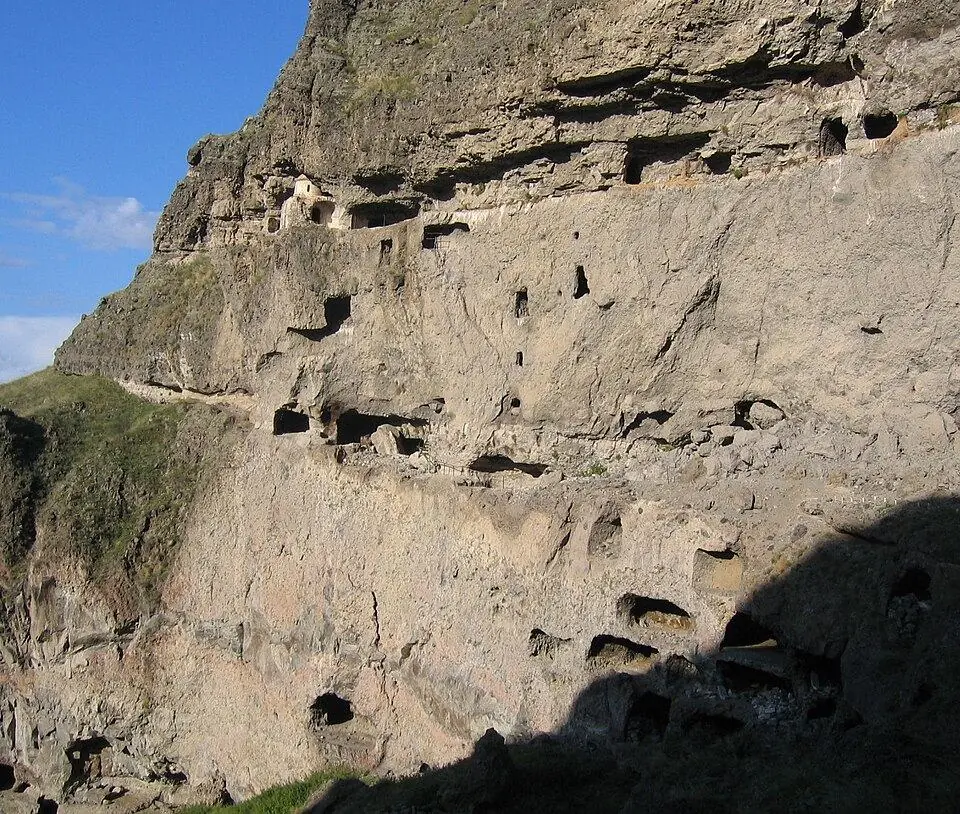
In 1283 a strong earthquake sheared away the outer skin of the cliff. Rooms that had been hidden inside the rock were left open to the valley, and that is the honeycomb you see today. Persian troops looted the monastery in 1551, and after the Ottoman conquest of 1578 the monks scattered. They came back in the late 20th century. Today part of the complex is a working monastery and the rest is a state museum-reserve. Vardzia is on Georgia's UNESCO Tentative List, but it is not a World Heritage Site.
Vardzia tickets and opening hours in 2026
Georgia's National Agency for Cultural Heritage Preservation manages the caves as part of the Vardzia and Khertvisi museum-reserve. You buy tickets at the office by the car park at river level. These are the prices on the agency's tariff list:
| Ticket or service | Price in 2026 (approx.) | Notes |
|---|---|---|
| Adult entry | About 15 GEL (about $5.50) | Same price for foreign and Georgian adults |
| Georgian pupils, students and pensioners | About 1 GEL (under $1) | Foreign students pay the adult price |
| Children under 6 | Free | No ticket needed |
| Visitors with a disability, plus one companion | Free | Show a document at the office |
| Minibus from the ticket office up to the caves | About 2 GEL (about $1) a person | Saves the climb up the access road; may not run at quiet times |
| Guide in Georgian | About 25 GEL (about $9) | Per guided visit |
| Guide in another language | About 45 GEL (about $17) | Per guided visit; ask at the office |
| Audio guide | About 15 GEL (about $5.50) | Handy if no guide is free |
The gates usually open at about 10:00 and close at about 19:00 from May to September. In spring, autumn and winter they close earlier, around 17:00 or 18:00. Aim to arrive at least two hours before closing. The agency's own page names Monday as a day off, yet visitors report that Vardzia opens every day. If Monday is your only day, ask your guesthouse or phone the museum-reserve first. Church holidays can change the hours too.
Is Vardzia open? What the May 2026 rockfall changed
Yes, Vardzia is open. In the early hours of 27 May 2026 a rockfall hit the visitor path near the so-called Secret Tunnel and damaged a stretch of walkway and its railing. The heritage agency fenced off that small section for safety. Only that section is closed. The caves, the terraces and the Dormition church are open as before.
You notice the change at the end of the walk. The usual route used to leave the cliff through the Secret Tunnel, a narrow stairway cut down inside the rock. With that part shut, you turn round and follow the cliff path back the way you came.
In September 2026 the agency said that geologists from the Georgian Technical University had rated the risk of more rockfall as minimal. It announced debris clearance, new protective netting and repairs to the handrails, with full access to return once the work is done. Staff on site guide visitors, so follow their signs.
How long you need, and the route through the caves
Plan on 2 to 3 hours on site, or about 1.5 hours if you only walk the main path to the church and back. The distances are short, but the walk is steep. Expect many stone stairs, uneven rock floors, narrow ledges with railings and a few low, dark tunnels.
- Ticket office
Buy tickets by the car park at river level and fill your water bottle. Then take the minibus or walk up the access road to the start of the path. - The first caves
The path begins among living rooms and storerooms. Look for the wine cellars, where qvevri jars sit in the rock floor, and for benches, shelves and niches carved straight out of the walls. - The Dormition church
The church sits near the middle of the cliff. Inside, wait a minute for your eyes to adjust before you look for Tamar and George III on the walls. Monks hold services here, so step aside if one is going on. - Tamar's Tears
Not far from the church a short tunnel leads to a pool fed by water dripping from the rock, known as Tamar's Tears. Many Georgians fill a bottle here. - Back along the cliff
Because the small section near the Secret Tunnel is closed, you return along the cliff path. Use the walk back to look across the river at the old farming terraces on the far slope.
Steps, tunnels and accessibility
There is no lift and no step-free way into the caves. The minibus takes out the first climb, but after that the path rises and falls on worn stone stairs, some with high steps. If stairs are hard for you, the whole cliff is still a fine sight from the road below. The tunnels are short but tight in places, so a phone torch helps. Children love the caves, but hold small hands on the ledges.
Vardzia dress code and visiting a working monastery
Vardzia is a holy place as well as a museum. For the church, cover your shoulders and knees. Women are asked to wear a skirt and a headscarf, and men should not go in wearing shorts. Wraps are often left at the church door, but bring your own to be safe. Keep your voice down near the monks' quarters, which are off limits. Inside the church, take no photos unless the staff say you may.
Practical clothes matter as much. Wear shoes with good grip and bring a hat and water in summer. Pack a warm layer too, as the caves stay cool even on hot days. A small backpack is easier than a big bag in the tunnels.
Getting to Vardzia by marshrutka, driver or car
Vardzia lies far up the Mtkvari gorge, close to the Turkish border, and every approach is long. Our Tbilisi to Vardzia route page compares the roads, stops and transfer prices in detail. Here is the short version.
- Marshrutka: buses and minibuses leave Tbilisi's Didube station for Akhaltsikhe about once an hour, at about 15 GEL (about $5.50) a seat in 2026. From Akhaltsikhe a few minibuses a day go on to Vardzia in about 1.5 hours, for about 5 to 7 GEL (about $2 to $2.50). The last one back usually leaves in mid-afternoon, around 15:00.
- Direct bus: direct services from Didube to Vardzia by way of Aspindza have also run, for about 20 to 25 GEL (about $7.50 to $9). Departures are few and change often, so ask at the station the day before.
- Private driver: the easiest way to see Vardzia and the sights on the road in one trip. Our private tours and transfers go whenever suits you, with no limit on numbers, and we can send a guide in your language along with the driver.
- Your own car: the road through Borjomi and Akhaltsikhe is paved all the way. From May to October you can loop back over the high Javakheti plateau through Akhalkalaki and Tsalka. In winter that road can be snowy, so check conditions.
Starting from the spa town? Our Borjomi travel guide covers the town itself. From there it is ~110 km and about 2 to 2.5 hours to the caves.
Vardzia day trip from Tbilisi, Borjomi or Akhaltsikhe
A Vardzia day trip is easy from Akhaltsikhe, comfortable from Borjomi and possible but tiring from Tbilisi. This is what each base means in practice.
| Start | Distance one way | Driving each way | What the day looks like |
|---|---|---|---|
| Guesthouse in the gorge | 1 to 15 km | 5 to 20 min | Caves at opening time, then Tmogvi or Upper Vardzia |
| Akhaltsikhe | ~60 km | About 1 h | Khertvisi and Vardzia by lunch, Rabati or Sapara after |
| Borjomi | ~110 km | 2 to 2.5 h | A full day, with Rabati on the way back |
| Tbilisi | ~265 km via Borjomi | 4 to 4.5 h | 10 to 12 h door to door with about 8 h of driving; car only |
From Tbilisi, leave by 07:00 to reach the gate at about 11:00. You then see the caves and Khertvisi and get home after dark. It works, but we suggest at least one night in the region. You reach the cliff at opening time in the cool of the morning, and you still have time for Rabati at sunset.
Our two-day private tour follows that plan from Tbilisi on the date you choose, for any group size. Day one takes in Borjomi, Rabati and Khertvisi, then a night in a family guesthouse in the gorge. You see Vardzia first thing on day two and, from May to October, drive home over the plateau.
Combine Vardzia with Khertvisi, Vanis Kvabebi, Rabati and Sapara
The gorge between Akhaltsikhe and Vardzia holds more medieval sites than most visitors have time for. These fit a Vardzia visit best.
| Sight | Where | Time to allow | Entry in 2026 (approx.) |
|---|---|---|---|
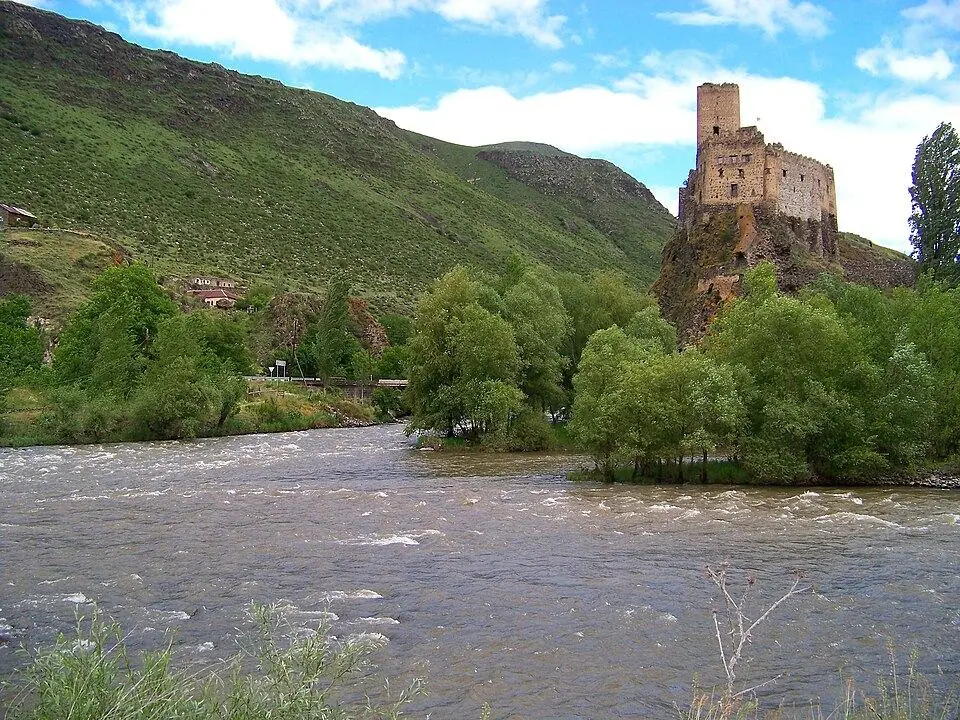
| Khertvisi Fortress | ~15 km before Vardzia, where the Paravani meets the Mtkvari | 30 to 45 min | About 10 GEL (about $4) |
| Vanis Kvabebi | A couple of km from Vardzia on the valley road | 15 min photo stop | Closed to visitors since 2018 |
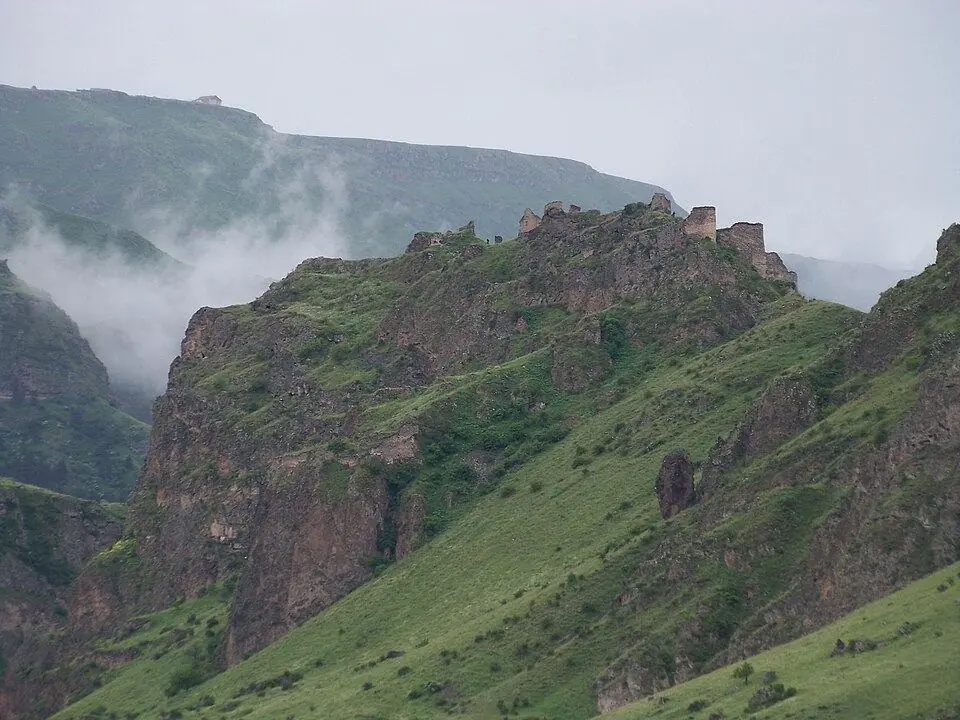
| Tmogvi Fortress | Crag above the gorge, reached from Pia village | 2 to 3 h with the hike | Free |
| Upper Vardzia church | ~3 km north-west of Vardzia | 30 min | Free; leave a donation |
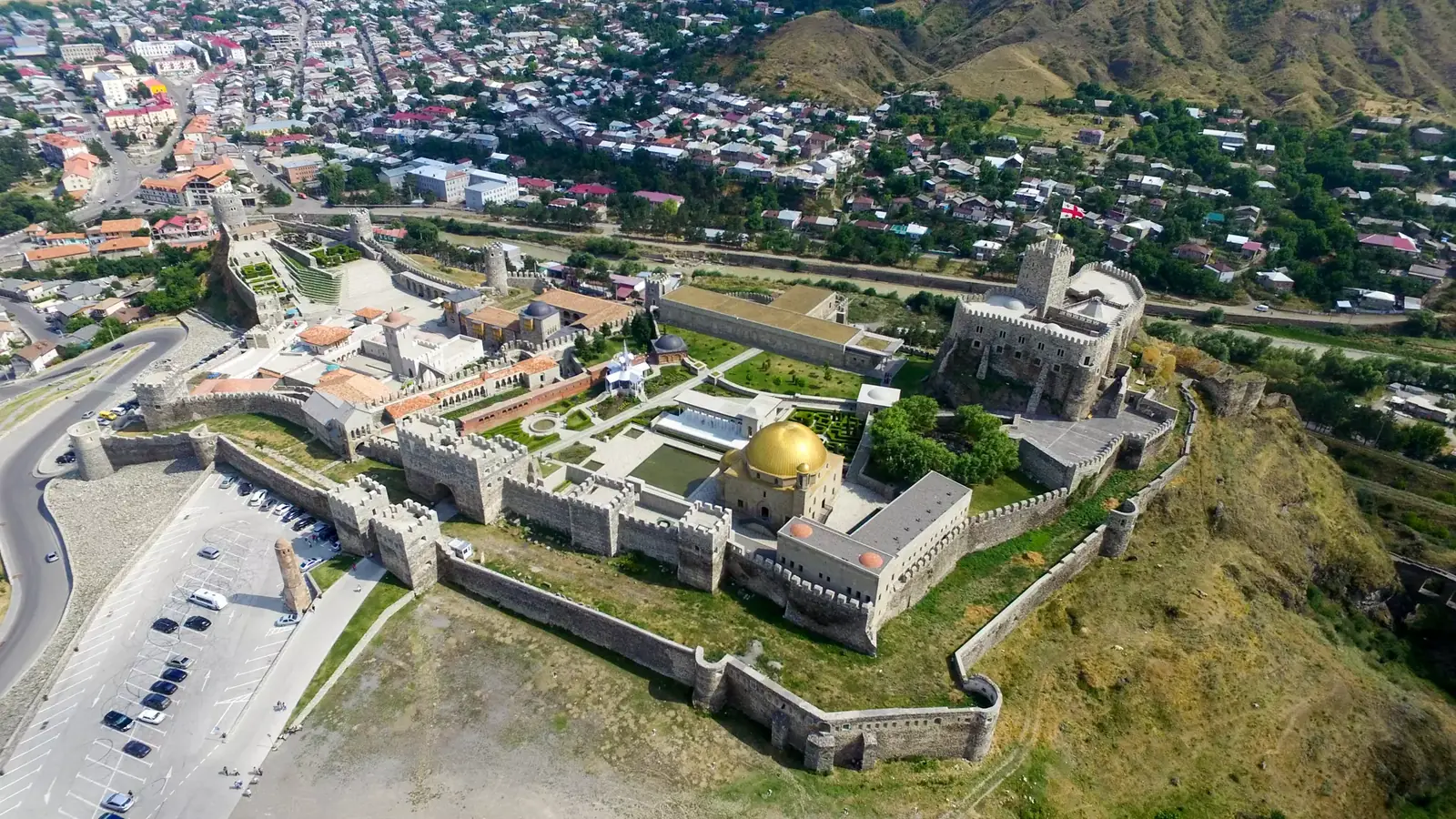
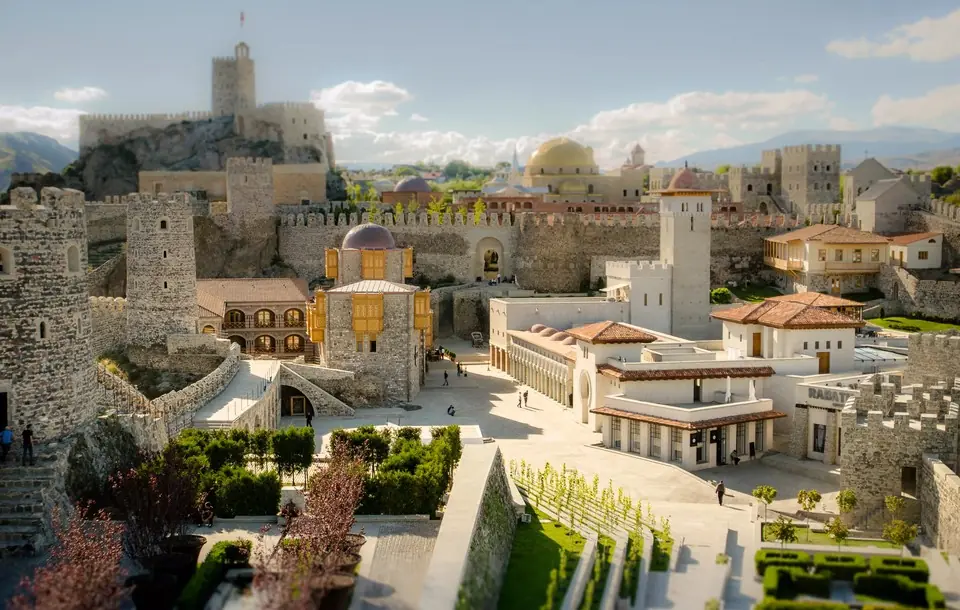
| Rabati Castle | Akhaltsikhe, ~60 km away | 1.5 to 2 h | Upper citadel about 20 GEL (about $7.50) |
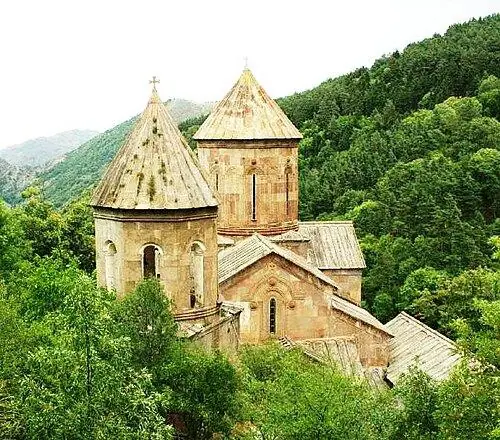
| Sapara Monastery | Mountain road ~30 min from Akhaltsikhe | 1 to 1.5 h | Free |
Khertvisi is the easy add-on. Its walls run along a rocky ridge right by the road, and a short, steep path climbs to the gate. Tmogvi suits fit walkers who want an empty ruin and a huge view, and it looks dramatic from the road as well. Vanis Kvabebi, the 8th-century cave monastery near Vardzia, was closed to visitors in October 2018 because of rockfall risk. In 2026 you could still only look at its cliff and defensive wall from below.
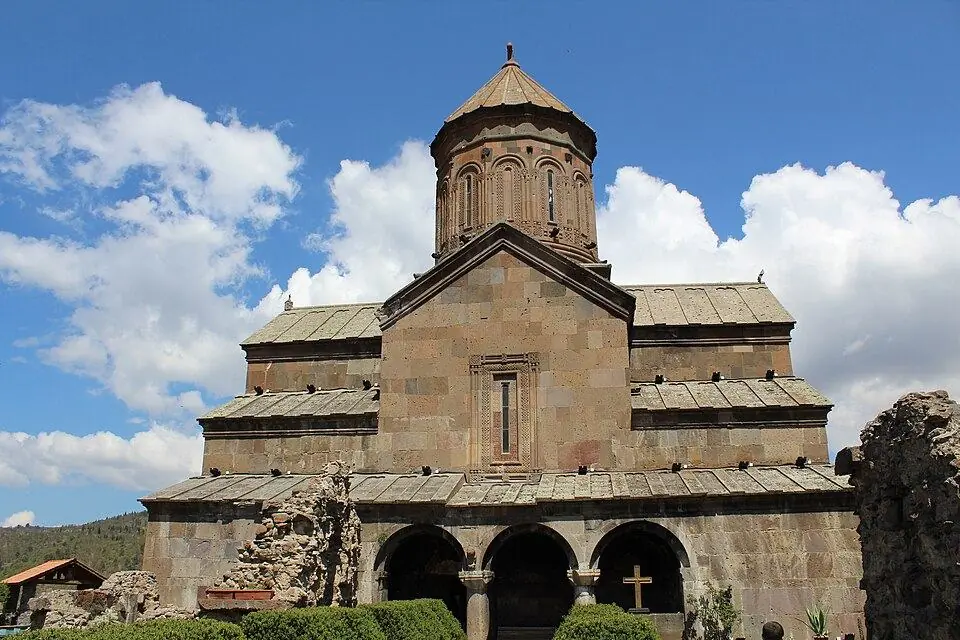
Upper Vardzia, Zeda Vardzia in Georgian, is a stone church from around the year 1000, raised by a local lord named Liparit on a terrace above a side valley. Back in Akhaltsikhe, Rabati Castle and the 14th-century frescoes of Sapara make the best afternoon. Zarzma Monastery lies further west, on the road towards Adjara.
For walkers, our five-day trek crosses Borjomi-Kharagauli National Park on foot and ends with Rabati, Khertvisi and Vardzia.
Where to stay near Vardzia
Sleeping close to the caves is the single best way to improve a visit. You reach the gate at opening time, ahead of the coaches from Tbilisi and Borjomi, and the gorge is very quiet in the evening.
| Area | Distance to Vardzia | Best for | Double room in 2026 (approx.) |
|---|---|---|---|
| Vardzia village and the gorge villages: Tmogvi, Nakalakevi, Khertvisi | 1 to 15 km | Early starts, riverside dinners, quiet nights | About 80 to 150 GEL (about $30 to $55), often with breakfast |
| Aspindza | ~30 km | Shops, cafés and a few guesthouses | Similar to the gorge |
| Akhaltsikhe | ~60 km | Rabati at sunset, restaurants, more choice | Guesthouses from about 80 GEL (about $30); hotels cost more |
Family guesthouses are the rule in the gorge. Rooms are simple, and most hosts cook dinner if you ask. Expect river trout and Meskhetian dishes such as tashmijabi, a stretchy mix of potato and cheese. Book ahead for weekends from June to September. Akhaltsikhe suits travellers who want a real town, with banks, cafés and an evening stroll up to Rabati.
Best time to visit Vardzia
The caves sit at ~1,300 m in a dry gorge, so summer is hotter and winter colder than many visitors expect. Our Vardzia weather page has the month-by-month figures. Here is the short version.
| Months | Conditions | Advice |
|---|---|---|
| April to May | Green slopes, highs of about 15 to 20°C; May is the wettest month | Wet steps get slippery |
| June and September | Highs of about 24°C, mostly dry, long days | The best months for the caves |
| July and August | Highs of about 28°C; the rock holds the heat | Arrive at 10:00 and rest at midday |
| October and November | Clear and cool, gold slopes in October | Short days: start early |
| December to March | Snow and frost, highs of about 2 to 9°C | Open but icy, with very few visitors |
Weekends from May to October bring school groups and Georgian families, and tour coaches roll in from late morning. On a weekday at opening time you may have whole terraces to yourself. The feast of the Dormition on 28 August is the church's own feast day, so expect services and more visitors.
In high summer you can also arrive after a trek on the Javakheti plateau. Our horse-supported route crosses the volcanic uplands and ends with a visit to the caves.
Vardzia FAQ
Is Vardzia open now?
Yes. Vardzia is open in 2026. The rockfall of 27 May 2026 led to the closure of only a small section, by the Secret Tunnel, so you walk back along the cliff instead of leaving through the tunnel. Repairs were announced in September 2026.
How much are Vardzia tickets?
An adult ticket is about 15 GEL (about $5.50) in 2026, and foreigners pay the same as Georgians. The shuttle minibus to the caves is about 2 GEL (about $1). Under-6s are free, and a guide in a foreign language costs about 45 GEL (about $17).
What are Vardzia's opening hours?
In summer the site normally opens from around 10:00 to 19:00, and in the colder months it shuts at about 17:00 or 18:00. The official page marks Monday as closed, while visitors report finding it open. Check ahead if you plan a Monday trip.
How long do you need at Vardzia?
Two to three hours covers the caves, the Dormition church and the spring at an easy pace. Add Khertvisi and a stop at Tmogvi or Upper Vardzia and you fill half a day in the gorge.
Can you do a Vardzia day trip from Tbilisi?
Yes, by car or with a driver, but it is a 10 to 12 hour day with about 8 hours on the road. Public transport cannot do it in a day. A night in Akhaltsikhe, Borjomi or a guesthouse near the caves makes the trip far easier.
Is Vardzia hard to walk?
It is moderate. You climb plenty of uneven stairs, edge along railed ledges and duck through some low passages, but the distances are short. There is no step-free route, although you can see the whole cliff from the road below.
What should I wear to Vardzia?
Grippy shoes, plus clothes that cover shoulders and knees for the church. For women, a scarf over the hair and a knee-length skirt or wrap. Add a hat and water in summer, or warm layers in winter when the steps can be icy.
Is Vardzia a UNESCO World Heritage Site?
No. It is on Georgia's UNESCO Tentative List, the first step towards inscription. It is protected at home as a cultural monument of national importance.