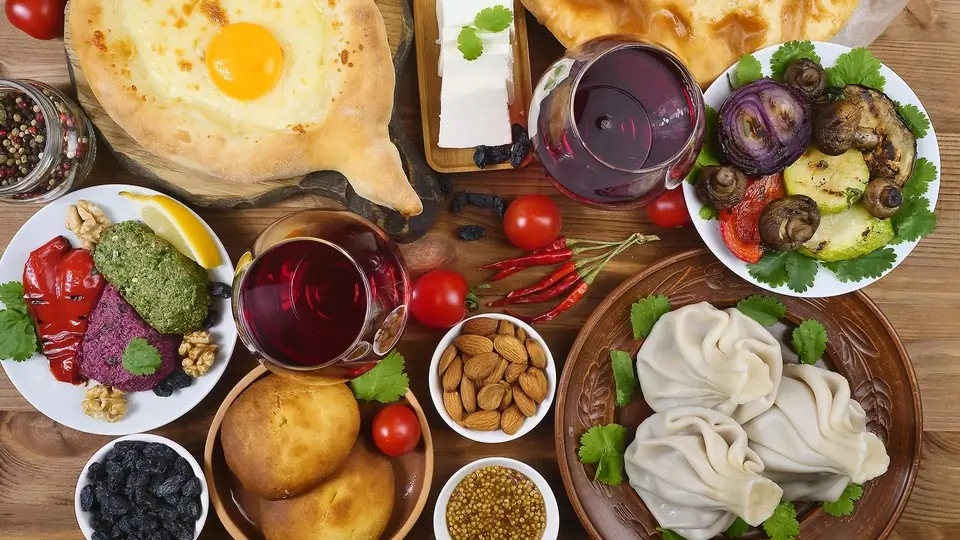
Shilaplavi Recipe
შილაფლავი
A home shilaplavi recipe for the soft Georgian pilaf: small pieces of fatty lamb cooked pale with onion, then simmered with round rice until the grains burst and thicken the pot, finished with cumin and a heavy grind of black pepper.
Recipe by the Maspindzeli team in Tbilisi · Updated 24 Nov 2026 · From Kakheti and eastern Georgia; now cooked across the country
Full recipe with the timeline, timers and US measures: maspindzeli.ge/recipes/shilaplavi/
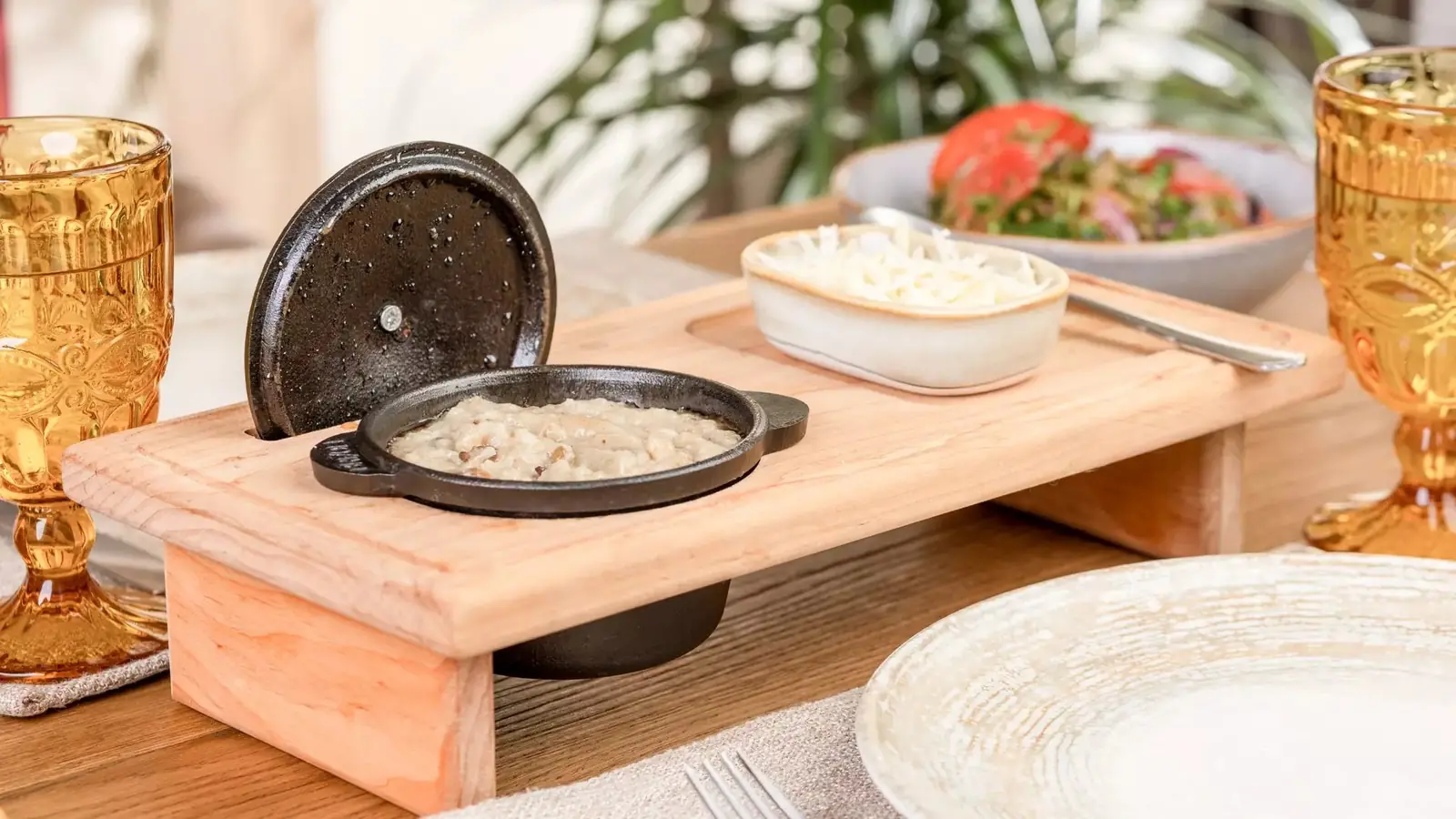
This shilaplavi recipe makes the Georgian rice dish that is meant to be soft, not fluffy. Fatty lamb is cut small and cooked gently with onion in its own rendered fat, then round rice and boiling water go in, and the pot simmers until the grains swell, split and turn everything creamy. Nothing is allowed to brown, so the pilaf stays pale, and its flavour comes from cumin and a good deal of black pepper stirred in at the end. You will also find it written shila plavi, shila pilav or shilaplav, and at home many Georgians simply call it shila.
Shilaplavi belongs to the kelekhi, the memorial meal held after a funeral and again on days of remembrance. In eastern Georgia it is the last dish to reach the table, once the final toasts for the dead have been said. Georgia's official tourism site links it to Persian pilaf and says Kakheti cooked it first. Today it is made all over the country: some families eat it on ordinary days, while others keep it for mourning. Our supra guide explains how a kelekhi runs.
Plavi is the Georgian form of the word pilaf, yet the dish is far from Central Asian plov, with its browned meat, carrots and separate grains. Shilaplavi is cooked pale, uses round rice and is stirred until the grains collapse, so it lands somewhere between a pilaf and a loose risotto, and you eat it with a spoon.
Timeline: what to do, and when
2 h 20 min from start to table · 1 h 5 min hands-on · 5 min waiting
Each bar is one step. Hands-on Waiting, while the oven, the pot or the dough does the work. Steps that sit inside a wait are done in parallel.
Recipe
Shilaplavi
Ingredients
Meat
Rice
To season
Amounts are scaled. Times stay about the same, but a bigger pot takes a little longer to come to the boil.
You will need
- Large heavy-based pot with a lid (4 to 5 litres)
- Sharp knife and chopping board
- Bowl and sieve for washing the rice
- Wooden spoon with a flat end
- Kettle
- Ladle
Method
- Prepare the meat15 min hands-on· start here
Trim off any tough sinew and cut the lamb into pieces of about 2 cm, keeping the fat on. Chop the tail fat very finely, almost to a paste, and finely chop the onions. Fill the kettle and put it on to boil.
- Melt the fat8 min hands-on· starts at +15 min
Put the chopped tail fat into the heavy pot over medium-low heat. Stir now and then for about 8 minutes, until most of it has turned into clear liquid fat around small pale bits. Keep the heat gentle: the fat should sizzle quietly, never smoke or colour.
- Cook the lamb without browning10 min hands-on· starts at +23 min
Add the lamb and turn the heat to medium. Stir often for 10 minutes as the meat turns grey and gives up its juices. It should stew in those juices rather than fry, so lower the heat if any pieces start to brown.
- Soften the onions10 min hands-on· starts at +33 min
Stir in the onions, turn the heat down to low and cover the pot. Cook for 10 minutes, stirring two or three times, until they are soft and see-through but still white. This is what keeps shilaplavi pale.
- Add the water and bay4 min hands-on· starts at +43 min
Pour in 500 ml water from the kettle, drop in the bay leaves, season with 1 tsp salt and bring the pot to the boil. Skim off the grey foam that rises to the surface.
- Simmer the lamb40 min waiting· starts at +47 min
Cover and simmer very gently for about 40 minutes, until a piece of lamb gives easily to a fork but still holds together; the rice will finish the job. Mutton needs 70 to 80 minutes at this stage.
- Wash the rice5 min hands-on· starts at +1 h 15 min, during step 6
While the lamb simmers, wash the rice in a bowl of cold water, rubbing the grains between your fingers, and change the water three or four times until it is only slightly cloudy. Drain it in a sieve and bring a full kettle back to the boil.
- Add the rice5 min hands-on· starts at +1 h 27 min
Tip the rice into the pot and pour in 1.2 l boiling water. Stir all the time while it comes back to the boil, so the grains do not settle and stick to the base.
- Simmer until creamy35 min waiting· starts at +1 h 32 min
Set the lid half on and keep the pot at a gentle bubble for 30 to 35 minutes, stirring and scraping across the bottom with the flat spoon every 5 minutes or so. It is ready when the grains have swollen and started to break, the liquid has turned thick and creamy and the lamb falls apart. If it thickens before then, add hot water a ladle at a time.
- Season and check the texture5 min hands-on· starts at +2 h 7 min
Fish out the bay leaves. Stir in the cumin, black pepper and red pepper, if using, then taste and add salt until it is well seasoned. A spoonful should slide off slowly and spread a little on a plate; if it is stiffer than that, loosen it with some of the extra hot water or broth.
- Rest5 min waiting· starts at +2 h 12 min
Take the pot off the heat, cover and leave it for 5 minutes so the spices settle into the rice. It goes on thickening as it stands.
- Serve3 min hands-on· starts at +2 h 17 min
Stir once more, adding a splash of hot water if needed, and ladle into warm deep plates. Grind a little more pepper over each one and scatter with parsley if you like.
About 700 kcal per serving (1 of 6). This is an estimate from standard values for the ingredients, not a lab figure.
Eat it hot or warm with a spoon, from a deep plate. At a kelekhi, custom asks every guest to take at least one spoonful in memory of the dead, and the family usually shares portions out among neighbours and close friends.
Tips, swaps and variations
Tips from your host
- Buy fatty meat. Shoulder, neck or breast give the rich, slightly greasy shilaplavi Georgians expect, while lean leg turns dry and stringy over this long cooking.
- Use round rice and do not swap it. Long-grain and basmati keep their shape however long they boil, so the pot never turns creamy. Arborio, Baldo or pudding rice stand in well for Georgian round rice.
- Keep every stage pale and gentle. Browned fat, meat or onion turns the dish beige and adds a roasted taste that does not belong in it.
- Stir right down to the base once the rice is in. Round rice sinks and catches quickly, and one scorched layer flavours the whole pot. A heavy pot and a flat-ended spoon make this easy.
- Leave the cumin and pepper until the end. Added early, they fade during the long simmer; stirred in at the last minute, they stay sharp and warm.
- Aim a little looser than you want to eat it. The rice goes on drinking liquid even on the plate, so keep the kettle hot until everyone is served.
Variations and swaps
- Mutton with more tail fat: Georgian sources call sheep meat with chopped tail fat the true version, and the official tourism site's recipe uses up to 200 g of tail fat per kilo of meat. Meat from an older sheep needs 70 to 80 minutes of simmering before the rice goes in.
- Veal or beef: use the same weight of fatty chuck, shin or brisket in 2 cm pieces, with 3 tbsp butter or beef dripping instead of tail fat. Simmer for 60 to 75 minutes before adding the rice.
- Chicken: use 800 g boneless chicken thighs and 3 tbsp butter. Cook the chicken pale with the onions, then give it only 15 minutes in the water before the rice goes in.
- Mushroom shilaplavi for fasting days: when a memorial meal falls in Lent, families leave out the meat and fat and use mushrooms and sunflower oil. Fry 600 g sliced mushrooms gently with the onions in 4 tbsp oil for 10 minutes, then add the rice with 1.4 l boiling water and carry on as in the main method. Georgian cooks prefer mushrooms that grow on trees, such as oyster mushrooms, because other kinds change the colour and taste of the pot. Made with water, it is vegan and fit for Lent.
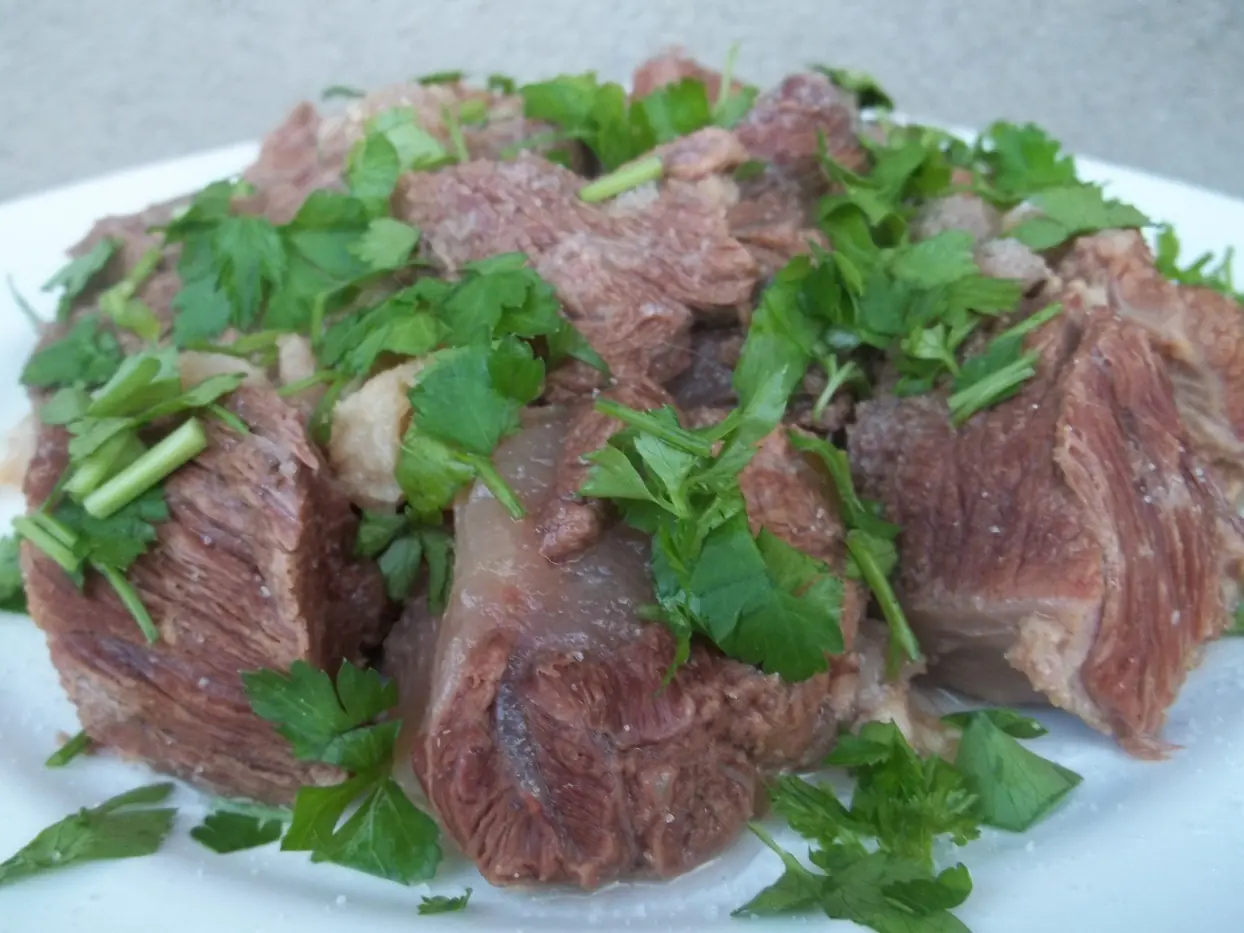
- With broth: khashlama, plain boiled meat, often shares the table at a big memorial meal, and a classic Georgian recipe suggests thinning the shilaplavi with its broth. Any lamb or beef broth can replace some or all of the water for a deeper taste.
- Spices: some cooks use ground caraway instead of cumin, or add a few allspice berries with the bay leaves. Garlic is not part of the classic recipe, though some people fry a crushed clove or two with the onions, especially in the mushroom version.
- Restaurant style: some modern chefs cook shilaplavi more like a risotto, adding a splash of dry wine and finishing it with butter and grated sheep's cheese. It is richer and less traditional.
- Herbs: nothing green goes into the pot, but one old Georgian recipe scatters chopped parsley over each plate, as in the last step.
Serve it with
- Khashlama, the boiled beef or lamb that often shares a memorial table with it
- Shoti or tonis puri, the long Georgian loaves, torn by hand
- Fresh tarragon, coriander, spring onions and radishes
- Pickled cabbage, green tomatoes or jonjoli (mzhave)
- A simple salad of tomatoes and cucumbers
- A glass of dry Kakhetian wine, red or white
Make ahead and storage
Shilaplavi is at its best soon after cooking, while it is still loose. Cool any leftovers quickly, cover them and chill for no more than 2 days. The rice sets firm and the fat hardens, so reheat single portions gently in a heavy saucepan with a few spoonfuls of hot water or broth, stirring until steaming all the way through. Warm up only what you will eat, and skip the freezer, which makes the rice grainy.


Maspindzeli Travel, Tbilisi · private tours and cooking classes in Georgia · maspindzeli.ge · WhatsApp +995 598 74 74 54 · hello@maspindzeli.ge