Chakapuli Recipe
ჩაქაფული
A home-style chakapuli recipe: lamb on the bone layered with armfuls of tarragon, spring onion and coriander, simmered in dry white wine and soured with whole green plums. It is Georgia's Easter and springtime stew, and the variations show what to use when the plums are out of season.
Recipe by the Maspindzeli team in Tbilisi · Updated 25 Oct 2026 · Cooked everywhere in spring; most at home in Kakheti and eastern Georgia
Full recipe with the timeline, timers and US measures: maspindzeli.ge/recipes/chakapuli/
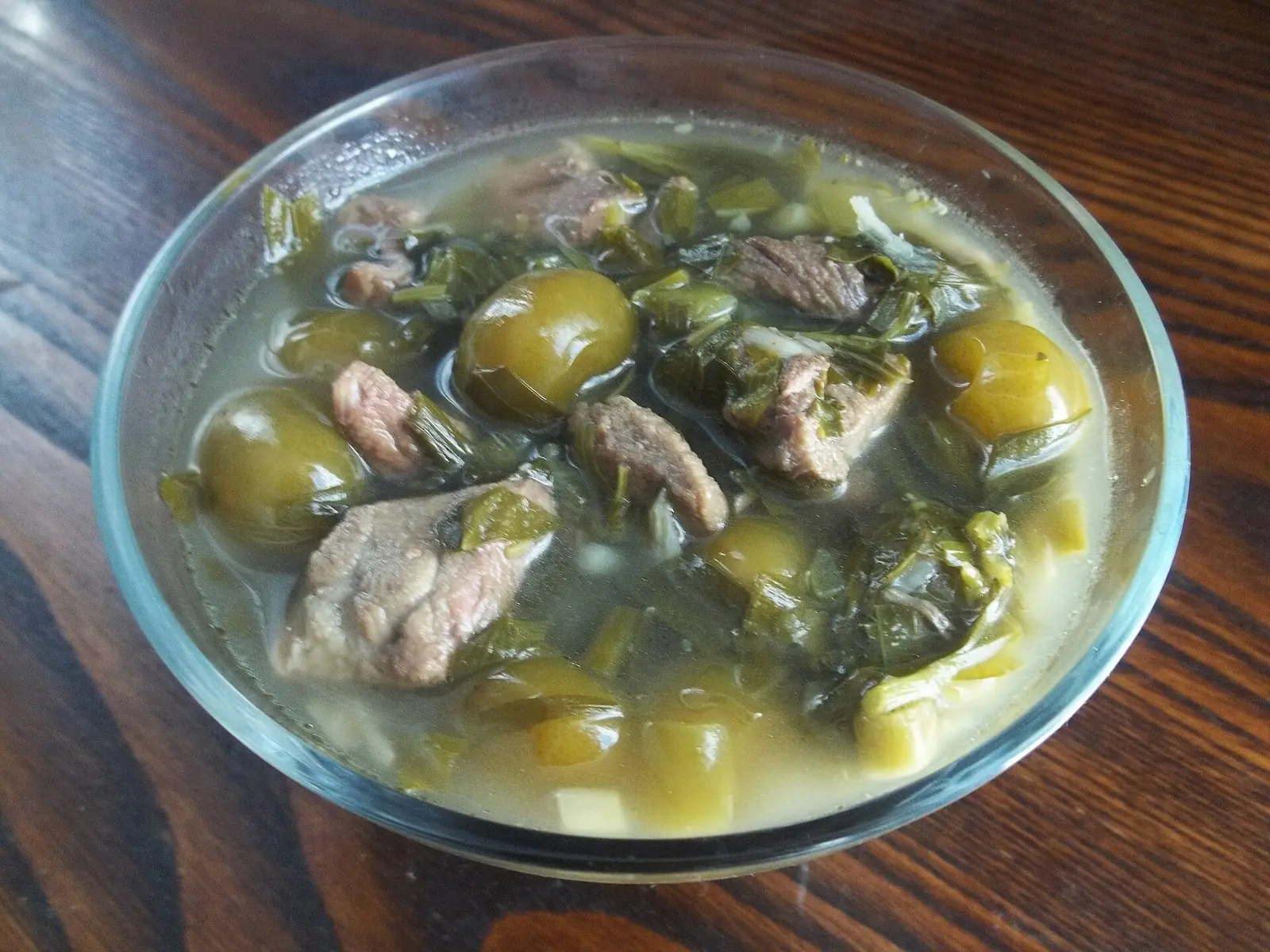
This chakapuli recipe makes the Georgian spring stew of lamb, tarragon and white wine, sharpened with small, hard green plums. Lamb on the bone goes into a heavy pot in layers, each one buried under chopped tarragon, spring onion and coriander. Dry white wine is poured over and the pot simmers slowly until the meat is soft and the herbs have collapsed into a sour, pale green broth. The name is also written chakhapuli or chaqapuli, and some English menus call it Georgian lamb and tarragon stew.
It is a dish of the season. Georgians cook it from Easter into early summer, when tarragon is young and the cherry plums, called tkemali or alucha, still hang green and sharp on the branch. For many families it is the pot that marks the end of the Lent fast, when meat comes back to the table. Veal is the usual alternative to lamb, and in Kakheti, the wine region in the east where the dish is most at home, cooks count white qvevri wine as essential.
You can cook it well in any month. The method below follows the spring version with fresh plums, and the variations explain what to use when there are none, from frozen plums to a bottle of green tkemali sauce, and how each one changes the result. The one thing you cannot leave out is fresh tarragon, and plenty of it.
Timeline: what to do, and when
2 h 36 min from start to table · 1 h 1 min hands-on · 10 min waiting
Each bar is one step. Hands-on Waiting, while the oven, the pot or the dough does the work. Steps that sit inside a wait are done in parallel.
Recipe
Chakapuli
Ingredients
Lamb
Herbs
Wine and sour plums
Amounts are scaled. Times stay about the same, but a bigger pot takes a little longer to come to the boil.
You will need
- Heavy pot or casserole with a tight lid, 4 to 5 litres; cast iron if you have one
- Sharp knife and a large board (or ask the butcher to cut through the bones)
- Very large bowl for the chopped herbs
- Salad spinner or clean tea towels for drying the herbs
- Slotted spoon
- Ladle and deep bowls for serving
Method
- Cut the lamb10 min hands-on· start here
Cut the lamb into pieces of about 5 cm, leaving the bones in; a cleaver or the butcher will deal with ribs and neck. Trim off any thick pads of fat, chop about 40 g of it finely for the pot and discard the rest.
- Prepare the herbs25 min hands-on· starts at +10 min
Strip the tarragon leaves from their stalks and throw the woody stalks away; the soft tips can stay. Wash all the herbs in plenty of cold water and spin or pat them dry. Chop the tarragon, spring onions, coriander and parsley coarsely, into pieces of 1 to 2 cm rather than a fine mince, and toss them in the big bowl with the garlic and chilli. Set a large handful aside for the end, and rinse the plums but leave them whole.
- Melt the fat8 min hands-on· starts at +35 min
Put the chopped fat into the heavy pot over a medium-low heat and let it melt slowly for 6 to 8 minutes, stirring now and then, until the base is coated with clear fat. Lift out the crisp leftover bits with the slotted spoon. If you have no fat to hand, warm 2 tbsp sunflower oil instead.
- Layer the pot and add the wine10 min hands-on· starts at +43 min
Take the pot off the heat and spread the onion rings over the fat. Add a layer of lamb, sprinkle it with some of the salt and bury it under a thick layer of the herb mixture, then repeat until all the meat is in, finishing with herbs. Pour over the wine, then add water until the liquid just reaches the top layer of meat; the herbs will give off more juice as they cook.
- Simmer without stirring50 min waiting· starts at +53 min
Put the lid on and bring the pot slowly to a gentle bubble over a medium heat, then turn it down to low. Leave it for about 45 minutes without stirring or skimming, while the herbs wilt, sink into the liquid and turn a dull olive green.
- Add the plums5 min hands-on· starts at +1 h 43 min
Stir the pot for the first time, turning the meat up from the bottom. If the liquid has dropped well below the meat, add a splash of hot water. Drop in the whole plums, straight from the freezer if they are frozen.
- Cook until the plums split35 min waiting· starts at +1 h 48 min
Cover again and keep at a low simmer for 30 to 40 minutes, until the lamb comes away from the bone easily and the plums have turned khaki and burst their skins. If the broth is getting too sharp, lift out a few plums; if it tastes flat, crush one or two against the side of the pot.
- Finish with fresh herbs3 min hands-on· starts at +2 h 23 min
Take the pot off the heat. Stir in the herbs you kept back and the mint leaves, if using, then taste and add more salt if it needs it.
- Rest, then serve10 min waiting· starts at +2 h 26 min
Keep the lid on for 10 minutes so the last herbs soften in the heat. Ladle into deep bowls with plenty of broth, and tell everyone that the plums still have their stones.
About 680 kcal per serving (1 of 4). This is an estimate from standard values for the ingredients, not a lab figure.
Chakapuli is eaten hot from deep bowls, broth and all. Pick up the bones with your fingers, dip bread into the sour broth and press the soft plums against the side of the bowl to free the stones, which go on the edge of your plate.
Tips, swaps and variations
Tips from your host
- Buy more tarragon than seems sensible. Supermarket packs are tiny, so look for the big bunches sold by Turkish, Middle Eastern, Russian or Eastern European grocers, or grow your own: tarragon is a perennial and comes back every spring.
- Use the leaves only. Tarragon stalks stay woody however long they simmer, and chewing on them spoils the soft texture of the stew.
- Pick a fatty cut with bone in it. Shoulder, neck and ribs stay moist through the long simmer and give the broth body, while lean leg ends up dry and stringy. Georgian cooks say the same of veal: it needs some fat.
- Leave the pot alone for the first 45 minutes. The herbs on top steam the meat and release their own juice, and the first stir only comes once they have wilted.
- Green plums differ a lot in sourness from tree to tree. Taste the broth once they soften and take a few out if it is turning too sharp; the stew keeps drawing acid from them as it stands.
- Cook with a dry white you would happily drink. A Rkatsiteli or an amber qvevri wine gives the broth structure; anything sweet will make the stew cloying.
Variations and swaps
- Frozen green plums: Georgian, Russian and Eastern European shops sell bags of frozen unripe cherry plums (sometimes labelled alycha or tkemali) all year. Use the same weight, straight from the freezer. Freezing softens them, so they break up more readily than fresh ones.
- Preserved green plums: jars of whole green plums in water or their own juice are what many Georgian cooks use when Easter comes before the first fresh plums. Drain them, rinse them if they are salted, and add them for the last 15 minutes only, as they are already soft.
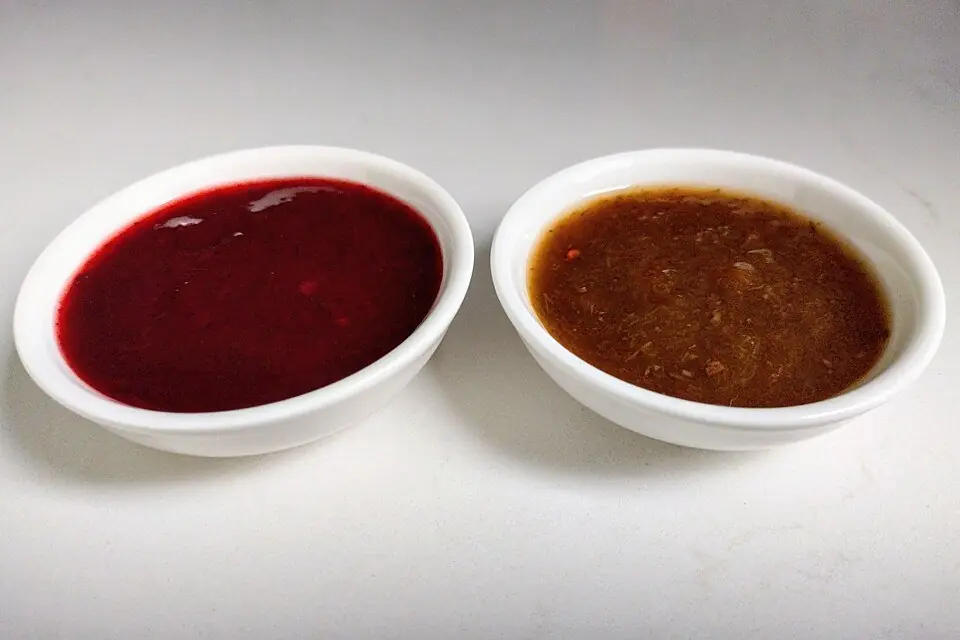
- Green tkemali sauce: with no plums at all, leave them out and stir 4 tbsp bottled green tkemali into the pot for the last 10 minutes, then taste and add more a spoonful at a time, up to about 120 ml. The sourness is close, but the sauce brings its own garlic, chilli, dill and wild mint (ombalo) and clouds the broth, so the stew tastes more of the sauce and less of fresh fruit. Choose an unsweetened bottle.
- Sorrel or lemon: a big bunch of sorrel (about 100 g) layered in with the herbs gives a lemony bite and is common in Georgian versions anyway, though it darkens the colour. The juice of 1 to 2 lemons stirred in at the end is the quickest fix: clean and sharp, but with none of the fruity depth of plums.
- Other unripe plums: any small plums picked green and rock-hard, well before they ripen, can stand in for cherry plums. Bite one first; it should make you wince.
- Veal or beef: veal is the classic alternative. Choose a fatty cut on the bone, such as breast or shoulder, and cook it exactly like the lamb. Beef shin or chuck is tougher and needs 30 to 60 minutes longer before the plums go in, with a little hot water if the level drops.
- Mushroom chakapuli for Lent: replace the meat with 1 kg quartered mushrooms and the fat with sunflower oil, add a bunch of sorrel to the herbs and simmer for about 25 minutes in total, with the plums in for the last 15. It is vegan and fit for fasting days.
- Browned first: some cooks brown the lamb in batches before layering it, for a deeper, meatier broth. It is not the traditional way, and the stew loses some of its clean, green taste.
- In the oven: once the layered pot comes to the boil, cover it and cook at 160 °C / 320 °F (140 °C / 285 °F fan) for about 1.5 hours, adding the plums for the last 40 minutes and the reserved herbs just before serving.
- More greens: depending on what the market has, Georgian cooks also add watercress, dill, garlic chives or extra mint to the herb layers.
Serve it with
- Fresh shoti or tonis puri to soak up the broth; in Kakheti, dedas puri from the tone oven
- A glass of Kakhetian white or amber qvevri wine, ideally the one in the pot
- Red-dyed eggs and paska, the sweet Easter bread, on the Easter table
- Pkhali and other cold vegetable starters
- Young cheese such as imeruli, radishes and raw spring onions
Make ahead and storage
Covered and chilled, chakapuli lasts up to 3 days. Overnight the herbs darken and the plums go on souring the broth, and plenty of cooks prefer it on day two. Warm it slowly over a low heat with the lid on until it bubbles, then stir in a little fresh tarragon or coriander. It also freezes for up to 3 months, though the herbs lose their colour; defrost it in the fridge before reheating.


Maspindzeli Travel, Tbilisi · private tours and cooking classes in Georgia · maspindzeli.ge · WhatsApp +995 598 74 74 54 · hello@maspindzeli.ge