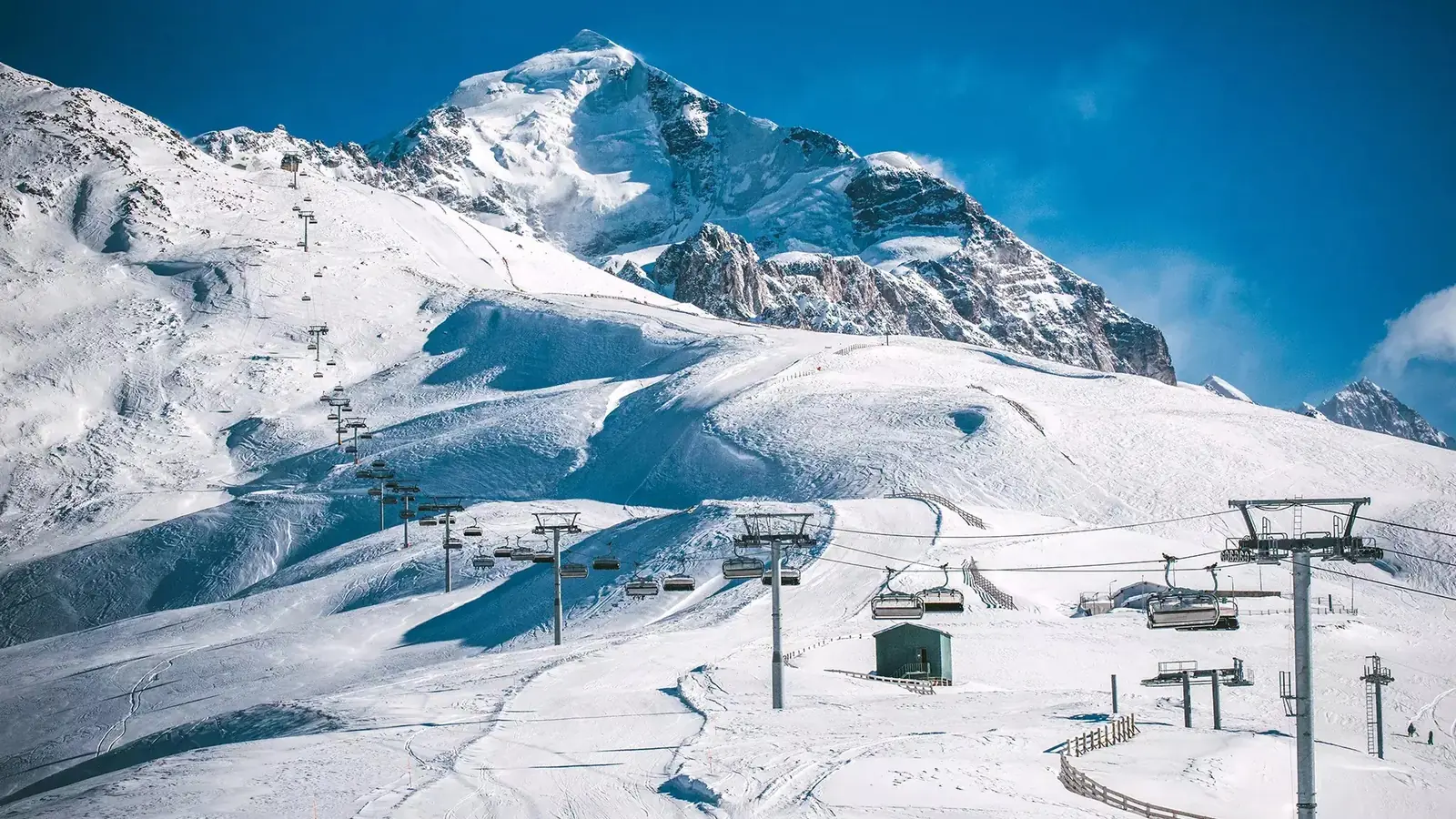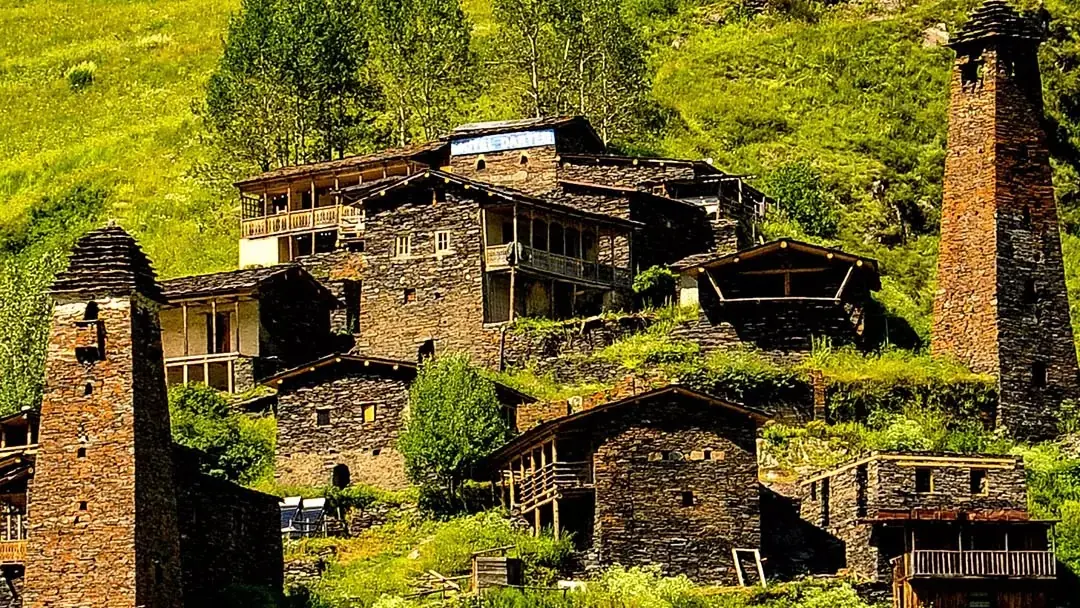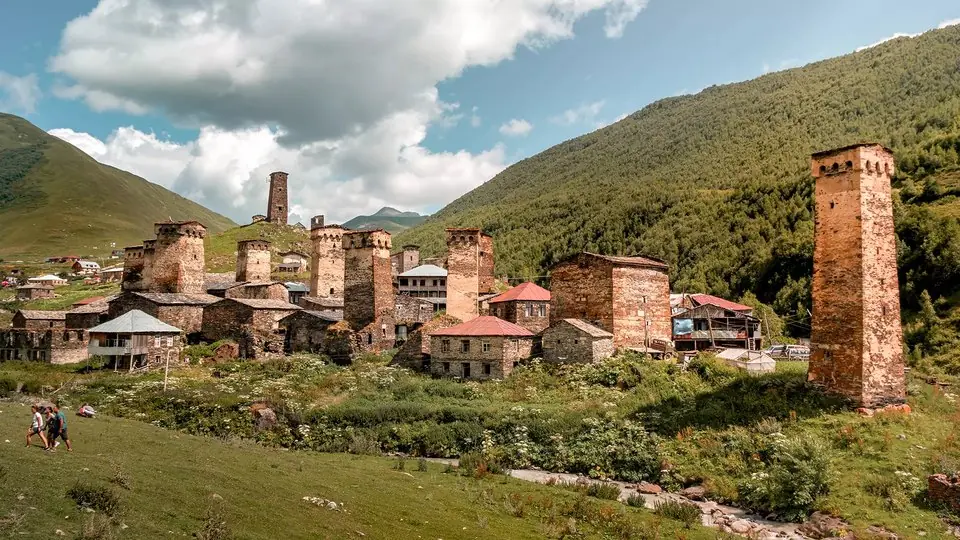
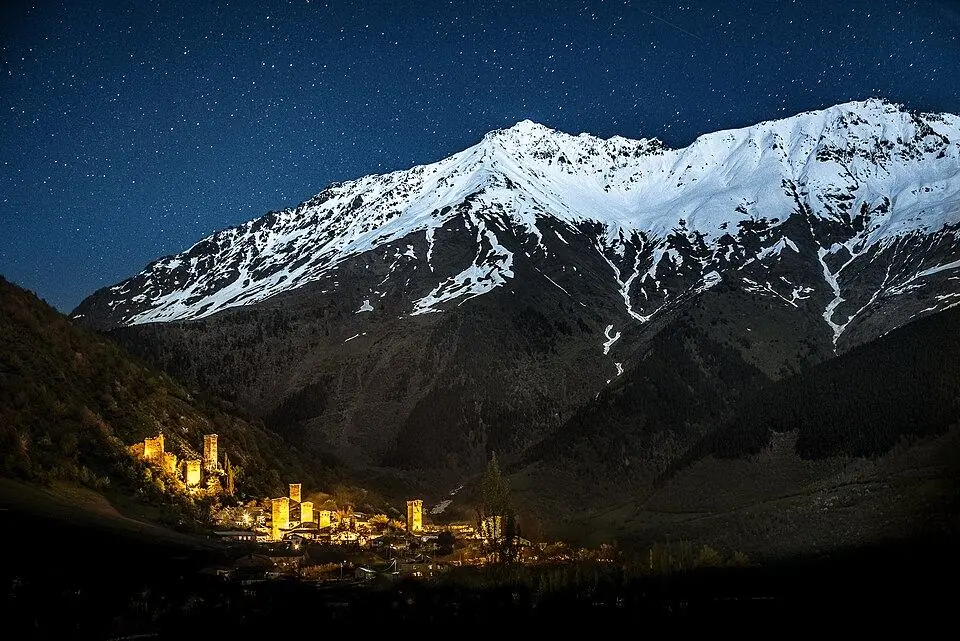
- Ushguli is four small tower villages at ~2,100 m in Upper Svaneti, ~45 km beyond Mestia, below Shkhara (5,193 m), the highest peak in Georgia.
- The drive from Mestia takes about 1.5 to 2 hours. The road is open all year, but in winter chains, snow and rockfall can stop traffic for days.
- Stay at least one night. A day trip gives you three or four busy hours, while a night adds quiet light and time for the ~16 km Shkhara Glacier walk.
- July to mid-September is the best time to go. Snow lies on the villages for about six months of the year.
- Bring cash. Ushguli has no cash machine, and hosts, drivers and horse handlers expect lari.
This Ushguli travel guide explains what Ushguli is, how to get there from Mestia and the best things to do in Ushguli once you arrive. In short, it is a group of four small villages full of medieval stone towers at the head of the Enguri valley in Svaneti, north-west Georgia. At ~2,100 m it ranks among the highest places in Europe where people live all year. Above the roofs stands Shkhara, at 5,193 m the tallest mountain in the country.
Most visitors come up from Mestia for a few hours. We think that wastes the trip, because the best light and the calm hours belong to those who sleep here. Below you will find the road in every season, the glacier walk, guesthouses, weather and village manners. For the wider region, read our Svaneti travel guide first.
What is Ushguli? Four villages and one UNESCO landscape
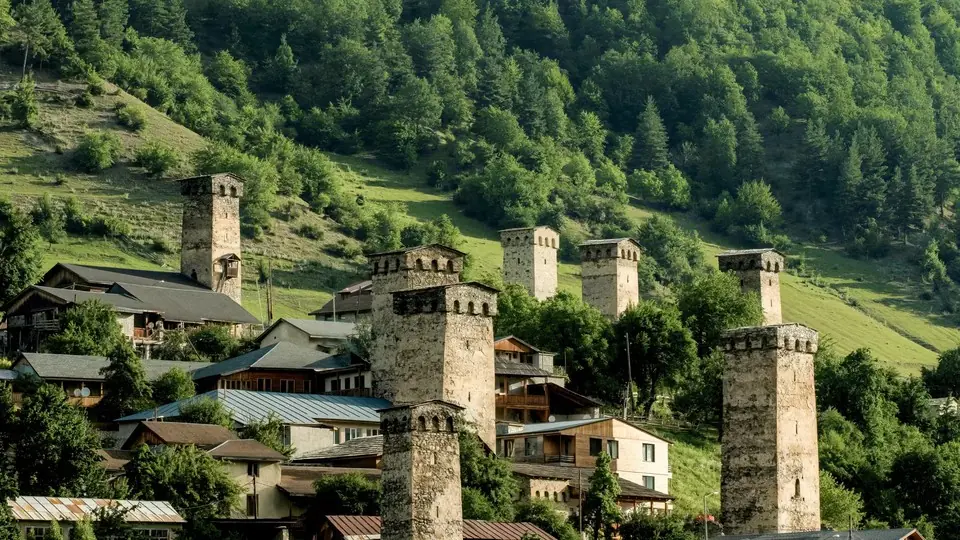
Ushguli is a community, not a single village. On the road from Mestia you reach Murkmeli (also spelled Murqmeli) first, then Chazhashi, then Chvibiani and Zhibiani at the top, below Lamaria Church. The four sit close together, and you can walk from one to the next in minutes. About 200 people live here all year. Most are farmers who cut hay all summer to feed their cattle through the long winter.
Chazhashi has the tightest cluster of towers and is protected as a museum-reserve. UNESCO put Upper Svaneti on its World Heritage List in 1996. It praised a high mountain landscape that has kept its medieval villages, defence towers and painted churches almost unchanged, and Chazhashi lies at the centre of that site.
The towers were built across many centuries, from about the 9th to the 18th. Most families built one, ~20 to 30 m tall, as a refuge from raiders and blood feuds. Locals say the name means "fearless heart". Ushguli belonged to Free Svaneti, a group of communities with no prince, and village lore says its people killed several lords who tried to rule them.
| Ushguli at a glance | Detail |
|---|---|
| Altitude | ~2,100 m (official sites say up to 2,200 m) |
| Villages | Murkmeli, Chazhashi, Chvibiani, Zhibiani |
| From Mestia | ~45 km, about 1.5 to 2 hours by road |
| From Tbilisi | About 8 hours' drive via Zugdidi and Mestia |
| People | About 200 year-round residents |
| UNESCO | Part of the Upper Svaneti site, listed in 1996 |
| Snow | About six months a year |
| Best months | July to mid-September |
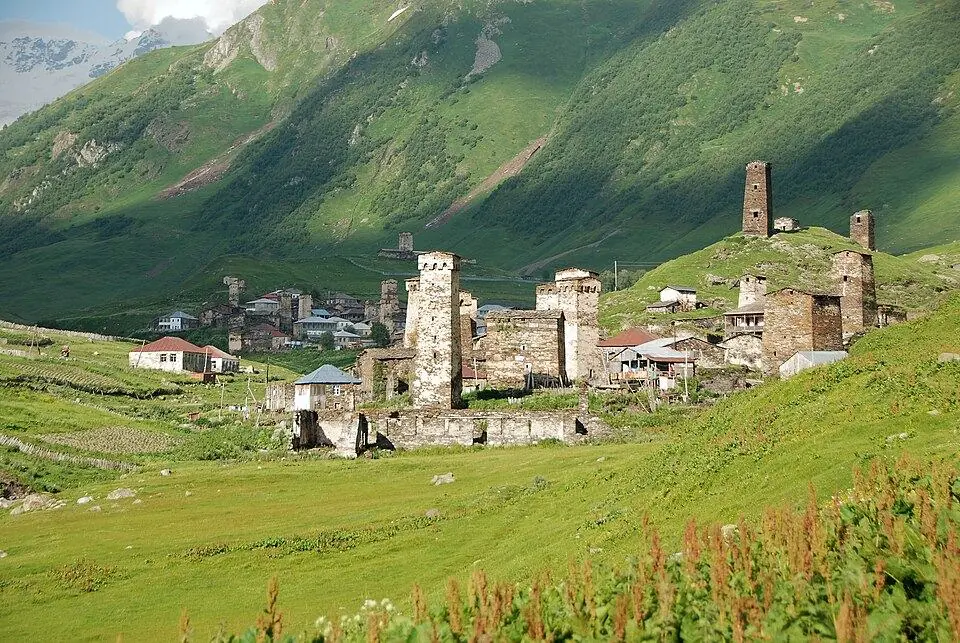
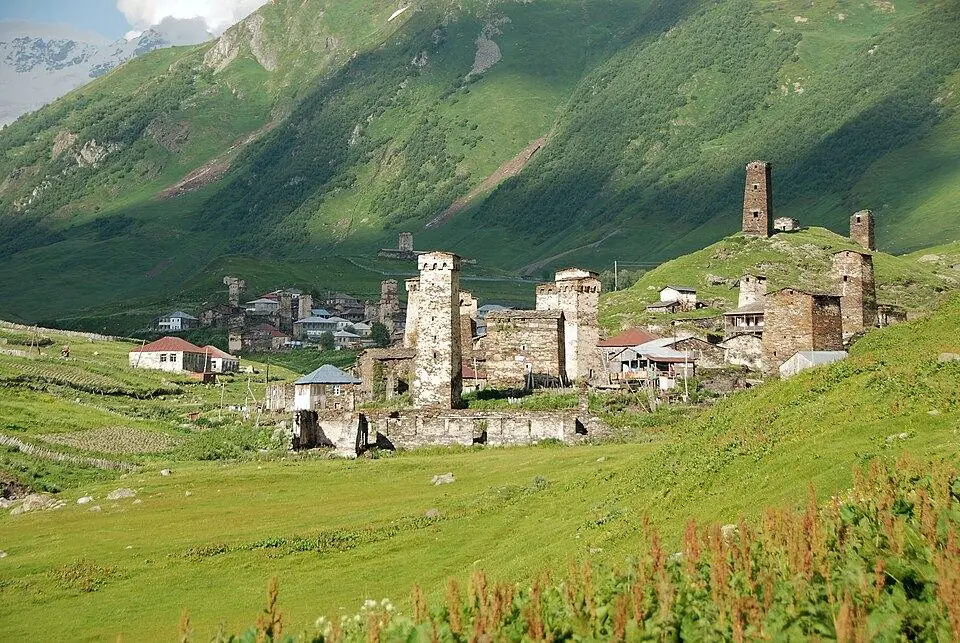
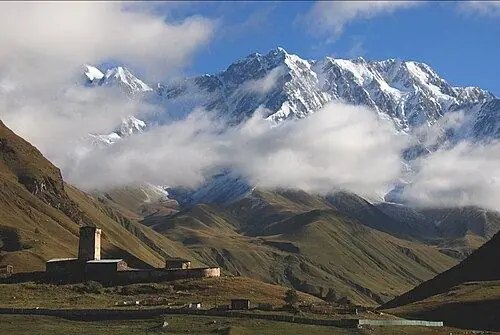
Is Ushguli worth visiting? A day trip or a night in the villages
Yes. Ushguli is the picture on countless posters of Georgia, and it looks just as good in person. The real question is how long to stay.
| Option | Time in Ushguli | What you get | The catch |
|---|---|---|---|
| Day trip from Mestia | About 3 to 4 hours | Lamaria, the lanes of Chazhashi, lunch | Busy midday hours, no glacier walk, 3 to 4 hours in a car |
| One night | An afternoon and a morning | Towers at sunset and sunrise, the museum, a calm village | Simple rooms; an early start if you have a flight next day |
| Two nights | A full free day | All of that plus the Shkhara Glacier walk or a ride | Cloud can still hide Shkhara for a day |
Our advice is one night at least, and two if you like to walk. On a day trip, leave Mestia by 8:00 and go straight up to Lamaria while the air is clear. When cloud sits on Shkhara, you lose the wall of ice that makes the place famous.
Mestia to Ushguli by road: shared jeep, private 4x4 or your own car
The road from Mestia to Ushguli is ~45 km long, and the drive takes about 1.5 to 2 hours with a stop or two. The Roads Department counts 47 km, from kilometre post 138 to 185. The road climbs over the Ugviri Pass, drops to the Enguri at Ipari and follows the river up past Kala. Long sections now have a concrete surface, including the last stretch into Ushguli, rebuilt in 2025. Expect tight bends and the odd fallen rock.
| Way to go | Cost in 2026 | Good to know |
|---|---|---|
| Shared jeep or minivan from Seti Square | About 40-70 GEL (about $15-26) a seat | Leaves in the morning when full and comes back in the afternoon. Be on the square by about 8:30. |
| Whole car with a driver | About 200-300 GEL (about $75-110) | Agree first whether this is one way or a return day with waiting time. |
| Your own car | Fuel only | A normal car copes in summer. In winter take a high-clearance 4x4 with chains. Many rental contracts ban this road. |
| Our private tour | See the tour pages | Driver, guide in your language and stops planned around you |
| On foot | Free | The four-day trek from Mestia ends here |
Two places on the way deserve a stop. Ipari is a tower village by the river. Kala, about two thirds of the way, has the tiny Lagurka church high on the slope above it, where Svans gather for Kvirikoba every 28 July. Ask your driver for a photo stop when Ushguli first comes into view.
Prefer to walk? The Mestia to Ushguli trek takes four days via roadless Adishi and ends in Murkmeli.
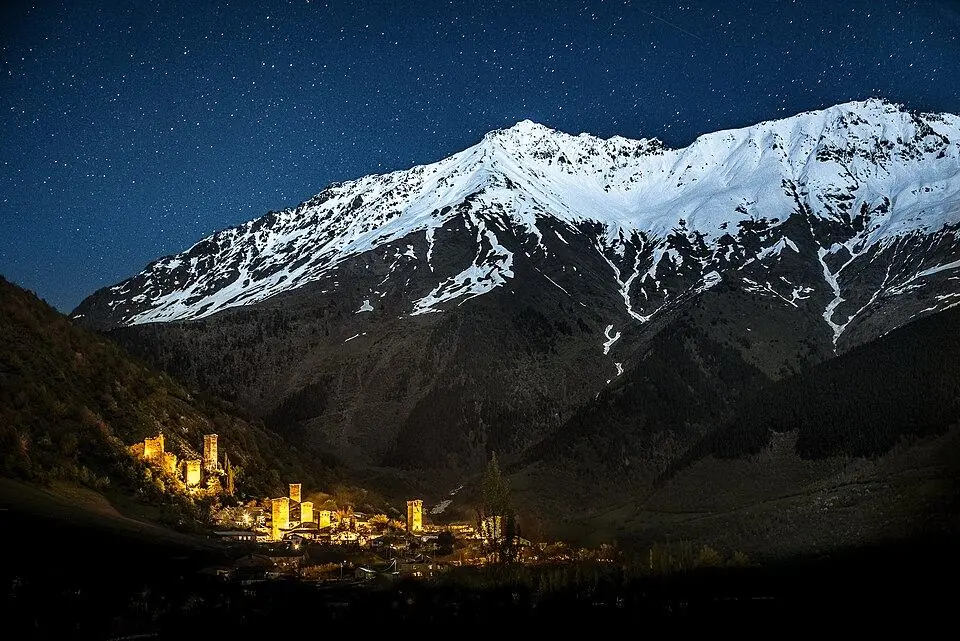
Ushguli in winter, road closures and the Zagari Pass
Getting there in winter
The road to Ushguli stays open all year, but winter makes it a different trip. From about December to March, the Roads Department often allows cars on the upper part only with snow chains, and large buses are barred. Rockfall and avalanche danger can shut the stretch between Kala and Ushguli for hours or days. In February 2026 it stayed closed for 13 days. A rockfall on 19 October 2026 closed it again until 24 October.
In winter, go with a local driver in a 4x4, set off early and keep a spare day in your plans. Look at our road status page before you set off. Georgia's tourism board also advises a high-clearance car for Svaneti in winter. Some guesthouses close in the cold months, so book ahead. The reward is a white village with smoke rising from the chimneys and almost nobody else there.
The Zagari Pass road to Lentekhi
A second road leaves Ushguli for Lower Svaneti. It crosses the Zagari Pass at ~2,600 m, then runs down to Lentekhi and on to Kutaisi. This is a summer and early autumn road only. From 2022 to 2025 it opened between late May and late June, then snow shut it again sometime between late October and early December. In late 2025 about 16 km around Ushguli and up toward the pass got new concrete, yet landslides closed the road twice in summer 2026.
Hire a 4x4 and a driver who has crossed the pass before. Allow about 4 to 5 hours from Ushguli to Kutaisi this way. The Imindari waterfall near Lentekhi makes a good break.
Things to do in Ushguli
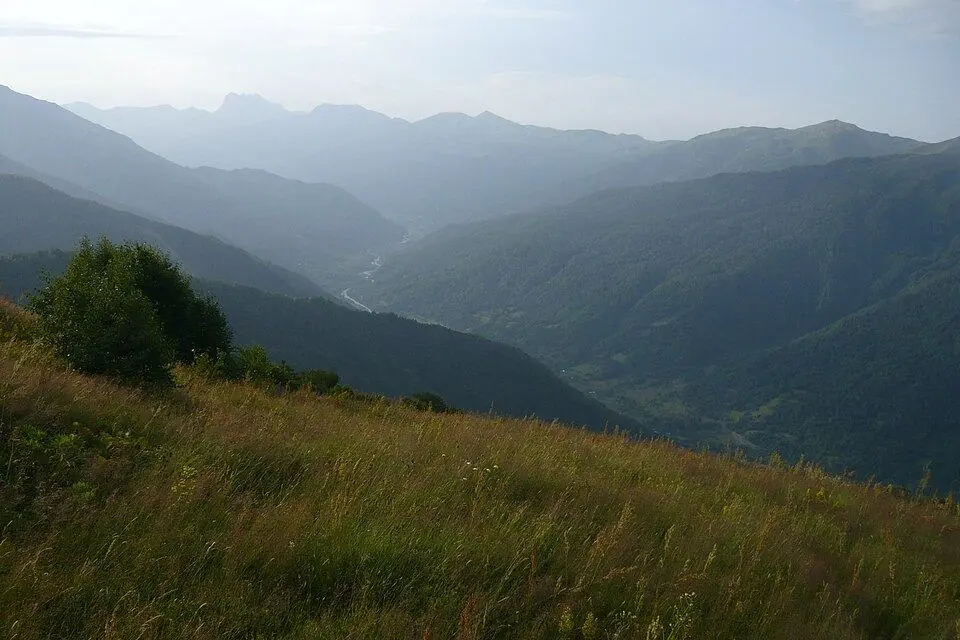
Ushguli is small, and you can see its main sights on foot in half a day. Wear shoes with a good grip. The lanes are steep and stony, often muddy, and shared with cows.
- Lamaria Church
The little church on the green hill above Zhibiani gives the classic view: a stone church, its own tower and Shkhara behind. Svans call it Limrie. It is dedicated to the Virgin and dated to the 9th or 10th century, with wall paintings added in stages up to the 13th. The bishop of Mestia also lives here, so a service may be going on. On 28 August the villages meet here for Limrieoba, the local feast of the Virgin. - The towers and lanes of Chazhashi
Wander between towers, stone houses, wooden hay barns and stacks of firewood. A few families let visitors climb their tower for a few lari. Others are homes, so ask before you step into a yard. - Ushguli Ethnographic Museum
Georgia's tourism board places it in a two-storey stone house from the 13th century. It is a machubi, where people and cattle once shared one warm room in winter. Inside are farm tools, weapons, old wooden furniture and church objects. There are also finds from digs in Svaneti: chased metalwork, icons and manuscripts. Entry was about 5-10 GEL (about $2-4) in 2026, and the hours depend on the keeper. - Queen Tamar's towers
On the hill above the villages stand the ruins of a fortress that tradition ties to Queen Tamar, who ruled Georgia around 1200. Locals point out her summer and winter towers, and some say she was buried nearby. The short, steep climb gives the best view over all four villages. - Village churches
Chazhashi has a church of the Saviour, and Murkmeli has its own small medieval church. Most stay locked. A neighbour usually holds the key, so ask nearby and leave a few lari for the church. - Horse riding
In summer, villagers hire out horses with a handler. You can ride up the valley toward the glacier or take a short loop around the villages. A horse with a handler for the day cost about 100 GEL (about $37) in 2026. - Sunset and sunrise viewpoints
Watch sunset from the Lamaria hill, then rise early for the first sun on Shkhara.
| Sight | Time to allow | Cost (2026) |
|---|---|---|
| Lamaria Church | About 45 minutes with the climb | Free |
| Chazhashi towers | About 1 hour | Free; tower climbs a few lari |
| Ethnographic Museum | 30-45 minutes | About 5-10 GEL (about $2-4) |
| Queen Tamar's towers | 1-1.5 hours return | Free |
| Shkhara Glacier | 5-6 hours return on foot | Free |
The Shkhara Glacier walk and other hikes from Ushguli
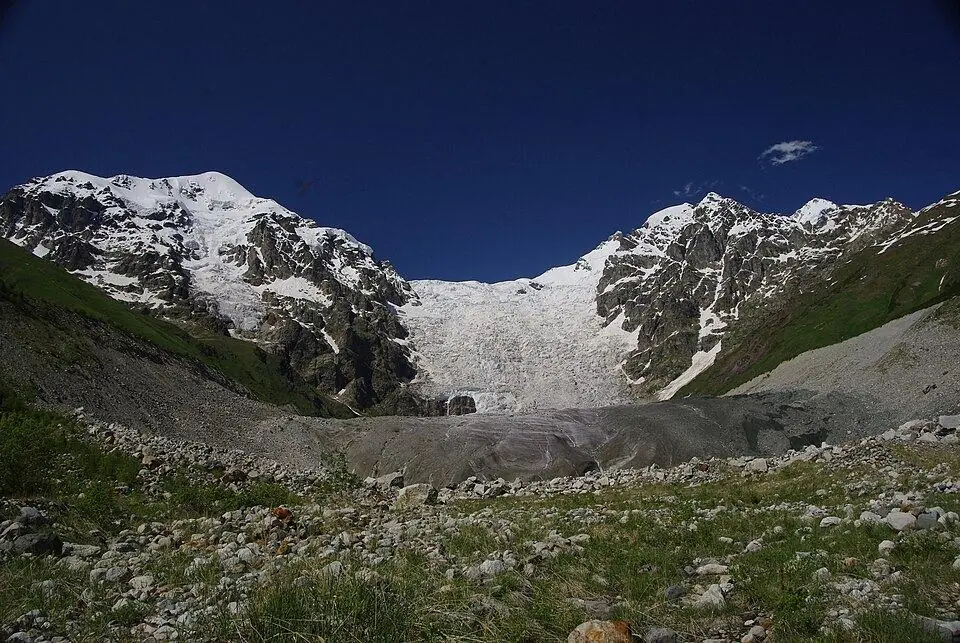
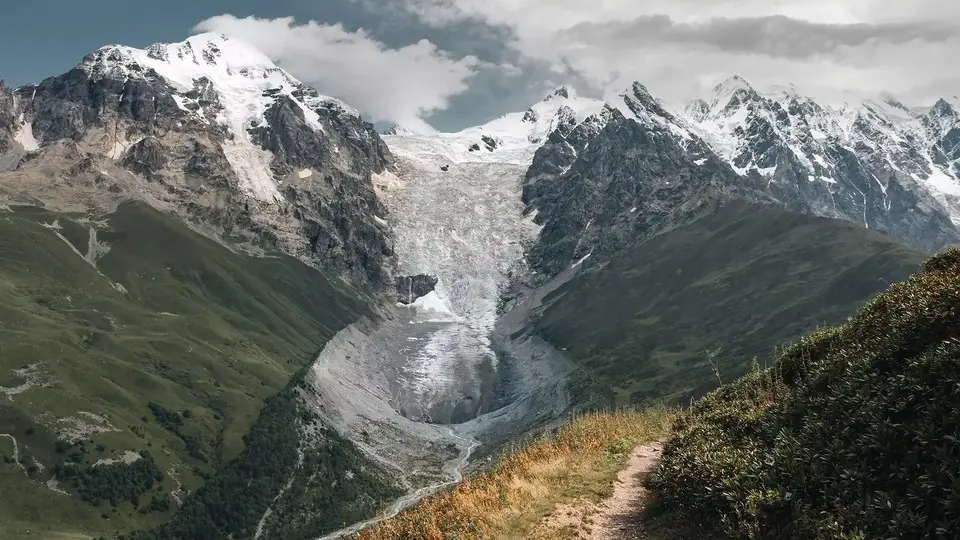
The walk to the Shkhara Glacier is the best day out from Ushguli. A dirt track leaves Zhibiani below Lamaria and runs ~6 to 7 km up the wide Enguri valley, through hay meadows and summer pasture. A footpath then climbs gently for about 2 km, over stones and small streams, to a viewpoint near the ice at ~2,450 m. The round trip is ~16 to 17 km with ~450 m of climbing. Allow 5 to 6 hours, plus breaks.
The gentle slope suits most fit walkers, children too. To shorten the day, ride a horse or take a 4x4 up the track and walk only the last hour. A local driver charged about 100-150 GEL (about $37-55) a car for that return trip in 2026. A small seasonal cafe on the way is sometimes open in summer. Start by 8:00, carry water and stay well back from the ice, where rocks can fall at any time.
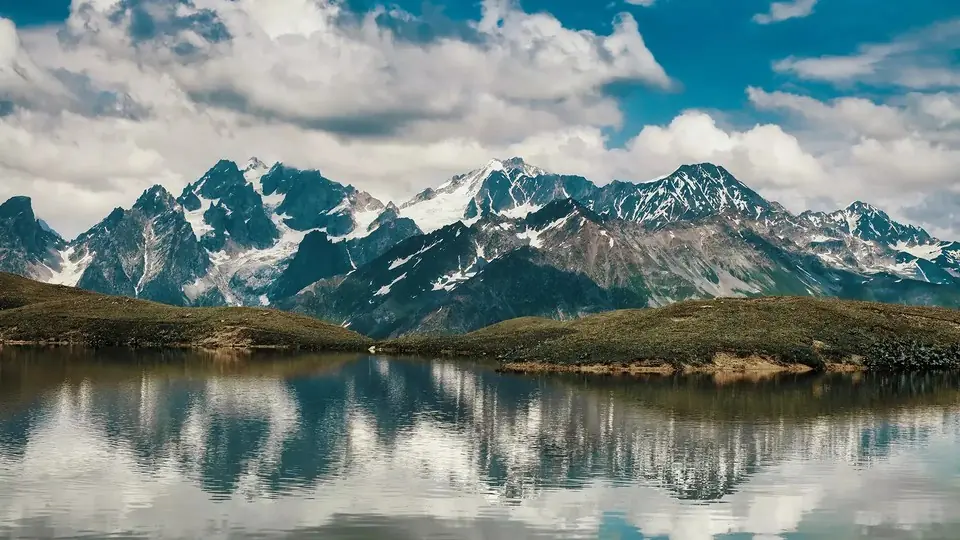
For a longer day, climb south to the Latpari Pass at ~2,800 m, where a small lake mirrors Shkhara. The route has few waymarks, so go with a guide or a good offline map.
Our private Svaneti Hiking Week spends two nights in Ushguli and walks to the glacier with a guide in your language. Like all our trips, it starts on any date and suits any group size, and the guides, gear and horses are our own.
Where to stay and eat in Ushguli
Ushguli has dozens of family guesthouses and a few small hotels, spread across all four villages. Rooms are simple and warm, and the cheaper ones often share a bathroom. Most guests take half board, dinner and breakfast with the family. It cost about 100-130 GEL (about $37-48) a person in 2026. Zhibiani and Chvibiani put you closest to Lamaria and the glacier track. Chazhashi puts you among the towers. Book early for July and August. If you would rather sleep in Mestia and visit for the day, our guide to where to stay in Mestia compares its areas.
Dinner is home cooking. Expect kubdari, the Svan meat pie, plus cheese breads, tashmijabi, soup and salads seasoned with Svan salt. If you want a particular dish, ask your host early in the day. A few cafes serve lunch to day visitors in summer, and some close for the winter.
Cash, power and phone signal
- Cash: there is no cash machine in Ushguli. Bring enough lari from Mestia for beds, meals, drivers and horses.
- Power: cuts happen, above all in storms and heavy snow. Pack a headlamp and a power bank.
- Signal: mobile data usually works in the villages but fades as you walk up the valley. Many guesthouses offer Wi-Fi, though speeds vary.
- Warmth: nights are cold even in August, so bring a fleece and a hat.
- Health: the nearest hospital is in Mestia. Travel insurance is a must for foreigners: the policy has to cover at least 30,000 GEL, and yours should include hiking.
Best time to visit Ushguli: seasons and weather
Snow and cold rule Ushguli for much of the year, so the good season is brief. July and August bring the warmest, clearest days, and mid-September is quieter.
| Months | Day / night | What to expect | Best for |
|---|---|---|---|
| December to March | About -3 to 3°C / -7 to -11°C | Deep snow, chains on the road, short days | Snow scenes and empty lanes |
| April and May | About 7 to 12°C / -2 to 2°C | Thaw, mud and frequent rain; Zagari Pass still shut | Low prices, if you can stand the mud |
| June | About 17°C / 6°C | Green and wet, snow left up the valley | Flowers and quiet villages |
| July and August | About 21°C / 9°C | Warmest days, clearest skies, most visitors | The glacier walk, riding, feasts |
| September | About 16°C / 5°C | Settled weather, fewer people | Walking and photography |
| October and November | About 11 to 3°C / 0 to -6°C | First snow, guesthouses closing | Golden birches, then quiet |
Our Ushguli weather page has the full monthly figures. For a feast day, aim for Kvirikoba in Kala on 28 July or Limrieoba at Lamaria on 28 August.
Visiting Ushguli respectfully: churches, photos and dress
Ushguli is a working village, not an open-air museum. Families live in these towers, and the churches are places of prayer.
- Churches: cover your shoulders and knees. Women usually cover their hair, so carry a scarf. Speak quietly, and stay outside during a service unless someone invites you in.
- Photos: ask before you photograph people. Never take pictures inside a church without permission.
- Drones: ask first near churches and houses, and keep away from cattle and horses.
- Private land: yards, barns and towers belong to families. Ask before you go in, even when the gate is open.
- Animals: give cows and herding dogs space, and close every gate you open.
- Rubbish: waste collection is limited up here, so carry your litter back to Mestia.
A few words help too: gamarjoba is hello in Georgian, and madloba is thank you.
How many days in Ushguli? Plans for a day, one night and two
- Day trip
Leave Mestia at 8:00, stop in Kala and reach Ushguli by about 10:00. See Lamaria first, then Chazhashi and the museum. Eat lunch, and start back by 15:00. - One night
Drive up in the morning with stops. Spend the afternoon in the villages and climb to Queen Tamar's towers for sunset. Next morning, walk up the glacier valley for two hours, then head back after lunch. - Two nights
Day 1 as above. Day 2: the full Shkhara Glacier walk or a horse ride. Day 3: leave by the Zagari Pass for Kutaisi when the road is open, or drive back to Mestia.
Our Grand Tour with Svaneti gives Ushguli a full day from a Mestia base, inside ten days across Georgia. Our Svaneti Trek walks in from Mestia over four days and ends with a night in Ushguli. Both are private, start on any date and work for any group size.
Ushguli FAQ
Is Ushguli worth visiting?
Yes. Its towers below Shkhara are the best-known view in Svaneti and part of a UNESCO World Heritage site. Stay at least one night if you can, because day trips miss the quiet evenings and the glacier walk.
How do I get from Mestia to Ushguli?
Take a shared jeep or minivan from Seti Square in the morning, hire a car with a driver, or drive yourself. The ~45 km road takes about 1.5 to 2 hours. A shared seat cost about 40-70 GEL (about $15-26) in 2026.
Can you drive to Ushguli in a normal car?
In summer, yes, as most of the road now has a hard surface. In winter, use a high-clearance 4x4 with chains and check the road status first. Many rental firms ban the road, so read your contract.
Can you visit Ushguli in winter?
Yes. People live there all year and the road stays open, but chains are often required. Rockfall or avalanche risk can close it for days. Some guesthouses shut in winter, so book ahead.
How long does the Shkhara Glacier hike take?
About 16 to 17 km return with ~450 m of climbing, or 5 to 6 hours on foot. A horse or a 4x4 up the valley track can save you most of the distance.
Is there an ATM in Ushguli?
No. Bring cash from Mestia for guesthouses, cafes, drivers and horses. Cards are rarely accepted.
Is Ushguli the highest village in Europe?
It is one of the highest places in Europe lived in all year, at ~2,100 m. Bochorna in Tusheti also claims the title, so the answer depends on how you count.