Bazhe Recipe
ბაჟე
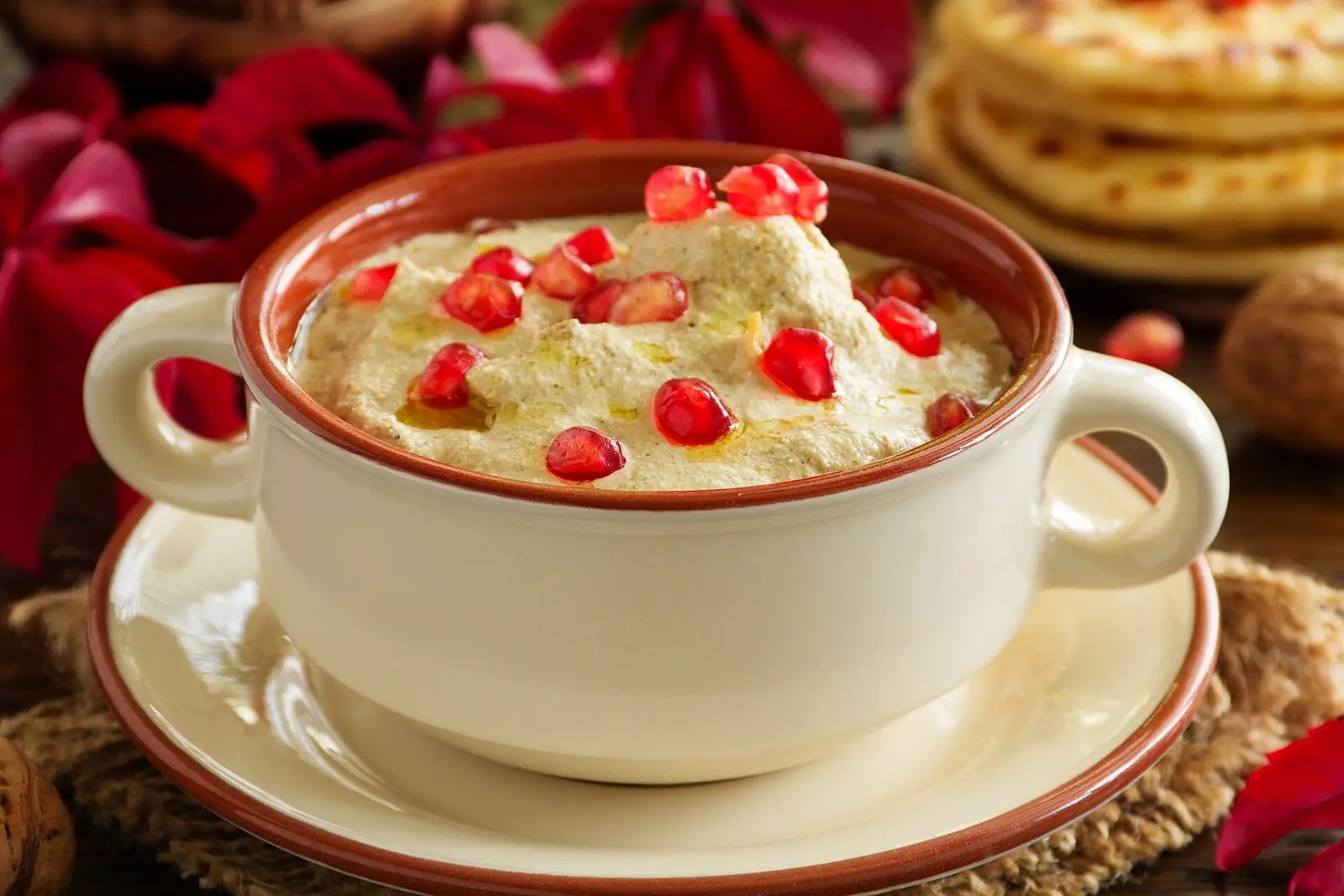
A home-style bazhe recipe for the cool Georgian walnut sauce: walnuts ground fine with garlic, blue fenugreek and marigold, thinned with cold water and sharpened with a little vinegar. Nothing goes on the stove, it is vegan, and it is ready to spoon over fried fish, chicken or vegetables.
Recipe by the Maspindzeli team in Tbilisi · Updated 30 Oct 2026 · Made everywhere, above all in Imereti, Samegrelo and Guria
Full recipe with the timeline, timers and US measures: maspindzeli.ge/recipes/bazhe/
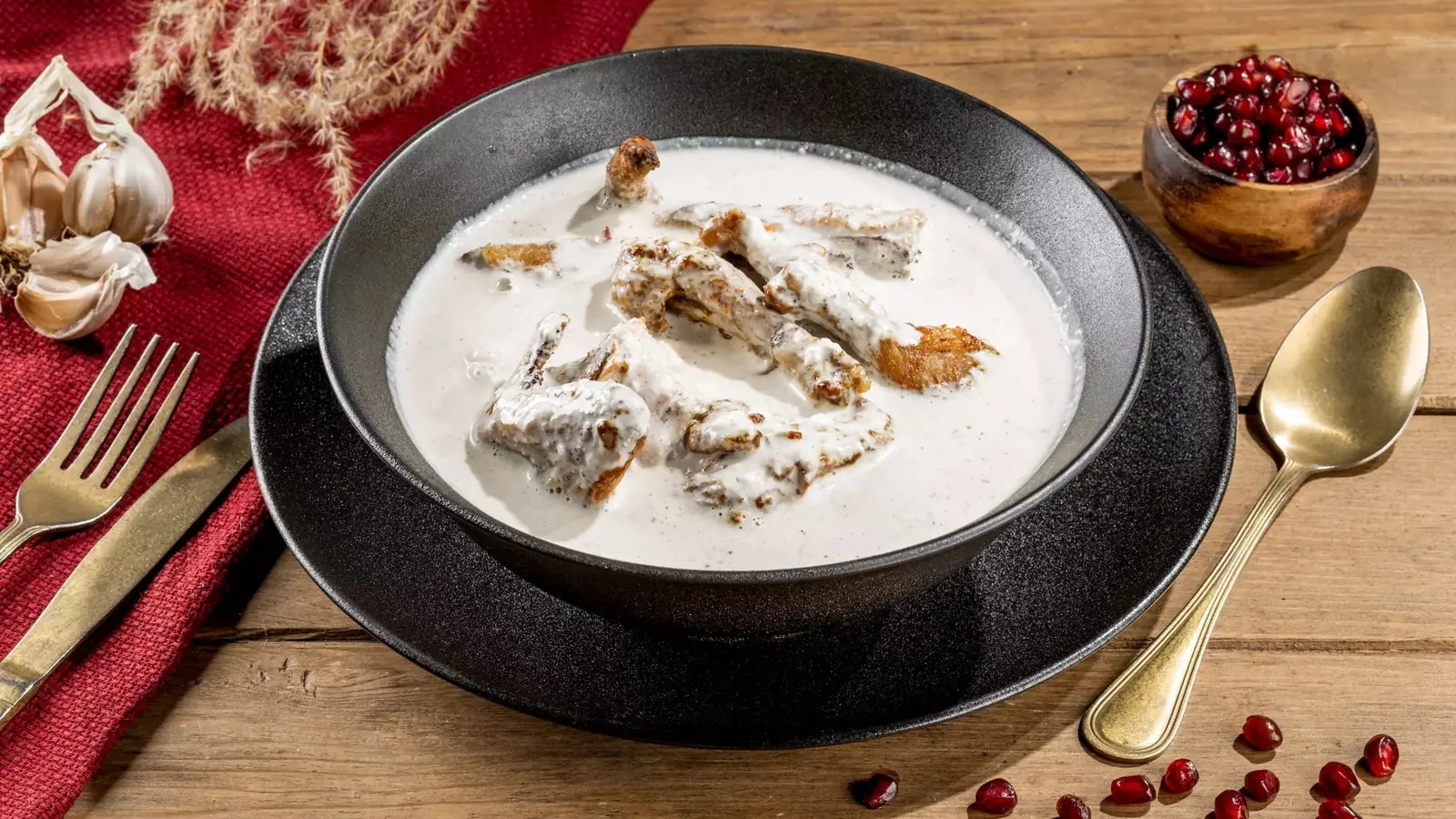
This bazhe recipe makes the Georgian walnut sauce the way most home cooks do it: raw walnuts ground very fine, mixed with pounded garlic, coriander seed, blue fenugreek, dried marigold and chilli, then beaten with cold water and a splash of wine vinegar until it runs slowly off a spoon. You may also see it spelt baje or bazha. Nothing is cooked, so it takes about half an hour of work and an hour's rest.
Two choices shape it most. Plain water gives a vegan sauce that Georgians eat on fasting days, while cold chicken broth makes a richer one for poultry. Vinegar keeps it pale and sharp; pomegranate juice turns it fruitier. Many cooks also squeeze the ground nuts until a little golden oil seeps out, keep it aside and trickle it over the finished bowl, and the method below does the same.
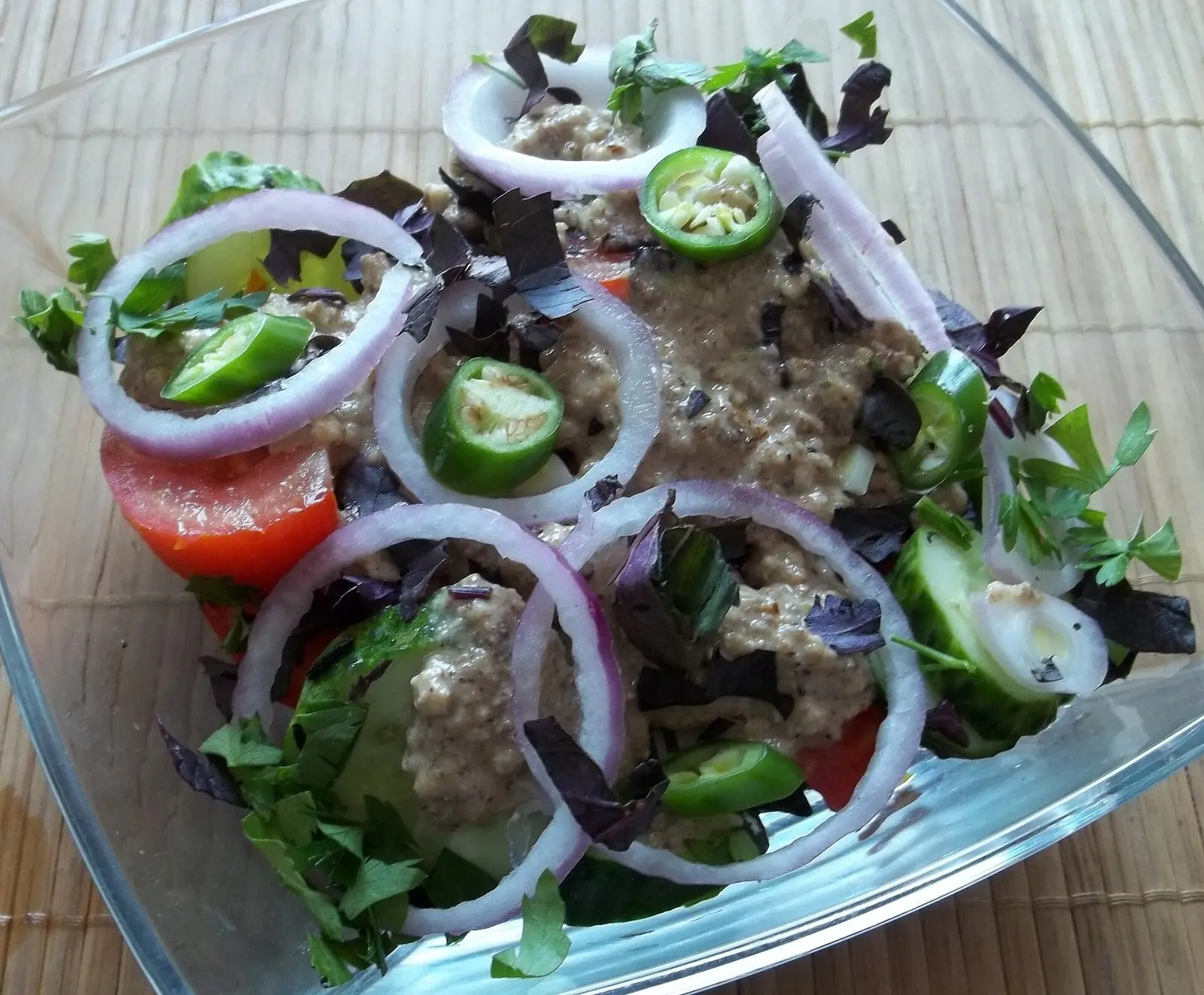
Bazhe belongs above all to western Georgia, to Imereti, Samegrelo and Guria, but every region makes it now, and it is a regular on the New Year table. It is poured over fried fish, chicken and turkey, fried aubergine and boiled vegetables, and eaten with ghomi or mchadi. Satsivi is its close cousin; the FAQ below explains how they differ.
Timeline: what to do, and when
1 h 35 min from start to table · 35 min hands-on · 1 h waiting
Each bar is one step. Hands-on Waiting, while the oven, the pot or the dough does the work. Steps that sit inside a wait are done in parallel.
Recipe
Bazhe
Ingredients
Walnut sauce
Amounts are scaled. Times stay about the same, but a bigger pot takes a little longer to come to the boil.
Contains: walnuts (tree nuts).
You will need
- Food processor, a meat grinder with its finest plate, or a large mortar and pestle
- Small mortar and pestle, or a fine grater, for the garlic
- Wide mixing bowl and a wooden spoon or balloon whisk
- Small cup for the pressed walnut oil
- Stick blender or fine sieve (optional, for a silky finish)
Method
- Check the walnuts3 min hands-on· start here
Spread the walnuts on a tray and pick out any scraps of shell and any dark, shrivelled kernels. Eat one or two: they should taste sweet and creamy. If they are bitter or smell stale, buy a fresh bag, because no amount of spice will hide it.
- Grind them very fine7 min hands-on· starts at +3 min
Put the walnuts in the processor and pulse them in short bursts, scraping the sides down now and then, until they look like moist, fine crumbs that hold together when you press them. Stop before the mass turns glossy and smooth like nut butter. With a meat grinder, pass them twice through the finest plate; with a big mortar, pound them a handful at a time.
- Press out the walnut oil5 min hands-on· starts at +10 min
Tip the ground walnuts into the wide bowl. Squeeze them hard in your fist and knead them against the side of the bowl for 3 to 4 minutes. When drops of oil gather at the edge, tilt the bowl and spoon the oil into the small cup. From processor-ground nuts you may get only a teaspoon or two, which is enough.
- Pound the garlic and spices5 min hands-on· starts at +15 min
Peel the garlic and crush it in the small mortar with the coarse salt until it turns into a wet paste. Add the ground coriander, blue fenugreek, marigold and red pepper and pound for another minute, until it smells warm and earthy. Without a mortar, grate the garlic finely and mash it with the salt on a board using the flat of a knife.
- Mix the walnut paste3 min hands-on· starts at +20 min
Work the garlic and spice paste evenly through the walnuts with a spoon or your hand, then stir in 1 tbsp of the vinegar. At this stage you have a stiff, crumbly paste flecked with spice.
- Beat in the cold water7 min hands-on· starts at +23 min
Pour in about 150 ml of the water and beat hard with the wooden spoon or whisk until smooth. Keep adding water a few spoonfuls at a time, beating after each, until the sauce coats the back of a spoon and slides off it in a slow, thick ribbon, like double cream. For a silkier bazhe, give it 30 seconds with a stick blender or rub it through the sieve.
- Rest1 h waiting· starts at +30 min
Cover the bowl and leave it in a cool spot or the fridge for about an hour, so the raw garlic softens and the spices colour the sauce. The ground nuts keep soaking up water, so expect it to set a little thicker.
- Adjust and serve5 min hands-on· starts at +1 h 30 min
Stir the bazhe; if it has stiffened, beat in cold water a spoonful at a time. Taste, then add salt, the rest of the vinegar or more red pepper until it is nutty, garlicky and gently tart. Pour it into a bowl or over the food, drizzle the saved walnut oil on top and serve cool rather than straight from the fridge.
About 335 kcal per serving (1 of 6, about 110 ml of sauce). This is an estimate from standard values for the ingredients, not a lab figure.
Bazhe goes on the table in a shared bowl or straight over the fish or chicken. Georgians are generous with it, and a piece of bread or mchadi is used to mop up whatever sauce is left at the end.
Tips, swaps and variations
Tips from your host
- Grind the nuts as finely as you can. A coarse grind gives a gritty sauce that separates in the bowl, while fine, slightly oily crumbs swell with water into something smooth. Older Georgian cooks swear by a stone mortar, but a processor or two passes through a meat grinder work well.
- Add the water gradually. Thinning bazhe is easy and thickening it again is not, and it firms up as it stands, so stop when it is a touch runnier than you want.
- Georgian recipes ask for water that was boiled and left to cool, an old habit for a sauce that never meets the heat. Cold filtered water, or tap water you would happily drink, does the same job.
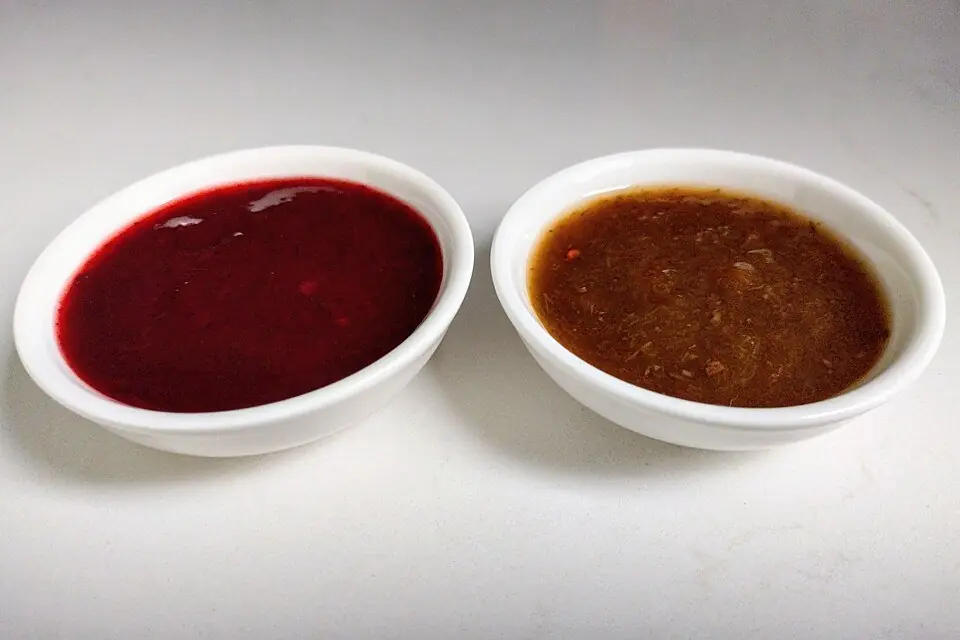
- White wine vinegar keeps the sauce pale and clean-tasting. Red wine vinegar or pomegranate juice tints it pink and makes it fruitier. Add half, taste, then decide on the rest.
- Make it at least an hour ahead, or in the morning for an evening meal. Raw garlic is harsh at first and mellows as the sauce sits.
- Bazhe is almost nothing but walnuts. Keep it well away from anyone with a tree-nut allergy, and give it its own serving spoon on a shared table.
Variations and swaps
- With broth, for poultry: use cold chicken or turkey broth, with the fat lifted off, in place of the water. Plenty of western Georgian families make it this way to pour over a boiled hen cut into pieces. It tastes rounder, but the broth rules it out for vegans and for fasting days.
- With pomegranate: replace the vinegar and 100 ml of the water with 100 ml fresh, sour pomegranate juice (about 2 pomegranates), keeping a splash of vinegar if you like it sharper. Some families make their Lenten bazhe for the New Year table like this. Bottled juice is usually sweeter, so add a squeeze of lemon. A teaspoon of pomegranate molasses also works, but it darkens the sauce and makes it sweeter.
- Plain western style: some cooks in western Georgia use only walnuts, garlic, marigold, red pepper and salt, with no coriander seed or blue fenugreek. The sauce tastes simpler and more of the nuts.
- For fish: pound a small handful of fresh coriander leaves with the garlic, or stir in a spoonful of their juice, and add a little more vinegar. Pour it over fried trout or any fried white fish.
- Hazelnut bazhe: in the west some cooks swap the walnuts for hazelnuts. Toast 300 g hazelnuts in a dry pan for 2 to 3 minutes, rub off the skins, grind them as fine as possible and carry on as above. White wine vinegar or lemon juice suits them best.
- Eggs and vegetables under bazhe: halve hard-boiled eggs, or boil cauliflower florets or thick slices of courgette until just tender, lay them in a shallow dish and pour the sauce over. Fried aubergine slices are dressed the same way. Leave them for 30 minutes so the sauce can soak in.
Serve it with
- Fried fish, such as trout or Black Sea fish
- Fried, roast or boiled chicken and turkey, including chicken tabaka
- Fried aubergine slices, boiled cauliflower or courgette
- Hard-boiled eggs, halved
- Ghomi (cornmeal porridge), mchadi (cornbread) or shoti bread
Make ahead and storage
Covered in the fridge, bazhe keeps for up to 3 days. The garlic gets stronger and the sauce sets almost to a paste, so stir in a little cold water and let it stand at room temperature for about 20 minutes before it goes to the table. To work further ahead, freeze small portions of the spiced walnut paste before any water goes in, then thaw and thin it on the day; the finished sauce is better not frozen.



Maspindzeli Travel, Tbilisi · private tours and cooking classes in Georgia · maspindzeli.ge · WhatsApp +995 598 74 74 54 · hello@maspindzeli.ge