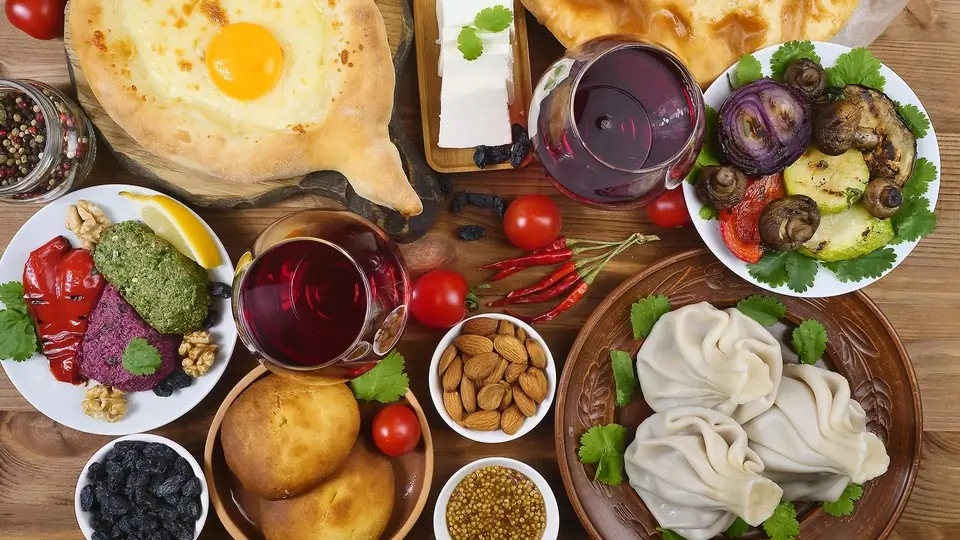
Chikhirtma Recipe
ჩიხირთმა
A home-style chikhirtma recipe: a whole chicken simmered into broth, onions melted in its fat with a spoonful of flour, then egg yolks warmed in slowly, a splash of wine vinegar and plenty of fresh coriander. The result is pale yellow, silky and gently sour, and the variations add a quicker version and the lamb soup.
Recipe by the Maspindzeli team in Tbilisi · Updated 28 Oct 2026 · From Kakheti and Kartli, in eastern Georgia
Full recipe with the timeline, timers and US measures: maspindzeli.ge/recipes/chikhirtma/
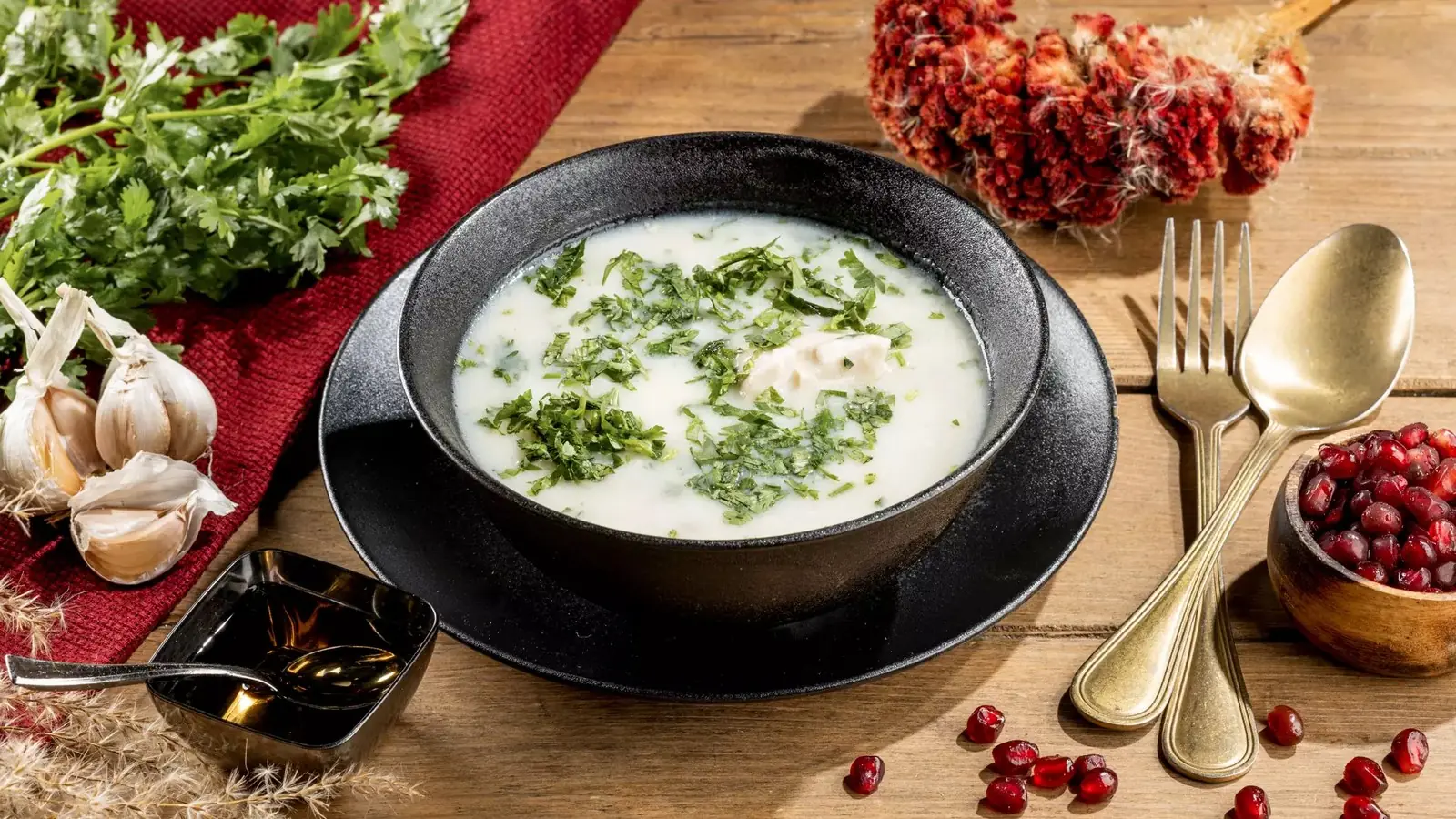
This chikhirtma recipe makes the egg-thickened chicken soup of eastern Georgia. A whole bird simmers into a clear broth, finely chopped onion turns soft and sweet in the chicken's own fat, and a little flour gives the base some body. Right at the end, beaten egg yolks and wine vinegar go in, and the pot turns silky, pale yellow and gently sour. Chopped coriander finishes it. You may also see the name spelled chikhirtmi, and English menus often just say Georgian chicken soup.
Everything hangs on one moment: getting the eggs into hot broth without them setting into threads. The method shows how to temper them, warming the yolks with ladles of soup before they meet the pot, and the tips say what to do if it starts to curdle. Georgian cooks happily disagree about the rest: vinegar or lemon, flour or none, coriander alone or with dill and mint, a pinch of cinnamon or a little marigold for colour. The variations cover those choices, plus a faster soup from chicken thighs and the version made with lamb.
Georgia's tourism board calls chikhirtma the king of Georgian soups and places it in Kakheti and Kartli, where it is fireside food for snowy winters. Today it is cooked and ordered all over the country, and plenty of Georgians want a bowl the morning after a long supra: alongside khashi, it is the soup the country turns to as a hangover cure.
Timeline: what to do, and when
2 h 42 min from start to table · 1 h 40 min hands-on
Each bar is one step. Hands-on Waiting, while the oven, the pot or the dough does the work. Steps that sit inside a wait are done in parallel.
Recipe
Chikhirtma
Ingredients
Broth
Soup base
To thicken and finish
Amounts are scaled. Times stay about the same, but a bigger pot takes a little longer to come to the boil.
Contains: gluten (wheat), egg.
You will need
- Large stockpot, 6 to 8 litres
- Second heavy-based pot, about 4 litres, for the soup
- Fine sieve and a large heatproof bowl or jug
- Kitchen string
- Heatproof mixing bowl and a balloon whisk
- Ladle and a wooden spoon
Method
- Put the chicken on10 min hands-on· start here
Rinse the chicken and put it in the stockpot with the wings, if using; leave its fat on, as it flavours the broth. Pour in the cold water and add 2 tsp salt now: Georgian cooks salt the water from the start for a more flavourful stock. Cut the stems off the coriander, tie them into a bundle with string and set the leaves aside.
- Bring to the boil and skim15 min hands-on· starts at +10 min
Heat the pot over a medium-high flame. As it nears boiling, grey foam gathers on top: lift it off with a large spoon until the surface stays mostly clear, 5 to 10 minutes of skimming. Add the bay leaves, peppercorns and the bundle of stems, then lower the heat until the water barely trembles.
- Simmer the chicken1 h 15 min waiting· starts at +25 min
Half cover the pot and simmer very gently for about 1 hour 15 minutes, until a leg wobbles loosely at the joint and the thigh meat slips off the bone. Fast boiling clouds the broth, so keep the bubbles lazy. An old hen needs 2 to 3 hours; top up with boiling water whenever the level drops below the bird.
- Prepare the onions and herbs15 min hands-on· starts at +1 h 10 min, during step 3
Chop the onions as finely as you can, or grate them on the coarse side of a box grater. Chop the coriander leaves, and the dill if using, and keep them in separate piles. If you have marigold, stir it into 60 ml of just-boiled water and leave it to steep.
- Strain the broth10 min hands-on· starts at +1 h 40 min
Lift the chicken onto a large plate, salt it lightly and leave it to cool. Pour the broth through the sieve into the heatproof bowl and throw away the stems, bay and peppercorns. Spoon 3 tbsp of the yellow fat from the surface into the second pot and skim off most of what is left. You should have 2.2 to 2.5 litres of broth; add water if there is less.
- Melt the onions15 min hands-on· starts at +1 h 50 min
Set the pot with the fat over a low heat, add the onions with a pinch of salt and cook for 12 to 15 minutes, stirring often, until very soft and translucent. Keep them pale, since browned onion makes the soup beige instead of yellow. Splash in a little broth if they start to stick.
- Add the flour, then the broth7 min hands-on· starts at +2 h 5 min
Sprinkle the flour over the onions and stir for 2 minutes without letting it colour. Whisk in the broth a ladle at a time; once the first four ladles have made a smooth, loose paste, pour in the rest. Bring up to a simmer, stirring so nothing catches on the bottom.
- Simmer the base15 min waiting· starts at +2 h 12 min
Let the soup bubble gently for 15 minutes, stirring now and then, so the flour loses its raw taste and the onion all but dissolves. Add the cinnamon, if using, and some black pepper. Check the salt at this point, while it is still easy to stir in.
- Pull the chicken10 min hands-on· starts at +2 h 13 min, during step 8
Once the chicken is cool enough to handle, remove the skin and pick the meat off the bones. Tear it into bite-sized pieces, cover and set aside; it goes in at the very end.
- Beat the yolks3 min hands-on· starts at +2 h 23 min, during step 8
Put the yolks in the heatproof mixing bowl with 2 tbsp of the vinegar and the strained marigold water, if using. Whisk until smooth and slightly frothy.
- Temper the eggs6 min hands-on· starts at +2 h 27 min
Take the pot off the heat and wait a minute or two until the bubbling has stopped. Whisking the yolks constantly, trickle in a small ladle of the hot soup. Add three or four more ladles the same way, one after another, until roughly 500 ml is in and the bowl feels hot. Now pour the warmed egg mixture back into the pot in a slow stream while you stir the soup steadily.
- Thicken over a low heat5 min hands-on· starts at +2 h 33 min
Put the pot back on a low heat and stir without stopping for 3 to 5 minutes, until the soup is an even pale yellow, lightly coats a spoon and is steaming well. Lift it off as soon as the first small bubbles break at the edge; it must not boil hard. If fine threads appear, act at once, as the tips explain.
- Finish and serve4 min hands-on· starts at +2 h 38 min
Stir in the chicken and give it 2 minutes to heat through. Add most of the chopped coriander, with the dill and torn mint if using, then taste: more salt, and the last spoonful of vinegar if you want it sharper. Serve in warmed bowls with the rest of the herbs on top.
About 330 kcal per serving (1 of 6). This is an estimate from standard values for the ingredients, not a lab figure.
Eat chikhirtma hot, as soon as it is ladled, with bread to tear and dip. Taste before seasoning, and add a few drops of vinegar or lemon to your own bowl if you like it more sour. The morning after a feast, a big bowl is breakfast enough.
Tips, swaps and variations
Tips from your host
- Add wings or other bony pieces. Kakhetian cooks say the wings matter most, because their skin, joints and cartilage release the gelatin that gives the broth its body.
- Buy a boiling hen if a butcher or market has one. Georgians favour an older, fatter bird for this soup: it takes 2 to 3 hours to cook, but the broth is much deeper than one from a young roasting chicken.
- Never tip cold yolks straight into a bubbling pot. Warming them with hot soup first, then keeping the pot below the boil, is what keeps chikhirtma smooth.
- If the soup starts to look grainy or stringy, pull it off the heat immediately and pour it into a cold pan or bowl to halt the cooking. Whisk hard for a minute, or give it a few seconds with a stick blender, and strain out any larger lumps. It ends up a little thinner but tastes the same.
- Treat the flour as insurance. Besides thickening, it helps the eggs hold together, which is why Georgian recipes can take the finished soup up to its first bubbles. Without flour, keep it well short of a simmer.
- Add the coriander leaves at the very end and never boil them, so they stay bright. Some families put the herbs and the vinegar on the table and let everyone season their own bowl.
Variations and swaps
- Quick chikhirtma (about 1 hour 30 minutes): instead of a whole bird, simmer 4 bone-in chicken thighs or legs (about 900 g) in 2 litres of chicken stock or water with the bay leaves and coriander stems for 40 minutes. Meanwhile cook the onions in 40 g butter or 3 tbsp sunflower oil in the second pot and add the flour, then strain the stock onto them and carry on as above with 3 or 4 yolks. Stick to dark meat on the bone: breast dries out and gives a thinner broth.
- Whole eggs instead of yolks: use 3 whole eggs for the 4 yolks, as many Georgian home cooks do. The soup is paler and slightly thinner, and egg white sets at a lower temperature than yolk, so beat the eggs very well and add the hot soup to them even more slowly.
- Lemon and other sour notes: the juice of 1 lemon can replace the vinegar and gives a softer, fresher sourness, which many cooks now prefer. Some recipes use pomegranate juice, and some cooks melt a small piece of tklapi, sour plum leather, into the hot broth before the eggs go in.
- Without flour: leave it out for a gluten-free soup thickened by the eggs alone, or use 1 tbsp cornflour mixed with a little cold broth instead. Flourless chikhirtma is thinner and silkier but splits far more easily, so keep it at a gentle steam once the eggs are in.
- Colour and spice: marigold, or a few saffron threads soaked in hot water, gives the soup a deeper yellow. The tourism board's recipe seasons it with black pepper and cinnamon. Khmeli suneli, the usual Georgian spice blend, is normally left out.
- Herbs: some cooks finish with coriander only, others add dill and mint. Dried mint goes in earlier, with the coriander stems, so it has time to soften. According to the tourism board, a Georgian cookbook from 1885 even put tarragon in the pot.
- With garlic: some home recipes stir 4 or 5 crushed garlic cloves into the soup with the last of the vinegar, which makes it sharper and more pungent.
- Lamb chikhirtma (batknis chikhirtma): brown 1 kg lamb or mutton on the bone, such as neck or shoulder, with the chopped onion in its own fat for 10 to 15 minutes. Cover with water and simmer for 1.5 to 2 hours until tender, season with crushed coriander, cinnamon and salt, then thicken with eggs beaten into vinegar exactly as above. Marigold infusion is optional.
- Turkey: one story told by Georgia's tourism board has the soup first made with turkey, with chicken and lamb arriving later. Turkey thighs or wings make a good, full broth; simmer them for about 1.5 hours.
- Chicken on the side: rather than returning the meat to the pot, serve the boiled chicken on its own plate, sprinkled with salt, and the soup separately, as some Georgian families do.
Serve it with
- Fresh shoti or tonis puri to tear into the soup
- Toasted bread croutons
- Finely sliced onion dressed with a little vinegar, or a plate of mzhave (pickles)
- Raw spring onions, radishes and sprigs of tarragon or basil
- Lemon wedges or a small jug of wine vinegar so everyone can sharpen their own bowl
Make ahead and storage
Chikhirtma tastes best on the day it is made. Cool it quickly, cover it and chill it, and eat it within 2 days. Reheat it slowly over a low flame, stirring all the while, and stop once it steams, because boiling splits the eggs. Do not freeze the finished soup. To get ahead, make the broth and the onion and flour base, chill or freeze them, and add the eggs, chicken and herbs only on the day you serve.

Maspindzeli Travel, Tbilisi · private tours and cooking classes in Georgia · maspindzeli.ge · WhatsApp +995 598 74 74 54 · hello@maspindzeli.ge