Gebzhalia Recipe
გებჟალია
A home-style gebzhalia recipe: young sulguni softened in hot milk, pressed into a thin sheet, spread with nadughi and pounded mint, then rolled, sliced and bathed in a cool matsoni sauce with garlic and more mint. Vegetarian, gluten-free and a much-loved Megrelian starter.
Recipe by the Maspindzeli team in Tbilisi · Updated 25 Nov 2026 · From Samegrelo, in western Georgia
Full recipe with the timeline, timers and US measures: maspindzeli.ge/recipes/gebzhalia/
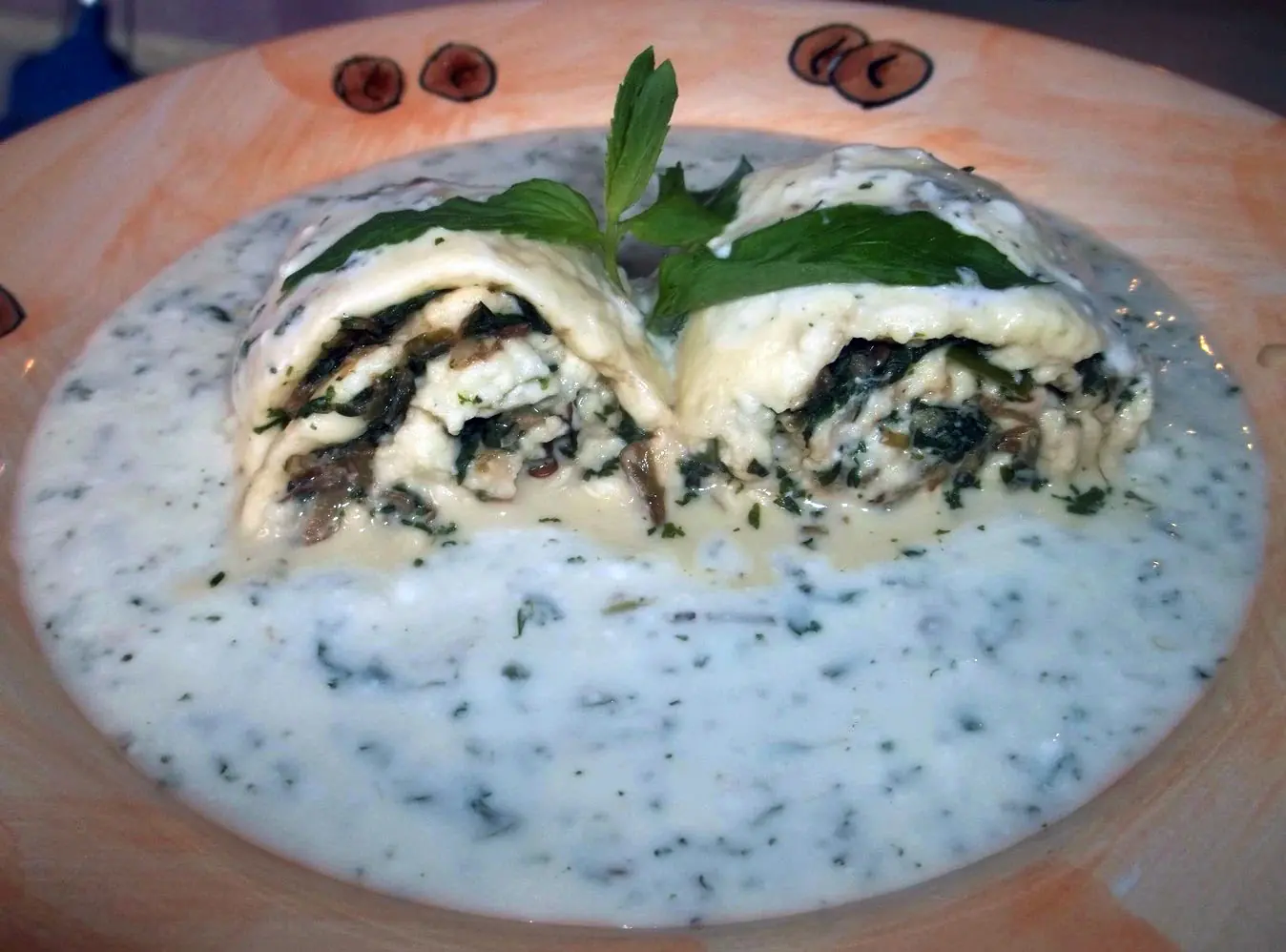
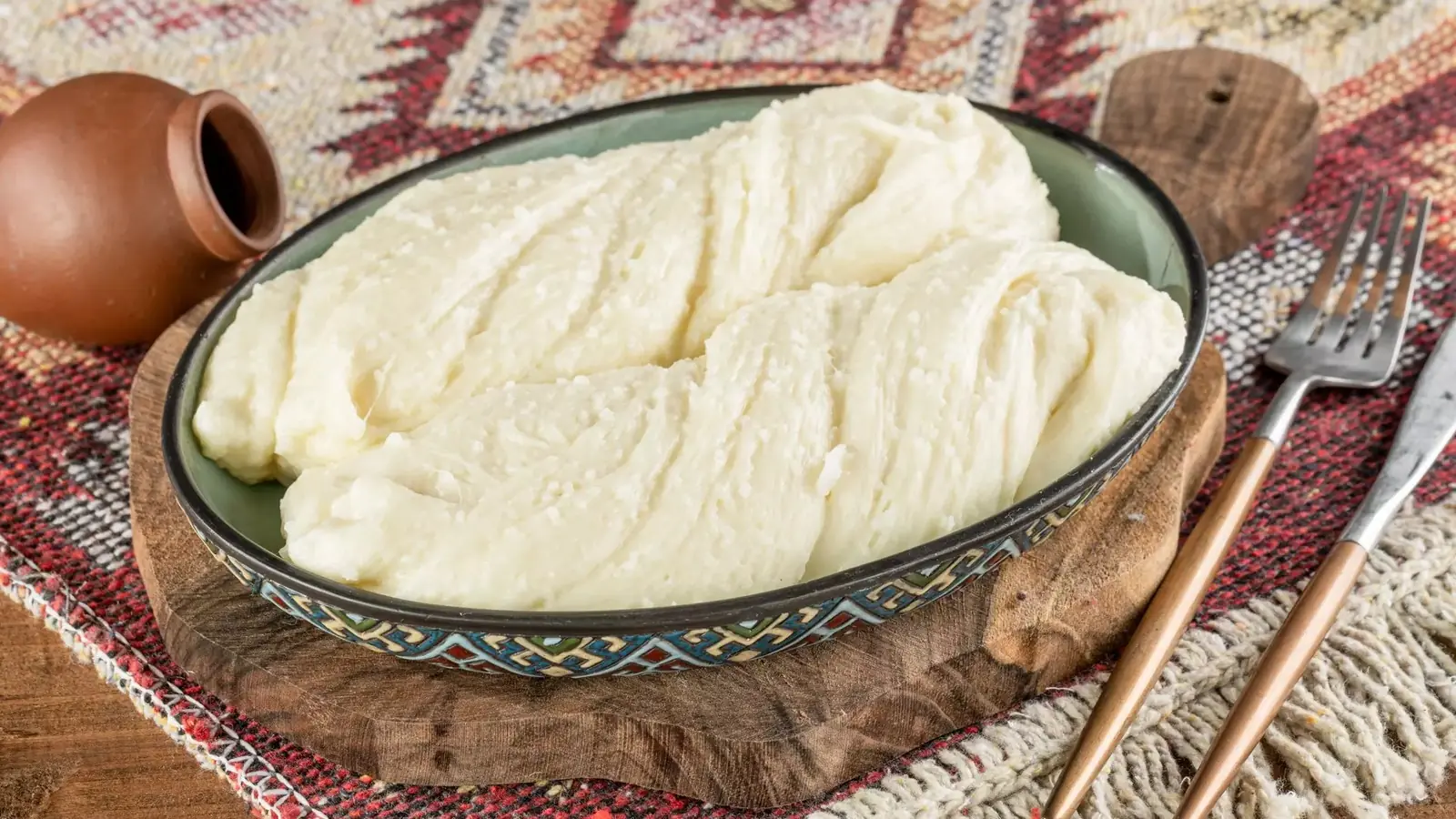
This gebzhalia recipe makes one of the favourite starters of Samegrelo in western Georgia. Young cheese is softened in hot milk until it stretches, pressed into a thin sheet, spread with soft nadughi cheese and pounded mint, then rolled up and sliced. The pieces sit in a cool sauce of matsoni, the Georgian set yoghurt, sharpened with garlic, mint and a little green chilli. Picture soft Georgian cheese rolls in a herby yoghurt dressing and you are close. Some menus spell the name gebjalia.
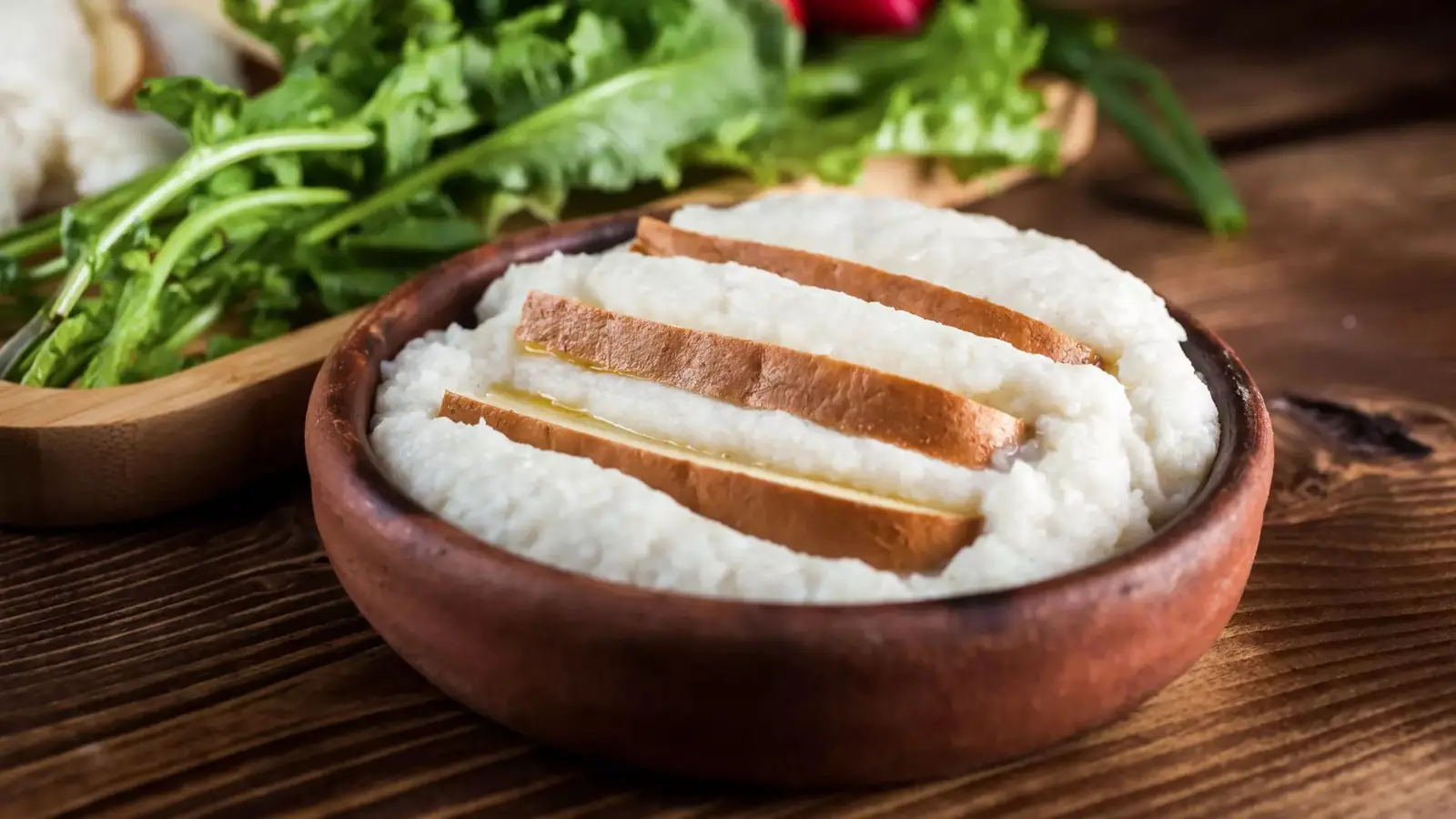
Megrelians serve it chilled or at room temperature, as a starter or as part of a supra spread, very often next to a pot of hot ghomi, the plain cornmeal porridge of the region. The details change from village to village: some cooks melt the cheese in water rather than milk, some leave out the nadughi, and the sauce may be matsoni, milk, cottage cheese or sour cream. A story told in Samegrelo links the name to bzha, the Megrelian word for sun, and says the dish was once shaped round like it. It is a charming idea, but nobody can prove it.
Knowing how to make gebzhalia comes down to the cheese, which must be fresh enough to stretch, and to the few minutes when it is hot and soft and has to be shaped quickly. Outside Georgia, young suluguni from an Eastern European shop or fresh mozzarella does the job, with ricotta in place of nadughi and plain whole-milk yoghurt for the matsoni. Our Georgian food guide has more on Megrelian cooking and where to taste it.
Timeline: what to do, and when
1 h 24 min from start to table · 47 min hands-on · 40 min waiting
Each bar is one step. Hands-on Waiting, while the oven, the pot or the dough does the work. Steps that sit inside a wait are done in parallel.
Recipe
Gebzhalia
Ingredients
Mint paste
Filling
Cheese sheet
Matsoni sauce
Amounts are scaled. Times stay about the same, but a bigger pot takes a little longer to come to the boil.
Contains: milk.
You will need
- Mortar and pestle (a mini chopper will do)
- Wide heavy pan, 24 to 28 cm across
- Wooden spoon and slotted spoon
- Large wooden board or tray
- Baking paper and a rolling pin (optional)
- Cling film
- Shallow serving dish or 4 deep plates
Method
- Pound the mint paste10 min hands-on· start here
Pull the mint leaves off their stalks, setting aside a few small sprigs for the end, and chop them roughly. In a mortar, crush the garlic and the chilli, if using, with 1 tsp coarse salt, then add the mint a handful at a time and pound to a dark green, juicy paste. A small food processor also works: pulse until fine, but stop before it turns smooth.
- Mix the filling and the sauce base5 min hands-on· starts at +10 min
Stir about two-thirds of the mint paste into the nadughi or ricotta until it is evenly green. Beat the rest of the paste into the matsoni in a bowl, cover and keep it in the fridge. Have both ready now, because the cheese must be filled the moment it is shaped.
- Heat the milk and slice the cheese10 min hands-on· starts at +15 min
Pour the milk into the wide pan and warm it over medium heat. Meanwhile cut the cheese into slices about 5 mm thick, wet the board with cold water and fill a bowl with cold water for your hands. The milk is ready when it steams and tiny bubbles form round the edge, about 75 to 80 °C / 165 to 175 °F. Do not let it boil.
- Melt the cheese5 min hands-on· starts at +25 min
Turn the heat down to low and lay the cheese slices in the milk, spreading them out. After 2 minutes, start folding them gently with the wooden spoon. Within another 2 to 3 minutes they soften, stick together and become one smooth, shiny lump: lift a corner, and if it stretches rather than snaps, it is ready. Take it out straight away, as cheese left longer in the heat turns tough.
- Shape the sheet5 min hands-on· starts at +30 min
Lift the cheese onto the wet board with the slotted spoon, then ladle 150 ml of the milk into a jug and leave it to cool. With wet hands, fold the hot cheese over on itself two or three times, only until smooth. Working fast, push and stretch it with the heels of your hands, or roll it out between two sheets of baking paper, to a sheet roughly 30 cm square and 5 mm thick. Pinch any tears back together.
- Fill and roll4 min hands-on· starts at +35 min
Spread the minty nadughi evenly over the warm sheet, keeping a clear 2 cm margin on the side furthest from you. Roll the cheese up from the near side, firmly and evenly, like a Swiss roll. Press the clear margin onto the roll: warm cheese seals to itself.
- Chill the roll30 min waiting· starts at +39 min
Wrap the roll tightly in cling film and refrigerate it for 30 minutes, until it is firm enough to cut neatly. If you are short of time you can slice it warm, but the pieces will squash a little.
- Finish the sauce3 min hands-on· starts at +55 min, during step 7
When the reserved milk is lukewarm, whisk it into the minty matsoni a little at a time until the sauce pours like single cream; you may not need all of it. Taste and add salt. It should taste lively and well seasoned, as the cheese is mild.
- Slice and dress5 min hands-on· starts at +1 h 9 min
Unwrap the roll and cut it into 8 pieces, each about 3.5 cm thick, with a sharp knife dipped in hot water. Pour most of the sauce into the serving dish or plates, lay the pieces in it and spoon the rest of the sauce over them.
- Rest and serve10 min waiting· starts at +1 h 14 min
Leave the gebzhalia for 10 minutes in the fridge or a cool spot so the cheese takes on the flavour of the sauce. Tuck in the reserved mint sprigs and serve cool, with hot ghomi or mchadi on the side.
About 510 kcal per serving (1 of 4). This is an estimate from standard values for the ingredients, not a lab figure.
Take a piece with plenty of sauce and eat it with a fork, or do as Megrelians do and pair each bite with a spoonful of hot ghomi or a piece of mchadi. The plain, warm corn softens the bite of the garlic and mint.
Tips, swaps and variations
Tips from your host
- Test the cheese before you start: drop one thin slice into hot water for a minute or two. If it softens and stretches, the batch will work. If it goes grainy, leaks fat or refuses to join up, it is too old or too dry, and hotter milk will not rescue it.
- Keep the milk below the boil. In milk that is too hot the cheese tightens, turns rubbery and weeps fat; in milk that is too cool it never melts through. A thermometer takes the guesswork out.
- Handle the hot cheese as little as you can. Two or three folds are enough: heavily kneaded cheese gives dense, squeaky rolls, while lightly worked cheese stays soft and tender.
- Cold water stops the sticking. Wet the board, your hands and the rolling pin before you touch the cheese. Clean rubber kitchen gloves dipped in cold water help if the heat bothers your fingers.
- Use the freshest, most fragrant mint you can find. Dried mint will not give the colour, the juice for the paste or the cool taste.
- Do not pour away the rest of the milk. It is mild and slightly cheesy, and good for pancakes, bread dough or porridge within a day.
Variations and swaps
- Cheese outside Georgia: Russian and other Eastern European grocers often carry suluguni; buy the youngest and mildest, never a smoked one. Mozzarella curd, sold for home cheesemaking, behaves much like the fresh curd Megrelians stretch. Failing that, use 500 g fresh mozzarella balls (fior di latte), drained and patted dry, which the hot milk melts back into a smooth sheet. A block of low-moisture mozzarella also works but is firmer and saltier, so halve the salt in the paste.
- Nadughi and matsoni swaps: ricotta is the nearest thing to nadughi; drain it in a sieve for 15 minutes if it looks wet. Sieved cottage cheese is tangier but fine. For the matsoni, plain whole-milk yoghurt is best. Greek yoghurt is too thick on its own, so thin it with extra milk, and kefir gives a looser, sharper sauce.
- Mint only: plenty of Megrelian cooks leave out the nadughi and spread the salty mint paste straight onto the cheese. The rolls are slimmer, greener and sharper; put half the paste inside and half in the sauce.
- Melted in water: many cooks soften the cheese in water instead of milk, which costs less and tastes cleaner. Heat 1 l water to about 80 °C / 175 °F, melt the cheese as in step 4, and thin the sauce with 100 ml of the cooking water.
- Milk sauce, no matsoni: simmer the milk left in the pan over the lowest heat until reduced by a third, let it cool and stir in the rest of the mint paste. Pour it over the rolls and chill well before serving. A few spoons of matsoni or sour cream make it tangier; cream makes it richer.
- Cottage cheese sauce: blend 200 g nadughi or cottage cheese with about 200 ml of the warm milk and the remaining mint paste until smooth and pourable. A spoonful of sour cream rounds it out.
- Herbs and heat: some families pound 30 g fresh coriander or a few tarragon leaves with the mint, or add a pinch of dried savory (kondari). Others spread green ajika, the herby chilli paste of Samegrelo, inside the roll for a much hotter result.
- Flat round: instead of rolling, press the hot cheese into a round on a plate, spread the minty filling over it, cut it into wedges and pour over the sauce.
Serve it with
Make ahead and storage
Gebzhalia is at its finest within a few hours of making. In a covered dish in the fridge, the pieces keep in their sauce for up to 2 days; the cheese firms and the sauce thins slightly, so stir it and let the dish stand out of the fridge for 20 minutes before serving. To get ahead, make and wrap the roll up to a day early and keep the sauce separately, then slice and dress it shortly before the meal. It does not freeze: the cheese turns crumbly and the sauce separates.



Maspindzeli Travel, Tbilisi · private tours and cooking classes in Georgia · maspindzeli.ge · WhatsApp +995 598 74 74 54 · hello@maspindzeli.ge