Elarji Recipe
ელარჯი
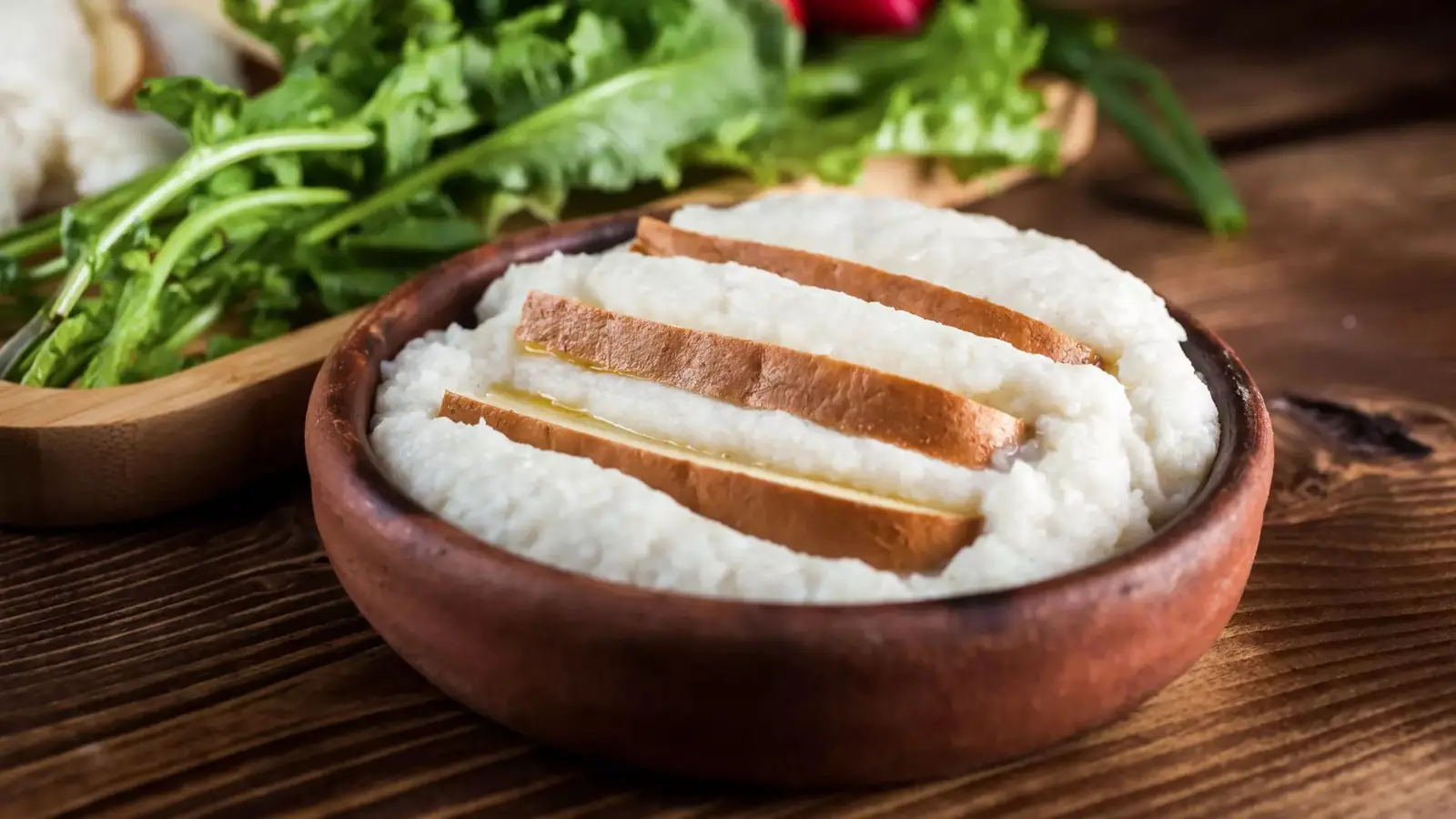
This elarji recipe makes the stretchy corn and cheese dish of Samegrelo in western Georgia: white grits simmered soft, firmed with fine cornmeal, then beaten with young sulguni until a spoonful pulls into long, glossy ribbons. Vegetarian, gluten-free and best eaten the minute it is ready.
Recipe by the Maspindzeli team in Tbilisi · Updated 12 Nov 2026 · From Samegrelo, western Georgia
Full recipe with the timeline, timers and US measures: maspindzeli.ge/recipes/elarji/
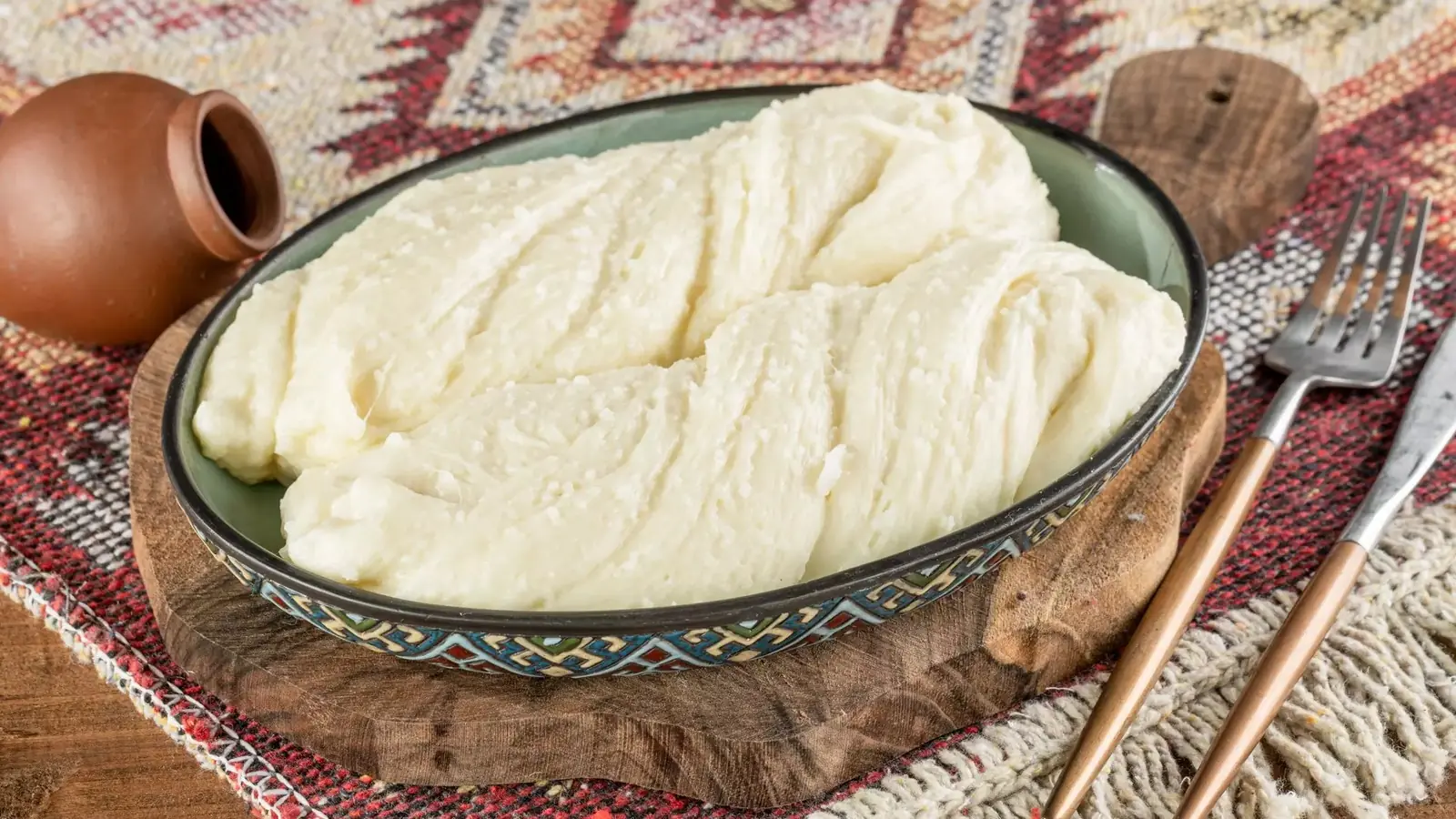
This elarji recipe brings the pride of Megrelian cooking into your own kitchen. Elarji is a thick porridge of white maize into which a generous weight of fresh sulguni is beaten until the cheese vanishes and the whole mass turns smooth and elastic. Lift it on a spoon and it stretches in long ribbons. You may also see it written elardzhi or elarje, and English menus sometimes call it Georgian cornmeal with cheese.
It starts life as ghomi, the plain corn porridge Megrelians eat with stews and walnut sauces, and becomes elarji once the cheese goes in. In the Megrelian language the name means something kneaded or mixed, which is a fair description of the work. In Samegrelo it is cooked for guests and feast days rather than as an everyday side.
Success depends on two things: corn grits rinsed until no dark specks remain, and cheese young enough to melt into strings. Outside Georgia, white grits or coarse polenta and a block of low-moisture mozzarella with a little feta do the job, and the variations below explain how. Our Georgian food guide covers the rest of Megrelian cooking and where to taste it.
Timeline: what to do, and when
1 h 25 min from start to table · 55 min hands-on
Each bar is one step. Hands-on Waiting, while the oven, the pot or the dough does the work. Steps that sit inside a wait are done in parallel.
Recipe
Elarji
Ingredients
Corn porridge
Cheese
Amounts are scaled. Times stay about the same, but a bigger pot takes a little longer to come to the boil.
Contains: milk.
You will need
- Large bowl and a fine sieve for rinsing the grits
- Heavy pot of about 3 litres with a lid, ideally cast iron
- Flat-ended wooden spoon or paddle (the Georgian chogani)
- Jug of cold water for dipping the spoon
- Warm plates or a wide platter
Method
- Rinse the grits10 min hands-on· start here
Tip the grits into the bowl, cover with plenty of cold water and swirl with your hand. Give them a few seconds to sink, then tip away the milky water together with the dark husks and specks that rise. Repeat five or six times, until the water stays almost clear, and drain in the sieve.
- Bring to the boil7 min hands-on· starts at +10 min
Put the rinsed grits in the pot with 1 litre of cold water and 1/2 tsp salt. Set it over medium-high heat and stir without stopping until it boils, so the grains cannot settle and stick to the base.
- Simmer until soft40 min waiting· starts at +17 min
Turn the heat down to low, cover with the lid a little ajar and let it bubble gently for 35 to 45 minutes, scraping the base with the wooden spoon every 5 minutes. It is done when a grain crushes between your fingers with no gritty core and the porridge is thick enough to hold a trail. If the pot runs dry while the grains are still hard, add boiling water, 100 ml at a time.
- Get the cheese ready10 min hands-on· starts at +35 min, during step 3
Slice the sulguni thinly or pull it into strips about 1 cm wide and leave it at room temperature, so it melts fast and evenly. Drop one strip into a little simmering water and press it with a spoon: it should soften and pull into threads. Warm the plates in a low oven and fill a jug with cold water for the spoon.
- Beat in the fine cornmeal5 min hands-on· starts at +57 min
Scatter the fine cornmeal over the porridge a spoonful at a time, beating hard after each addition so no dry pockets form. The porridge thickens almost at once and gets harder to move.
- Cook the ghomi base15 min hands-on· starts at +1 h 2 min
Keep the heat at its lowest and cook for 15 minutes, beating the porridge and pushing it against the side of the pot every 2 to 3 minutes. It is ready when it no longer tastes of raw flour and turns in the pot as one heavy, smooth mass, leaving a thin dry film on the sides.
- Work in the cheese5 min hands-on· starts at +1 h 17 min
Add the cheese in three or four handfuls, beating and folding after each and lifting the spoon high so the mass pulls upwards. Keep the flame as low as it goes. In 3 to 5 minutes the cheese disappears and the porridge turns shiny and elastic; taste now and add salt if the cheese was mild.
- Test the stretch and serve3 min hands-on· starts at +1 h 22 min
Leave the pot on the lowest heat for a minute, then lift a spoonful: it should rise in a thick, glossy rope at least 30 cm long before it breaks. Dip the spoon in cold water, scoop the elarji onto the warm plates and serve at once, while it still pulls.
About 380 kcal per serving (1 of 6). This is an estimate from standard values for the ingredients, not a lab figure.
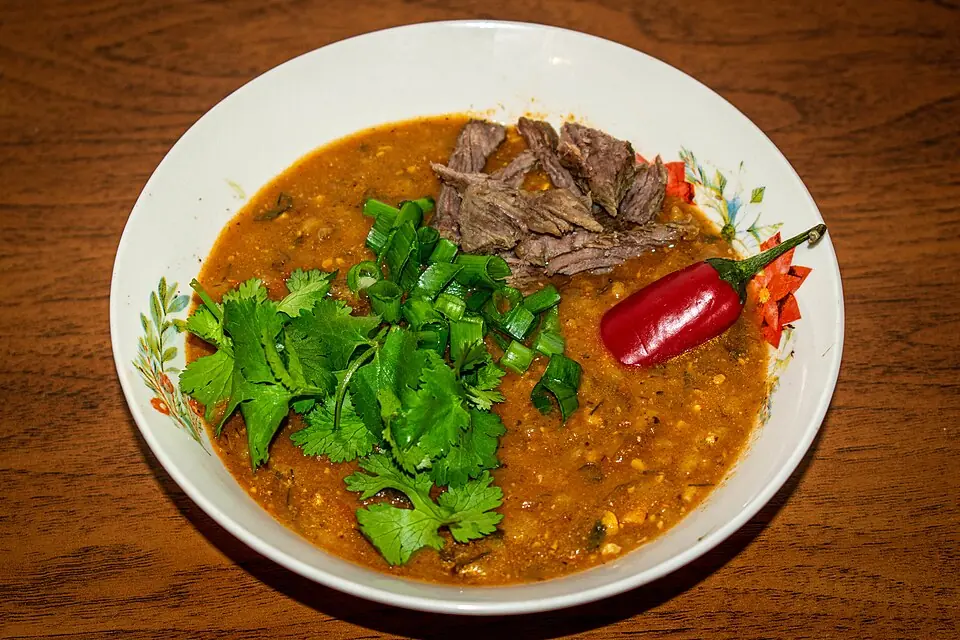
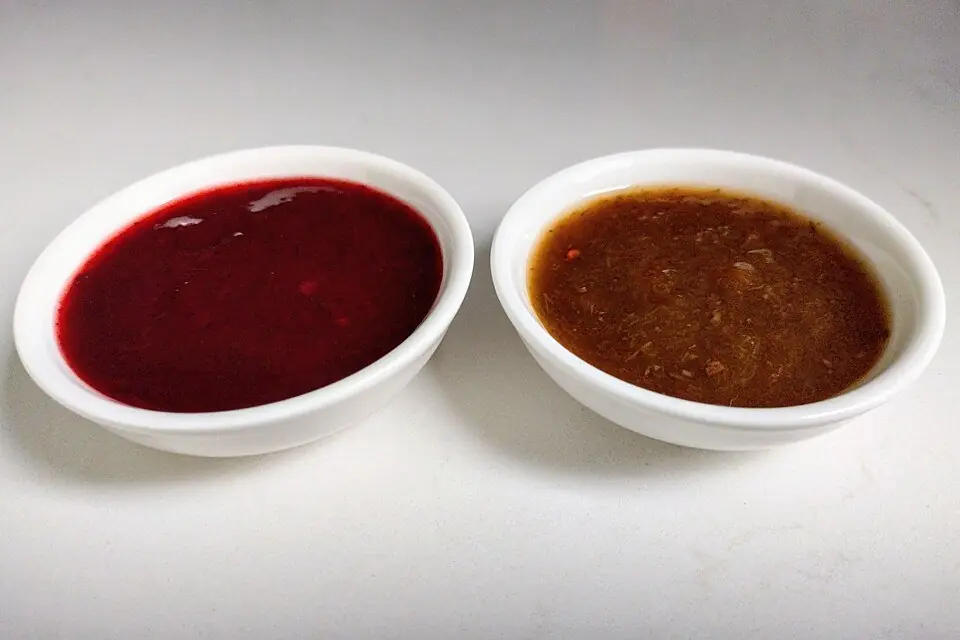
Elarji goes to the table hot, either in a mound on each plate or spread on one wide platter for everyone to share. Eat it with a fork, twisting the strands round it as you lift, and take a little kharcho, bazhe or ajika with each mouthful. Do not let it wait, because the pull fades within minutes of leaving the heat.
Tips, swaps and variations
Tips from your host
- Choose the heaviest pot you own. A thin pan scorches the porridge on the base long before the grains are soft, which is why Megrelian kitchens use cast iron.
- Cooking time depends on the grind. Supermarket grits and coarse polenta can be tender in 20 to 30 minutes while Georgian grits may need close to an hour, so bite a grain rather than watch the clock.
- Use the freshest cheese you can get. Young, milky sulguni gives the longest pull; cheese that is old, dry or ready-grated turns grainy and leaks fat instead of stretching. The water test in step 4 tells you before you commit the whole batch.
- Once the cheese is in, a low flame and steady beating matter more than speed. Fierce heat tightens the cheese into rubbery lumps.
- Wet the spoon in cold water before every scoop. Elarji slides cleanly off a wet spoon and clings stubbornly to a dry one.
- Fill the empty pot with cold water straight away and leave it to soak. Corn porridge that dries on the base sets almost like cement.
Variations and swaps
- Cheese outside Georgia: shops selling Eastern European food often stock suluguni. Pick the youngest one and, if it tastes very salty, soak the slices in cold water for an hour and pat them dry. Otherwise buy low-moisture mozzarella in a block, not ready-grated, and use 350 g of it with 50 g crumbled feta for salt and tang. Fresh mozzarella in water is too wet on its own: drain and dry it and keep it to half the cheese at most.
- Cornmeal outside Georgia: white grits are the closest match to Georgian ghergili, and coarse polenta works well too. Yellow cornmeal makes a golden, slightly sweeter elarji that stretches just as well. With quick-cook polenta, cook it with the water the packet gives, then carry on from step 5.
- No fine cornmeal: grind 50 g of the grits to a powder in a spice grinder, or leave it out and simmer the porridge 10 minutes longer so it is stiff enough to hold the cheese.
- Plain ghomi: stop after step 6 and serve the corn porridge without cheese, with slices of sulguni on the side. This is the everyday version Megrelian families eat with kharcho, beans or fried fish.
- Smoky elarji: swap about a third of the sulguni for a smoked one, which outside Georgia can be scamorza or smoked mozzarella. Modern Georgian kitchens sometimes blend the two.
- Fried elarji balls, a modern restaurant idea that suits leftovers: spread cooled elarji in a dish, chill until firm, roll into 30 g balls and coat in flour, beaten egg and panko. Deep-fry at 180 °C / 355 °F for 5 to 7 minutes and serve with bazhe. These contain gluten and egg.
- With nadughi: some Megrelian cooks spoon seasoned nadughi, a soft whey cheese usually mixed with mint, over each plate. Ricotta stirred with chopped mint and a pinch of salt is a fair stand-in.
Serve it with
- Megrelian kharcho, beef or chicken in a hot walnut sauce
- Bazhe, the Georgian walnut sauce
- Red Megrelian ajika, a little at a time
- Fried or roast chicken, or fried fish
- Nadughi with mint, on top or on the side
- Fresh herbs, pickles and a glass of Ojaleshi, the red wine of Samegrelo
Make ahead and storage
Elarji is at its best the moment it leaves the pot: as it cools the cheese sets and the stretch goes. Covered and chilled, leftovers keep for 2 days and firm into a solid slab. Cut it into slices about 1.5 cm thick and fry them in a little butter or oil over medium heat for about 3 minutes on each side, until crisp outside and soft within, or shape the balls described in the variations. Warming it slowly with a spoonful of water and plenty of beating brings back some softness, but never the full pull. It does not freeze well.



Maspindzeli Travel, Tbilisi · private tours and cooking classes in Georgia · maspindzeli.ge · WhatsApp +995 598 74 74 54 · hello@maspindzeli.ge