Megruli Khachapuri Recipe
მეგრული ხაჭაპური
A home-style megruli khachapuri recipe from Samegrelo: a milk and yeast dough wrapped round Imeretian cheese and sulguni, spread with more sulguni beaten with egg yolk and baked hot until the top bubbles and browns. Two large rounds, each enough for three.
Recipe by the Maspindzeli team in Tbilisi · Updated 27 Oct 2026 · From Samegrelo, around Zugdidi and Martvili
Full recipe with the timeline, timers and US measures: maspindzeli.ge/recipes/megruli-khachapuri/
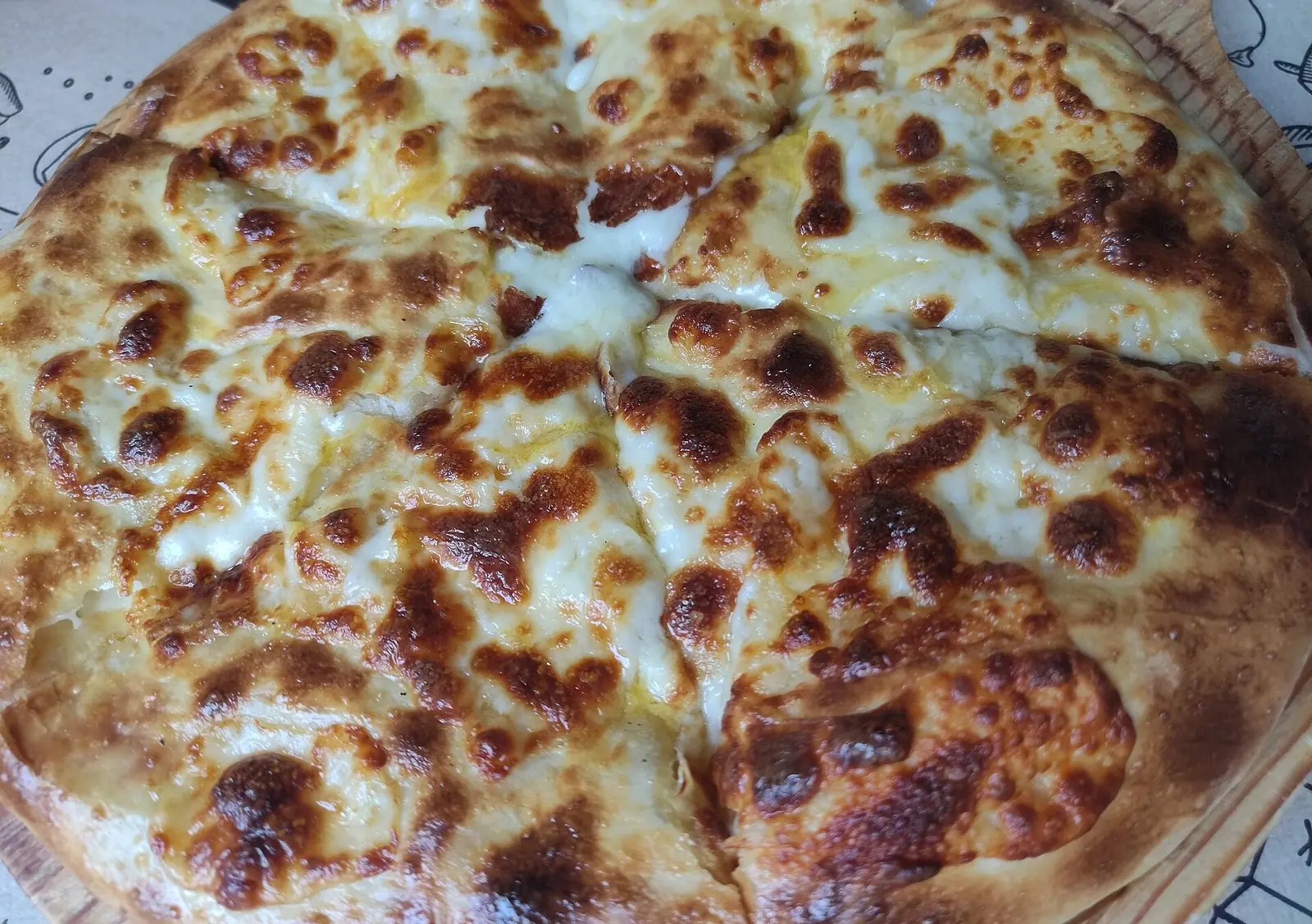
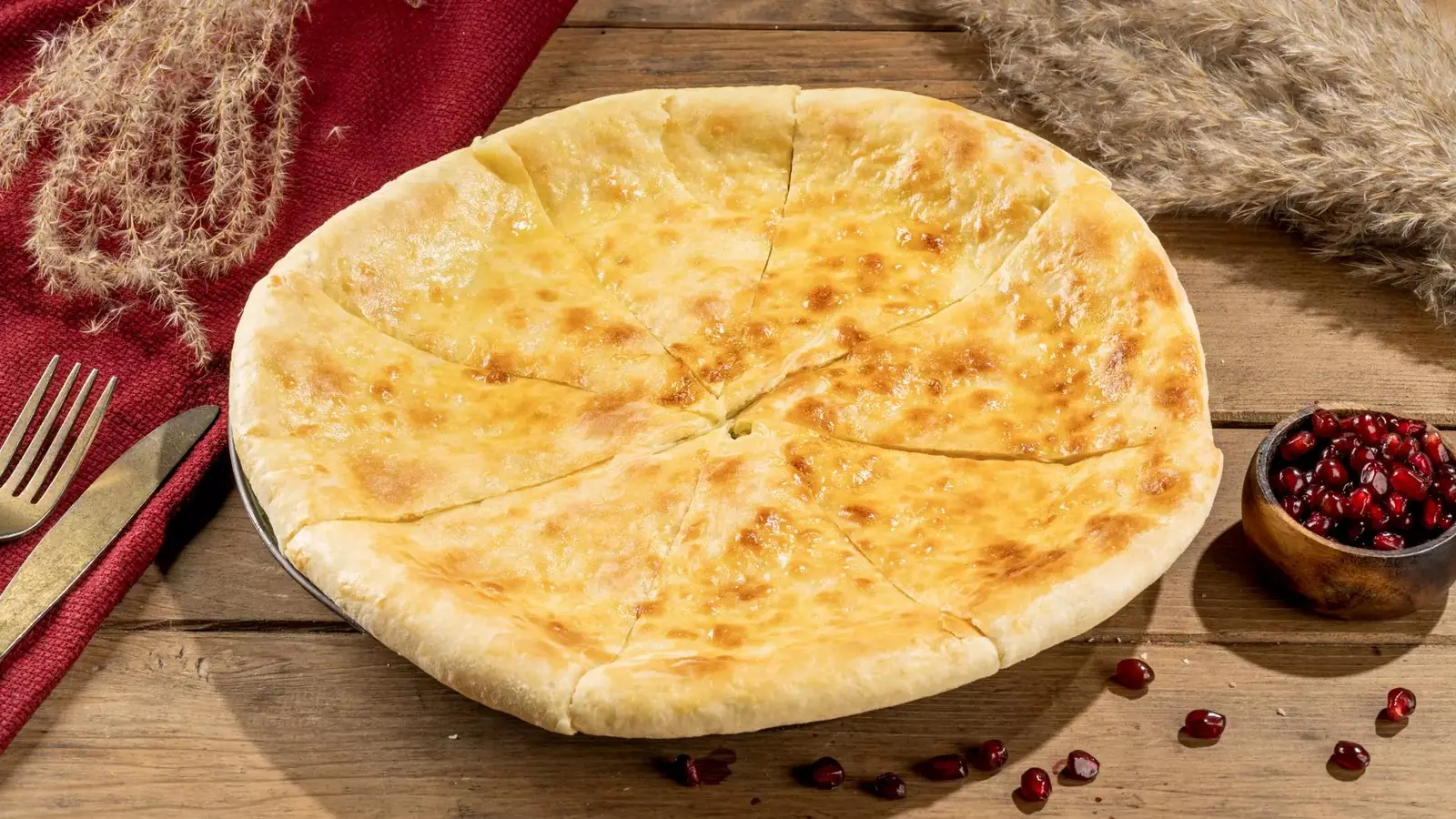
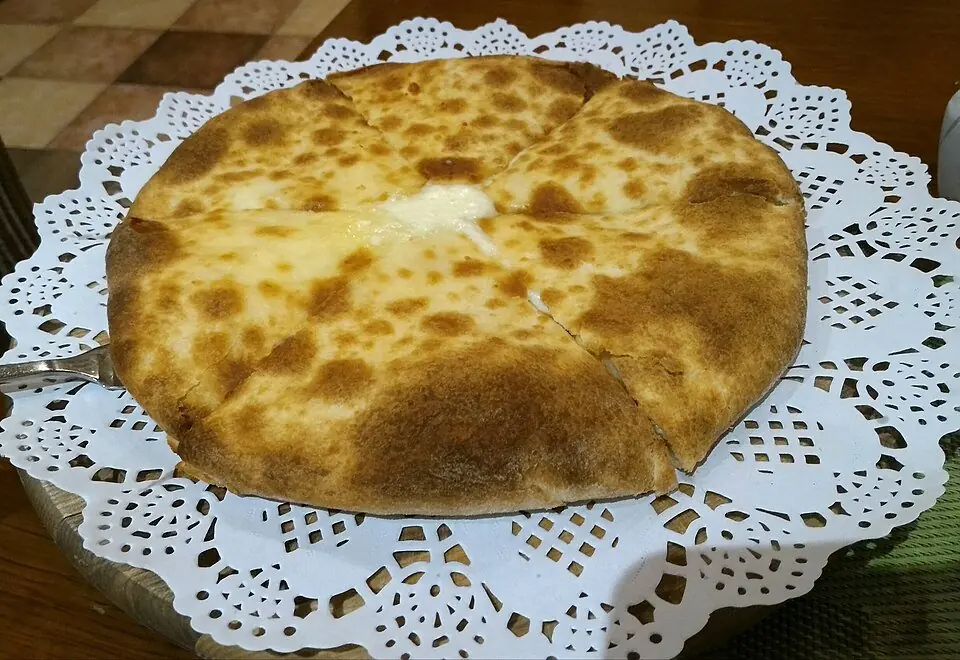
This megruli khachapuri recipe gives you the cheese bread of Samegrelo, in western Georgia, at its most generous. It starts like any round khachapuri: a soft dough of warm milk and yeast is folded over a thick filling of Imeretian cheese and sulguni, pinched shut and pressed flat. Then comes the part that makes it Megruli. A layer of grated sulguni bound with egg yolk is spread over the top, and a hot oven turns it golden and blistered. English menus and cookbooks also call it Megrelian or Mingrelian khachapuri.
Put it next to Imeruli, its plainer neighbour from Imereti, and the differences are easy to list. Megruli has cheese outside as well as inside, the filling is usually larger and stretchier because sulguni goes into it, and the topping is often mixed or brushed with egg, which sets into a crust that cuts cleanly. It also needs an oven, since a pan cannot brown cheese from above. For that reason this recipe uses a risen dough of milk and yeast, as Georgian recipes for Megruli do, instead of the quick matsoni dough in our Imeruli khachapuri recipe: in a hot oven it puffs up around the heavy topping rather than baking flat and dense beneath it.
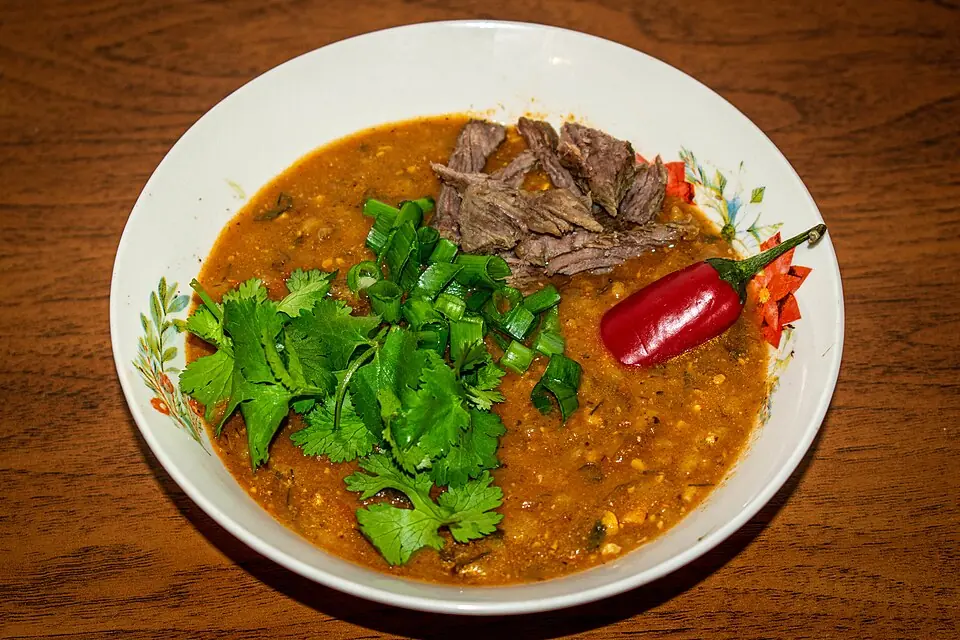
Samegrelo has long been cattle and dairy country, and sulguni, the springy brined cheese now sold all over Georgia, comes from there. Village cooks once set this bread on a big heated clay disc and covered it with a tin lid heaped with embers, so the heat reached it from above as well as below; today it is an oven bread from Zugdidi to Tbilisi. It is rich, so two or three people share one round, often beside Megrelian kharcho and a plate of herbs. Our khachapuri guide describes the other regional kinds and where to taste them.
Timeline: what to do, and when
2 h 7 min from start to table · 58 min hands-on · 1 h 5 min waiting
Each bar is one step. Hands-on Waiting, while the oven, the pot or the dough does the work. Steps that sit inside a wait are done in parallel.
Recipe
Megruli Khachapuri
Ingredients
Milk and yeast dough
Cheese filling
Cheese topping
To finish
Amounts are scaled. Times stay about the same, but a bigger pot takes a little longer to come to the boil.
Contains: gluten (wheat), milk, egg.
You will need
- Large mixing bowl
- Coarse grater
- Baking steel or pizza stone, or a heavy baking tray turned upside down
- Baking paper
- Pizza peel, or a flat tray with no rim, for sliding the bread in
- Rolling pin (optional; your fingers do most of the work)
- Pastry brush
- Large knife or pizza wheel
Method
- Make the dough15 min hands-on· start here
Warm the milk until it feels just warm on the inside of your wrist, about 38 °C / 100 °F, stir in the sugar and yeast and leave it for 5 minutes, until a light foam appears. Stir the salt through the flour in the large bowl, pour in the yeasty milk and the melted butter and mix until no dry flour is left. Turn it out and work it with the heel of your hand for 8 to 10 minutes. You want it silky and only just tacky, and noticeably looser than ordinary bread dough.
- Let it rise50 min waiting· starts at +15 min
Put the dough back in the bowl, greased with a little butter or oil, cover it and leave it somewhere warm until doubled, 45 minutes to an hour. A cool kitchen needs longer; it is ready when a floured finger leaves a dent that fills back only slowly.
- Prepare the filling15 min hands-on· starts at +20 min, during step 2
Taste both cheeses and deal with any excess salt first (see the tips). Crumble the Imeretian cheese finely between your fingers and coarsely grate all the sulguni, keeping the 300 g for the topping in a separate bowl. Mix the crumbled cheese and the other 200 g of sulguni with the whole egg and the soft butter, then squeeze the mixture into 2 compact balls of about 330 g each.
- Heat the oven40 min waiting· starts at +40 min, during step 2
Put the baking steel, stone or upturned tray low down in the oven, one shelf above the bottom, and turn the dial to 220 °C / 430 °F (200 °C / 390 °F fan). Give it at least 40 minutes: the bread cooks on the heat stored underneath it, and a half-heated stone leaves the base pale and doughy.
- Divide the dough3 min hands-on· starts at +1 h 5 min
Turn the risen dough out onto a lightly floured board, press out the largest air pockets and cut it in half, about 420 g each. Tuck the edges of each piece underneath until you have two smooth balls.
- Rest the dough balls10 min waiting· starts at +1 h 8 min
Cover the balls with the upturned bowl or a cloth for 10 minutes. The dough relaxes, so it will stretch over the cheese later without springing back.
- Mix the topping5 min hands-on· starts at +1 h 10 min, during step 6
Beat the egg yolks with the milk. Set about a tablespoon aside for the rims, then stir the 300 g of grated sulguni into the rest until it clumps into a sticky, evenly yellow mass.
- Shape and top the first khachapuri8 min hands-on· starts at +1 h 18 min
On a sheet of floured baking paper, press one dough ball with your fingertips into a 20 cm round with a slightly thicker middle, set a cheese ball in the centre, gather the dough over it in pleats and pinch them firmly together on top. Turn the parcel seam side down and push it outwards from the centre into a round about 26 cm across and 1 cm thick, leaving the rim a little raised. Make a small steam hole in the centre with your fingertip. Brush the rim with the reserved yolk and spread half the topping over the rest, stopping 2 cm short of the edge.
- Bake the first khachapuri16 min waiting· starts at +1 h 26 min
Slide it, paper and all, onto the hot steel or tray and bake for 14 to 18 minutes. It is ready when the rim is golden, the topping bubbles with deep brown patches and the underside, when you lift an edge with a spatula, is browned all over. If the top colours long before the base, lay a sheet of foil loosely over it.
- Shape the second one8 min hands-on· starts at +1 h 28 min, during step 9
Meanwhile fill, shape and top the second dough ball on a fresh sheet of baking paper in the same way.
- Butter the first, bake the second2 min hands-on· starts at +1 h 42 min
Lift the first khachapuri onto a board and rub half the butter over the hot rim and topping. Slide the second one into the oven.
- Bake the second khachapuri16 min waiting· starts at +1 h 44 min
Bake it like the first, 14 to 18 minutes, until browned above and below. Cut the first round and start eating, or keep it warm under a folded tea towel.
- Butter and rest5 min waiting· starts at +2 h
Take the second khachapuri out, rub the remaining butter over it and leave it for 5 minutes. The filling stays molten for a while, and a short rest keeps it from flooding the board when you cut.
- Cut and serve2 min hands-on· starts at +2 h 5 min
Cut each round into 8 wedges with a large knife or a pizza wheel and bring them to the table while the cheese still pulls into strings.
About 900 kcal per serving (1 of 6: a third of a khachapuri, 2 to 3 wedges). This is an estimate from standard values for the ingredients, not a lab figure.
Eat it with your hands, wedge by wedge, holding the crust and biting from the point; while it is hot the topping pulls into long strings. At a supra the rounds arrive after the cold starters, already cut, and each is passed around for two or three people. Keep napkins close, because a hot Megruli is buttery.
Tips, swaps and variations
Tips from your host
- Heat the stone, steel or tray for the full 40 minutes. A cheese-topped bread has to cook from below, and the usual home failure is a top that looks right over a pale, damp base. With only a thin baking sheet, bake on the lowest shelf.
- Taste the cheeses before anything else. Sulguni is saltier than Imeretian cheese and here it goes both inside and on top, so the bread can turn salty quickly. If a sliver sends you reaching for water, cut the cheese into thick slices and leave them in a bowl of cold water for an hour or two, changing the water once, then pat them dry.
- A wet filling gives a soggy middle. Very fresh Imeretian cheese can hold a lot of whey, so wrap it in a clean cloth and wring it before crumbling, and drain off any brine clinging to the sulguni.
- Spread the topping, do not scatter it. Bound with yolk, the sulguni melts into one golden sheet with brown blisters, while loose grated cheese slides about and turns greasy. Keeping it 2 cm back from the edge stops it dripping onto the stone and scorching.
- Never skip the steam hole. Without it the dough balloons in the hot oven, the topping cracks and slips, and cheese can burst through a weak seam.
- Shape each round directly on its baking paper. A filled 26 cm disc of soft dough is too floppy to lift by hand, but on paper it slides onto the hot stone in one movement.
Variations and swaps
- Cheese outside Georgia: for the filling, use 250 g feta and 350 g low-moisture mozzarella from a block in place of the Imeretian cheese and sulguni; for the topping, 250 g low-moisture mozzarella with 50 g finely crumbled feta. Mozzarella brings the melt, stretch and browning of sulguni but little salt or tang, and the feta supplies those. Do not put more feta on top: it dries and scorches instead of bubbling. Fresh mozzarella balls are too watery; if they are all you can get, tear them up, squeeze them hard in a cloth and leave them on kitchen paper for an hour. Russian, Ukrainian and other Eastern European grocers often stock real sulguni under the name suluguni, and brynza or farmer's cheese can replace the Imeretian cheese once you have checked its salt.
- No egg on top: some Georgian cooks simply scatter grated sulguni over the round, or lay thin slices of it there as the old village recipe did, and brush only the rim with yolk. The top stays paler, softer and stringier, and it turns greasy sooner as it cools.
- Matsoni dough instead of yeast: the quick matsoni and baking soda dough from our Imeruli khachapuri recipe needs no rise, so dinner is ready in about an hour and a half. One batch makes two slightly thinner rounds; fill and top them as here and bake at the same temperature for 16 to 20 minutes. The crumb is denser and more tender, and the base takes a little longer to brown.
- Smaller rounds: divide the dough and the filling into 4 instead of 2 for rounds about 18 cm across, handy for a small oven or for freezing. Bake them two at a time for 10 to 13 minutes.
- Smoky top: replace half the topping cheese with grated smoked sulguni, or with smoked mozzarella or scamorza abroad. The top comes out firmer and amber-coloured, with a gentle smoky taste.
- No oven: Georgian recipes treat Megruli as an oven bread, unlike Imeruli, which is often cooked in a pan. On a hob, cook the filled round without its topping in a heavy covered frying pan over medium-low heat for 6 to 8 minutes, turn it, spread the topping over the browned side and cover again for 7 to 9 minutes, until the base is spotted brown and the cheese has melted. The top will stay pale; in an ovenproof pan, 2 to 3 minutes under a very hot grill browns it.
Serve it with
- Megrelian kharcho, or a bowl of soup kharcho
- Georgian tomato and cucumber salad
- Bunches of coriander, tarragon and spring onions, with a few radishes
- Pickled green tomatoes, cabbage or jonjoli
- A small dish of red ajika for anyone who likes heat
- Chilled white wine, or a red made from Ojaleshi, a grape of Samegrelo
Make ahead and storage
Megruli is at its best within half an hour of baking: as it cools, the sulguni on top firms up and grows chewy, while an Imeruli stays soft. Wrapped, leftovers keep at cool room temperature for the rest of the day, or chilled for 3 days at most. Warm wedges on a tray at 180 °C / 355 °F for 8 to 10 minutes, or under a lid in a dry pan over low heat, and the topping melts again. Baked, cooled and well wrapped, the bread freezes for up to 2 months and can go straight from the freezer into the oven for about a quarter of an hour at 180 °C / 355 °F. To get ahead, knead the dough the evening before and keep it covered in the fridge overnight, then give it an hour at room temperature before dividing; the filling can be mixed a day ahead and chilled.



Maspindzeli Travel, Tbilisi · private tours and cooking classes in Georgia · maspindzeli.ge · WhatsApp +995 598 74 74 54 · hello@maspindzeli.ge