Pelamushi Recipe
ფელამუში
This pelamushi recipe makes the soft Georgian grape pudding of the harvest season: grape juice boiled down a little, stirred with flour and fine cornmeal until it shines, then set in bowls and scattered with toasted walnuts. Vegan, fine for Lent, and often made with no added sugar at all.
Recipe by the Maspindzeli team in Tbilisi · Updated 31 Oct 2026 · Made everywhere at harvest time; maize flour in the west, wheat flour in the east
Full recipe with the timeline, timers and US measures: maspindzeli.ge/recipes/pelamushi/
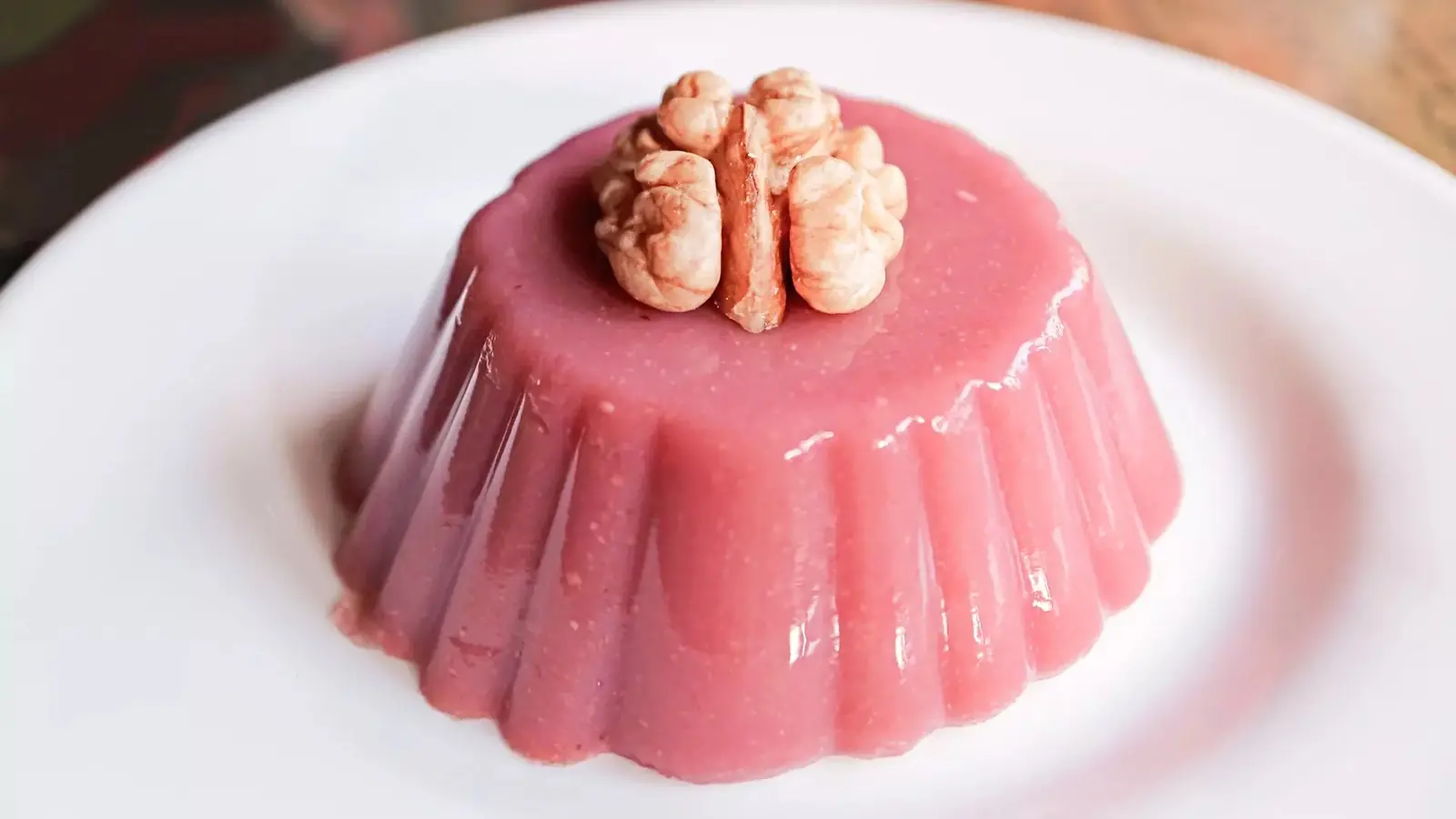
This pelamushi recipe gives you the grape pudding Georgian families make every autumn: grape juice boiled down by about a third, thickened with plain flour and a little fine cornmeal, stirred until glossy, then left to set in bowls and finished with walnuts. The Georgian name is ფელამუში, so you will also see it spelt felamushi. It works well with bottled juice, and the hands-on part takes under an hour.
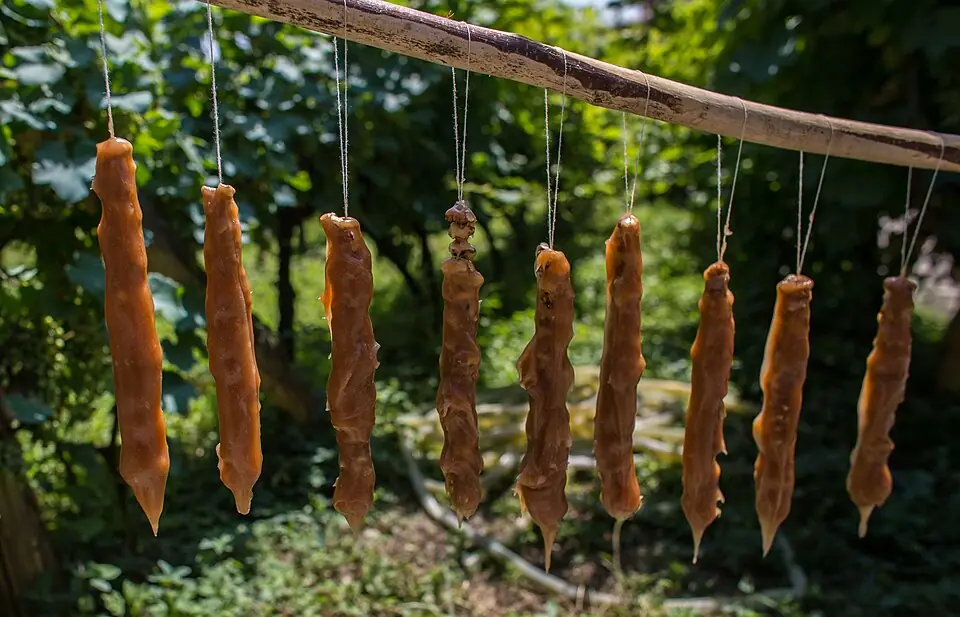
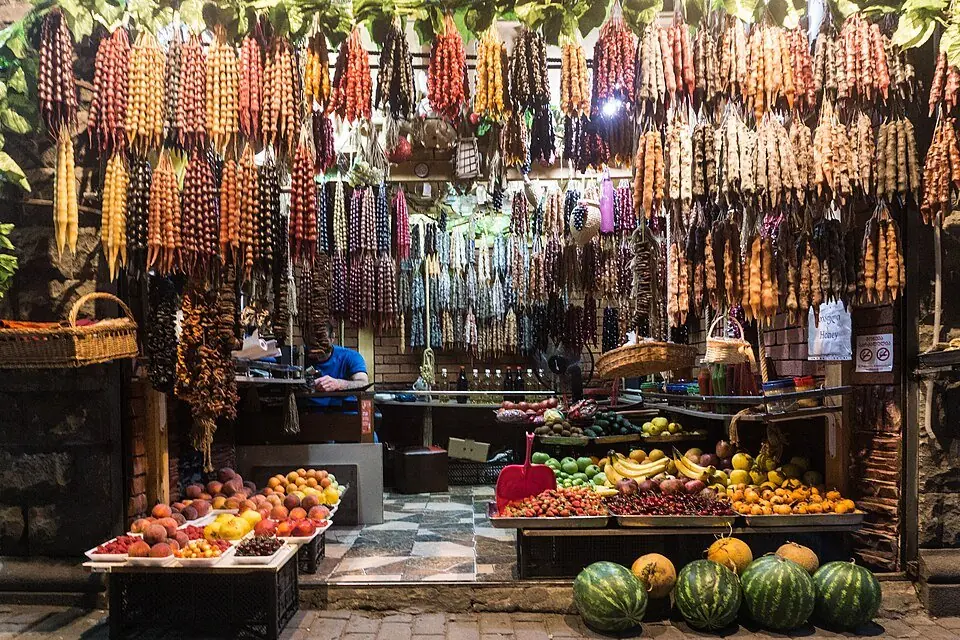
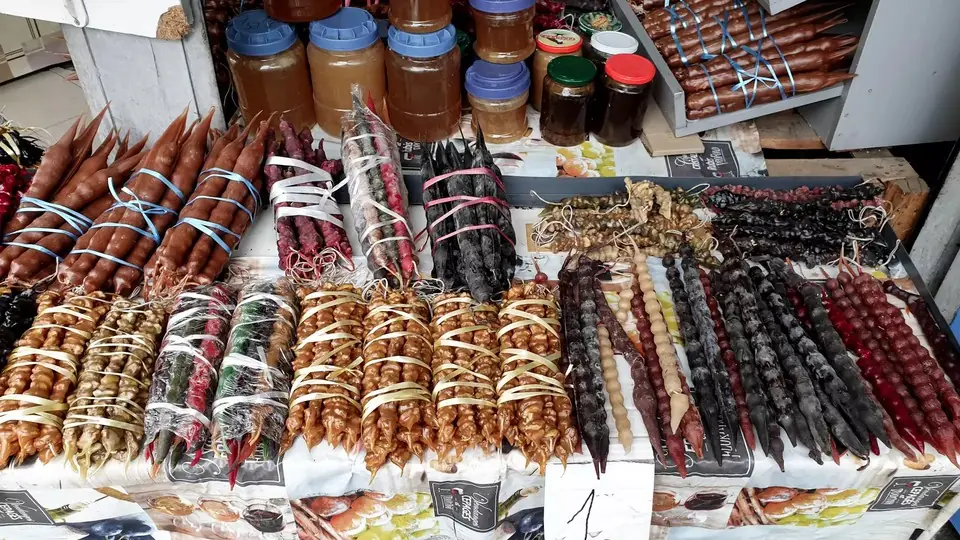
Pelamushi belongs to rtveli, the grape harvest of September and October, and it is cooked in the same big pots as churchkhela; spare dipping mixture often ends up in bowls as pudding. Western Georgia is home to the maize-flour version, while in Kakheti and Kartli the thickener is wheat flour and many cooks call the result tatara. Plenty of home cooks now mix the two flours, as this recipe does.
With no dairy, eggs or animal fat, it is a standby for Orthodox fast days, Lent included, and just as welcome at the harvest table. Serve it cold, turned out smooth side up, with toasted walnuts. How it differs from churchkhela is explained in the FAQ below.
Timeline: what to do, and when
4 h 5 min from start to table · 53 min hands-on · 3 h waiting
Each bar is one step. Hands-on Waiting, while the oven, the pot or the dough does the work. Steps that sit inside a wait are done in parallel.
Recipe
Pelamushi
Ingredients
Pudding
To finish
Amounts are scaled. Times stay about the same, but a bigger pot takes a little longer to come to the boil.
Contains: gluten (wheat), walnuts (tree nuts).
You will need
- Wide, heavy-based pan of at least 3 litres
- Whisk and a flat-ended wooden spoon or heatproof spatula
- Measuring jug, a mixing bowl and a fine sieve
- Small frying pan for the walnuts
- 6 small bowls, ramekins or moulds (150 to 175 ml each), or a single bowl that holds 1 litre
Method
- Set the juice boiling5 min hands-on· start here
Set aside 400 ml of the juice in a jug, cold, for mixing the flour later. Pour the remaining 1.1 litres into the wide pan, dip a wooden skewer in to mark the starting depth and bring it up to a boil on high heat.
- Boil it down25 min waiting· starts at +5 min
Keep it at a lively boil, skimming off the pink foam now and then, until it has dropped to about 600 ml, a little over half the depth on your skewer. Lower the heat towards the end so the edges do not scorch. Taste: it should be sweet like ripe grapes with a little tartness; add the sugar now only if it is still sharp.
- Toast the walnuts8 min hands-on· starts at +7 min, during step 2
Warm the walnuts in a dry frying pan over a medium heat for 4 to 5 minutes, tossing them, until they smell nutty and darken slightly. Tip them onto a board, let them cool and chop them roughly.
- Make the flour paste5 min hands-on· starts at +15 min, during step 2
Put the flour and cornmeal in a bowl and whisk in the cold juice a little at a time until there are no dry lumps left. Pour it through a sieve, pressing any lumps through with a spoon. The cornmeal settles, so whisk again just before you use it.
- Thicken the juice5 min hands-on· starts at +30 min
Turn the heat to medium. Pour the paste slowly into the hot juice, whisking without a break, and carry on until it bubbles again and starts to thicken.
- Cook and stir20 min hands-on· starts at +35 min
Turn the heat to low, switch to the wooden spoon and stir steadily for about 20 minutes, scraping the base and corners. It splutters as it thickens, so keep your hand clear. It is ready when it is glossy, falls from the spoon in thick ribbons, no longer tastes of raw flour or corn, and leaves a thin film on the sides of the pan.
- Fill the bowls5 min hands-on· starts at +55 min
Rinse the bowls or moulds with cold water and shake them out, leaving them damp. Pour in the hot pudding straight away, because it stiffens fast as it cools, then tap each bowl on the worktop to level the top.
- Let it cool1 h waiting· starts at +1 h
Leave the bowls uncovered at room temperature for about an hour, until they are no longer warm to the touch.
- Chill until set2 h waiting· starts at +2 h
Cover the bowls and chill them for at least 2 hours, or overnight. The pudding is ready when it has pulled away slightly from the sides and wobbles as one piece when you tilt the bowl.
- Turn out and serve5 min hands-on· starts at +4 h
Run a thin knife round the edge of each bowl, put a plate on top and flip both over so the pudding drops out smooth side up. Scatter over the walnuts and serve cold, or simply eat it from the bowls.
About 315 kcal per serving (1 of 6, about 150 ml) with walnuts; about 250 without. This is an estimate from standard values for the ingredients, not a lab figure.
Eat it cold with a teaspoon, at the end of a meal or in the afternoon with tea. A large pudding turned out of one bowl is cut into wedges like a cake and shared round the table. Some Georgians like it barely set, still warm and spooned straight from the pan.
Tips, swaps and variations
Tips from your host
- Taste the juice once it has boiled down, before any flour goes in. Ripe Georgian grapes need no sugar, and good bottled juice reduced by a third rarely does either; add it a spoonful at a time only if the juice is tart.
- Never tip flour straight into hot juice. Slaking it in cold juice first, then pouring it in slowly while whisking, is what keeps the pudding smooth.
- Test the set before you fill the bowls: put a teaspoon of pudding on a saucer in the freezer for 2 minutes. If it still runs, cook for 5 minutes more; if it is stiff and rubbery, whisk in a splash of juice or water.
- Grape sugar burns easily. Use a heavy pan, keep the heat low once the flour is in and keep scraping the bottom; a scorched layer spoils the taste of the whole batch.
- Add the walnuts at the table rather than before chilling, so they stay crisp instead of softening in the fridge.
Variations and swaps
- Western Georgian style, gluten-free: thicken it with 150 g fine cornmeal or white maize flour and no wheat flour, and stir for 25 to 30 minutes, until the smell of raw corn has gone. The texture is a little grainier and less glossy. Buy cornmeal labelled gluten-free if you are cooking for someone with coeliac disease.
- Wheat flour only, the eastern way: use 150 g plain flour and no cornmeal. It thickens sooner and is ready after 10 to 15 minutes of stirring. It is the same mixture as the dipping paste in our churchkhela recipe, made with less flour and a lighter reduction so it sets softer.
- From fresh grapes: crush about 2.5 kg of very ripe grapes, squeeze the juice through a sieve or muslin (roughly 1.5 litres) and boil it, skimming off the foam, until it has reduced by a third to a half. Georgian cooks leave this badagi overnight to settle and pour it off the sediment. Fresh must is sweeter and more fragrant than bottled juice, so skip the sugar.
- Quick version: skip the boiling down. Whisk 100 g plain flour or fine cornmeal and 2 tbsp sugar into 1 litre of cold juice, bring it to the boil while stirring and cook gently for 15 minutes. It is lighter in taste and sets more softly.
- Colour: white grape juice (Rkatsiteli in Georgia) gives a golden pudding, while pink grapes, or white and red juice mixed, give a rosy one. Isabella grapes, called adesa in western Georgia, make a dark, sweet-sour pelamushi.
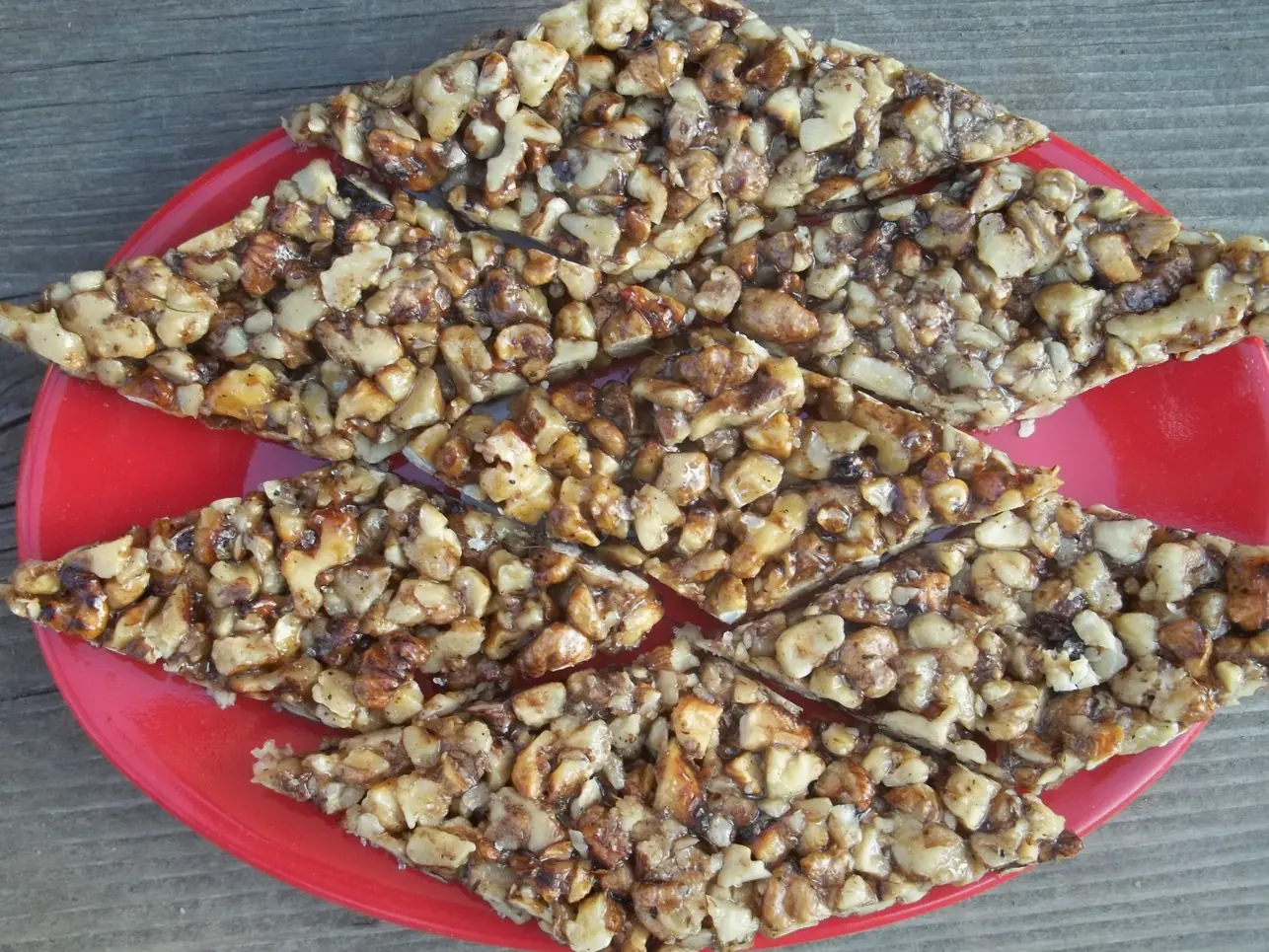
- Toppings: toasted, skinned hazelnuts are popular in western Georgia, and pomegranate seeds add colour. Georgians also serve it with gozinaki; that brings honey, so the dish is then no longer vegan, though still fine for Lent.
- Pelamushi roll: spread the hot pudding 5 mm thick on a lightly oiled tray and chill it. Cover it with chopped toasted walnuts and hazelnuts, and a few chopped dried fruits if you like, roll it up from one long side, chill again and cut it into slices.
Serve it with
- Toasted walnuts or hazelnuts on top
- Black tea or Georgian coffee
- Gozinaki or slices of churchkhela on the same sweet plate
- Fresh grapes or pomegranate seeds in autumn
Make ahead and storage
Once cold, keep the bowls covered in the fridge for up to 4 days, and add the nuts only when you serve. After a day or two tiny pale sugar crystals may appear on the surface; they are natural grape sugar, not mould. Freezing does not work well: the pudding weeps and goes spongy when it thaws. It is a good dessert to make the day before a dinner.



Maspindzeli Travel, Tbilisi · private tours and cooking classes in Georgia · maspindzeli.ge · WhatsApp +995 598 74 74 54 · hello@maspindzeli.ge