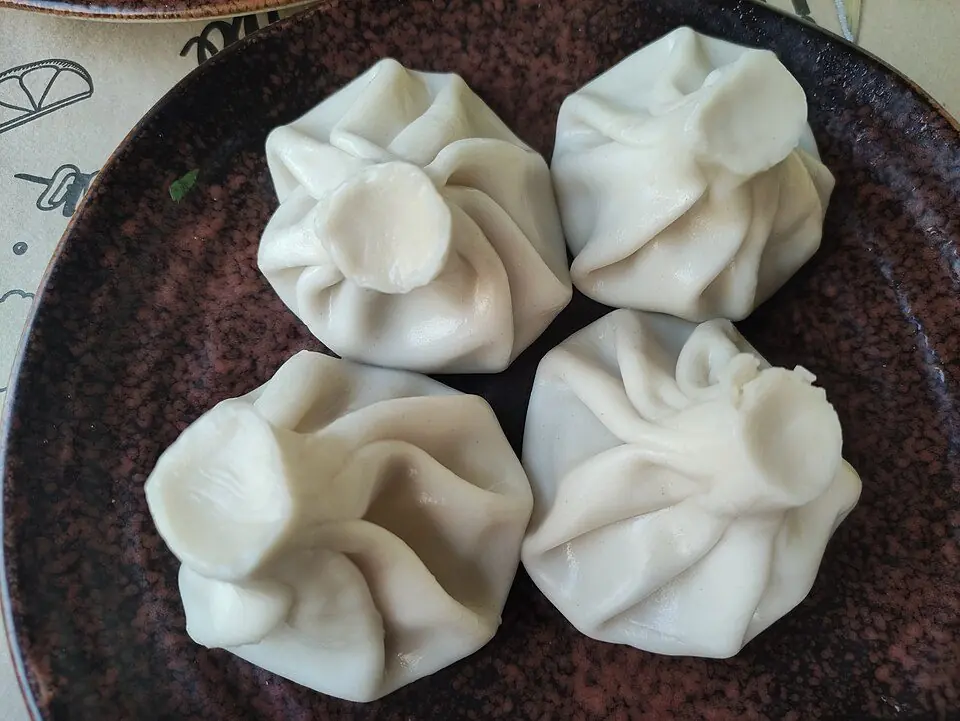
Tashmijabi Recipe
თაშმიჯაბი
This tashmijabi recipe turns potatoes and young sulguni into the hot, elastic mash of the Svan mountains: potatoes cooked in their jackets, mashed smooth, then beaten with butter, warm milk and cheese until the pot pulls into glossy strands. Vegetarian, gluten-free and on the table in about 70 minutes.
Recipe by the Maspindzeli team in Tbilisi · Updated 23 Nov 2026 · From Svaneti, in the mountains of north-west Georgia
Full recipe with the timeline, timers and US measures: maspindzeli.ge/recipes/tashmijabi/
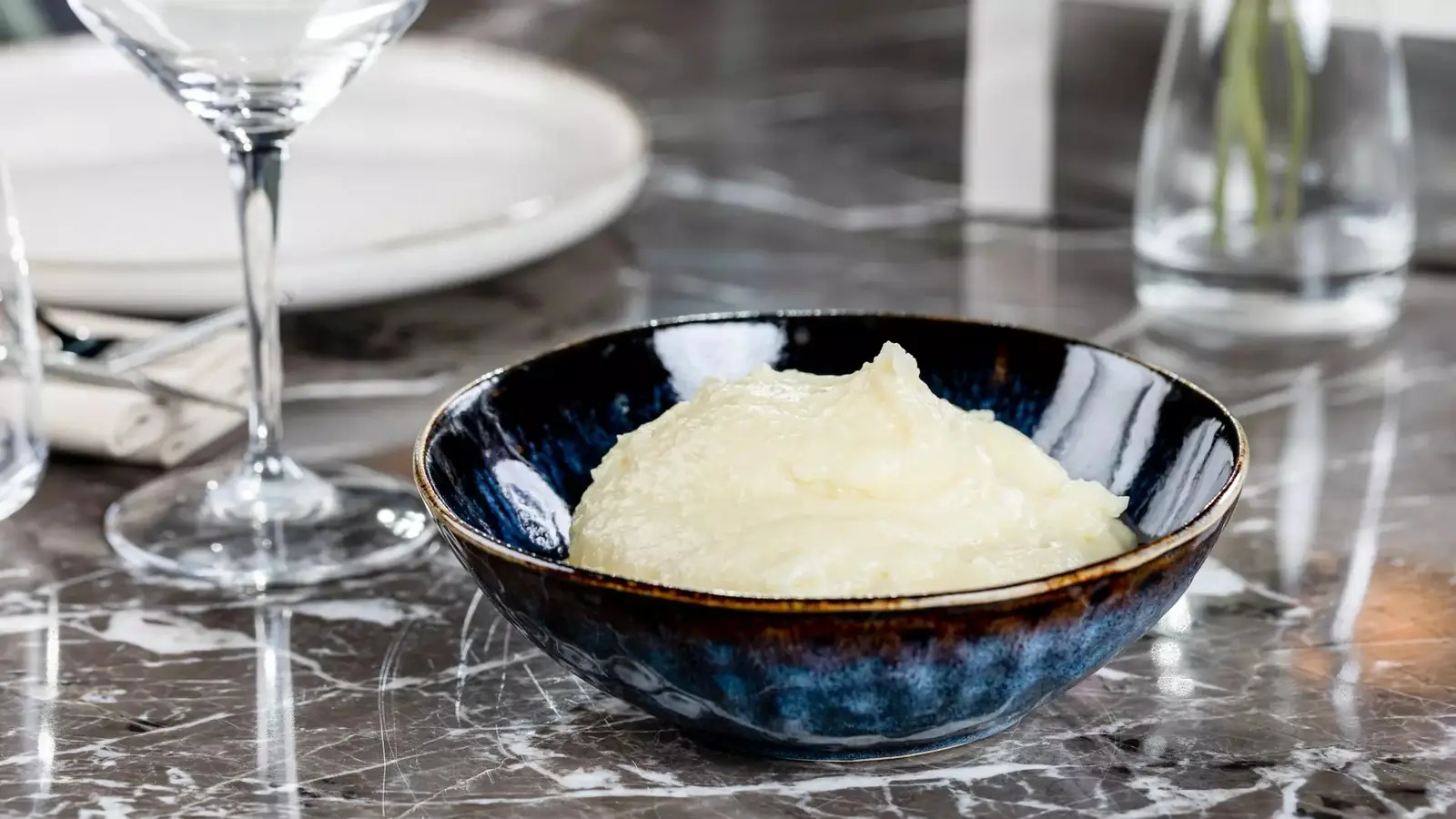
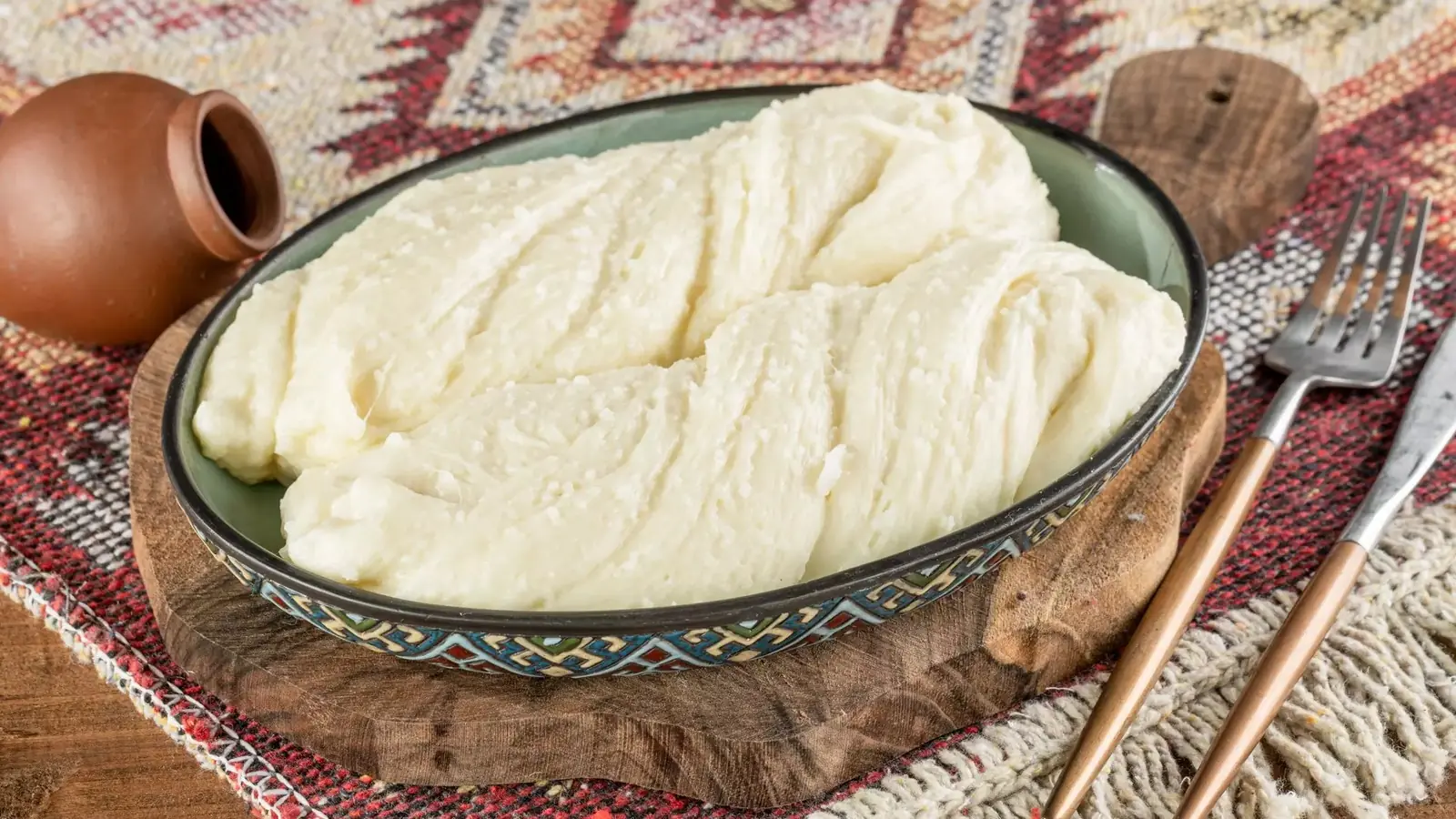
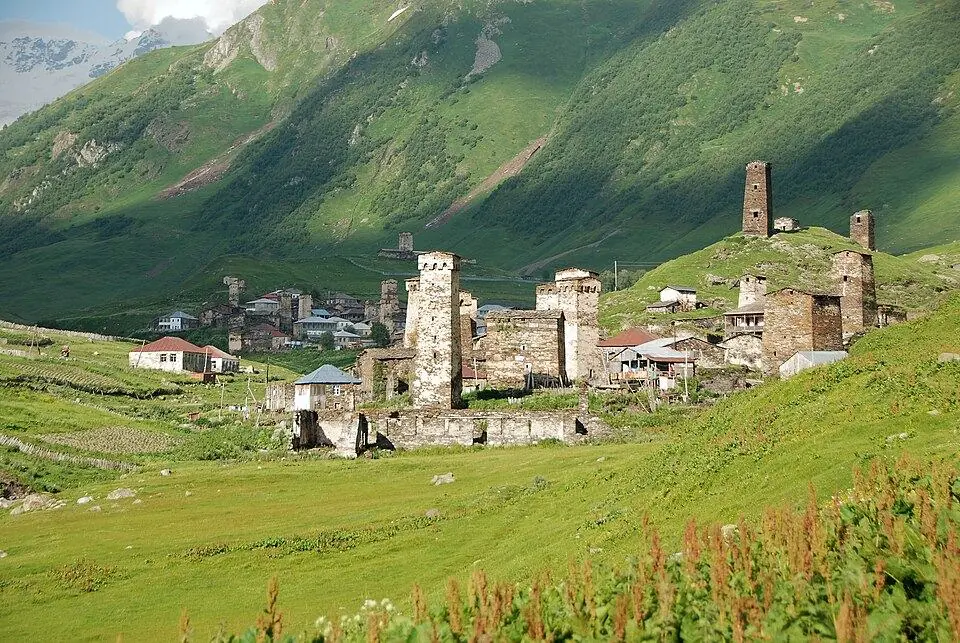
This tashmijabi recipe makes the stretchy potato dish of Svaneti, the high mountain region in Georgia's north-west. Floury potatoes are boiled whole, peeled and mashed while still hot, softened with butter and warm milk, then worked over a gentle flame with fresh sulguni. The cheese vanishes into the potato, and a spoonful lifted from the pot rises in long, shiny ribbons. You may also see it spelt tashmidjabi, and Georgians often call it Svan elarji, after the Megrelian corn and cheese dish it resembles.
Potatoes have been grown in Georgia for only about two hundred years, yet they became a staple in the Svan villages, and Georgia has entered this mash in its national register of intangible heritage. Names change from valley to valley: around Lenjeri the same dish is shusha, in Ushguli mertsvi. For the wider story of Svan cooking and where to eat it in Mestia, read our kubdari guide.
Success rests on dry, floury potatoes and cheese young enough to stretch. Outside Georgia, block mozzarella with a little salty brined cheese gets you very close, as the variations explain. Warm the plates and gather everyone before the cheese goes in, because the stretch lasts only a few minutes.
Timeline: what to do, and when
1 h 11 min from start to table · 46 min hands-on
Each bar is one step. Hands-on Waiting, while the oven, the pot or the dough does the work. Steps that sit inside a wait are done in parallel.
Recipe
Tashmijabi
Ingredients
Potatoes
Mash
To serve
Amounts are scaled. Times stay about the same, but a bigger pot takes a little longer to come to the boil.
Contains: milk.
You will need
- Large heavy-based pot of about 4 litres (you boil and finish in the same one)
- Colander
- Potato masher or ricer (not a blender or food processor)
- Small pan for warming the milk
- Sturdy wooden spoon
- Fork or folded tea towel for holding hot potatoes while you peel
- Warm plates or a shallow serving bowl
Method
- Start the potatoes5 min hands-on· start here
Scrub the potatoes but leave the skins on. Put them in the large pot, cover with cold water by about 3 cm, add 1 tsp salt and set the pot over high heat.
- Boil in their skins35 min waiting· starts at +5 min
When the water boils, lower the heat to a steady bubble and cook for 20 to 30 minutes, depending on size. They are ready when a thin knife slides into the middle of the biggest one without resistance. Cooked whole and unpeeled, the potatoes take on very little water, so the mash stays firm enough to carry the cheese.
- Get the cheese and milk ready10 min hands-on· starts at +10 min, during step 2
While the potatoes cook, slice the sulguni thinly or grate it coarsely and leave it out of the fridge so it melts fast. Nibble a piece: a salty cheese means little or no extra salt later. Measure the milk into the small pan and put the plates in a low oven to warm.
- Drain and peel hot10 min hands-on· starts at +40 min
Drain the potatoes and give them 2 minutes in the colander so the steam carries off surface moisture. Spear each one on a fork or hold it in the folded towel and strip off the skin with a small knife; it comes away easily while they are hot. Never cool them under the cold tap, which makes the flesh dense and changes its taste.
- Mash until smooth5 min hands-on· starts at +50 min
Put the peeled potatoes back into the empty pot, or press them through the ricer into it, and mash until not a single lump is left. A masher or ricer keeps the texture light; a blender or food processor would turn the hot potato gluey.
- Loosen with milk and butter5 min hands-on· starts at +55 min
Heat the milk until it steams. Set the pot of mash over low heat, add the 40 g butter and about 150 ml of the hot milk, and beat with the wooden spoon until the mash is hot right through. Aim for something softer than everyday mashed potato that still holds its shape on a spoon.
- Beat in the cheese8 min hands-on· starts at +1 h
Keep the flame low. Add the sulguni one handful at a time, beating hard and lifting the spoon high after each addition so the mash is pulled and folded as you go. If it tightens and grips the spoon, loosen it with a splash of the remaining milk. In 5 to 8 minutes the cheese disappears and the whole pot turns glossy and elastic.
- Check the stretch and serve3 min hands-on· starts at +1 h 8 min
Raise a spoonful: it should lift in one smooth sheet a good 20 cm long before it sags back into the pot. Taste and season with salt or Svan salt. Spoon onto the warm plates, press a hollow into each mound with the back of the spoon, pour in a little melted butter, if using, and bring it straight to the table.
About 420 kcal per serving (1 of 6), without the butter for the hollow. This is an estimate from standard values for the ingredients, not a lab figure.
Eat tashmijabi while it is still steaming, with a fork or by scooping it up on torn pieces of bread. A bite of pickle, salad or raw spring onion between mouthfuls freshens the palate. Do not leave it waiting on the table: within ten minutes it thickens and loses its pull.
Tips, swaps and variations
Tips from your host
- Pick floury potatoes and keep them dry. Waxy varieties, or potatoes that have absorbed water through cuts in the skin, make a heavy, pasty mash that refuses to stretch however much cheese you add.
- The younger the cheese, the longer the pull. Svan cooks use sulguni made only a day or two before. To test yours, warm a slice in a dry frying pan: if it softens and draws out into threads it will work, but if it sweats oil and stays a lump, find a fresher one.
- Once the cheese is in, low heat matters more than speed. A strong flame makes sulguni seize into rubbery knots and release its fat, while gentle heat and steady beating give a silky stretch.
- Salt at the very end. Sulguni ranges from mild to very salty, and Svan salt brings salt of its own, so taste only after the cheese has melted in.
- Have everyone at the table before you start on the cheese. Tashmijabi is at its stretchiest in the first few minutes and firms quickly on a cold plate.
- Fill the pot with hot water as soon as it is empty. Melted cheese dries onto the base like glue but lifts off easily after a half-hour soak.
Variations and swaps
- Cheese outside Georgia: Georgian, Russian and Turkish grocers often sell sulguni, sometimes labelled suluguni; buy the youngest they have. Otherwise use 400 g low-moisture mozzarella bought as a block and sliced at home, plus 100 g of a salty brined white cheese such as feta, Bulgarian sirene or Turkish beyaz peynir, crumbled small. The mozzarella brings the stretch and the brined cheese the tang. Ready-grated mozzarella is dusted with starch and fresh mozzarella in water is too wet unless well dried, and cheddar or other aged cheeses go greasy instead of elastic.
- Fresh unsalted cheese: some Svan cooks use cow's milk cheese made a day or two earlier and never brined, instead of sulguni. The mash turns out milder and milkier, so season it more boldly at the end.
- Richer and stretchier: some Georgian recipes use as much as 750 g cheese to 1 kg potatoes. Add the extra in the same small batches and stop when the pull is as long as you like.
- Svan salt: many families season tashmijabi with Svan salt (svanuri marili), a blend of salt, garlic and dried spices that usually includes blue fenugreek, coriander seed and marigold. Beat 1/2 to 1 tsp into the mash in place of plain salt, or sprinkle a little over each plate. To improvise, pound a small garlic clove with salt and a pinch each of ground coriander and fenugreek.
- With garlic: some cooks warm one or two crushed garlic cloves in the milk before it goes into the mash. Svan salt already carries garlic, so choose one or the other.
- Water instead of milk: plenty of Svan home cooks loosen the mash with hot water, or half water and half milk. The potato and cheese taste a little sharper and cleaner; use the same amount.
- Finishing touches: a pinch of dried savory (kondari) or some freshly ground black pepper suits it well. For a vegetarian main, a modern idea is to top each plate with oyster or button mushrooms fried in butter with onion, tarragon and a little mint.
Serve it with
- Kubdari, the Svan bread filled with spiced meat
- Mtsvadi or other grilled pork, beef or chicken
- A tomato and cucumber salad sprinkled with Svan salt
- Mzhave (pickles): cabbage, green tomatoes, cucumbers or jonjoli
- Chvishtari and plain salads for a meat-free Svan dinner
- Bread to scoop with and a little extra Svan salt on the table
Make ahead and storage
Serve it straight from the pot: after about ten minutes the cheese begins to set and the pull fades. Any leftovers last two days in a closed container, chilled. Warm them up in a heavy pan over low heat with 2 to 3 tbsp milk, beating all the time; the mash turns soft and creamy again, though it never stretches as it did at first. Cold leftovers also make good patties: shape them about 2 cm thick and fry in butter over medium heat until golden, about 4 minutes on each side. To get ahead, boil and peel the potatoes a few hours early and keep them covered, then mash and warm them with the milk just before the cheese goes in. Tashmijabi does not freeze well.


Maspindzeli Travel, Tbilisi · private tours and cooking classes in Georgia · maspindzeli.ge · WhatsApp +995 598 74 74 54 · hello@maspindzeli.ge