Chvishtari Recipe
ჭვიშტარი
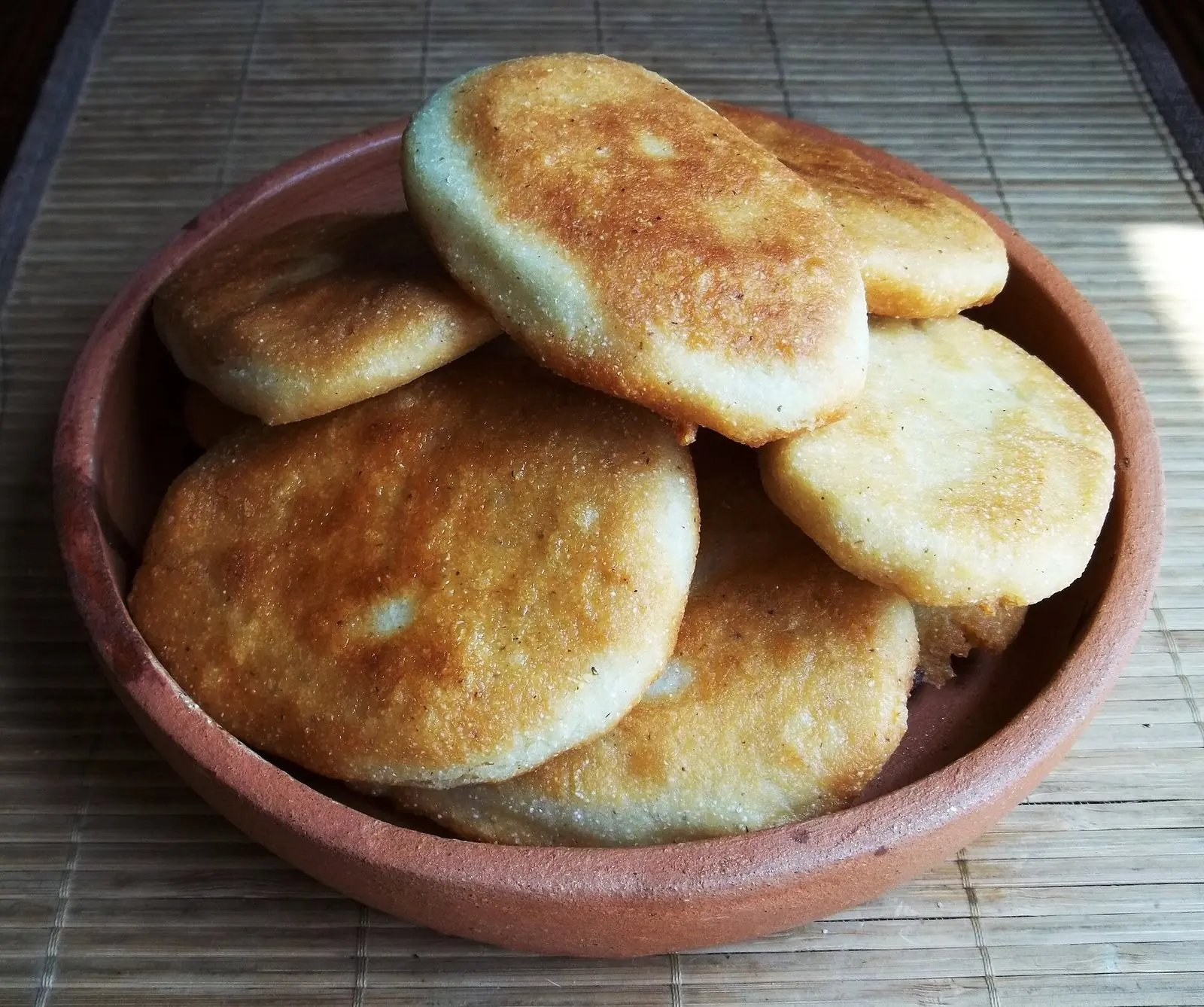
A home-style chvishtari recipe: fine maize flour kneaded with matsoni, almost its own weight of grated sulguni worked through, then rolled into thick fingers and fried until crisp and golden. Vegetarian, gluten-free and eaten hot.
Recipe by the Maspindzeli team in Tbilisi · Updated 18 Nov 2026 · From Svaneti and Samegrelo, north-west Georgia
Full recipe with the timeline, timers and US measures: maspindzeli.ge/recipes/chvishtari/
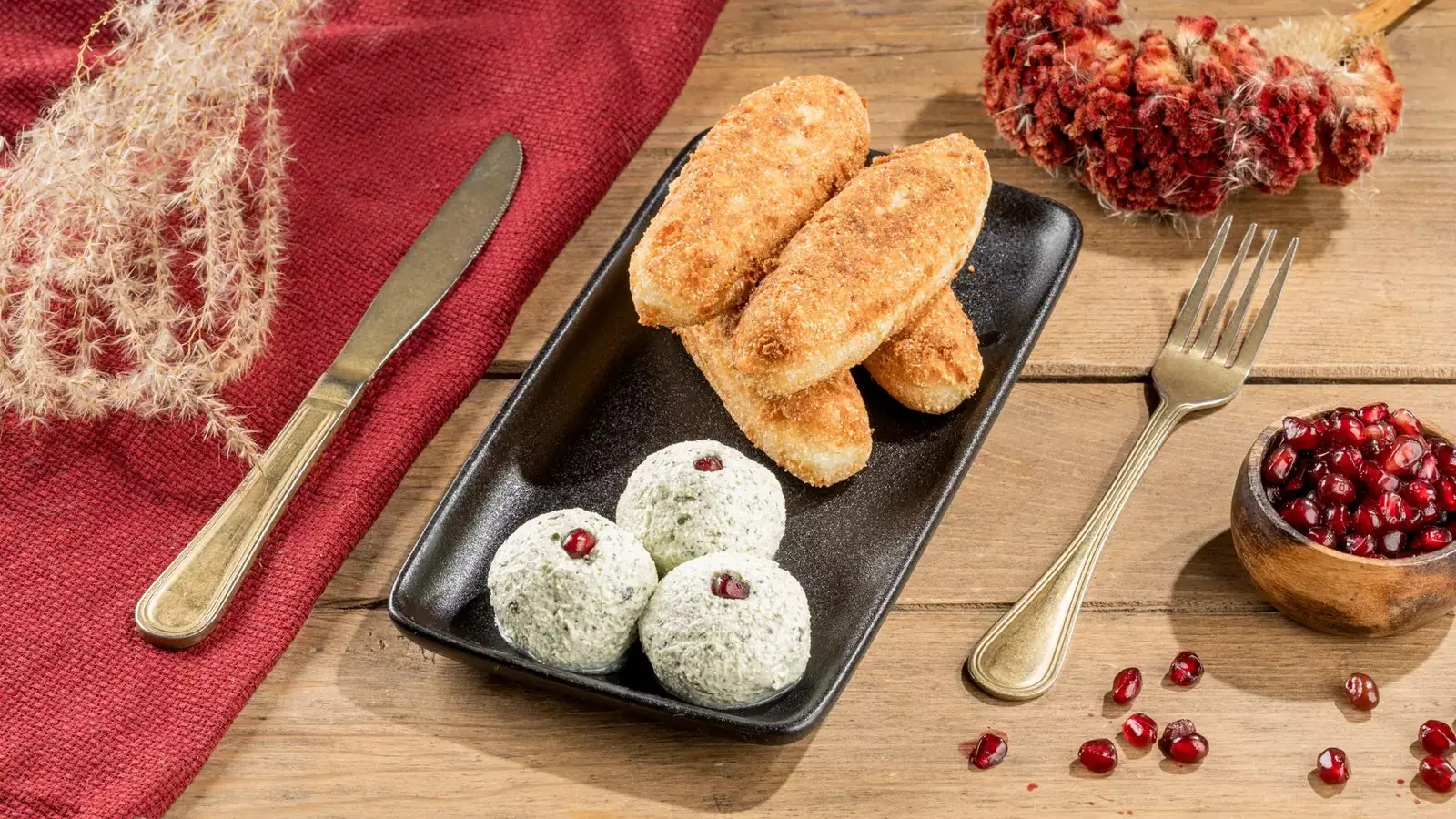
This chvishtari recipe makes the cheese cornbread of Svaneti and Samegrelo. A soft dough of maize flour and matsoni takes in nearly as much grated sulguni as there is flour, then goes into the pan as thick fingers that fry to a crunchy golden shell around a melting middle. Menus may call it chvishtari bread or Georgian cornbread with cheese, and in Svaneti you will also hear chishdvari. Where plain mchadi is eaten next to a slice of cheese, chvishtari carries the cheese inside.
Both regions count it as their own, and no two villages make it quite alike. In Svaneti it was once made with ground millet as well as maize. Some Megrelian cooks beat in eggs, hide one thick slab of sulguni in each cake, or bake a single layered round on a hot clay ketsi. This page sticks to the common home method with the cheese mixed through the dough; the guides linked below tell the wider story of Georgian corn breads.
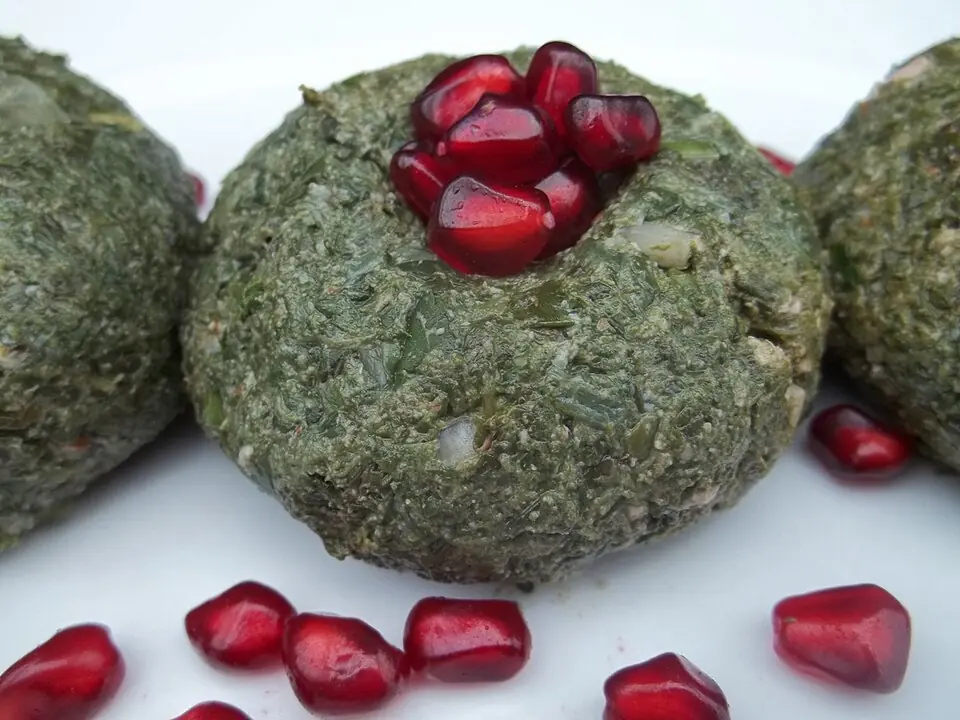
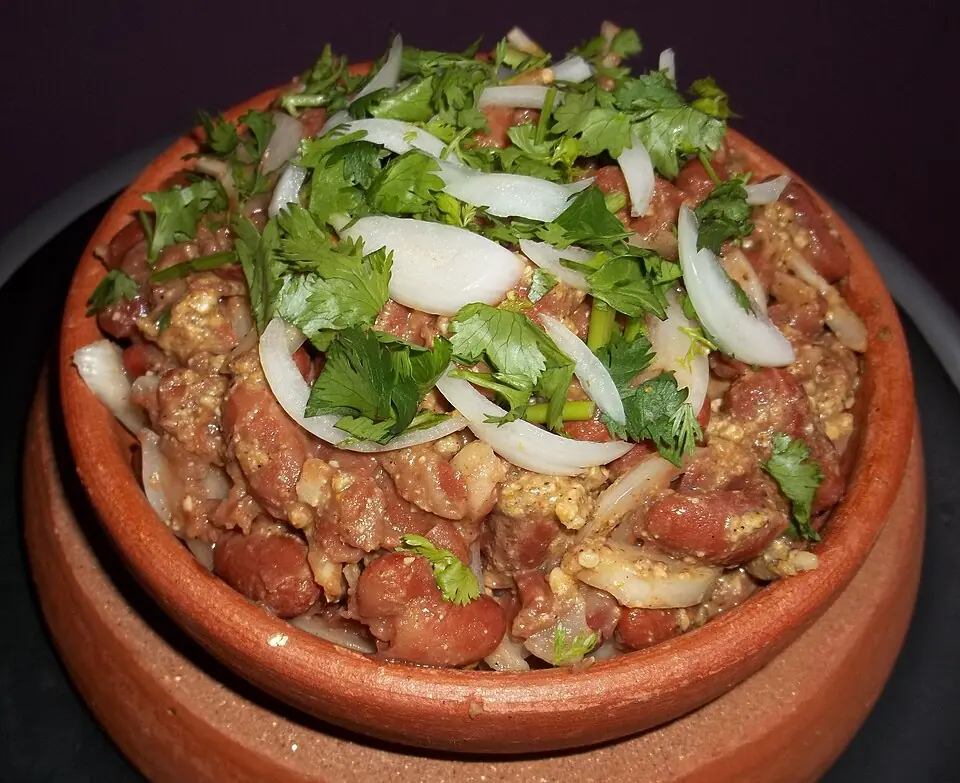
Georgians serve chvishtari straight from the pan as a starter or with drinks, often beside pkhali, a clay pot of lobio or a bowl of cool matsoni. It contains no wheat, so it suits gluten-free guests too, provided the maize flour is certified.
Timeline: what to do, and when
1 h 15 min from start to table · 58 min hands-on · 15 min waiting
Each bar is one step. Hands-on Waiting, while the oven, the pot or the dough does the work. Steps that sit inside a wait are done in parallel.
Recipe
Chvishtari
Ingredients
Dough
Cheese
For frying
Amounts are scaled. Times stay about the same, but a bigger pot takes a little longer to come to the boil.
Contains: milk.
You will need
- Fine sieve
- Coarse grater
- Large mixing bowl
- Heavy frying pan, 26 to 28 cm across, with a lid
- Spatula or tongs for turning
- Bowl of cold water for damping your hands
- Plate lined with kitchen paper
Method
- Grate the cheese6 min hands-on· start here
Run the sulguni over the large holes of the grater; a very fresh, soft one is easier to crumble finely by hand. Pat brined cheese dry with kitchen paper first. Taste a crumb: salty cheese means you can skip the salt in the next step.
- Sift the flour3 min hands-on· starts at +6 min
Sift the maize flour into the large bowl to aerate it and to catch any coarse bits of husk. Stir in the bicarbonate of soda, and the salt only if the cheese was mild.
- Knead with matsoni10 min hands-on· starts at +9 min
Warm the milk to about 40 °C / 105 °F and stir 50 ml of it into the matsoni. Pour this into the flour and bring it together with one hand, then knead in the bowl for about 8 minutes. If the dough cracks, work in the remaining milk, one spoonful after another. Stop when it is soft, smooth and barely tacky, and a lump squeezed in your fist keeps its shape.
- Work in the cheese4 min hands-on· starts at +19 min
Scatter the grated sulguni over the dough and fold and squeeze until every part of it is speckled with cheese. The mass turns heavier and a little sticky as the cheese goes in, which is how it should be.
- Rest the dough15 min waiting· starts at +23 min
Lay a damp tea towel or a plate on top and give the dough 15 minutes at room temperature. The maize drinks up moisture while it sits, and the dough firms enough to hold a clean shape.
- Heat the oil6 min waiting· starts at +32 min, during step 5
With 6 minutes of the rest to go, pour the oil into the frying pan to a depth of 3 to 4 mm and set it over medium heat. It is ready when the surface shimmers and a pinch of dough sizzles the moment it goes in. Line a plate with kitchen paper.
- Shape the first six5 min hands-on· starts at +38 min
Dip your hands in the cold water. Take a piece of dough of about 85 g, roll it into a short sausage, then press it into a rounded finger roughly 11 cm long, 4 cm wide and 3 cm thick. Pinch any cracks closed so the cheese cannot run out. Lower six fingers into the hot oil with space between them.
- Fry under the lid6 min waiting· starts at +43 min
Turn the heat down to medium-low, put the lid on and fry for 6 minutes. Covered, the thick centre cooks through and the cheese melts while the underside turns a deep gold.
- Shape the rest4 min hands-on· starts at +44 min, during step 8
While the first batch fries, wet your hands once more and form what is left of the dough into six more fingers of the same size. Keep them under a cloth on a plate.
- Turn and crisp all over8 min hands-on· starts at +49 min
Take off the lid and turn each finger with the spatula or tongs. Fry uncovered for 4 minutes, then roll them onto each long side for about 2 minutes, until the whole crust is crunchy and evenly golden. Lift them onto the lined plate to drain.
- Fry the second batch14 min hands-on· starts at +57 min
Add a little more oil if the pan looks dry and give it a minute to heat. Fry the second six the same way: 6 minutes covered, then about 8 minutes uncovered, turning until every side has coloured. If the crust darkens quickly, lower the heat, because the middle still needs the full time.
- Drain and serve4 min hands-on· starts at +1 h 11 min
Leave the last batch on the paper for 2 or 3 minutes so the molten cheese settles slightly. Stack all twelve fingers crosswise on a dish and bring them to the table hot, with pkhali, matsoni or lobio alongside.
About 510 kcal per serving (2 fingers, 1 of 6). This is an estimate from standard values for the ingredients, not a lab figure.
Eat chvishtari with your hands while it is hot. Break a finger in half to let the steam out, then alternate bites with pkhali, a spoonful of matsoni or a raw spring onion.
Tips, swaps and variations
Tips from your host
- Do the fist test before shaping. A handful of dough that holds together when squeezed, with no cracks at the edges, will survive the pan; if it crumbles, work in another spoonful of milk.
- Give the fingers room. Six in a 26 to 28 cm pan can be turned easily, and the oil stays hot enough to crisp the outside instead of soaking into it.
- Taste the sulguni before you add any salt. Georgian sulguni is often well salted and smoked sulguni even more so, and with cheese like that the dough needs no extra salt at all.
- If your cheese is very salty, slice it and leave it in a bowl of cold water for 30 to 60 minutes, then dry it thoroughly before grating.
- Keep the heat moderate. A 3 cm finger of raw maize dough needs around 14 minutes in the pan, and over a fierce flame the shell goes dark long before the centre has lost its sandy rawness.
- A thread of cheese that escapes and fries into a lacy crisp is no disaster. Leave it attached: browned, crunchy sulguni is a treat in its own right.
Variations and swaps
- Cheese outside Georgia: Eastern European and Turkish grocers often sell sulguni, sometimes spelt suluguni. Otherwise mix 250 g firm mozzarella from a block with 100 g feta for melt and salty tang. For a smoky Svan note, replace 100 g of the mozzarella with smoked scamorza or smoked mozzarella. Imeretian cheese, fresh and crumbly, can also go in alongside the sulguni.
- Maize flour: choose the finest white or yellow maize flour you can buy, the kind sold for mchadi, pap or ugali. Coarse polenta makes a crumbly dough that splits in the oil, and cornflour (cornstarch) will not work at all. Our mchadi recipe has more advice on choosing flour.
- Oven-baked: many Georgian recipes bake chvishtari instead of frying it. Heat the oven to 250 °C / 480 °F with a baking tray inside, brush the hot tray with butter or oil and set the dough on it as 12 flat rounds about 1.5 cm thick. Bake for 10 to 15 minutes, until golden underneath and firm. They are less crunchy than fried fingers, but lighter.
- Megrelian style with the cheese inside: knead the dough without the sulguni, adding 1 egg and 1 tbsp soft butter so it seals well. Divide it into 6 balls, press a thick slab of sulguni of about 35 g into each, close the dough over it and flatten into ovals. Fry over low heat with the lid on for 5 to 6 minutes, turn and give them 5 to 6 minutes more uncovered. This version contains egg.
- With egg: beat 1 egg into the matsoni before kneading. Lots of Georgian home cooks do this; the dough binds more easily, the fingers hold together better in the oil and the crumb turns softer and more cake-like. It is no longer egg-free.
- Layered ketsi chvishtari, from Samegrelo: make the dough without cheese and press half of it into a greased clay ketsi or a heavy 24 cm ovenproof pan, heated with the oven to 180 °C / 355 °F. Cover with 250 g crumbled cheese, lay the rest of the dough on top and spread over 100 g more cheese beaten with 1 egg. Bake for 20 to 25 minutes, until browned in patches, and cut into wedges.
- With some wheat flour: a few cooks, mostly outside Svaneti, swap part of the maize for wheat flour to make a stretchier dough that is easier to shape. It works, but the chvishtari is no longer gluten-free.
Serve it with
- Pkhali, the spinach, beetroot or leek balls with walnut, topped with pomegranate seeds
- Lobio, the red bean stew in a clay pot
- A bowl of cold matsoni, or nadughi mixed with mint
- Fresh herbs, spring onions, radishes and mzhave (pickles)
- Tkemali or a little ajika for dipping
- Kubdari and tashmijabi, for a full Svan dinner
Make ahead and storage
Chvishtari tastes best in the first half hour after frying, while the cheese inside is still soft. Covered and chilled, leftovers last up to 2 days. Warm them in a dry frying pan with a lid over low heat for about 8 minutes, turning once or twice, or for 10 minutes on a tray at 180 °C / 355 °F; a microwave turns them rubbery. You can mix the dough, cheese included, up to 4 hours ahead and keep it covered in the fridge: give it 20 minutes at room temperature and a short knead before shaping. Fried and cooled fingers freeze for up to a month and reheat from frozen at 180 °C / 355 °F in about 15 minutes.



Maspindzeli Travel, Tbilisi · private tours and cooking classes in Georgia · maspindzeli.ge · WhatsApp +995 598 74 74 54 · hello@maspindzeli.ge