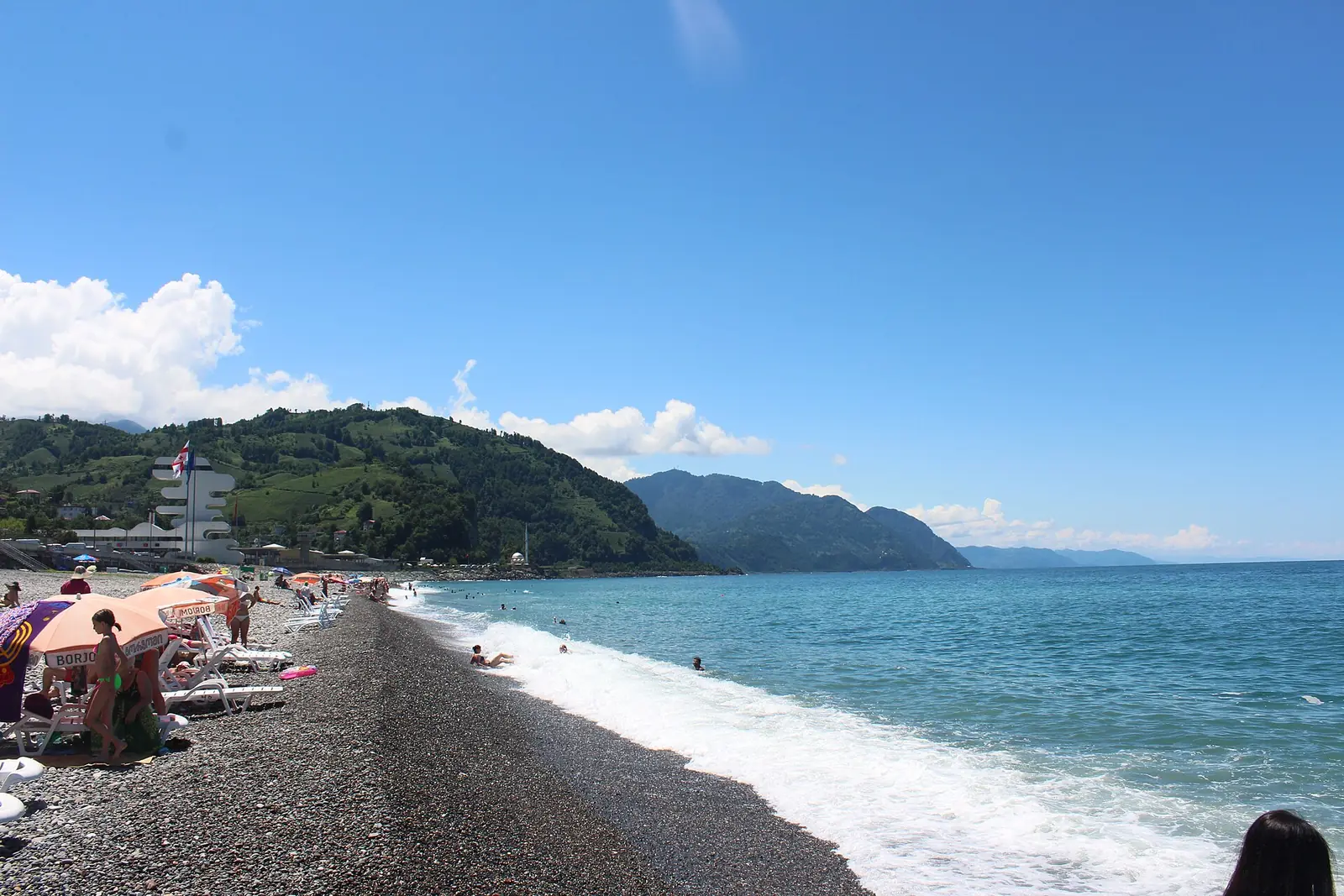
- The best beaches near Batumi lie south of the Chorokhi river: Kvariati and Sarpi have the clearest water, and Gonio has the widest stretch of shore.
- Every beach from Sarpi to Kobuleti is pebble or a pebble and sand mix; Kobuleti, ~27 km north, is the softest underfoot and the easiest for toddlers.
- City bus 16 links central Batumi with Gonio, Kvariati and Sarpi about every 17 minutes, and minibuses bound for Kobuleti serve the northern beaches.
- The sea holds about 23 °C in June, 26-27 °C in July and August and 25 °C in September, so June and September pair warm water with thinner crowds.
The best beaches near Batumi are the pebble bays just south of the city. Pick Kvariati Beach or Sarpi for clear water and Gonio for space. North of the city, Kobuleti has the gentlest shore for children, while the Green Cape, Makhinjauri, Chakvi and Tsikhisdziri are quiet village beaches. All of them lie within about 45 minutes of the old town by car. Swim from mid-June to late September, when the Black Sea warms to about 23 to 27 °C.
This guide stays on the Batumi stretch, from the Turkish border at Sarpi to Kobuleti in the north. For Guria's dark sand and the far north at Anaklia, see our guide to the best beaches in Georgia. Below you get a comparison table, nine beach profiles, sea temperature and crowds by month, bus and taxi details, and tips on safety, snorkelling and children. Routes and fares were checked in autumn 2026.
Beaches near Batumi at a glance: stones, water and travel time
Think of this coast in two halves, split by the city and the mouth of the Chorokhi river just past the airport. To the south, steep wooded ridges fall into deep, clear water, and the stones are big. To the north the shore is lower. The pebbles shrink as you go, until Kobuleti mixes them with coarse sand. Road distances below start at Europe Square in the old town.
| Beach | Underfoot | Water | By car from Batumi | Public transport | Best for |
|---|---|---|---|---|---|
| Batumi city beach | Small to medium pebbles | Cloudiest near the port, better further south | In town, 0-5 km | On foot or city bus | A first swim, evenings out |
| Makhinjauri | Pebbles | Fairly clear | ~7 km, 15 min | Minibuses heading north | Quiet hotels close to town |
| Green Cape (Mtsvane Kontskhi) | Pebbles and rock | Clear, liked by divers | ~10 km, 15-20 min | Buses 10 and 10a, minibuses 31 and 40 | A dip after the Botanical Garden |
| Chakvi | Pebbles | Calm and fairly clear | ~15 km, 20-25 min | Kobuleti minibuses | Families, the aquapark, Mtirala |
| Tsikhisdziri | Pebbles in small coves | Clear on calm days | ~22 km, about 30 min | Kobuleti minibuses | A quiet swim below Petra Fortress |
| Kobuleti | Small pebbles and coarse sand | Average | ~27 km, 35-45 min | Minibus or fast train | Toddlers, long stays on a budget |
| Gonio | Pebbles, a broad beach | Clear | ~13 km, 20-25 min | Bus 16, Sarpi minibuses | Space to spread out, the Roman fort |
| Kvariati | Large pebbles, steep shelf | Very clear | ~16 km, about 25 min | Bus 16 | Snorkelling, a first dive |
| Sarpi | Fine pebbles and rocks | Very clear | ~20 km, 25-30 min | Bus 16, last stop | Cliff jumping, snorkelling |
Batumi beach: the city shore below the boulevard
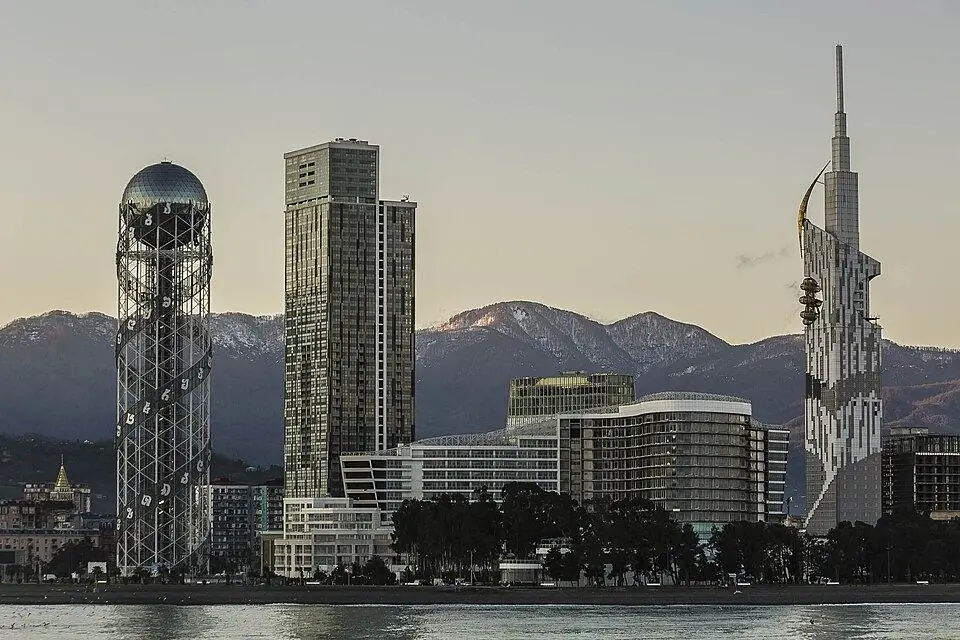
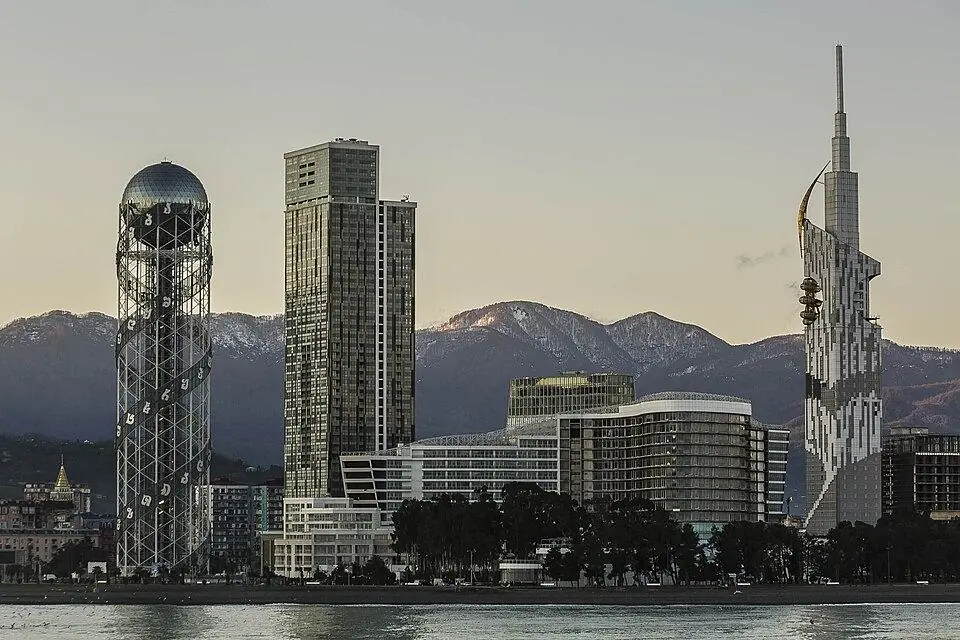
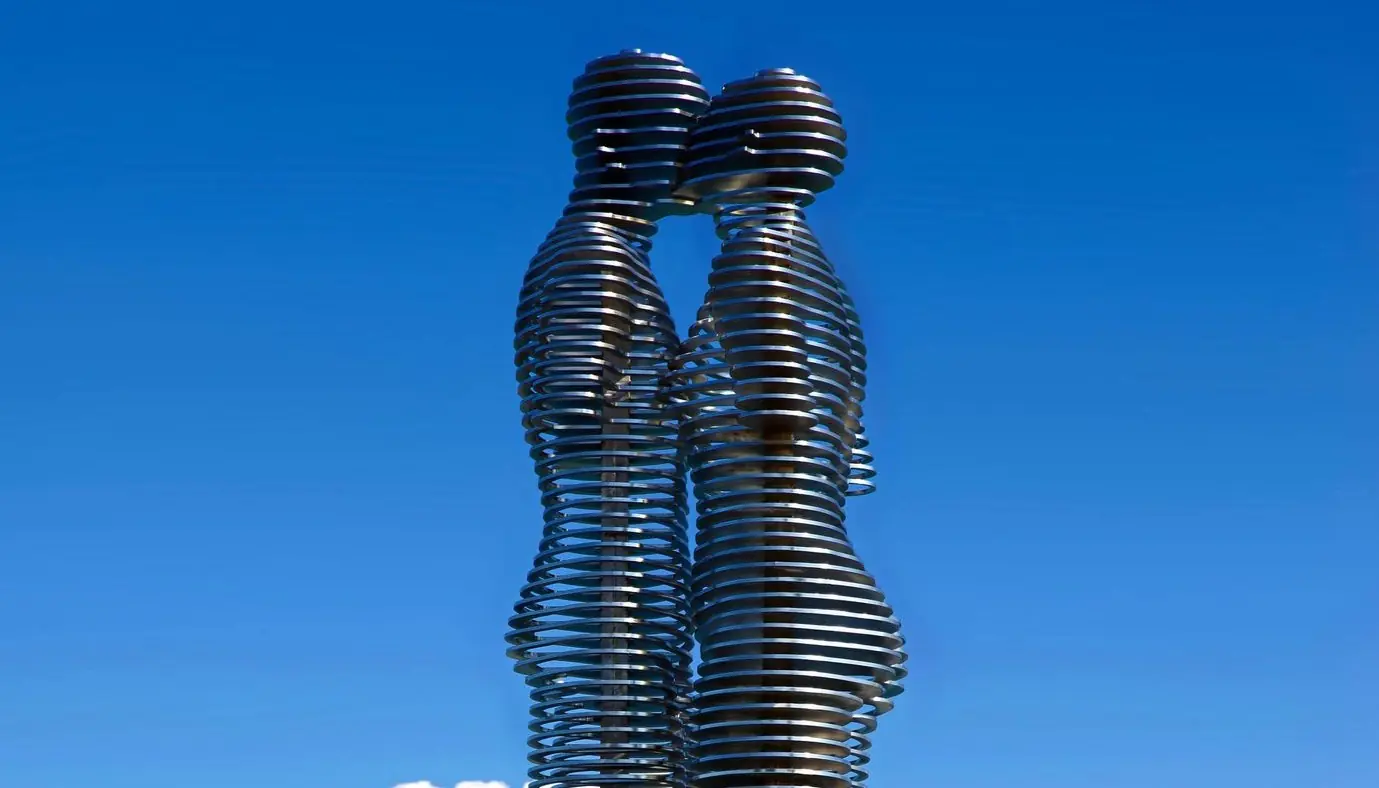
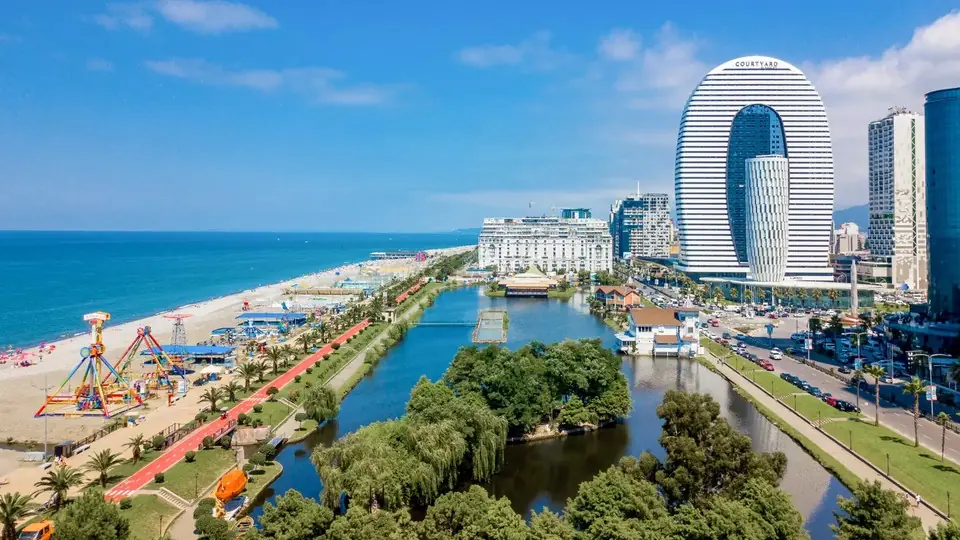
The city's own beach follows Batumi Boulevard for about 7 km, from the port in the north to the hotel towers in the south. It is pebble from end to end, and the seabed falls away within a few paces. The old boulevard end, near the Ali and Nino Statue and the 130 m Alphabetic Tower, draws the biggest crowds. Walk twenty minutes south along the New Boulevard and you gain room and slightly clearer water.
Services here beat anything else on the coast. In summer, lifeguard towers stand along the shore, with showers, changing cabins and cafes close by and a cycle lane behind. The city caps rental prices on its leased beach plots. In 2026 a sunbed cost at most about 10 GEL (about $4), and a parasol at most about 5 GEL (about $2).
Batumi also cleared its seafront in 2026. Inspectors removed about 80 small unlicensed structures, among them some 25 cafes and clubs, so parts of the shore feel more open than in past summers.
Clear water is the weak point. The port, small city streams and thousands of daily swimmers leave the sea near the centre cloudier than elsewhere, more so after rain. Come before 10:00, when the surface is flat and the stones are still cool.
Picking a base by the beach? Our where to stay in Batumi guide weighs each district, from Old Batumi to Gonio.
- Crowds: steady from late June, packed on July and August evenings, when local families come down after work.
- Best for: a first beach day, a swim between sights, and a drink at a beach bar after dark.
- Downside: the murkiest water in the area, and music from beach clubs on summer nights.
Gonio beach: room to spread out by a Roman fort
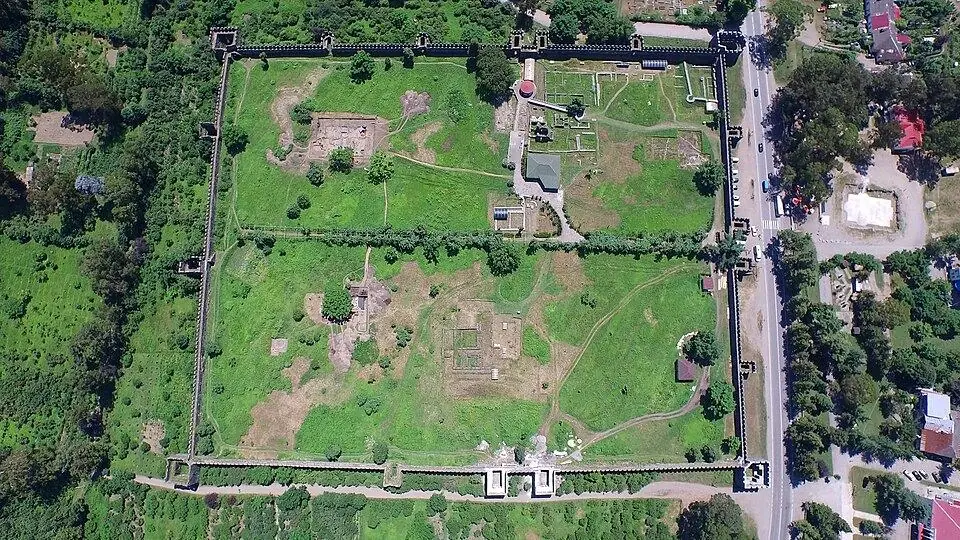
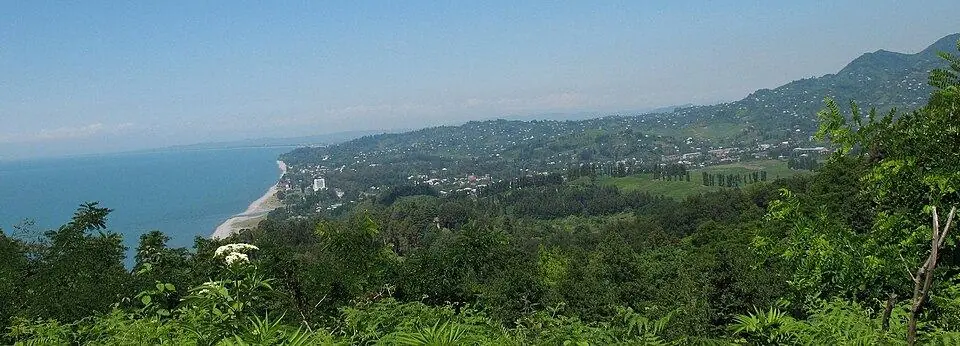
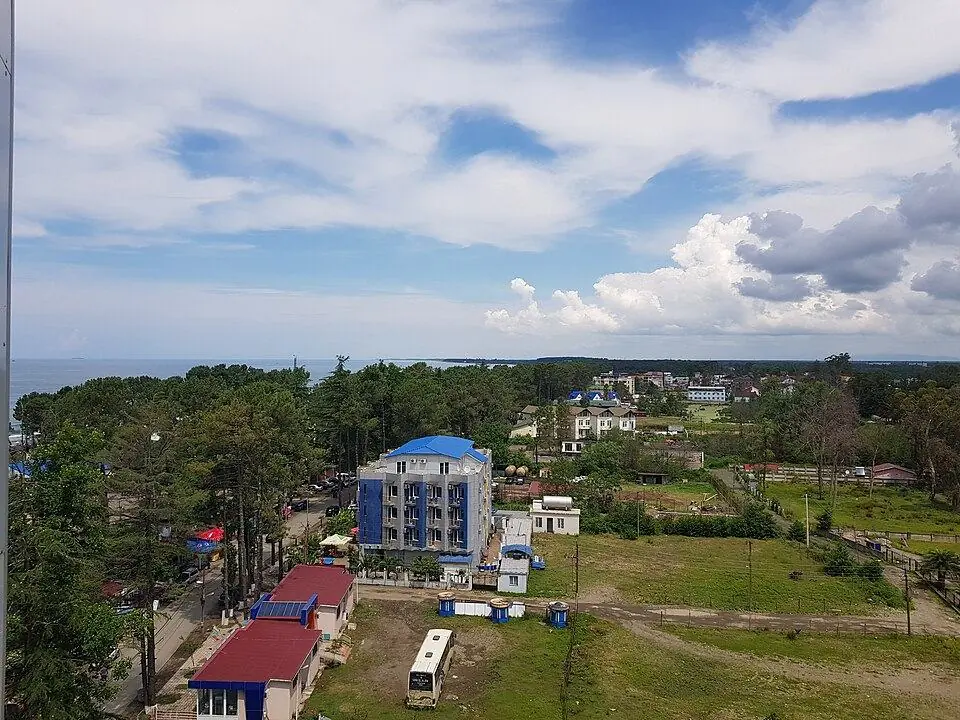
Gonio lies ~13 km south of the centre, beyond the airport and the bridge over the Chorokhi. Its beach is the broadest on this stretch, backed by a seafront path, villas and family guesthouses. Forested ridges rise right behind the village, so from the water you look back at green hills rather than towers.
On calm days the sea is clean and clear. After heavy rain, though, the river mouth just north can tint it brown for a day or so. Children have more room for games than at Kvariati. The bottom still drops quickly, so stay within reach of anyone who cannot swim well.
Combine a swim with Gonio Fortress, the Roman camp of Apsaros, a short walk inland. Foreign adults paid about 15 GEL (about $6) in 2026, and the gates usually open from about 10:00 to 17:00. Keen walkers climb to the Gonio Cross first, while it is cool. Tandem paragliding flights also launch from the ridge above the village.
- Getting there: city bus 16 or a minibus signed for Sarpi; a car or app taxi takes 20 to 25 minutes.
- Facilities: beach cafes, loungers in season, guesthouses and small hotels.
- Crowds: city families arrive in force on summer weekends, and the one road back to Batumi crawls in the evening.
Kvariati beach: the clearest water close to Batumi
Kvariati is a small village ~16 km south of the centre, wedged between Gonio and Sarpi. The bay runs for about 1 km between rocky points, with green hills climbing straight behind it. The stones are large. A few strides out, the bottom drops into deep water.
That shape makes Kvariati poor for toddlers and excellent for swimmers. On a still summer morning you can watch the seabed several metres below you. Snorkellers follow the rocks at either end of the bay, where small fish gather.
A dive centre works from the rocks at the southern end, and its try-dives with an instructor suit complete beginners. In July and August, boat trips and banana rides also leave from the beach.
The beach looks different since 2026. Batumi's inspectors warned 35 owners of unlicensed cafes and bungalows on the Gonio and Kvariati shore that spring, and many structures came down. Expect more open stones and fewer late bars than older reviews describe.
- Getting there: bus 16 stops on the main road above the bay, and a car takes about 25 minutes.
- Crowds: the bay is small, so on summer weekends space runs out by late morning. Weekdays before 11:00 are calm.
- Downside: big stones, deep water close in, and very little shade.
Sarpi beach: cliff jumps at the Turkish border
Sarpi is the last Georgian village on the coast, ~20 km south of Batumi, and the end of the line for bus 16. A strip of fine grey pebbles runs right up to the border fence, under the tall white checkpoint building. The water is often the clearest on the whole coast. Adjara's tourism department calls Sarpi the only place in the region for cliff jumping.
Many families here are Laz and keep their own language and customs. The village carries on across the frontier as Sarp, and from the beach you can see a Turkish minaret and hear the call to prayer. Walk up to the waterfall named after St Andrew the First-Called, where his statue stands, or visit the small Laz ethnographic museum. Each August the Laz sea festival Kolkhoba is staged in Sarpi.
- Facilities: sunbeds and umbrellas for hire, a few cafes and guesthouses, and a casino by the border.
- Getting there: bus 16 to its final stop, or 25 to 30 minutes by car.
- Downside: border traffic clogs the road, and photos of the checkpoint or the guards are forbidden. Keep your passport on you.
Green Cape and Makhinjauri: garden beaches north of the city
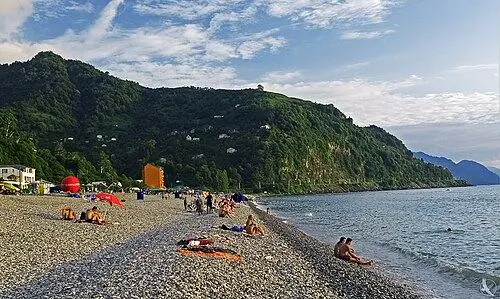
Drive north past Batumi Central station and the coast turns green and steep. Makhinjauri comes first, ~7 km from the centre: a small resort of hotels on a pebble shore, with a wide view back to the city skyline. Locals have bathed in its warm sulphur water for over a century, and the spa complex is now being modernised. On the beach you can hire water bikes or join a ball game.
About three kilometres further on, the Batumi Botanical Garden covers the Green Cape, Mtsvane Kontskhi in Georgian. Below its seaside park the shore mixes pebbles with rock, and the water is among the cleanest north of the city. Adjara's tourism department notes that divers come for the fish around the rocks.
Walk the garden's steep paths in the morning and keep the swim for the afternoon. Foreign visitors paid about 25 GEL (about $10) for the garden in 2026, and its gates usually stay open from about 09:00 until 20:00.
- Getting there: buses 10 and 10a and minibuses 31 and 40 stop near the garden gates, and a car takes 15 to 20 minutes. For Makhinjauri, any minibus heading north will let you off.
- Downside: trains and traffic pass right behind the shore, and the beaches are narrow strips rather than wide bays.
Chakvi and Tsikhisdziri: calm village beaches below the tea hills
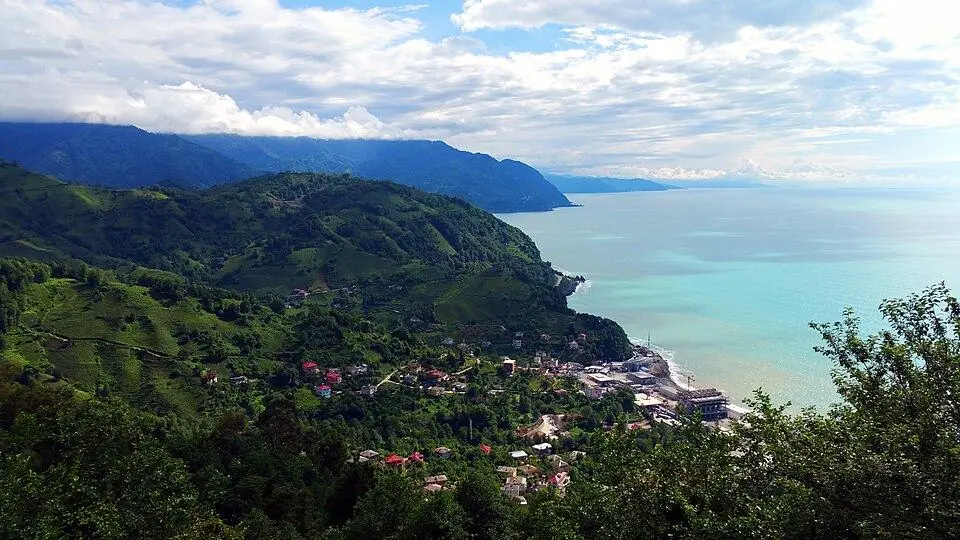
Chakvi, ~15 km up the coast, feels like a village with a beach rather than a resort. Old tea terraces stripe the hills above it, a reminder that this was one of the cradles of Georgian tea, with estates dating from the late 19th century. The pebble shore is calm and used mostly by locals, which is exactly what Adjara's tourism department praises it for. On a hot day, children can trade the sea for the Dreamland Oasis aquapark. The lane inland to Mtirala National Park also starts here.
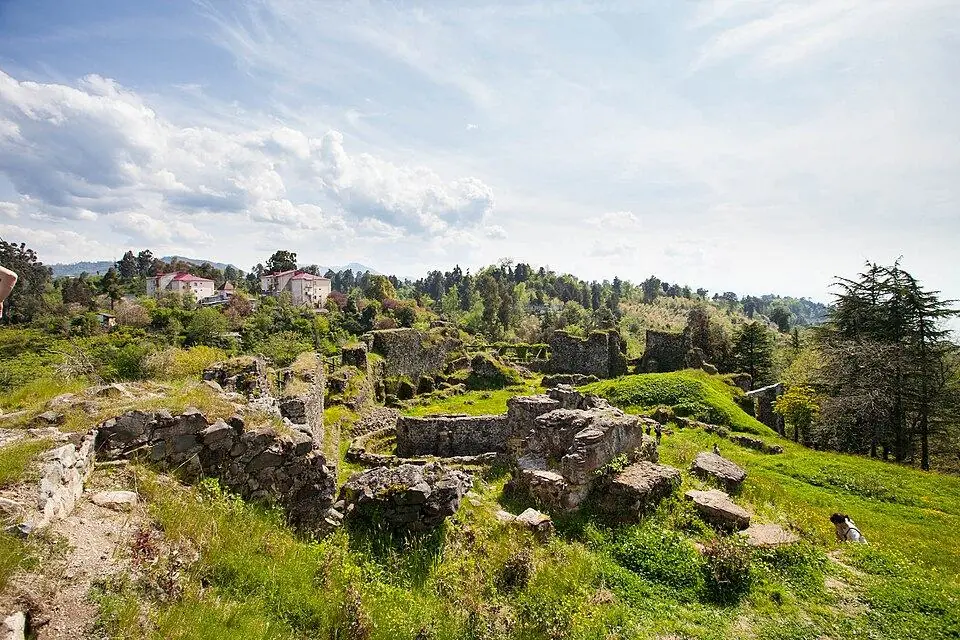
Tsikhisdziri lies ~22 km from Batumi, where a rocky cape juts into the sea. The ruins of Petra Fortress, a 6th-century Byzantine stronghold, crown the hill, and small pebble coves hide below. Services by the water are thin, so pack a picnic. Climb to the walls first, then cool off in a cove.
- Getting there: minibuses to Kobuleti stop in both villages if you ask the driver. The fare all the way to Kobuleti was about 3 GEL (about $1) in 2026.
- Crowds: light even in August, apart from hotel guests.
- Downside: this is one of the rainiest corners of Georgia, with ~2,500 mm a year, so keep a spare beach day.
Rained off? Our private Adjara Highlands Day Trip swaps the shore for Makhuntseti waterfall, a Keda family's table with their own Chkhaveri, and the forest of Machakhela. We run it on whatever date you choose. For more inland ideas, see our guide to day trips from Batumi.
Kobuleti beach: the softest shore for small children
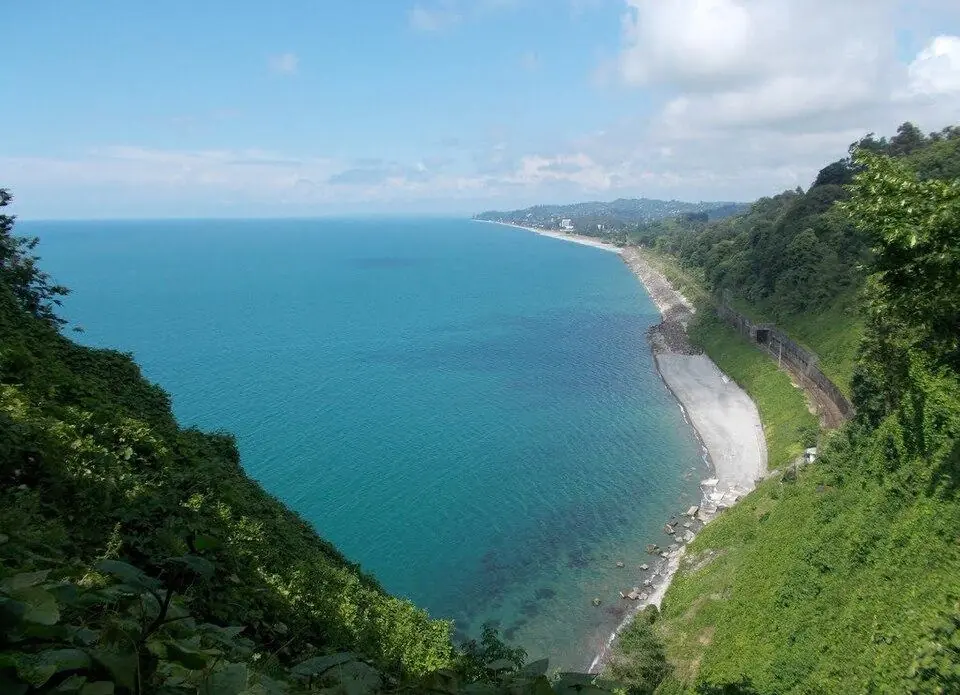
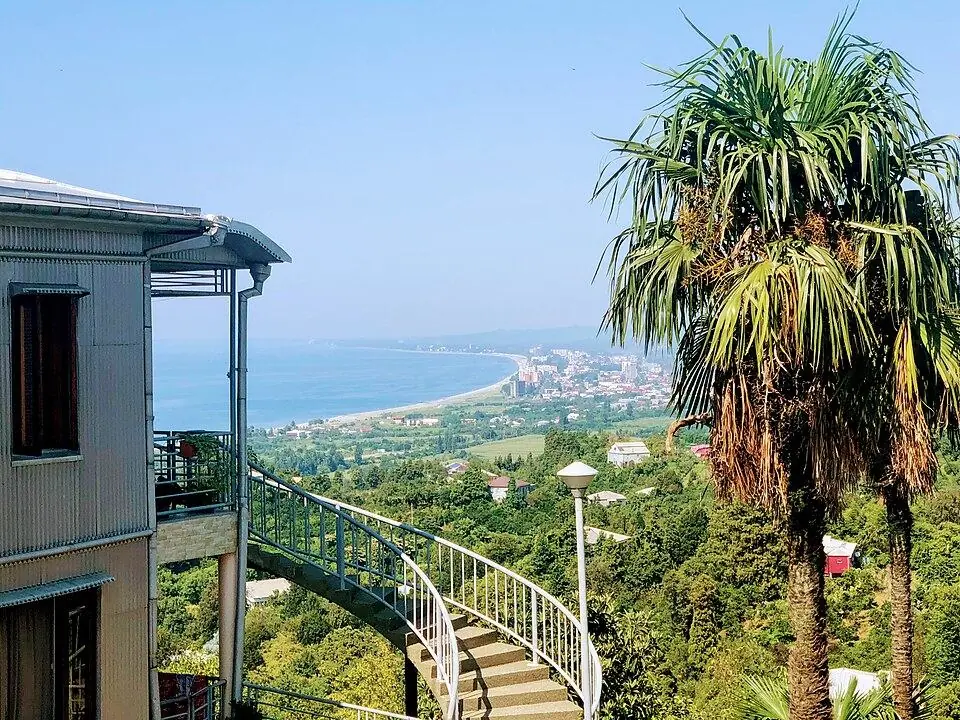
Kobuleti sits ~27 km north of Batumi. Adjara's tourism department puts its shoreline at about 10 km, longer than Batumi's own. The shore is a blend of fine gravel and gritty sand, and little ones walk on it far more easily than on the big stones of the south. For true sand you would have to drive on to Shekvetili or Ureki in Guria, about an hour from Batumi.
A seaside park of old pines runs behind much of the shore, the best natural shade on this coast. The town is low and spread out along one long avenue, with guesthouses, family hotels and old Soviet sanatoriums. Rooms cost less than in Batumi, so families from all over Georgia and from Armenia stay for a week or two.
If the centre feels busy in August, the Pichvnari end in the north has more room. Kobuleti weather follows Batumi's, warm and often wet, so leave space in your plans for a grey day.
- Getting there: minibuses from Batumi run all day for about 3 GEL (about $1) in 2026 and take 35 to 50 minutes. A taxi takes 35 to 45 minutes, and fast trains from Tbilisi stop here too.
- Facilities: loungers, cafes, showers and lifeguards along the central beach in summer.
- Downside: the town feels stretched out, and many cafes shut from October to May.
Sea temperature and crowds near Batumi, month by month
For most people the water is warm enough from mid-June to late September. It peaks in August at about 27 °C. The figures below are long-term averages for Batumi, and the other beaches on this stretch differ by less than half a degree. Our Batumi sea temperature page tracks the water through the year.
| Month | Sea | Air high | Rainy days | Sunset | Crowds and what is open |
|---|---|---|---|---|---|
| May | about 17 °C | ~20 °C | ~10 | ~20:25 | Empty beaches, most beach cafes still shut; hardy swimmers only |
| June | about 23 °C | ~25 °C | ~10 | ~20:50 | The season opens with a summer festival; lifeguards from about mid-month; quiet weekdays |
| July | about 26 °C | ~27 °C | ~10 | ~20:45 | Busy; the Black Sea Jazz Festival fills Batumi; full weekends at Gonio and Kvariati |
| August | about 27 °C | ~28 °C | ~12 | ~20:15 | Peak crowds and room prices; Mariamoba (28 August) is a national day off |
| September | about 25 °C | ~25 °C | ~11 | ~19:25 | Warm sea, fewer people; bars start closing after mid-month; the wettest month |
| October | about 21 °C | ~21 °C | ~12 | ~18:35 | Calm days are still swimmable early in the month; loungers mostly gone |
| November to April | about 10-17 °C | ~12-17 °C | 10-14 | 17:45-19:50 | Too cold for most swimmers; seafront walks and fish dinners instead |
Weekends matter as much as months. On summer Saturdays and Sundays, Batumi families and visitors from Tbilisi fill the southern beaches, and the coast road to Sarpi slows to a crawl. Weekday mornings stay pleasant even in August.
September is our pick for a beach week here. The sea still sits at about 25 °C, rooms cost less and the evenings are warm. The catch is rain: September and October are Batumi's wettest months, so choose a base you would enjoy on a grey day.
How to get to the beaches from Batumi: bus 16, minibuses and taxis
Bus 16 to Gonio, Kvariati and Sarpi
City bus 16 is the cheapest way south. It starts near the old bus station on Mayakovsky Street and runs down Chavchavadze Street through the centre. Then it passes Batumi airport and stops in Gonio, above Kvariati and at Sarpi. Buses come about every 17 minutes from early morning until about 23:00. Allow 40 to 50 minutes from the old town to Kvariati in summer traffic. Arriving by rail? Our Tbilisi to Batumi guide has the train times.
The buses do not take cash. Tap a contactless bank card or the orange Batumi transport card on the reader by the door. A ride cost about 0.70 GEL (about $0.30) in 2026 on a Georgian bank or transport card, and about 1 GEL (about $0.40) on a foreign card. The Batumi Discount Card, about 15 GEL (about $6) in 2026 at tourist information centres, includes four rides.
Buses and minibuses to the north coast
The Botanical Garden on the Green Cape is served by city buses 10 and 10a, plus minibuses 31 and 40. For Makhinjauri, Chakvi, Tsikhisdziri and Kobuleti, flag down a minibus signed for Kobuleti on the coast road. Tell the driver where you want to get off, and carry coins and small notes for the fare.
Taxis and Bolt
App taxis are the quickest way to reach any beach. Bolt and Yandex Go both work in Batumi. A ride to Gonio cost about 15-25 GEL (about $6-10) in 2026, and Kvariati or Sarpi a little more. For Kobuleti, expect a street taxi to ask roughly 40 to 60 GEL (about $15 to $23) in 2026, so the minibus is far better value unless you share.
Rather skip the timetables? We can plan a private coast day: Gonio Fortress in the morning, a swim at Kvariati or Sarpi, and the Botanical Garden on the way back. No other travellers join you: the date and the head count are yours to set, and your guide speaks your language. Coming from Tbilisi? Our six-day East to West tour ends here on the Black Sea in Batumi.
Which beach near Batumi suits you: families, snorkelling or a quiet day
- Toddlers and young children: Kobuleti, for the finer surface and the pine shade. Chakvi is calm too, with the aquapark as a back-up.
- Children who swim well: Gonio, where the broad beach leaves space for games.
- Snorkelling: the rocks at each end of Kvariati and Sarpi, and the Green Cape. Bring your own mask.
- A first dive: the dive centre at Kvariati, with try-dives led by an instructor.
- Peace and quiet: Tsikhisdziri, Chakvi and Makhinjauri, best on weekdays.
- Nightlife: central Batumi, with its beach bars and clubs. Gonio and Kvariati are calmer than they were before 2026.
- No car: Batumi, Gonio, Kvariati and Sarpi, all on foot or on bus 16.
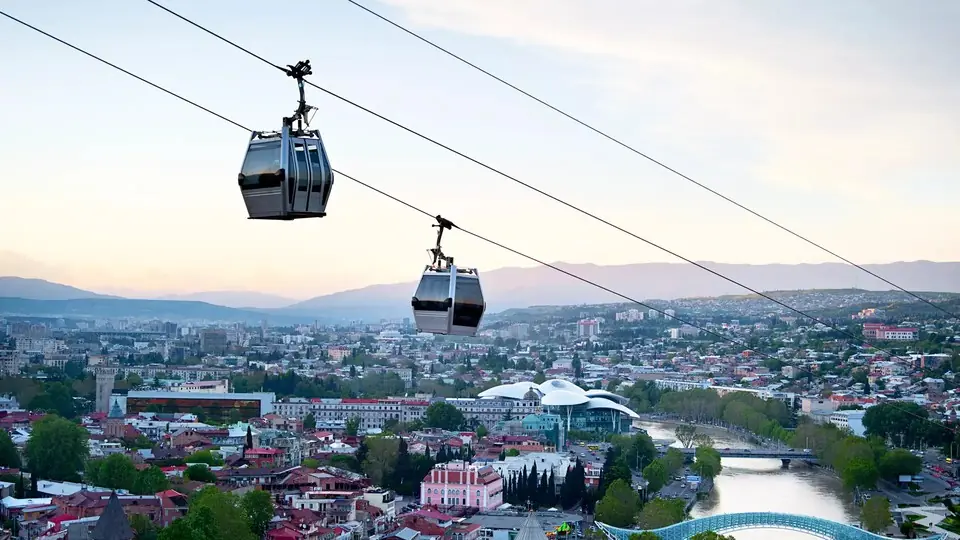
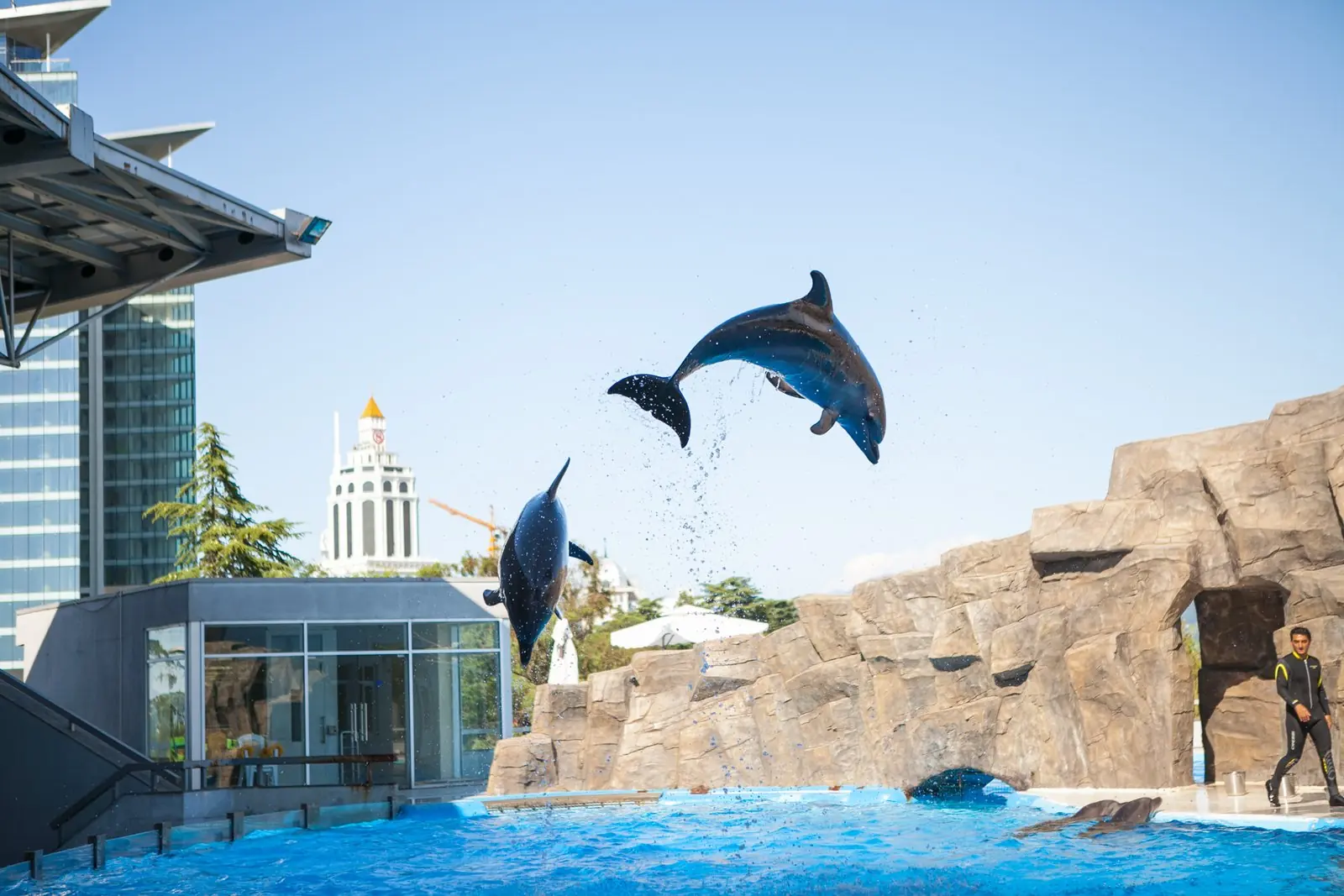
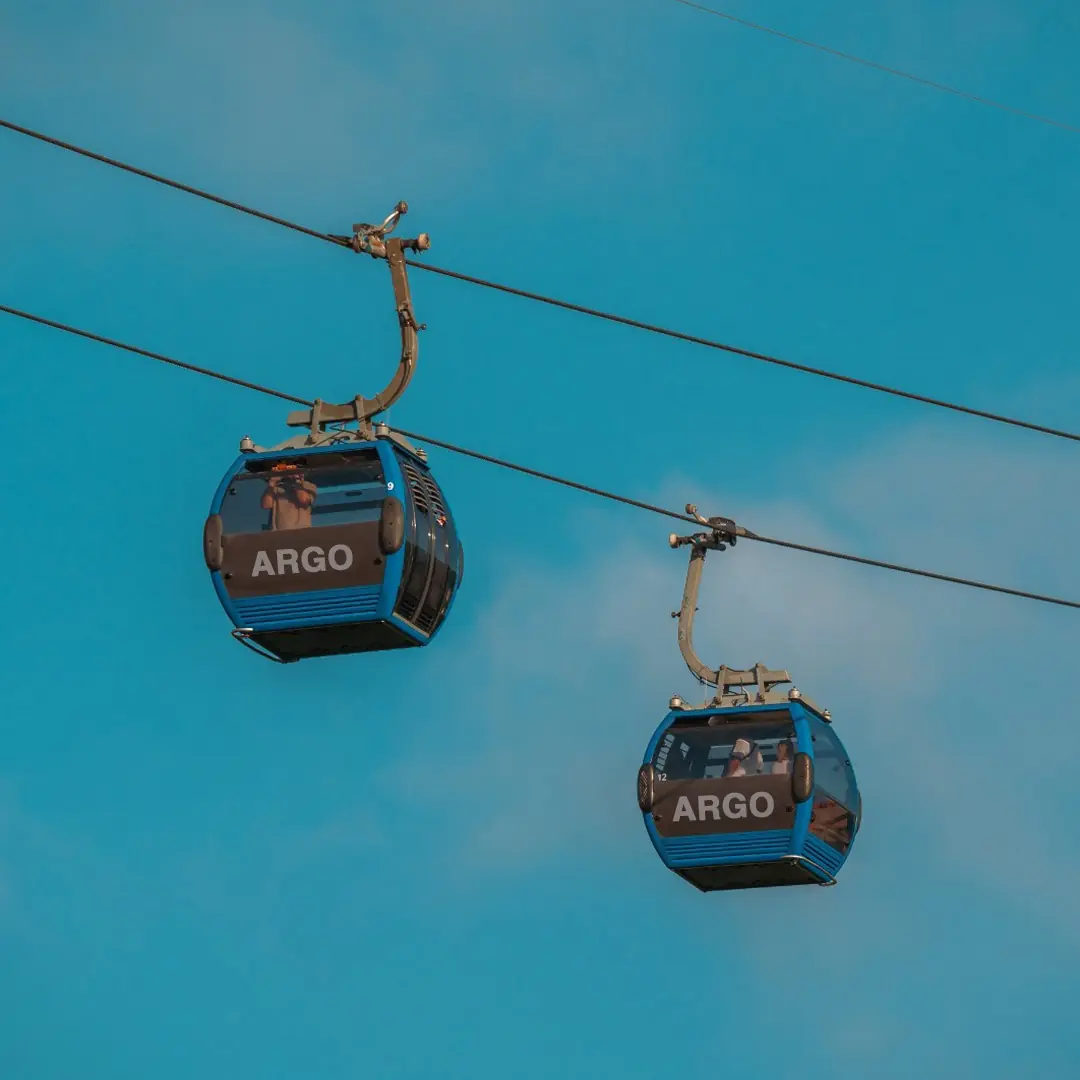
- Rainy days with children: the Batumi Dolphinarium and a ride on the Argo Cable Car up Anuria hill, both in central Batumi.
Safety on Adjara's pebble beaches
- Lifeguards: from about mid-June, rescuers from the Interior Ministry staff towers along the Adjara coast. Stay within the buoy line, and keep out of the water when a red flag flies.
- Steep shelves: the bottom drops fast beside the stones, and in a swell the waves can knock you over at the edge. Go in and out between sets of waves.
- River water: after heavy rain the Chorokhi and the smaller streams push muddy water into the sea for a day or two. Swim further from their mouths until it clears.
- Jellyfish: some summers bring moon jellyfish and the larger barrel jellyfish. Most give a mild sting at worst, but keep children away from any washed up on the stones.
- Papers: carry your passport at Sarpi and leave it in your room elsewhere. Foreign visitors also need medical insurance for every day of the trip, and border officers may ask for a policy whose limit starts at 30,000 GEL (about $11,600).
Bringing children? Our eight-day Georgia for Families tour finishes on this coast after cable cars, caves and a canyon boat ride. We set the dates and the pace around your family, with no age limit for children.
Beaches near Batumi: FAQ
What is the best beach near Batumi?
For clear water, Kvariati or Sarpi: 25 to 30 minutes south by car, longer on bus 16. For space and a sight, Gonio, beside the Roman fort. For small children, Kobuleti, ~27 km north, has the softest surface.
What is the best beach in Batumi itself?
The southern stretch below the New Boulevard, where there is more room and the water is a little clearer than near the port. The old boulevard end is handier for the old town but much busier.
Does Batumi have sandy beaches?
No. Batumi and the coast south to Sarpi are pebble. Kobuleti mixes small pebbles with coarse sand, and the nearest real sand is at Shekvetili and Ureki in Guria, about an hour north by car.
How do I get from Batumi to Kvariati beach?
Take city bus 16 towards Sarpi. Its stop sits on the coast road just above the beach. Pay by contactless card, about 0.70-1 GEL (about $0.30-0.40) in 2026. By car or app taxi it takes about 25 minutes.
Is Sarpi beach good for swimming?
Yes. Sarpi has some of the clearest water in Georgia and rocks for cliff jumping. The pebbles drop off quickly, so it suits confident swimmers. Keep your passport with you, because the border checkpoint towers over the beach, and never photograph it.
When can you swim in the sea at Batumi?
From about mid-June to late September. June brings water of about 23 °C, the high summer months about 26-27 °C, and September about 25 °C. May is still fresh, at about 17 °C.
Are the beaches near Batumi free?
Yes. The shore is public, so walking and swimming cost nothing. You pay only for loungers and umbrellas, and Batumi's 2026 rules capped a lounger at about 10 GEL (about $4).
Is Kvariati beach good for children?
Only for confident swimmers. The stones are big and the water gets deep a few steps out. For young children, Kobuleti or Chakvi are calmer choices.