- Georgia's Black Sea coast runs ~155 km by road from Anaklia to Sarpi: Guria has the dark sand, Adjara has pebbles, and Anaklia mixes the two.
- For small children, pick Ureki, Grigoleti or Shekvetili, where the sand slopes gently; for clear water and snorkelling, pick Kvariati or Sarpi, south of Batumi.
- The sea holds about 25-27 °C from July to September and about 23 °C in June, so late June and September pair warm water with emptier beaches.
- Fast trains from Tbilisi call at Ureki and Kobuleti before Batumi, and Kutaisi airport is a little over an hour from the Guria beaches.
The best beaches in Georgia line a short stretch of the Black Sea, from Anaklia near the Enguri river to Sarpi on the Turkish border. Choose Ureki, Grigoleti or Shekvetili in Guria for soft dark sand and shallow water. Choose Kvariati or Sarpi, south of Batumi, for the clearest sea. Kobuleti suits families on a budget. Batumi suits anyone who wants food and nightlife a few steps from the shore. Swim from late June to September, when the water sits at about 23 to 27 °C.
This guide walks the whole Georgian Black Sea coast from north to south. For each beach you get the surface, the mood, the facilities, the distance from Batumi and Tbilisi, and one honest drawback. Then come sea temperatures, transport, safety, families and lake beaches near Tbilisi. For the city's sights and food, see our Batumi travel guide.
Beaches in Georgia at a glance: sand or pebble, north to south
Georgia's shore is short, yet it changes fast. In Guria, rivers wash iron-rich grains down from the mountains, so the beaches are dark sand. From Kobuleti south, the hills reach the water and the shore turns to stones, which grow larger, with the sea clearer, the closer you get to Turkey. Road distances below start from Europe Square in Batumi and Freedom Square in Tbilisi. Times are for a car on a clear road.
| Beach | Sand or pebble | Best for | From Batumi | From Tbilisi |
|---|---|---|---|---|
| Anaklia and Ganmukhuri | Dark shingle and fine sand | Sunny skies, a long promenade, a rest after Svaneti | ~135 km, about 2.5 h | ~330 km, 5 to 5.5 h |
| Grigoleti | Dark sand | Quiet cottage weeks, birdwatching | ~56 km, about 1 h | ~305 km, about 4.5 h |
| Ureki | Dark sand with magnetite | Toddlers, shallow water, a lively resort | ~51 km, about 1 h | ~310 km, about 4.5 h; train 3 h 25 min |
| Shekvetili | Dark sand below pines | Families with a car, summer concerts | ~44 km, about 50 min | ~315 km, about 4.5 h |
| Kobuleti | Small pebbles, coarse sand in places | Families on a budget, long stays | ~27 km, 35-40 min | ~330 km, about 5 h; train ~3.5 h |
| Tsikhisdziri | Pebbles in small coves | A quiet swim below Petra Fortress | ~22 km, about 30 min | ~335 km, about 5 h |
| Chakvi | Pebbles | A calm village beach near Mtirala | ~15 km, about 20 min | ~355 km, 5 to 5.5 h |
| Green Cape (Mtsvane Kontskhi) | Pebbles | A swim after the Botanical Garden | ~10 km, 15-20 min | ~360 km, 5 to 5.5 h |
| Makhinjauri | Pebbles | Quiet hotels close to the city | ~7 km, about 15 min | ~365 km, 5 to 5.5 h |
| Batumi | Pebbles | Food, nightlife and everything on foot | In the city | ~370 km, 5 to 6 h; train ~4 h |
| Gonio | Pebbles, a wide beach | Families, the Roman fort | ~14 km, 20-25 min | ~385 km, 5.5 to 6 h |
| Kvariati | Large pebbles | Snorkelling and a first dive | ~16 km, about 25 min | ~385 km, 5.5 to 6 h |
| Sarpi | Fine pebbles and rocks | Snorkelling, cliff jumping | ~20 km, 25-30 min | ~390 km, 5.5 to 6 h |
Anaklia and Ganmukhuri: the sunniest beach on the coast
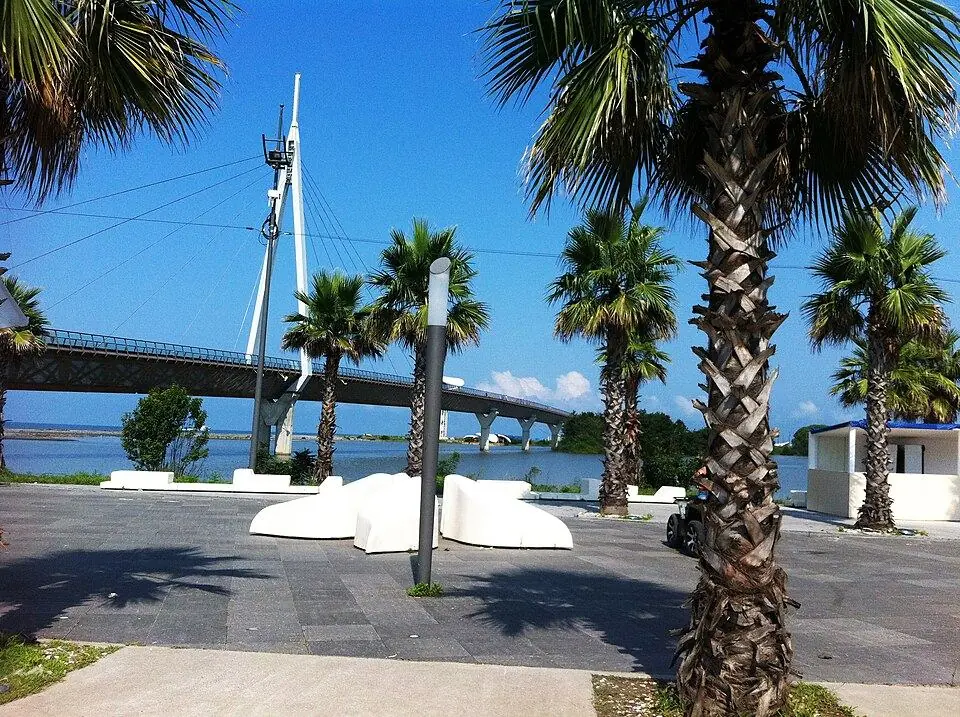
Anaklia stands on the left bank of the Enguri, right where the river meets the sea, ~30 km west of Zugdidi. Dark shingle mixes with stretches of fine sand, and behind it runs a promenade of palms, cafes, bike paths and a small water park. Our weather data give Anaklia about 21% cloud in August, against about 40% in Batumi. Come here to chase the sun.
A timber footbridge, about 500 m long, crosses the river mouth to Ganmukhuri, a smaller resort with an amphitheatre and a few hotels. Beyond Ganmukhuri lies occupied Abkhazia, so go no further north than the village.
- Mood: wide, open and calm outside early August, good for couples and walkers.
- Facilities: showers, beach bars, volleyball courts and loungers in season, with lifeguards on the main stretch in summer.
- Getting there: ~135 km from Batumi, about 2.5 hours. From Tbilisi it is ~330 km, 5 to 5.5 hours by car, or a train ride to Zugdidi plus ~32 km by minibus.
- Downside: it is far from everything, and many hotels and cafes open only in July and August. There is almost no shade on the sand.
Guria's dark sand: Grigoleti, Ureki and Shekvetili
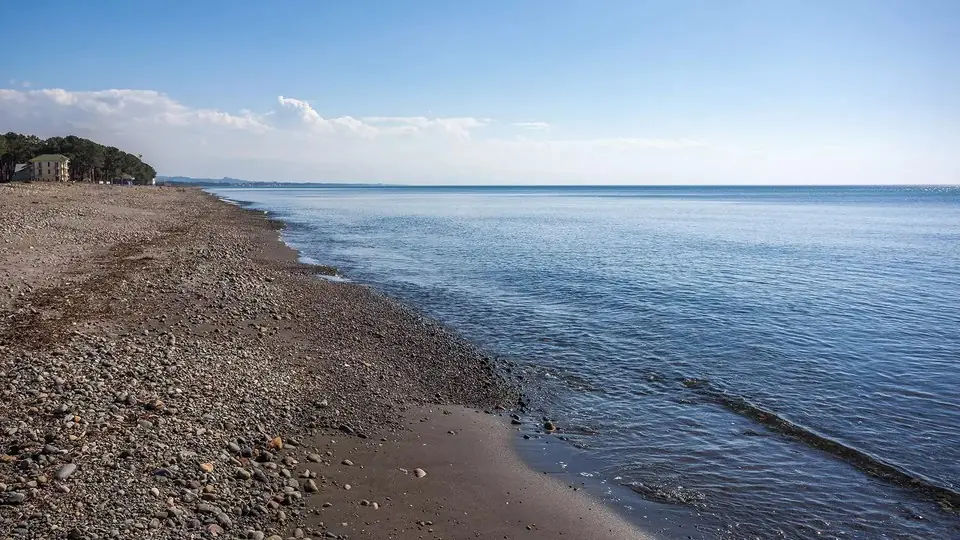
South of Poti the shore bends into Guria. The sand is dark grey to black, the sea floor slopes gently, and the water stays shallow for many metres, which is why Georgian families with toddlers come here. From late September to early June most cafes close. Our Guria travel guide covers the tea hills inland.
Grigoleti
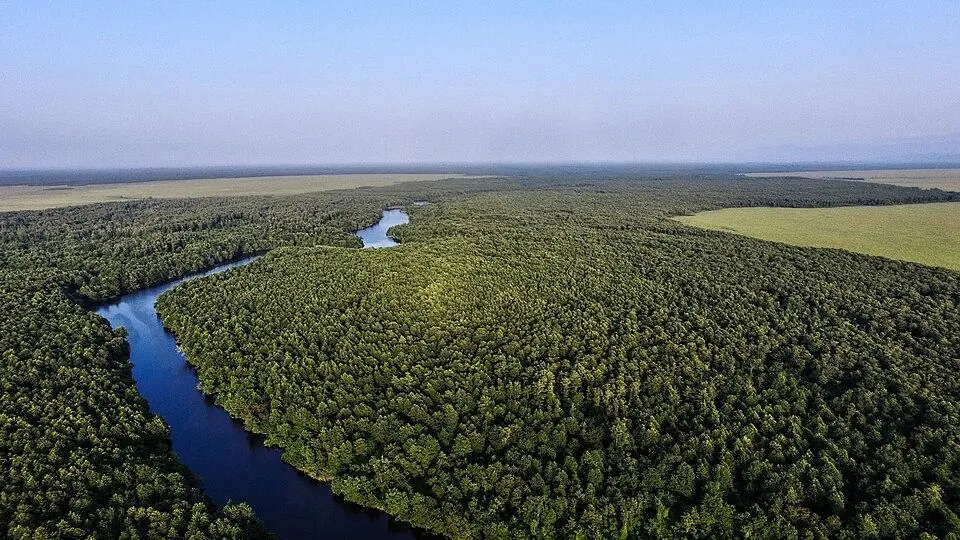
Grigoleti is the quietest of the three: cottages and small hotels behind a broad beach, with a line of Pitsunda pines that cope with the salt wind. Its sand holds magnetite and titanomagnetite, like Ureki's. Paliastomi Lake and the Kolkheti wetlands begin just to the north. Boat trips leave from the park centre in Poti, about 20 minutes away by car.
- Facilities: a few cafes and small shops. Most people rent a cottage and cook.
- Getting there: ~56 km from Batumi, about 1 hour, and ~305 km from Tbilisi, about 4.5 hours. The nearest station is Ureki, ~6 km south.
- Downside: mosquitoes rise from the wetlands on warm, still evenings, so pack repellent and choose a room with screens.
Poti families have long swum at Maltakva, a seaside suburb of their city, a little further north.
Ureki
Ureki is the busy one. Its beach district, Magnetiti, is named after the iron mineral in the sand, about 5% of it by the national tourism board's analysis. Locals bury themselves in it for their health. Science is unconvinced, but the gentle shore is ideal for small children. Expect water slides, banana boats and loud music.
- Getting there: ~51 km from Batumi, about 1 hour, and ~310 km from Tbilisi. The fast train stops here, 3 h 25 min from Tbilisi, ~1.5 km from the sand.
- Downside: it is packed in July and August, and the dark sand burns bare feet by midday.
Shekvetili
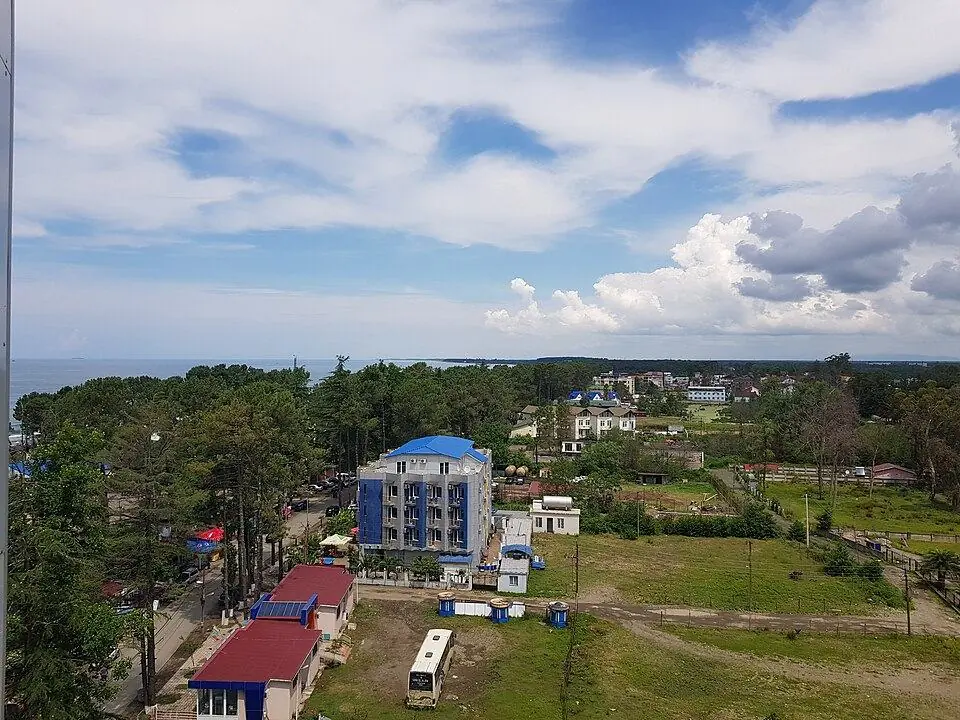
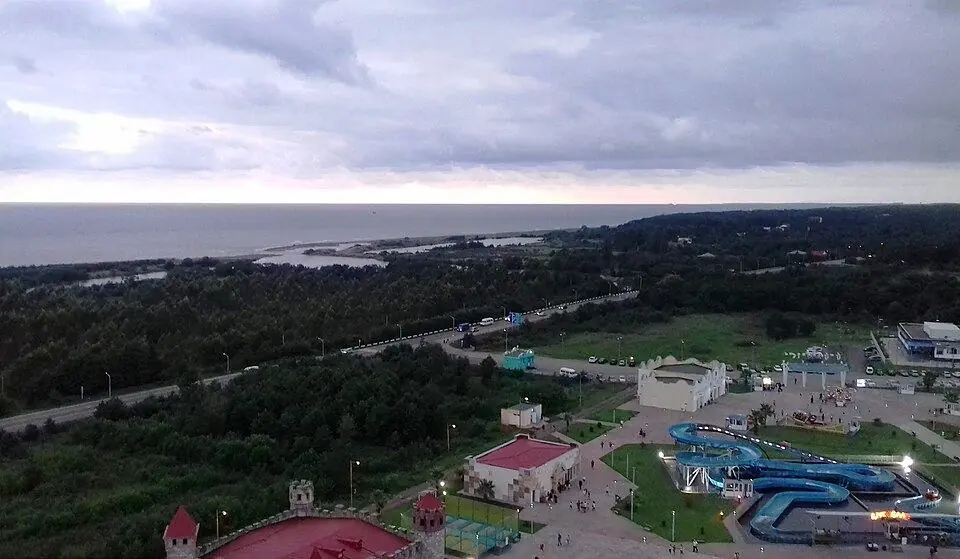
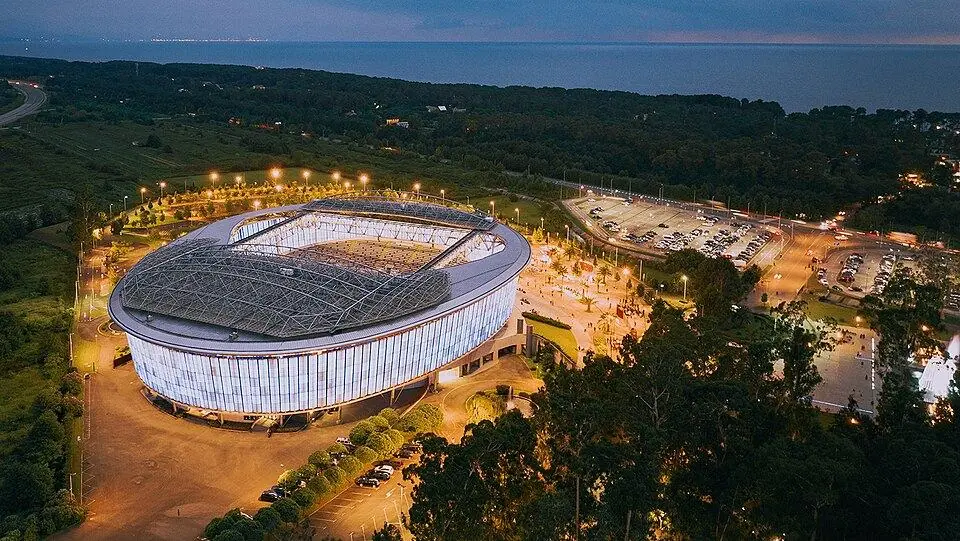
Shekvetili, ~8 km closer to Batumi, puts a belt of pine wood between the road and a few kilometres of dark sand. Families rent houses among the trees. It also holds Guria's big attractions: the Black Sea Arena, the Shekvetili Dendrological Park, the scale models of Georgia in Miniature and an amusement park.
- Getting there: ~44 km from Batumi, about 50 minutes, and ~315 km from Tbilisi. Coast minibuses pass by, but a car makes life easier.
- Downside: the resort is spread out, with few places to eat on foot, and the road jams on concert nights in late July and August.
Kobuleti, Tsikhisdziri and Chakvi: Adjara's quieter north coast
Cross the Choloki river into Adjara and the sand gives way to stones. The stretch from Kobuleti to the Green Cape is low-rise and calmer than Batumi. A minibus ride from the city to Kobuleti is about 3 GEL (about $1) in 2026.
Kobuleti
Kobuleti is a long, flat resort where guesthouses and family hotels stand beside Soviet sanatoriums, with a pine grove behind much of the seafront. The beach runs for ~10 km, mostly small pebbles, with patches of coarse sand. Rooms cost less than in Batumi, so many Georgian and Armenian families stay a week or more.
- Facilities: loungers, cafes, showers and lifeguard towers in season.
- Getting there: ~27 km from Batumi, 35 to 40 minutes, and ~330 km from Tbilisi, with its own station on the fast line.
- Downside: Kobuleti is as rainy as Batumi, at about 2,500 mm a year, and the long main road makes the town feel stretched out.
Tsikhisdziri
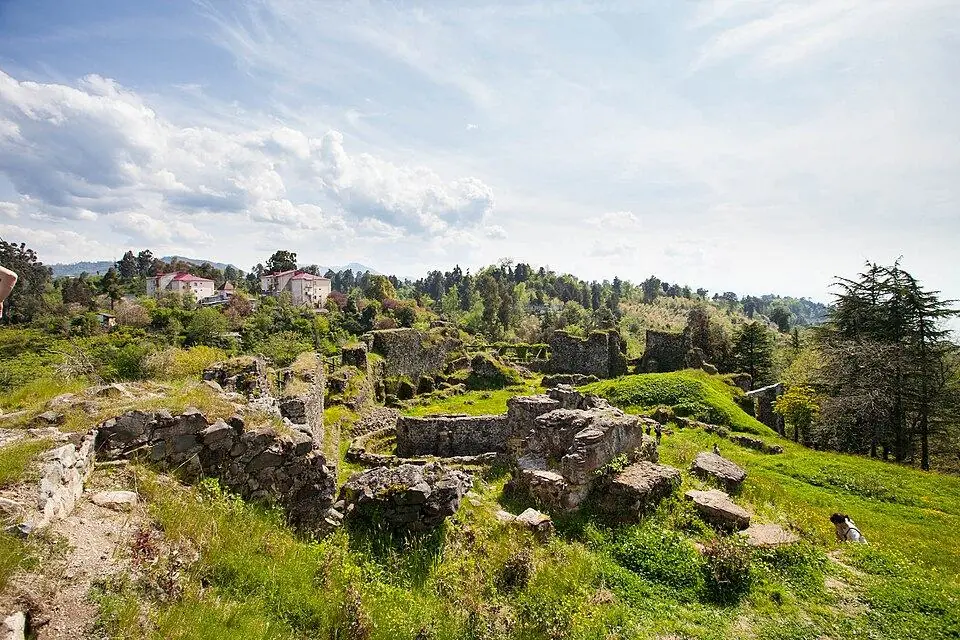
Tsikhisdziri is a cape village ~22 km north of Batumi, where the hills push into the sea. Below the 6th-century ruins of Petra Fortress, small pebble coves give you a swim with a view. A few hotels and guesthouses cling to the slope, and that is about all.
- Downside: there are few services by the water, so carry drinks and snacks.
Chakvi
Chakvi, ~15 km from Batumi, is the village where Georgia's first big tea estates were planted in the 1890s. Its calm pebble beach serves mostly locals and a few resort hotels. Children will spot the large Dreamland Oasis aquapark. The road to Mtirala National Park leaves the coast here, so a forest walk and a swim fit into one day.
- Downside: Chakvi gets some of the heaviest rain in the country, and the railway and the coast road run between some hotels and the sea.
Green Cape, Makhinjauri and Batumi: city beaches on the Black Sea
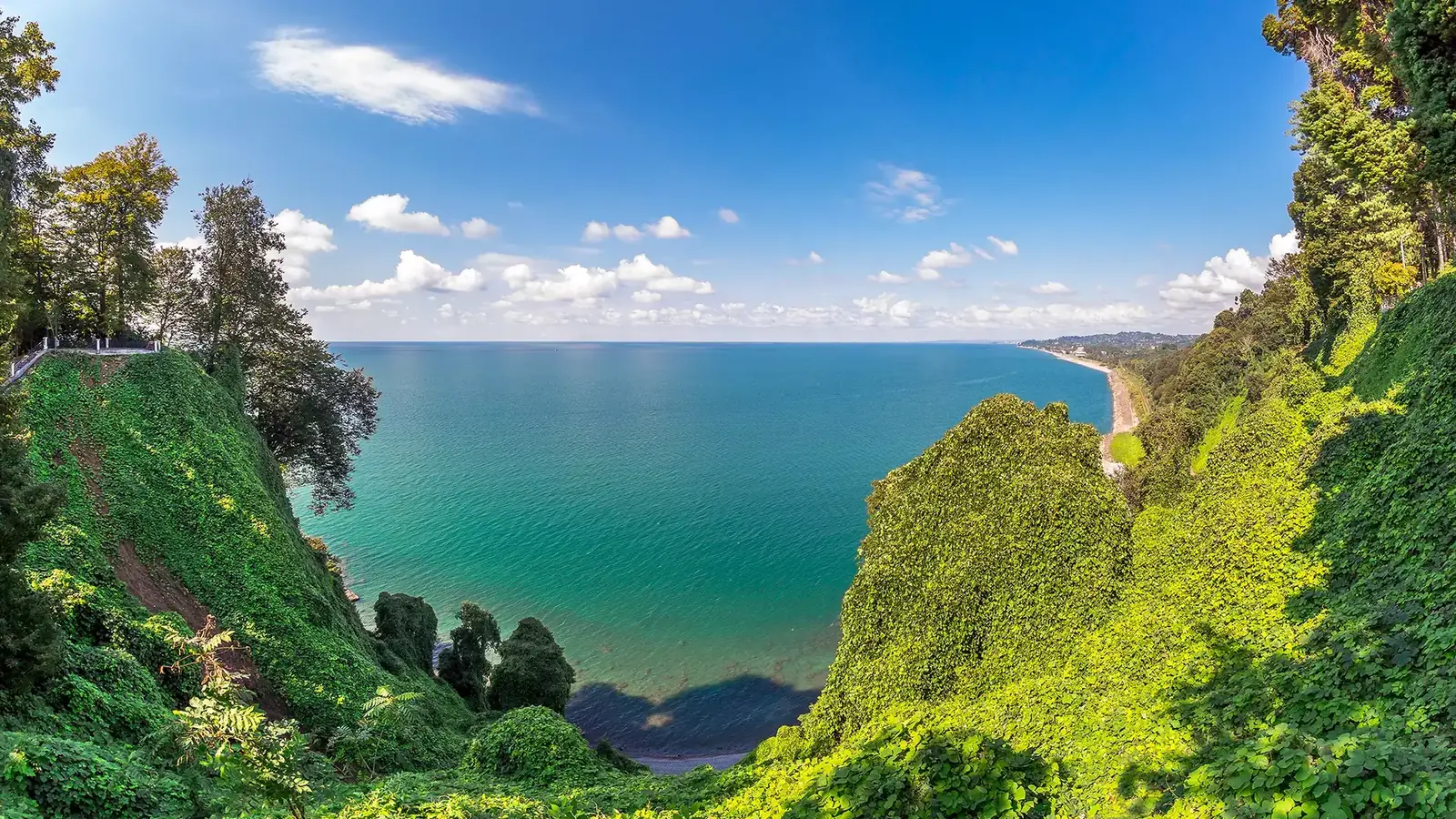
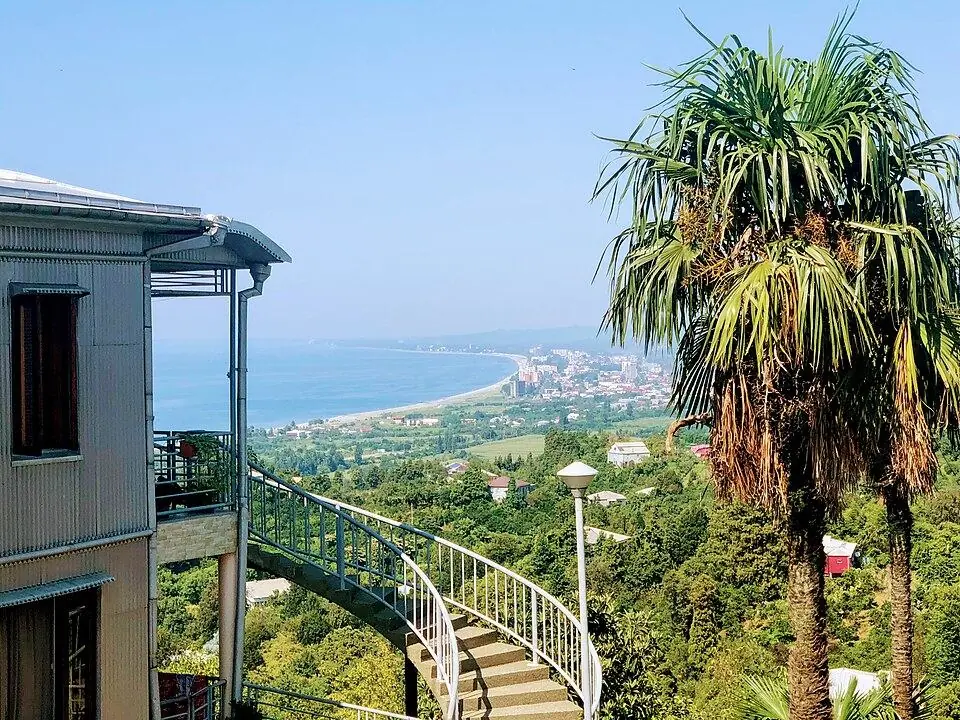
At the Green Cape, ~10 km north of the centre, the Batumi Botanical Garden climbs from the shore. A small pebble beach lies at its foot, and a swim is the best reward after three hours on the garden's steep paths.
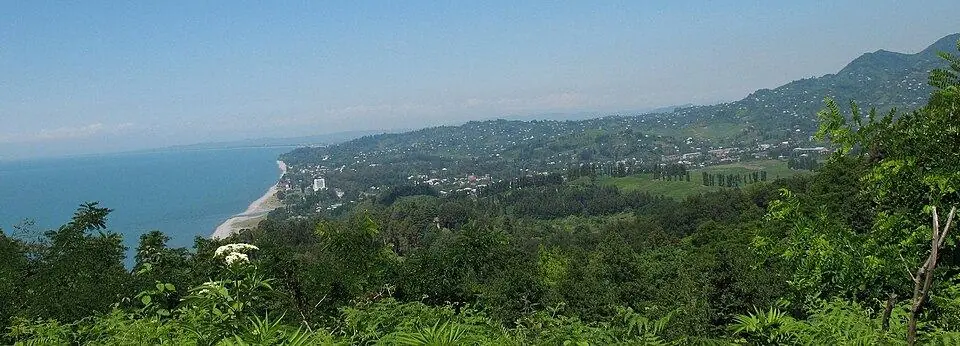
Makhinjauri, ~7 km out, is a resort suburb on the pebbles with hotels, beach volleyball and pedal boats. Its sulphur springs have drawn visitors since the early 20th century, though the old bathhouse was still being renovated in 2026. At both spots the railway and the coast road squeeze between the hills and the beach, so you often reach the sea through an underpass.
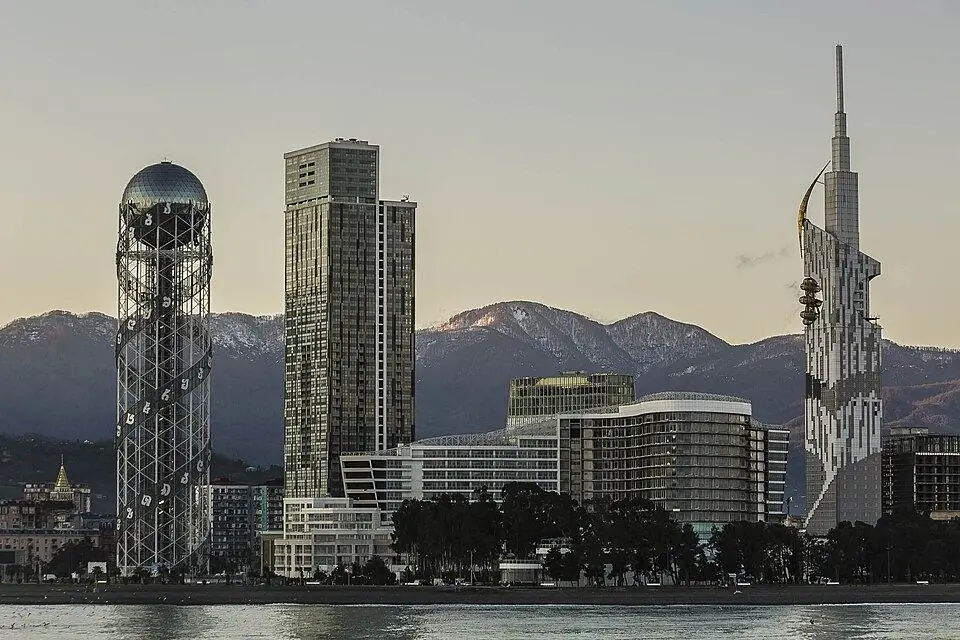
Batumi itself has about 7 km of pebble beach below its boulevard. It is the easiest choice for a first Georgia beach holiday: loungers, lifeguards and showers in summer, and the old town a few minutes' walk away. The downside: from late morning in July and August, the central beach is crowded.
Our where to stay in Batumi guide compares the city's areas and hotels, and our day trips from Batumi guide covers the forests and valleys inland.
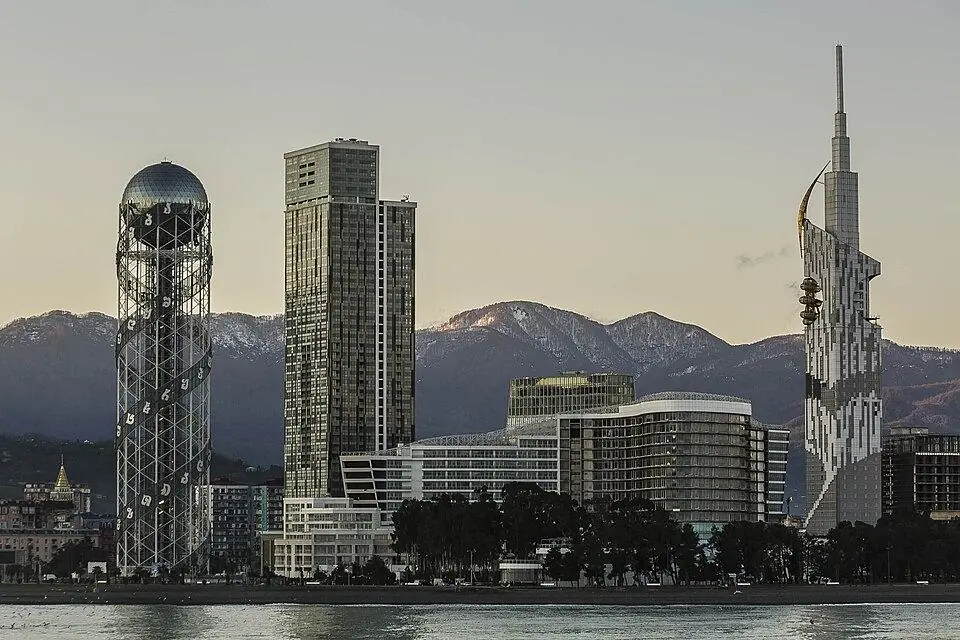
Gonio, Kvariati and Sarpi: the clearest water in Georgia
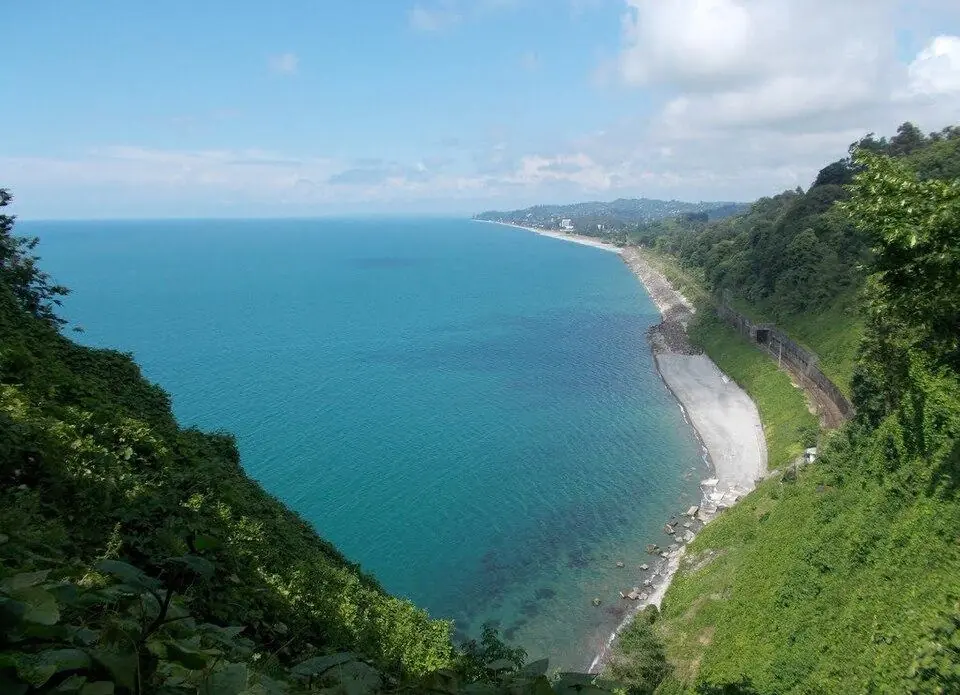
Past the airport and the mouth of the Chorokhi, forested hills come right down to the shore. The sea here is usually the clearest in the country. The pebbles are bigger, and the beach drops steeply into deep water. City bus 16 and Sarpi minibuses link all three villages to Batumi. Our guide to the beaches near Batumi takes them one by one, with bus 16 and taxi times.
Gonio
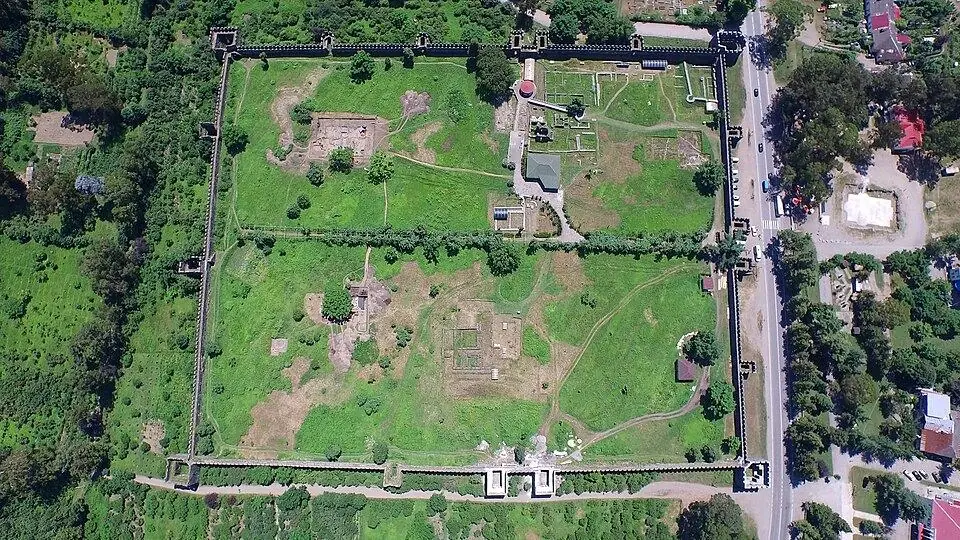
Gonio has a wide beach with a promenade, villas and family hotels, a short walk from the Roman walls of Gonio Fortress. In summer, paragliders take off from the hills above. It is ~14 km from Batumi, 20 to 25 minutes by car.
- Downside: on summer weekends the one road south, and the beach, fill with day-trippers from the city.
Kvariati
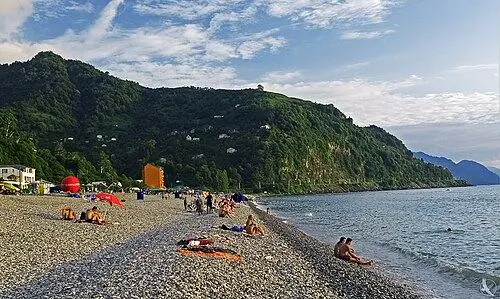
Kvariati is a small bay about 1 km long. A diving centre works from the rocks at its southern end, which makes it one of the few places in Georgia to try a first dive. Beach bars stay open late in July and August. It is ~16 km from Batumi, about 25 minutes.
- Downside: big stones and a steep shelf make it hard for small children, and space runs out by late morning at weekends.
Sarpi
Sarpi is a Laz village right at the Turkish border, with ~3 km of fine pebbles, rocks to jump from and water at about 25-27 °C through the summer. In August the village holds Kolkhoba, a Laz festival of the sea. It is ~20 km from Batumi, 25 to 30 minutes.
- Downside: the busy border post stands above the beach, so carry your passport and keep your camera off the checkpoint.
When to go to Georgia's Black Sea coast: sea temperature by month
The swimming season runs from late June to late September. Keen swimmers start in late May and carry on into the first half of October. The sea is warmest in August, at about 27 °C, and stays at about 25 °C in September. The sea figures hold for the whole coast.
| Month | Sea | Batumi high | Ureki high | Rain in Batumi | Swim? |
|---|---|---|---|---|---|
| January | about 11 °C | ~12 °C | ~11 °C | ~235 mm | No |
| February | about 10 °C | ~12 °C | ~12 °C | ~185 mm | No |
| March | about 10 °C | ~14 °C | ~15 °C | ~155 mm | No |
| April | about 12 °C | ~17 °C | ~19 °C | ~90 mm | No |
| May | about 17 °C | ~20 °C | ~23 °C | ~90 mm | Hardy swimmers only |
| June | about 23 °C | ~25 °C | ~27 °C | ~140 mm | Yes, from mid-month |
| July | about 26 °C | ~27 °C | ~29 °C | ~165 mm | Yes |
| August | about 27 °C | ~28 °C | ~29 °C | ~220 mm | Yes, the warmest |
| September | about 25 °C | ~25 °C | ~27 °C | ~330 mm | Yes |
| October | about 21 °C | ~21 °C | ~22 °C | ~320 mm | First half, on calm days |
| November | about 17 °C | ~17 °C | ~17 °C | ~305 mm | No |
| December | about 14 °C | ~14 °C | ~13 °C | ~275 mm | No |
The warmest weeks, late July to late August, are also when the whole country heads to the sea. Rooms cost the most, the coast road crawls on Saturdays, and 28 August, the Assumption, is a public holiday that fills every beach. Late June and the first three weeks of September give you water above 23 °C and far more space.
In September the rain picks up in Adjara, while Guria and Anaklia stay drier. Our Batumi sea temperature page follows the water month by month, and the Ureki weather, Kobuleti weather and Anaklia weather pages cover the other resorts.
Getting to the Black Sea coast of Georgia: trains, flights and minibuses
By train
In autumn 2026, two fast double-deck trains a day leave Tbilisi for Batumi, at 08:05 and 17:10, and more run in summer. Between the two cities they stop just three times: Kutaisi Airport, Ureki and Kobuleti. Ureki is about 3 h 25 min out, and Batumi about 4 hours. A 2nd-class seat to any stop: about 35 GEL (about $13) in 2026; 1st class: about 75 GEL (about $29). Book a few days ahead for summer weekends.
For Anaklia, take the 08:15 train to Zugdidi, about 5 h 20 min from Tbilisi; a 2nd-class seat is about 16 GEL (about $6) in 2026. A minibus or taxi covers the last stretch. A slow train to Ozurgeti runs every other day and also calls at Ureki, but the fast train is quicker. Our Tbilisi to Batumi guide and our guide to trains in Georgia have the full timetables.
By air
Batumi airport lies just south of the city, minutes from Gonio and Kvariati. Most of its routes fly in summer only, though Istanbul flights run all year. Guria is closer to Kutaisi airport, where Wizz Air lands from many European cities, five of them in Germany. Ureki is ~75 km away, a little over an hour by car, and coaches to Batumi meet arriving flights for about 20-30 GEL (about $8-12) in 2026.
By minibus and coach
A marshrutka from Didube in Tbilisi takes 6 to 7 hours to Batumi, and fares ran about 30 to 40 GEL (about $12 to $15) in 2026 one way. Coaches from Ortachala are a little faster. On the coast, minibuses run all day: Poti-bound ones stop at Shekvetili and Ureki, and in Zugdidi the Anaklia minibuses leave from near the bazaar. Pay the driver in cash.
Prefer not to juggle timetables? Tell us your dates and we will plan a private trip to the coast: any day you like, two people or twenty, a guide who speaks your language and children of every age welcome. We can meet you at Kutaisi or Batumi airport and stop wherever the water looks good. With more time, try From the Mountains to the Sea, an eight-day tour that crosses the country and finishes on the Batumi coast.
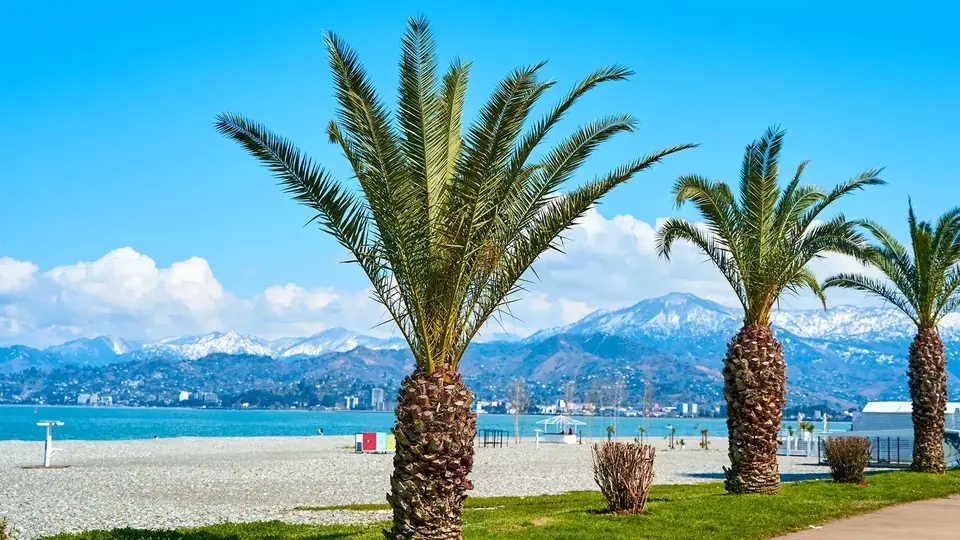
Beach practicalities: loungers, lifeguards, currents and shade
- Loungers and umbrellas: the beaches are free to use. Under Batumi's 2026 beach leases, a lounger may cost no more than about 10 GEL (about $4) and an umbrella no more than about 5 GEL (about $2). Smaller resorts usually charge the same or less. Carry some cash.
- Lifeguards: in summer, rescuers from the Interior Ministry's emergency service staff towers on the Adjara beaches from Sarpi to the Choloki, and the main Guria beaches have their own. Swim inside the buoys and stay out under a red flag.
- Waves and currents: Adjara's pebble beaches drop off within a few metres, and waves break hard on them in a swell. After storms, rivers such as the Chorokhi and the Enguri push muddy water and strong currents out to sea. Keep away from river mouths after rain.
- Shade: pine groves stand behind the beaches at Kobuleti, Shekvetili and Grigoleti, but on the sand you need an umbrella, a hat and strong sunscreen.
- Shoes: water shoes make Adjara's stones far easier and protect your feet from Guria's hot sand.
- Papers and insurance: leave passports and spare cash in your room, except at Sarpi, next to the border. Bring proof of travel insurance too: since 2026, foreign visitors need cover worth 30,000 GEL (about $11,600) or more.
A Georgia beach holiday with children: where to go
For toddlers and early swimmers, Guria wins. At Ureki, Grigoleti and Shekvetili, the sand is soft and the water stays knee-deep far from the shore.
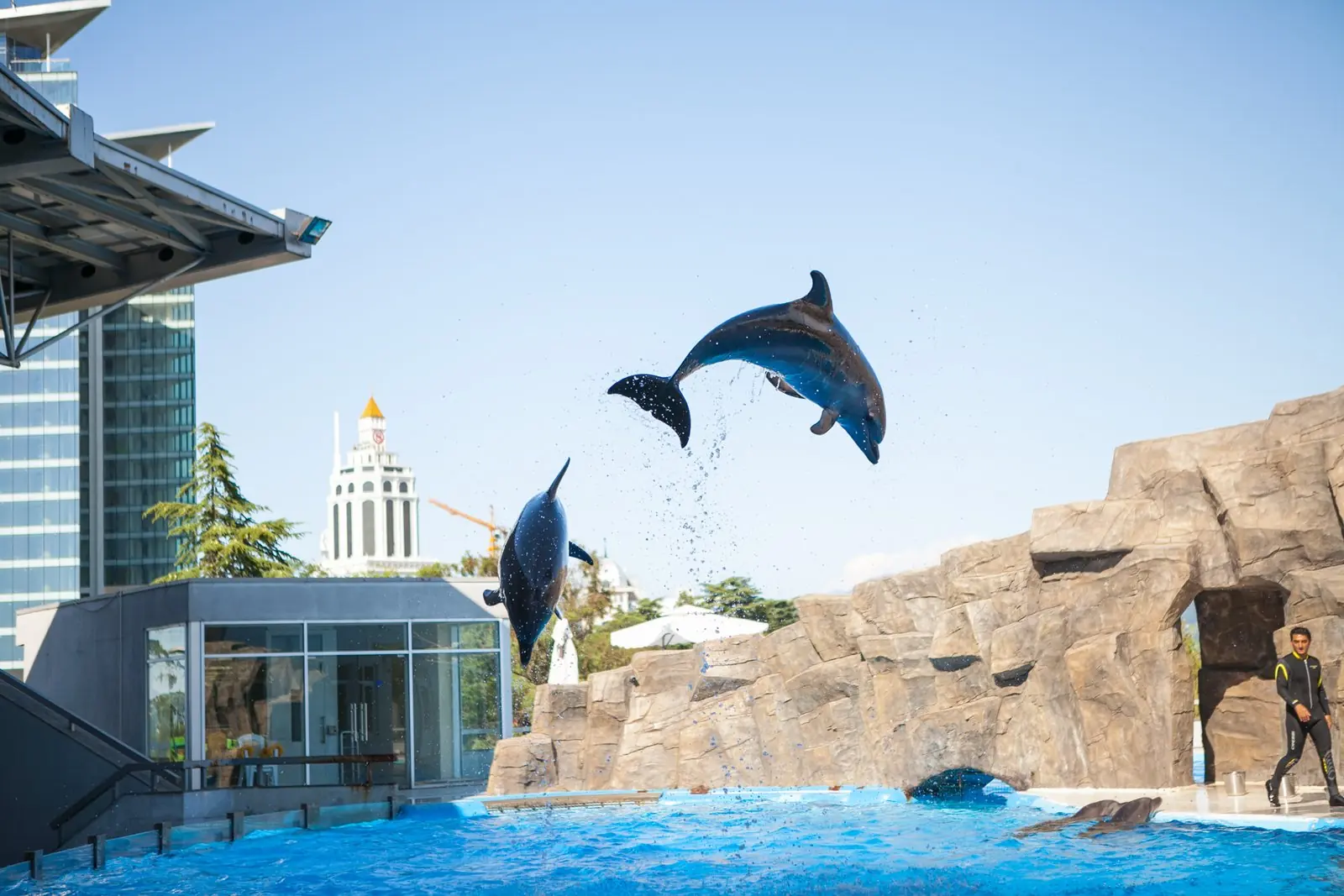
Kobuleti suits families who want cheaper rooms and a calm seafront. Batumi adds rainy-day backups, such as the Batumi Dolphinarium and the boulevard's playgrounds and bike lanes.
Leave Kvariati and Sarpi for older children who swim well. The stones are big, the shelf is steep, and the water is deep within a few strides.
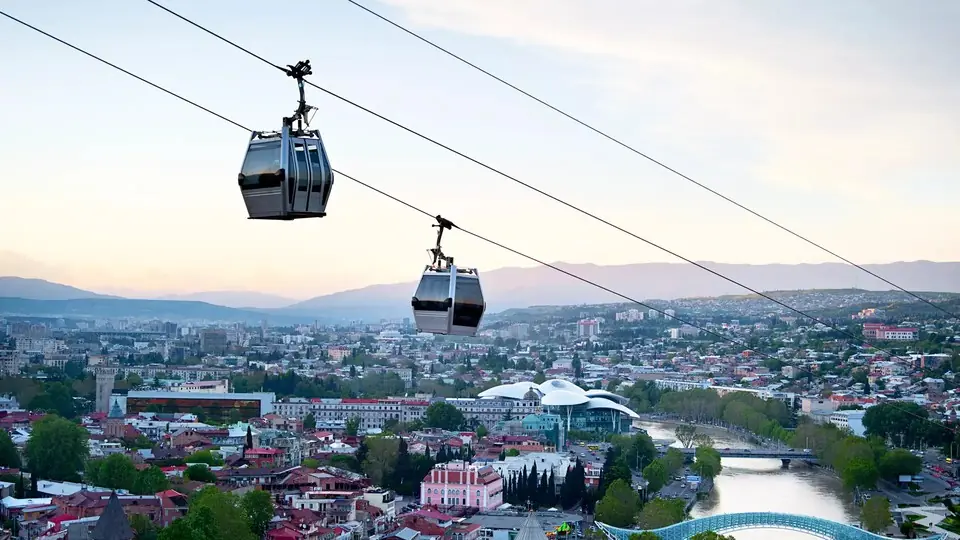
Our Georgia for Families tour shows children cable cars, caves, ponies and a canyon by boat, then ends with beach time in Batumi. It is private, so it runs on your dates, for children of any age.
Lake beaches near Tbilisi: Tbilisi Sea, Lisi and Bazaleti
Staying inland in July? Tbilisi has its own swimming spots.
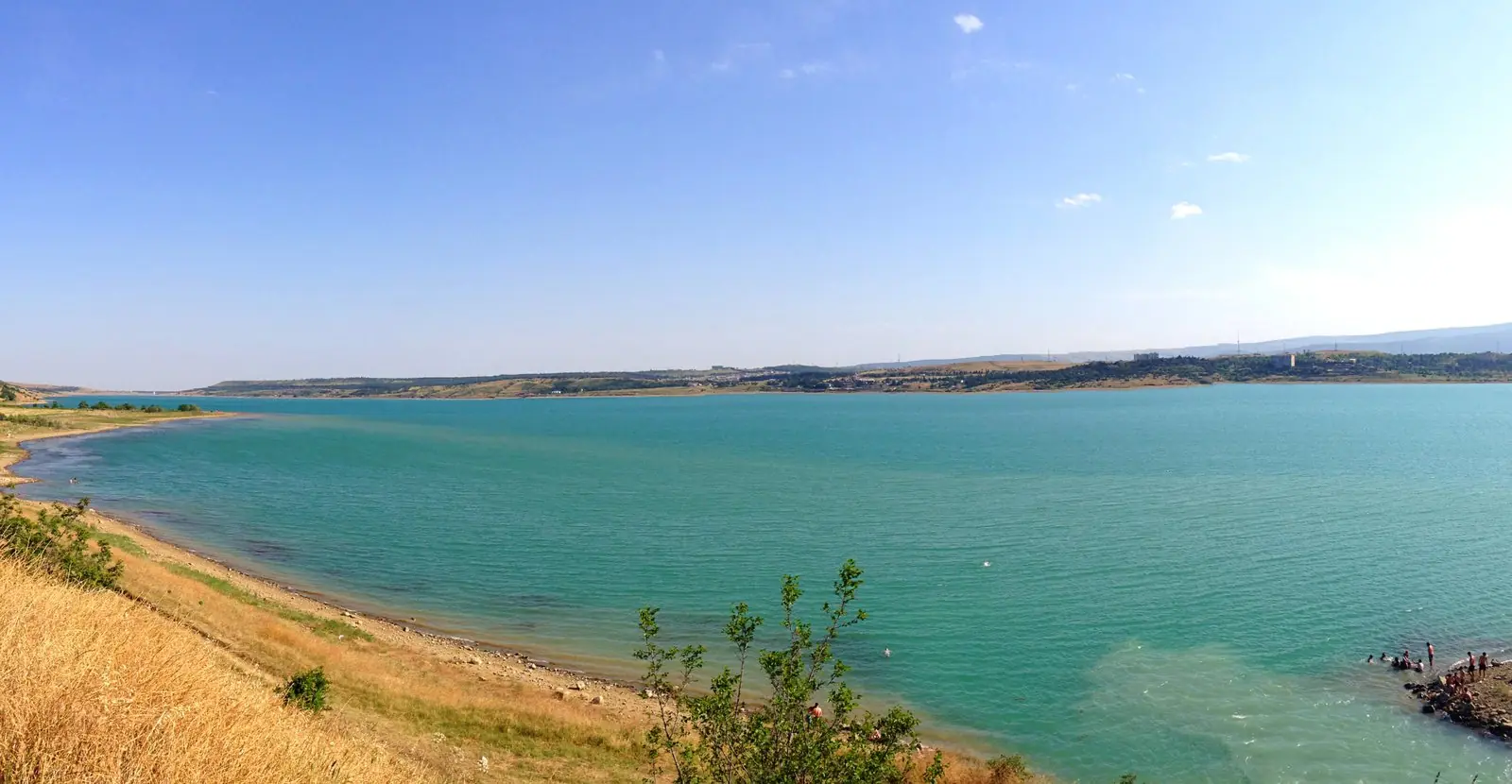
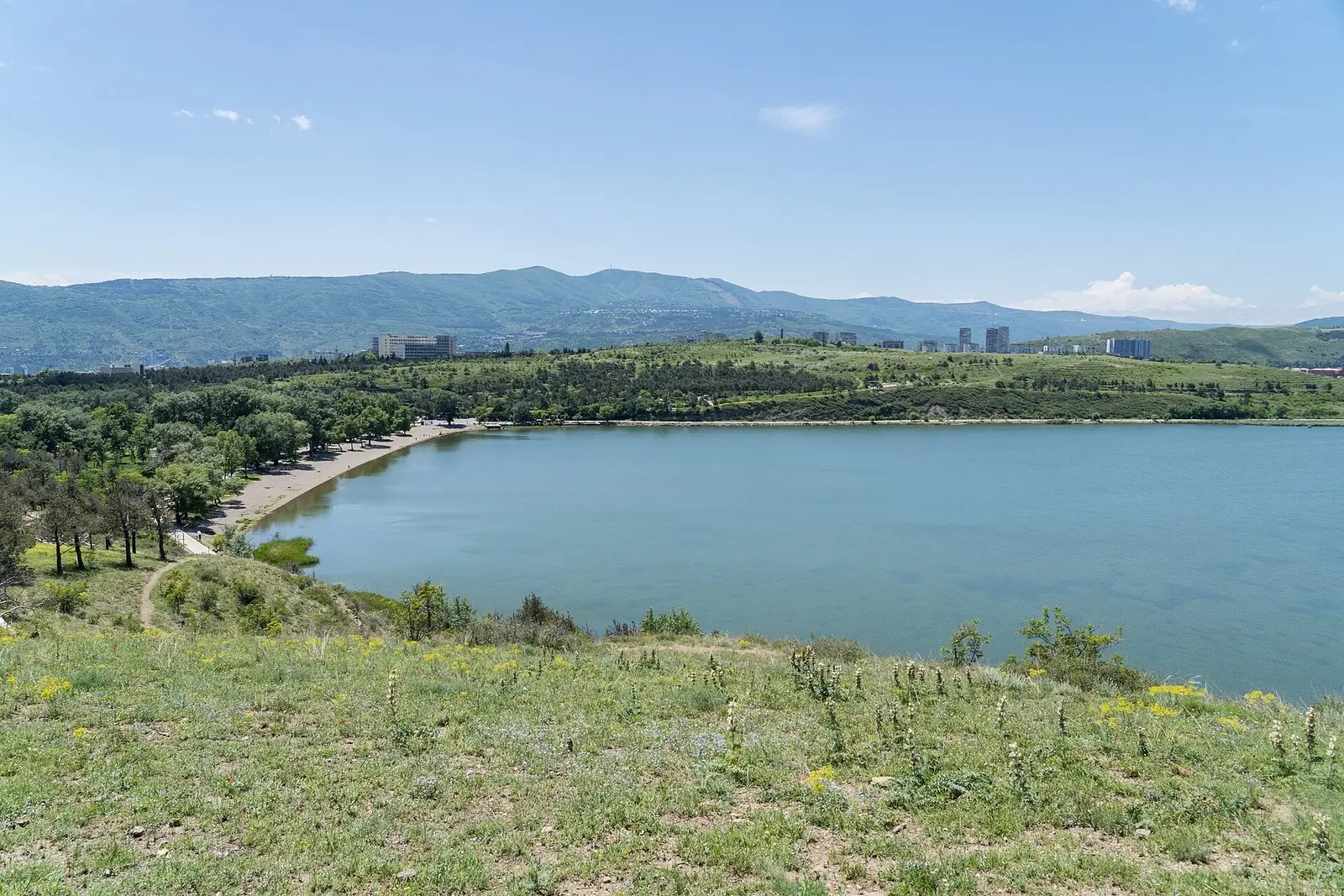
- Tbilisi Sea: a 1950s reservoir ~11 km from the centre, with a free beach below the Chronicles of Georgia and a paid club with pools further south.
- Lisi Lake: a shallow lake on the city's north-west edge, ~12 km from the centre, with a small beach on its southern shore and a ~3 km path around the water.
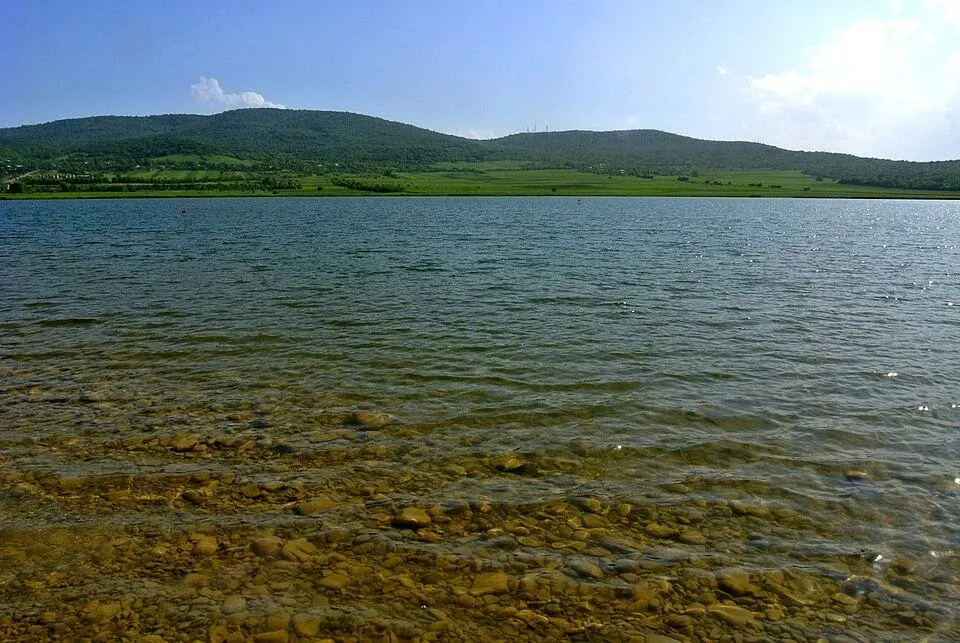
- Bazaleti Lake: a small lake at 878 m, ~50 km north of the capital, about an hour by car, with boats for hire and lakeside cafes.
We found no official 2026 water-quality results for any of the three. Swim where the locals swim, and skip it after heavy rain.
Beaches in Georgia: FAQ
What are the best beaches in Georgia?
For sand and shallow water, Ureki, Grigoleti and Shekvetili in Guria. For the clearest sea, Kvariati and Sarpi, south of Batumi. For a city break with a beach, Batumi, and for the sunniest skies, Anaklia in the far north.
Does Georgia have sandy beaches?
Yes, mainly in Guria: the sand at Ureki, Grigoleti and Shekvetili is dark and full of magnetite. Anaklia mixes sand and shingle. From Kobuleti south to the Turkish border the beaches are pebble, so pack water shoes.
When is the best time for a Georgia beach holiday?
July to mid-September, when the sea holds about 25-27 °C. Late June and September are quieter, with the water at about 23-25 °C. August is the warmest and busiest month.
Is the Black Sea in Georgia warm enough to swim in June?
Yes, from about mid-June. The sea averages about 23 °C in June, against about 17 °C in May and about 26 °C in July. Early June can still feel fresh on a cloudy day.
Is it safe to swim on Georgia's Black Sea coast?
Yes, on calm days at beaches with a lifeguard tower. The Black Sea has almost no tide, but waves break hard on Adjara's steep pebble shores in a swell. Stay out under a red flag, keep children close and avoid river mouths after rain.
Which beach in Georgia is best for small children?
Ureki, for its soft sand and water that stays shallow far out. Grigoleti and Shekvetili offer the same shore with fewer people. Kobuleti is a good middle ground, with cheaper stays and a station on the Tbilisi line.
How do I get from Tbilisi to the beach?
Take the fast train: about 3 h 25 min to Ureki, about 3.5 hours to Kobuleti and about 4 hours to Batumi. Coaches and marshrutkas are slower, and a private driver lets you stop on the way.