Chicken Tabaka Recipe
წიწილა ტაბაკა
This chicken tabaka recipe opens a poussin along the breastbone, fries it flat under a weight until the skin is crisp and deep gold, and brings it to the table with niortskali, a sharp Georgian garlic water. About 70 minutes from start to plate.
Recipe by the Maspindzeli team in Tbilisi · Updated 7 Nov 2026 · Cooked all over Georgia, in family kitchens and on restaurant menus
Full recipe with the timeline, timers and US measures: maspindzeli.ge/recipes/chicken-tabaka/
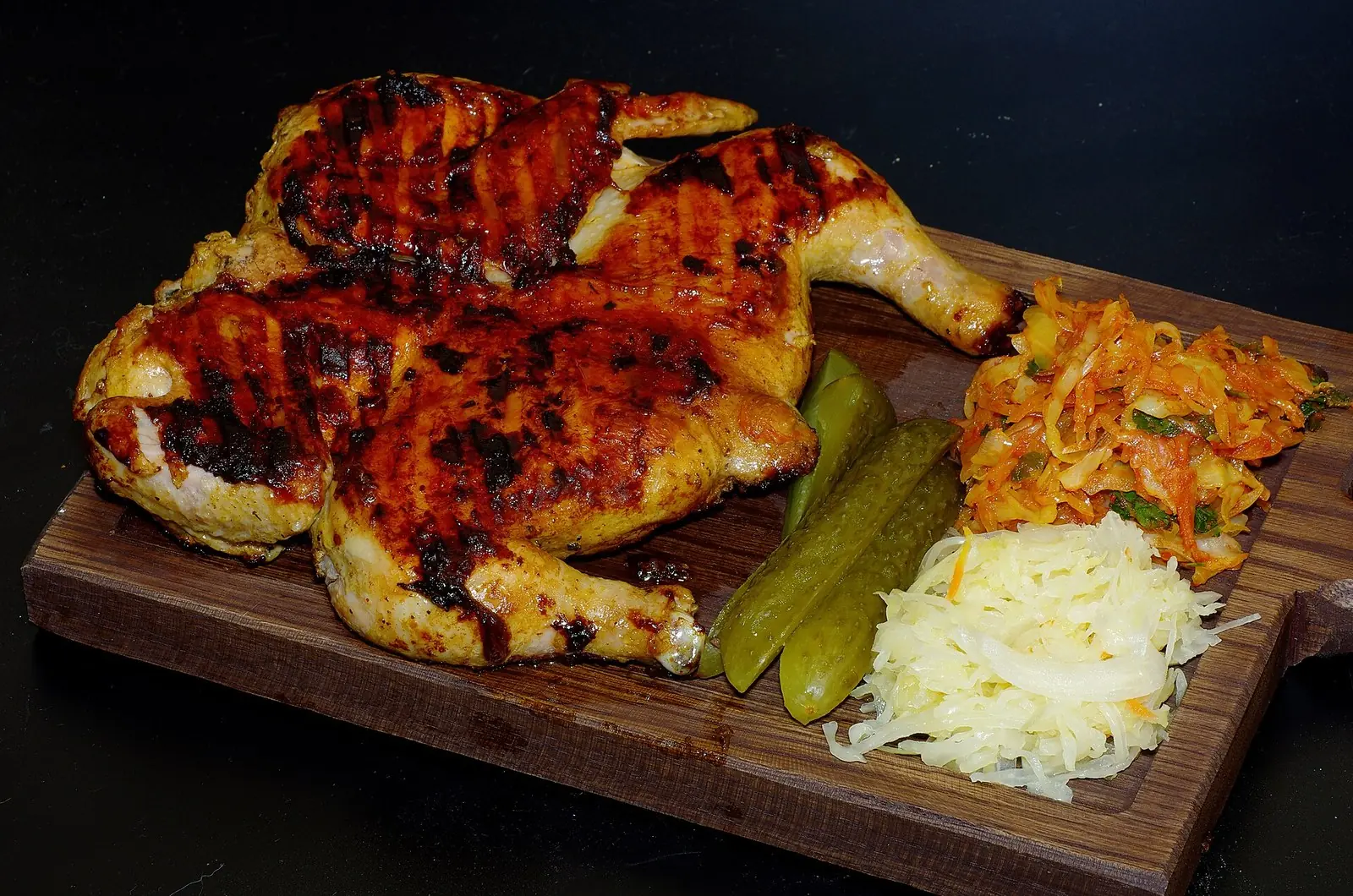
Chicken tabaka is a young chicken split down the front, opened out flat and fried in a heavy pan with a weight on top, so the skin stays pressed against the hot metal and turns crisp and evenly golden. This chicken tabaka recipe follows the Georgian home method: little more than salt and pepper on the bird, ghee in the pan, and a small bowl of niortskali, raw garlic loosened with warm broth, to spoon over at the table. In Georgian it is tsitsila tabaka, and you will also see it written chicken tapaka.
The name points to the pan. A tapa (ტაფა) is a heavy Georgian frying pan with a lid that presses down on what is cooking, and Russian speakers changed tapaka into tabaka, so Russian menus list it as tsyplyonok tabaka. In Soviet times the dish became a standard of restaurant cooking far beyond Georgia, and it is still a familiar order from Eastern Europe to Central Asia. Some modern tabaka pans have a screw press, but any heavy frying pan with something weighty on top does the job, which is why American recipes sometimes call it Georgian chicken under a brick.
Traditionally each person gets a whole small bird. Learning how to make chicken tabaka is mostly a matter of patience: moderate heat, steady pressure and only one turn. Buy poussins or the smallest chickens you can find, 500 to 700 g each, and a meat thermometer helps if you are new to it.
Timeline: what to do, and when
1 h 7 min from start to table · 25 min hands-on · 20 min waiting
Each bar is one step. Hands-on Waiting, while the oven, the pot or the dough does the work. Steps that sit inside a wait are done in parallel.
Recipe
Chicken Tabaka
Ingredients
Birds
Niortskali (garlic water)
Amounts are scaled. Times stay about the same, but a bigger pot takes a little longer to come to the boil.
Contains: milk.
You will need
- Heavy knife or sturdy kitchen scissors
- Two heavy frying pans, 26 to 28 cm, ideally cast iron (one for each bird), or a tapa with a press lid
- A weight for each pan, about 3 kg: a smaller pan holding a few full tins, a pot of water or a clean brick wrapped in foil
- Baking paper
- Pestle and mortar or a garlic press
- Meat thermometer (optional but useful)
Method
- Split and flatten the birds10 min hands-on· start here
Set a bird breast side up and cut straight down through the breastbone with a heavy knife or scissors, leaving the backbone in one piece. Open it out like a book, turn it skin side up and lean on the backbone with the heel of your hand until it cracks and the bird lies flat. Snip off the wing tips, tuck the wings behind and pat both birds very dry with kitchen paper.
- Salt and rest20 min waiting· starts at +10 min
Rub the fine salt, black pepper and red pepper, if using, into both sides of each bird. Set them skin side up on a plate and leave them out of the fridge for 20 minutes, so the salt sinks in and the meat loses its chill.
- Make the niortskali8 min hands-on· starts at +12 min, during step 2
Peel the garlic and pound it with the coarse salt in a mortar to a wet paste, or push it through a garlic press and work the salt in with the back of a spoon. Stir in the hot stock, then the ground and fresh coriander, if using, and set the bowl aside. Taste it: it should be salty, sharp and full of garlic.
- Fry skin side down under a weight15 min waiting· starts at +30 min
Put the pans over a medium-high heat with half the ghee in each. When it shimmers, lay in the birds skin side down, cover each with a sheet of baking paper and set the weight on top so the whole bird presses against the pan. After 2 minutes lower the heat to medium and leave them for about 13 minutes more, until the skin is an even deep gold; peek under one edge and turn the heat down if it colours too quickly.
- Turn and fry the second side15 min waiting· starts at +45 min
Turn the birds over with tongs, return the paper and weights, lower the heat a little more and give them another 12 to 15 minutes. They are ready when a thermometer pushed into the thickest part of the thigh reads 75 °C / 165 °F and the juices run clear. If not, lift off the weight, cover the pan with a lid and give them 3 to 5 minutes more.
- Rest and warm the garlic water5 min hands-on· starts at +1 h
Lift the birds onto warm plates skin side up and let them rest for 5 minutes. Pour all but a spoonful of fat out of one pan, set it over the lowest heat and tip in the niortskali, scraping up the browned bits with a wooden spoon for about 30 seconds. Take it off before it boils, so the garlic stays bright and pungent.
- Serve2 min hands-on· starts at +1 h 5 min
Spoon a little garlic water over each bird and pour the rest into a small bowl for the table. Eat at once, while the skin still crackles.
About 800 kcal per serving (one 600 g bird with garlic water, without bread or sides). This is an estimate from standard values for the ingredients, not a lab figure.
Tabaka is finger food. Pull off a leg or a wing, dip it into the garlic water or tkemali, then work the breast meat off the bones with your fingers and use bread to wipe up whatever is left on the plate.
Tips, swaps and variations
Tips from your host
- Small birds give the best tabaka. Georgian cooks keep to young chickens of about 500 to 800 g: anything bigger is too thick at the thigh, so the skin turns dark before the meat by the bone is done.
- Make the weight heavy and flat. A cast-iron pan with three full tins inside, a pot of water or a foil-covered brick all work; Georgian cooks also press with the stone pestle from their mortar.
- Ghee gives the taste of butter without burning over half an hour in the pan. Plain butter alone scorches, so if that is all you have, mix it half and half with sunflower oil.
- Leave the bird alone for the first 10 minutes. The skin sticks at first and releases by itself once it has browned; tugging at it early tears it.
- Watch the heat rather than the clock. The pan should sizzle steadily but never smoke; a fierce flame blackens the skin while the joints are still pink.
- Only one big pan? Fry the birds one after the other and keep the first one warm, uncovered, in a 100 °C / 210 °F oven while the second cooks. Covering it would soften the skin.
Variations and swaps
- One larger chicken: if you can only buy a 1.2 to 1.4 kg bird, cut it right through into two halves and fry each half in its own pan, about 18 minutes skin side down and 15 to 18 minutes on the second side, until the thigh reads 75 °C / 165 °F.
- Dairy-free: fry in 3 tbsp sunflower oil per pan instead of ghee. Georgian home recipes often call for oil, and the skin still crisps well.
- Garlic and coriander rub: some families pound one garlic clove with ground coriander seed and the salt and rub it over the bird before frying. Keep the heat a notch lower, as garlic on the skin burns easily.
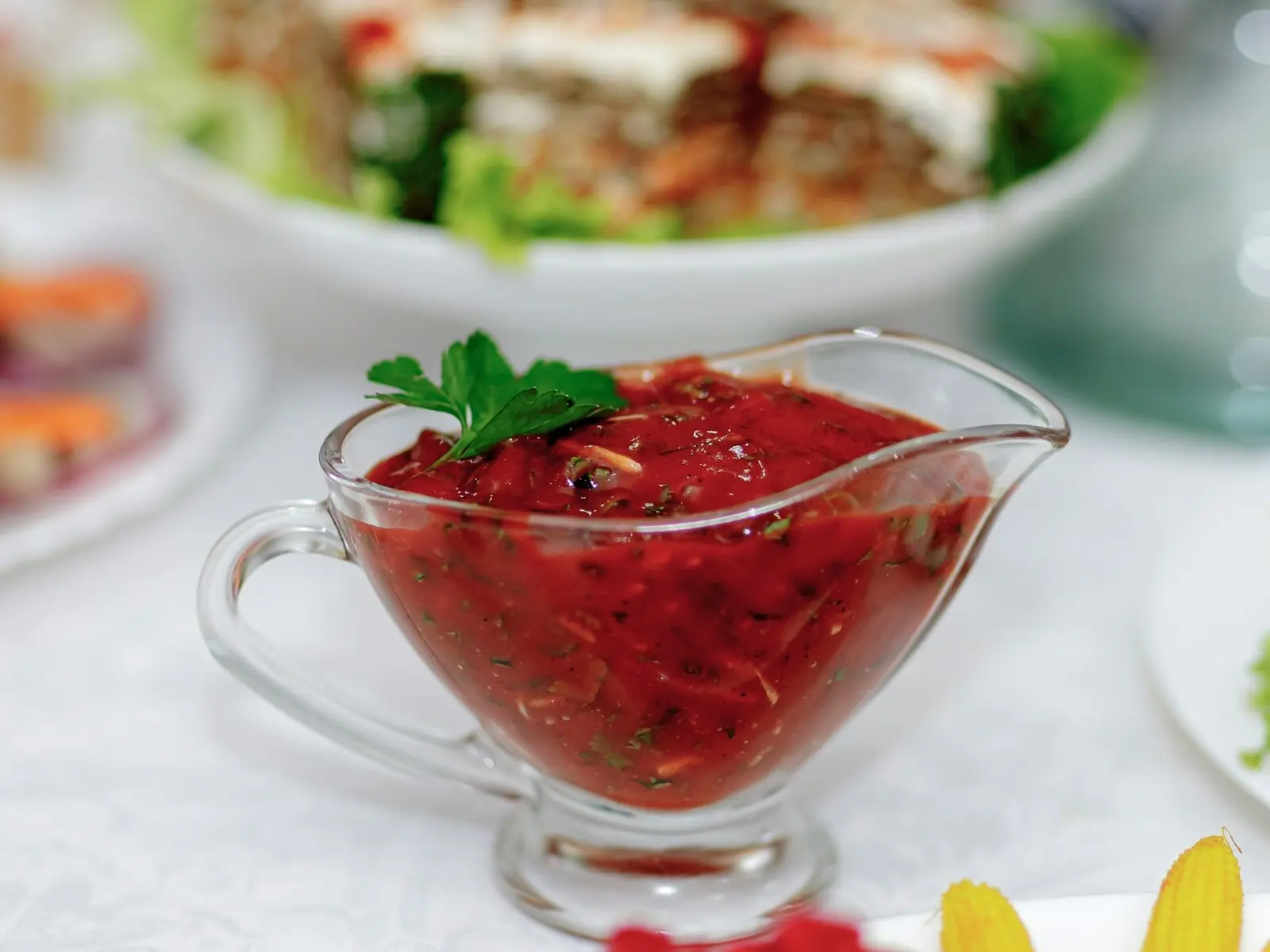
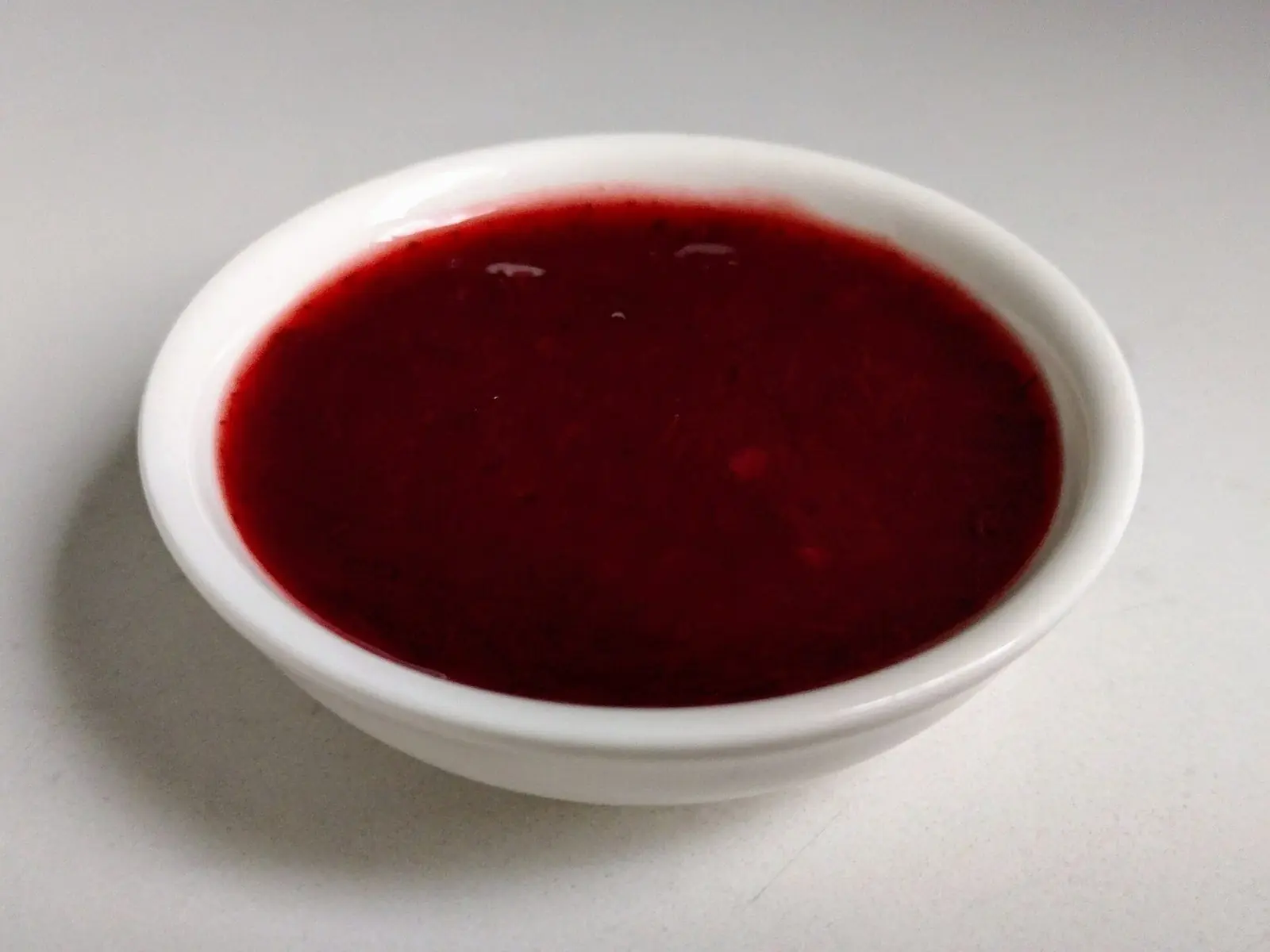
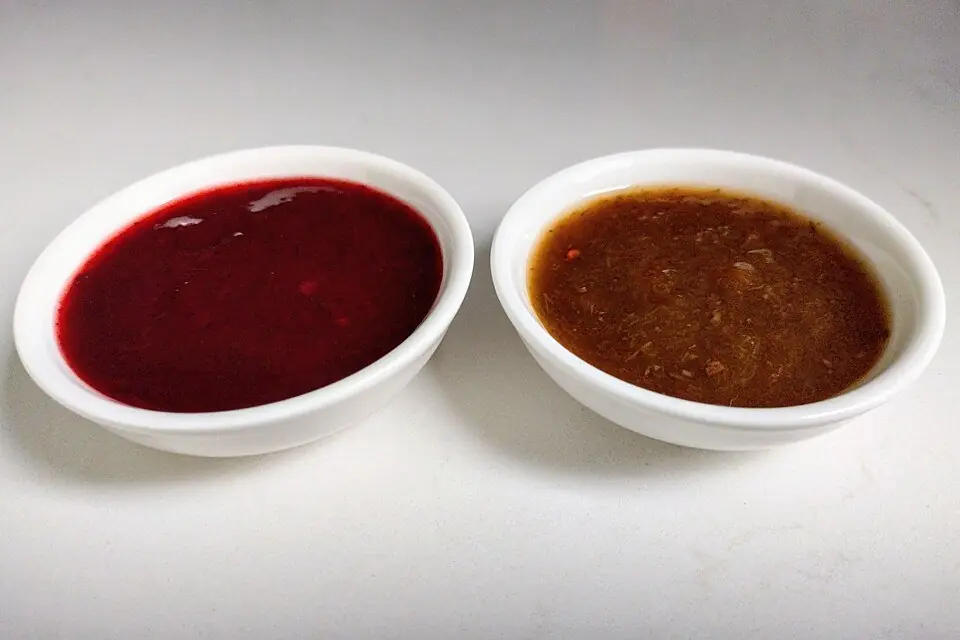
- Other sauces: serve tkemali (sour plum sauce) instead of the garlic water, or a walnut or hazelnut bazhe. In summer, fried young chicken is also served with a sauce of sieved unripe grapes (isrimi) and blackberries mixed with garlic, coriander, dill and chilli.
- Sharper garlic water: make the niortskali with plain hot water, and add a teaspoon of wine vinegar or a pinch of chilli if you like more bite.
- On a barbecue: cook the flattened bird over medium coals with a foil-wrapped brick on top, turning once. Tabaka grilled over charcoal also turns up on Tbilisi menus.
Serve it with
- Niortskali, the garlic water in this recipe, or tkemali, the sour plum sauce
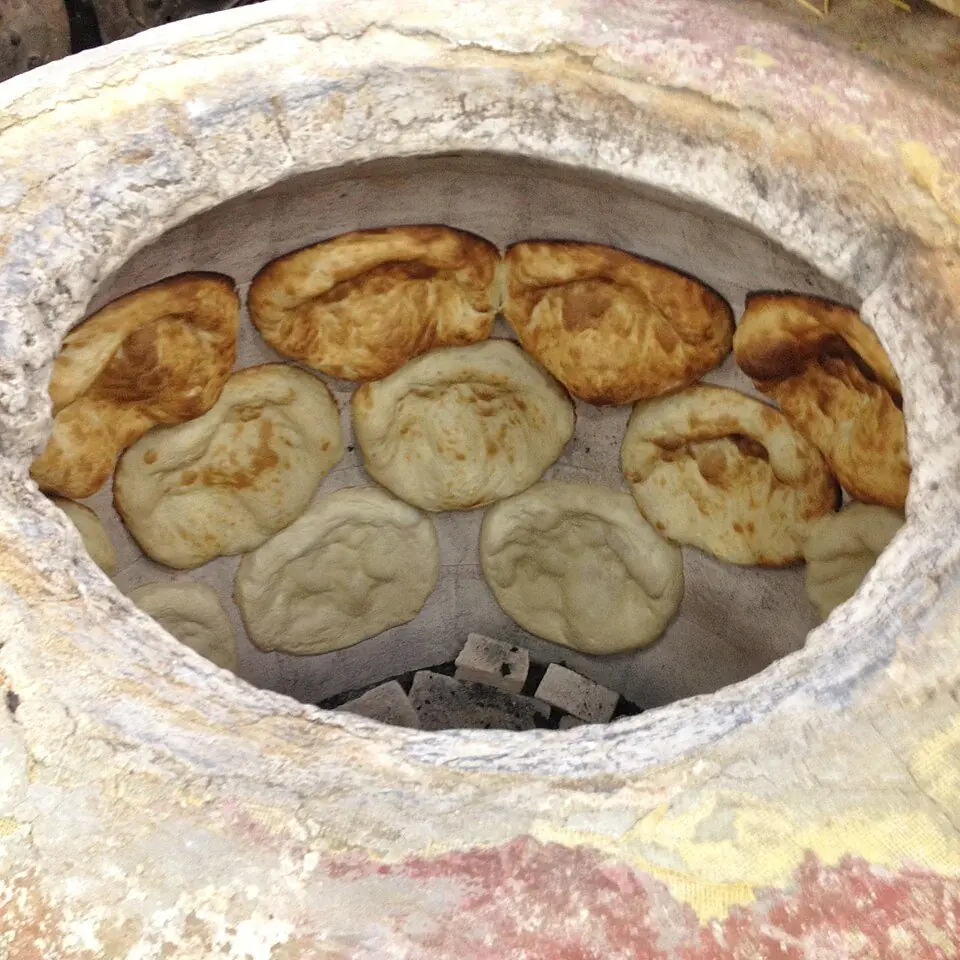
- Shoti or tonis puri bread to soak up the garlicky juices
- Fried potatoes
- A tomato and cucumber salad with a plate of fresh herbs
- Pickles (mzhave) and lemon wedges
- A dry white wine such as Rkatsiteli, or a light, chilled red
Make ahead and storage
Tabaka tastes best within minutes of leaving the pan, while the skin is at its crispest. Cold leftovers stay good for two days in a covered box in the fridge; warm them skin side up in a 200 °C / 390 °F oven for 10 to 12 minutes, or eat them cold with a spoonful of tkemali. Mix a fresh batch of garlic water rather than keeping the old one, as it fades and turns harsh overnight.

Maspindzeli Travel, Tbilisi · private tours and cooking classes in Georgia · maspindzeli.ge · WhatsApp +995 598 74 74 54 · hello@maspindzeli.ge