Satsebeli Recipe
პომიდვრის საწებელი
A home-style satsebeli recipe for the thin, garlicky Georgian tomato sauce: ripe tomatoes and a red pepper stewed, sieved and reduced, then seasoned with chilli, coriander seed and blue fenugreek. With a quick raw version for summer and a tinned-tomato one for winter.
Recipe by the Maspindzeli team in Tbilisi · Updated 11 Nov 2026 · Made everywhere, in big pots when tomatoes are cheap
Full recipe with the timeline, timers and US measures: maspindzeli.ge/recipes/satsebeli/
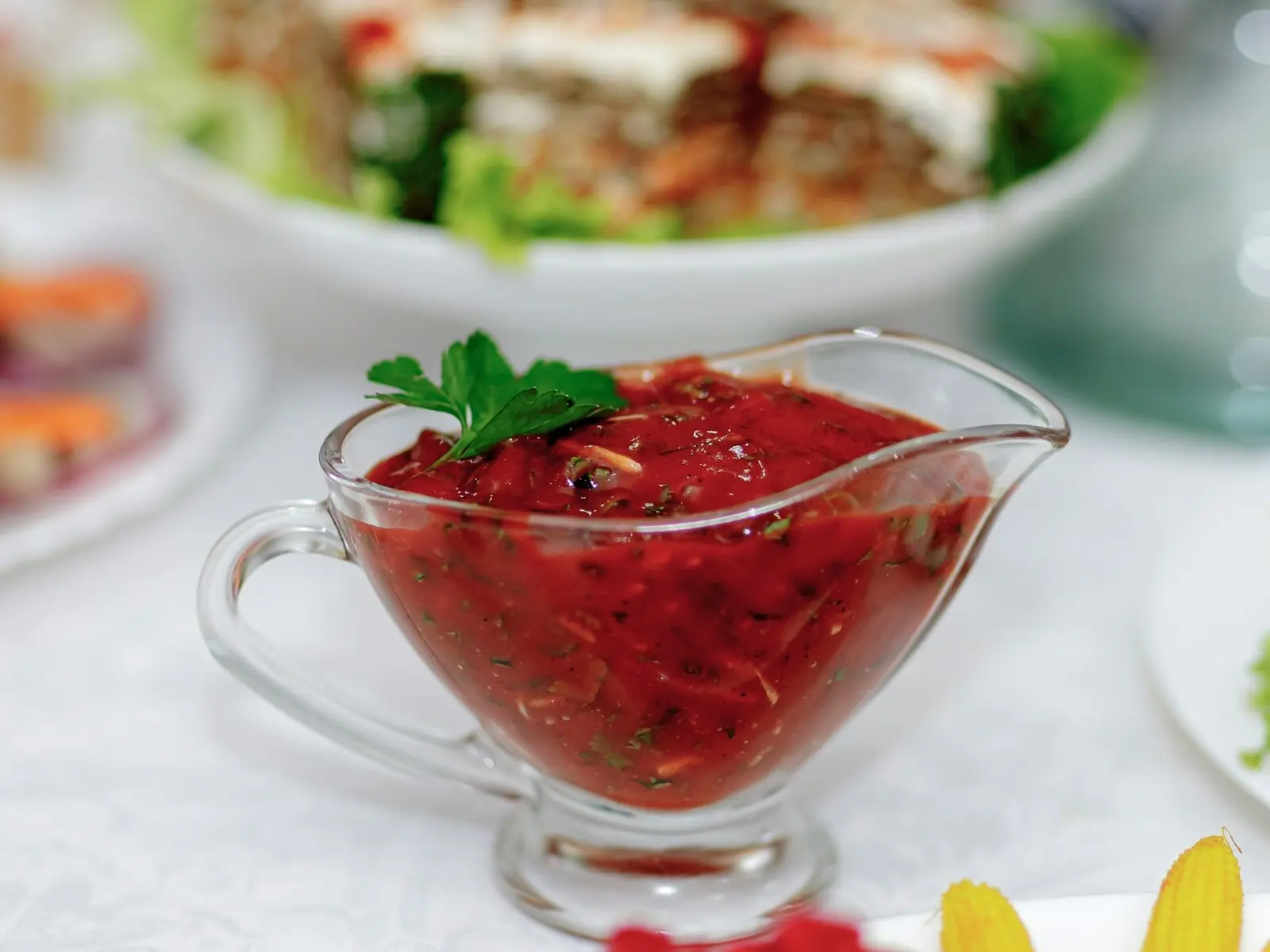
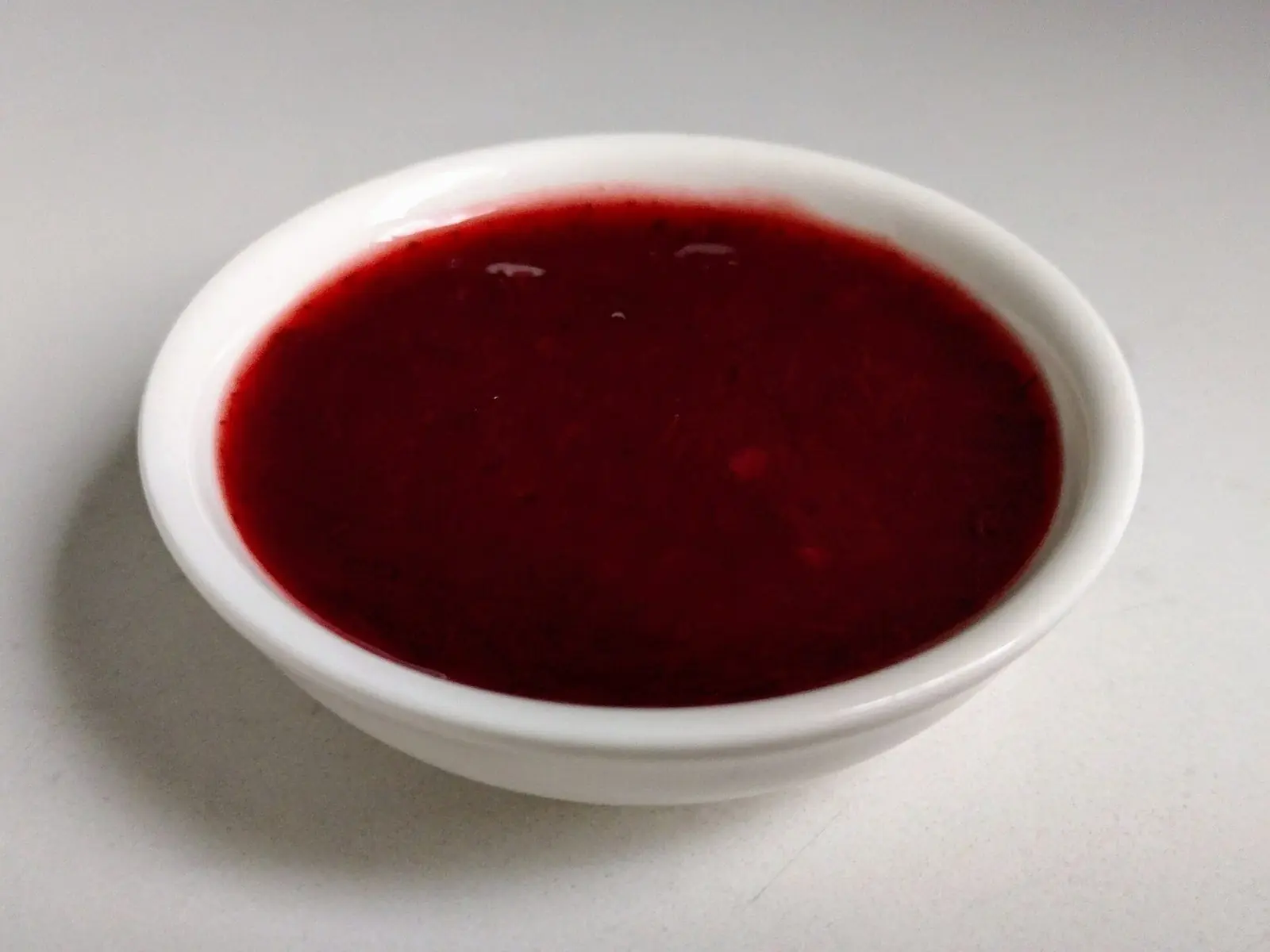
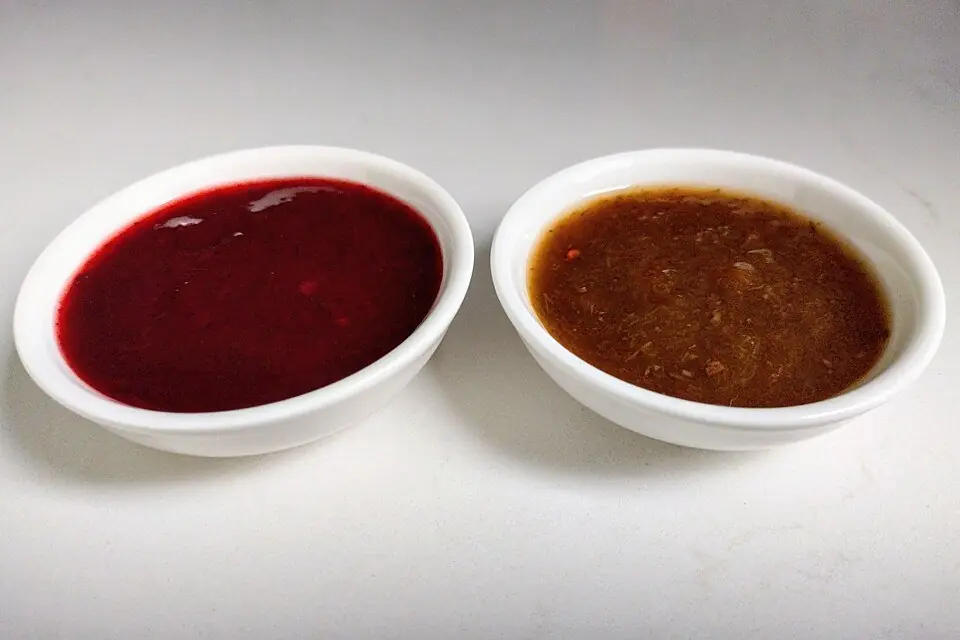
This satsebeli recipe is for the Georgian tomato sauce called pomidvris satsebeli, or simply tomato satsebeli. In Georgian the word satsebeli just means a sauce to dip into, and there are blackberry, sour cherry and cornel ones too, but on a menu it means tomato unless it says otherwise. Ripe tomatoes and a sweet red pepper are stewed soft, pressed through a sieve and boiled down, then seasoned with garlic, hot pepper, ground coriander seed and blue fenugreek. It comes out thin, sharp and garlicky, a pouring sauce rather than a ketchup, and 1.5 kg of tomatoes gives about 750 ml in two hours.
We cook it, as most Georgian households do when they put up a big batch at the end of summer, because a cooked sauce lasts a week in the fridge and freezes well. On hot days plenty of cooks skip the stove altogether and stir grated raw tomato with garlic, chilli and fresh herbs, sometimes with pounded walnuts, to eat that same day. That raw satsebeli is the first variation below, followed by a version from tinned tomatoes for the months when good fresh ones are hard to find.
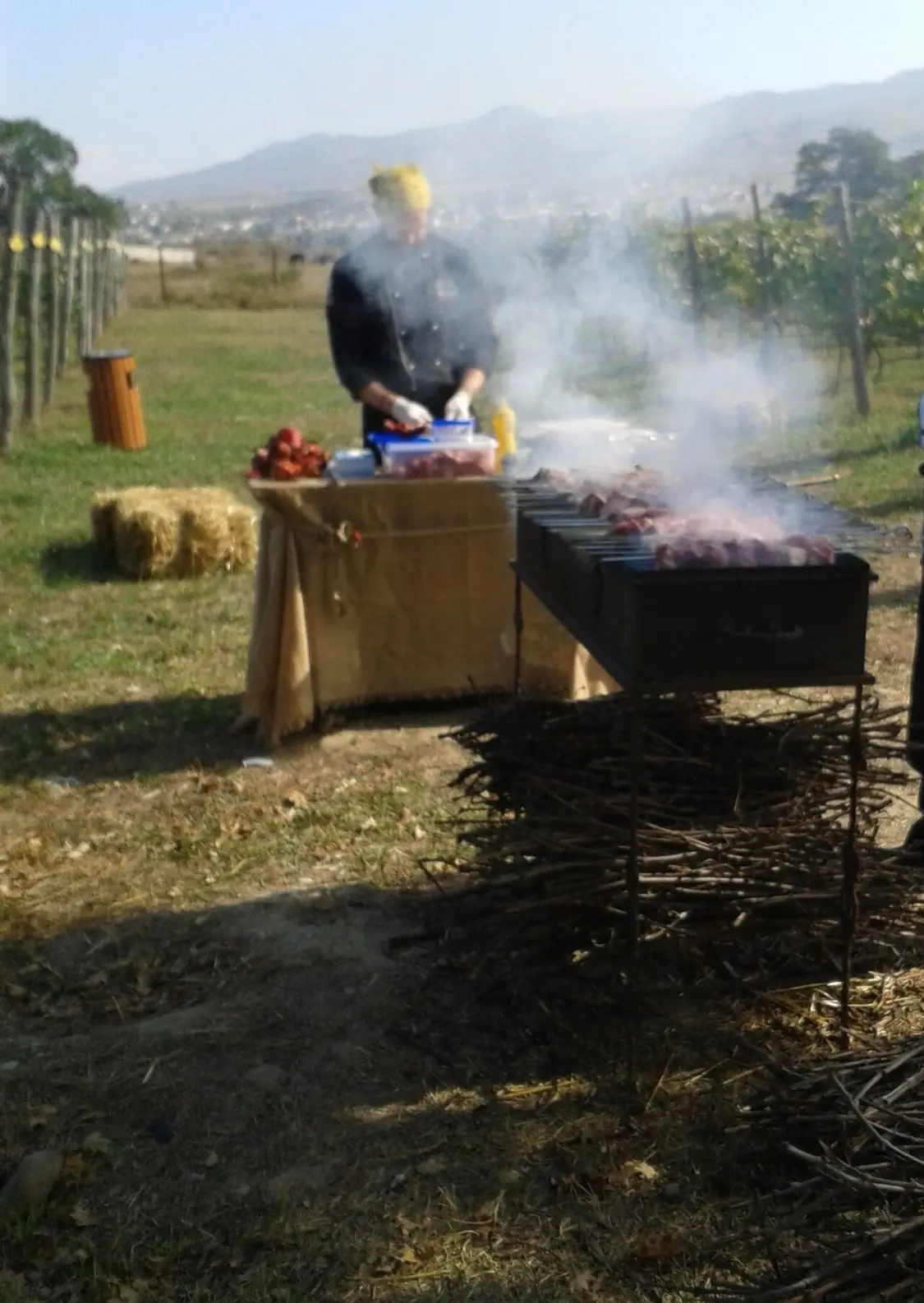
Satsebeli is the sauce Georgians spoon over kababi rolled in lavash, and it is just as much at home with mtsvadi, fried chicken, potatoes and eggs. How it sits alongside tkemali, ajika and the other Georgian sauces is covered in our guide, linked below.
Timeline: what to do, and when
2 h from start to table · 45 min hands-on · 30 min waiting
Each bar is one step. Hands-on Waiting, while the oven, the pot or the dough does the work. Steps that sit inside a wait are done in parallel.
Recipe
Satsebeli
Ingredients
Tomato base
Seasoning
To finish (optional)
Amounts are scaled. Times stay about the same, but a bigger pot takes a little longer to come to the boil.
You will need
- A wide, heavy pan of 4 litres or more, ideally stainless steel or enamel
- Sieve and wooden spoon, or a food mill, over a large bowl
- Pestle and mortar for pounding the garlic (a fine grater will do)
- Ladle
- Clean jars or small freezer tubs with lids
Method
- Cut the tomatoes and peppers10 min hands-on· start here
Rinse the tomatoes, cut out the hard cores and any bruised patches, and quarter them, or cut large ones into eighths. Leave the skins on: the sieve keeps them back later. Pull the stalk and seeds out of the sweet pepper and slice it into strips. Halve the chillies lengthways and scrape out the seeds if you want a milder sauce.
- Stew until soft20 min waiting· starts at +10 min
Put the tomatoes, pepper strips and chillies into the wide pan with the 100 ml water, cover and set over a medium heat. Once the juices bubble, turn the heat down a notch and cook for about 20 minutes, stirring now and then, until the tomatoes have collapsed and the pepper crushes easily against the side of the pan.
- Pound the garlic and spices10 min hands-on· starts at +12 min, during step 2
Meanwhile peel the garlic and pound it in a mortar with the salt to a smooth, wet paste, or grate it finely and mash it with the salt using the flat of a knife. Mix in the ground coriander, blue fenugreek and khmeli suneli. Chop the fresh coriander, if using, and keep both to one side.
- Press through a sieve10 min hands-on· starts at +30 min
Set the sieve over a large bowl and ladle in the hot vegetables a few spoonfuls at a time. Stir and press with a wooden spoon until only dry skins and seeds are left, scrape off the purée clinging to the underside, and throw the skins away. A food mill does this faster. Expect roughly 1.5 litres of thin, bright red purée.
- Boil it down35 min waiting· starts at +40 min
Rinse the pan, pour the purée back in and bring it to a lively simmer with the lid off. Let it bubble for 30 to 40 minutes, stirring every few minutes and more often near the end, when it starts to spit and stick. It is ready when it has lost about half its volume and coats a spoon thinly but still runs off freely, like single cream.
- Season and simmer10 min hands-on· starts at +1 h 15 min
Stir in the garlic and spice paste, lower the heat and simmer gently for 5 to 8 minutes, stirring often, so the garlic loses its raw edge but keeps its bite. Try a little on bread, then adjust it: more salt, a pinch of chilli flakes for extra heat, or the vinegar if the tomatoes taste flat.
- Add the herbs5 min hands-on· starts at +1 h 25 min
Take the pan off the heat. If the sauce has become too thick, loosen it with a few spoonfuls of just-boiled water. Stir in the chopped coriander, if using, and pour the satsebeli into a wide bowl so it cools quickly.
- Leave to cool30 min waiting· starts at +1 h 30 min
Leave it uncovered for about 30 minutes, stirring once or twice, until it reaches room temperature; it thickens a little as it cools. Serve it at room temperature or chilled, and spoon whatever you will not eat this week into small tubs for the freezer.
About 30 kcal per serving of about 4 tablespoons (1 of 12). This is an estimate from standard values for the ingredients, not a lab figure.
Set satsebeli on the table cool, in a small bowl, and let everyone help themselves. Spoon it over meat and potatoes or dip each piece in. With kababi it goes straight onto the lavash with sliced onion and herbs before the wrap is rolled up.
Tips, swaps and variations
Tips from your host
- Flavour matters more than looks here, so very ripe or even split tomatoes are ideal; just cut away any mould or bruising. Pale winter tomatoes give a dull, watery sauce, and a good tin of plum tomatoes will beat them.
- If your tomatoes are very juicy, quarter them and leave them in a colander for an hour or two before cooking, then pour away the clear liquid that drips out. Georgian cooks do this with big batches because it shortens the boiling down.
- Season only once the purée has reduced. Salt and chilli both concentrate as the water cooks off, so a sauce that tastes right at the start can end up too salty and too hot.
- Be generous with the garlic. Satsebeli should taste clearly of it, and pounding it with salt releases far more flavour than chopping. Adding it near the end keeps it sharp rather than sweet.
- Keep it on the thin side. Satsebeli is meant to run off a spoon and soak into bread and meat, so it is far looser than ketchup. It is easy to simmer it a little longer, but a sauce that has gone stiff needs water to bring it back.
Variations and swaps
- Raw satsebeli for high summer: cut 1 kg very ripe tomatoes in two and grate them, flesh side down, into a bowl, pressing until just a thin skin remains; if the pulp is very wet, let it drain in a sieve for 10 minutes. Pound 3 or 4 garlic cloves with 1 tsp salt and a seeded fresh chilli, add a small handful each of coriander and basil (purple basil if you can find it), then stir it all into the tomato with 1/2 tsp ground coriander seed and a pinch of blue fenugreek. Some cooks pound 50 g walnuts in with the garlic for a creamier sauce, which then contains nuts. Eat it the day you make it, or within two days from the fridge.
- Tinned tomatoes, from autumn to spring: use three 400 g tins of whole plum tomatoes in place of the fresh ones. They are soft already, so 10 minutes with the pepper and chillies is enough before sieving; then boil the purée down as above, which takes 25 to 30 minutes and gives a slightly smaller batch. With 1 litre of passata you can skip the sieve: simmer the sliced pepper and chillies in it until soft, blend until smooth and reduce for about 15 to 20 minutes, until it pours like single cream.
- Quick tomato-paste sauce: whisk 4 tbsp tomato paste into 500 ml water, add half the garlic and spice paste and simmer for 10 minutes, then stir in the coriander. It has less freshness than the real thing but is handy for a weeknight plate of grilled meat.
- Winter-store style: for a sweeter, thicker sauce some Georgian families cook carrots, apples and onions with the tomatoes, roughly 1 carrot, 1 cooking apple and 1 onion for this amount, and a few add a pinch of ground cloves and cinnamon. Others leave out the sweet pepper and use only tomatoes and plenty of hot red pepper.
- With ajika: stir 1 to 2 tsp red ajika into the sauce along with the garlic for more heat and a deeper, spicier taste. It is a common shortcut, since ajika already holds chilli, garlic and the same dried spices.
- Herbs and spices: dill, parsley or celery leaves can stand in for some or all of the coriander, and a few basil leaves suit it well. If you have no blue fenugreek, use 1/2 tsp ground fenugreek seed, or double the khmeli suneli, which usually contains it.
Serve it with
- Kababi, minced lamb or beef kebabs wrapped in lavash with raw onion
- Mtsvadi, chunks of pork or veal cooked on skewers over embers
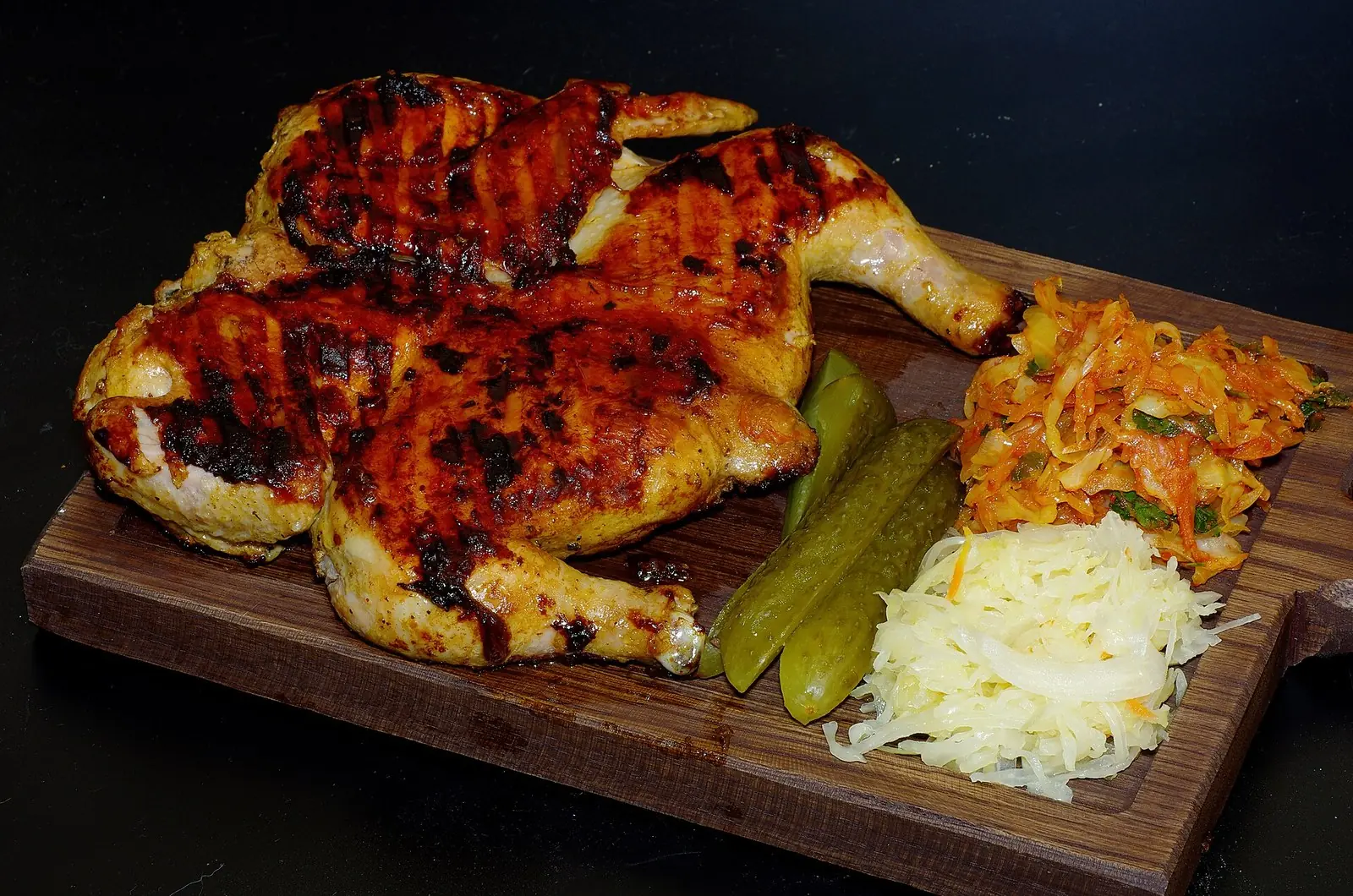
- Chicken tabaka, roast chicken or grilled lamb
- Fried potatoes, or potatoes roasted in their skins
- Boiled or fried eggs
- Shoti bread or lavash with a plate of fresh herbs
Make ahead and storage
Pour the cooled sauce into a clean jar, cover it and keep it in the fridge for up to 7 days; it may separate slightly, so give it a stir before serving. It freezes well in small tubs or an ice-cube tray for 3 months, and a tub thaws overnight in the fridge. Georgian families also bottle big batches boiling hot for the winter, but the pepper and garlic make the sauce less acidic than plain tomatoes, so only keep jars in a cupboard if you follow a tested canning method with added lemon juice or citric acid. A film of oil poured over the top, an old habit, does not replace the fridge.


Maspindzeli Travel, Tbilisi · private tours and cooking classes in Georgia · maspindzeli.ge · WhatsApp +995 598 74 74 54 · hello@maspindzeli.ge