Khmeli Suneli Recipe
ხმელი სუნელი
A home-style khmeli suneli recipe: ground blue fenugreek and lightly warmed coriander seed mixed with dried marigold, summer savory, dill and other dried herbs. It makes a small jar in about half an hour, with notes on how much to use in Georgian stews, soups and walnut sauces.
Recipe by the Maspindzeli team in Tbilisi · Updated 26 Nov 2026 · Made everywhere, each family and market stall to its own formula
Full recipe with the timeline, timers and US measures: maspindzeli.ge/recipes/khmeli-suneli/
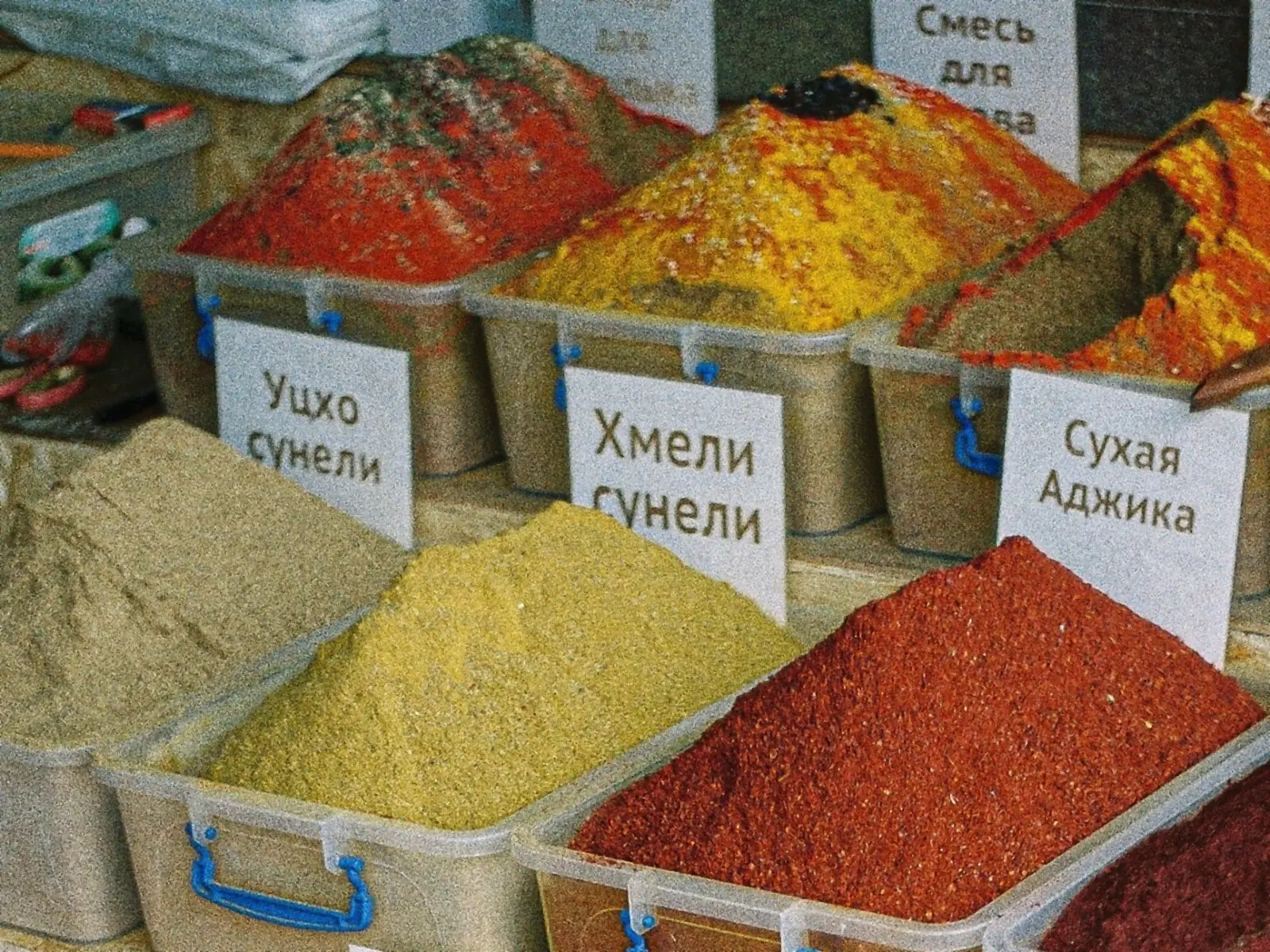
This khmeli suneli recipe makes the Georgian dried spice blend in your own kitchen. Ground blue fenugreek and coriander seed form the base, dried marigold petals add golden flecks, and a handful of dried herbs, among them summer savory, dill, marjoram and basil, bring a green, grassy note. The name simply means dried spice. Labels also spell it khmeli-suneli or hmeli suneli, and shops abroad often sell it as khmeli suneli spice mix.
There is no single correct formula. Families, market sellers and brands each keep their own, from long lists of a dozen herbs to shorter ones of six or seven. Three things turn up in almost every Georgian version: blue fenugreek, coriander seed and marigold. Bought bags differ just as much, and some add salt, cumin, turmeric or black pepper. Utskho suneli is not the same thing: it is ground blue fenugreek on its own, and one of the ingredients below.
Georgian cooks use it in kharcho, chakhokhbili, satsivi, bean dishes, walnut pastes and tomato sauces, usually a teaspoon or two per pot. The serving list on this page gives the amounts for each dish, and our Georgian food guide explains the other spices you will meet.
Timeline: what to do, and when
31 min from start to table · 27 min hands-on · 10 min waiting
Each bar is one step. Hands-on Waiting, while the oven, the pot or the dough does the work. Steps that sit inside a wait are done in parallel.
Recipe
Khmeli Suneli
Ingredients
Seeds to warm
Ground spices
Dried herbs
Amounts are scaled. Times stay about the same, but a bigger pot takes a little longer to come to the boil.
You will need
- Small heavy frying pan, without oil
- A cold plate for cooling the seeds
- Electric spice or coffee grinder (or a mortar and pestle)
- Fine sieve and a coarse sieve
- Mixing bowl and a teaspoon
- A clean, dry glass jar of about 200 ml with a tight lid
Method
- Measure and sort5 min hands-on· start here
Measure everything into small separate piles. Pick out any woody stalks from the dried herbs. Snap the bay leaves into pieces and throw away the hard central rib. If your marigold came as whole dried flower heads, pull off the orange petals and use only those.
- Warm the seeds4 min hands-on· starts at +5 min
Put the coriander seed and celery seed in a small, dry, heavy frying pan over medium-low heat. Shake the pan for 2 to 3 minutes, until the seeds smell warm and citrusy and turn barely a shade darker. Add the bay leaf pieces for the last 30 seconds so they turn crisp. Plenty of Georgian cooks grind the seeds unwarmed; this short step simply makes them easier to grind finely.
- Cool completely10 min waiting· starts at +9 min
Tip the seeds and bay leaves onto a cold plate in a single layer and leave them for about 10 minutes, until they no longer feel warm. Warm seeds turn pasty in the grinder and can leave damp patches in the jar.
- Crumble the herbs6 min hands-on· starts at +10 min, during step 3
Meanwhile, rub the savory, marjoram, dill, basil, parsley and mint between your palms, or press them through a coarse sieve, into the mixing bowl. Aim for small flakes rather than dust: in a good Georgian market blend you can still see bits of leaf.
- Grind the seeds6 min hands-on· starts at +19 min
Grind the cooled seeds and bay leaves, with the chilli if using, in an electric spice or coffee grinder, in short bursts, to a fine powder. Shake it through the fine sieve and grind again whatever stays behind. A mortar and pestle works too but needs about 10 minutes more of steady pounding.
- Mix the blend4 min hands-on· starts at +25 min
Add the ground seeds, blue fenugreek and marigold to the herbs. Stir with a spoon, then rub the mixture between your fingertips for a minute to break up any clumps and spread the colour. It should look khaki green with orange flecks and smell nutty and herby.
- Jar and label2 min hands-on· starts at +29 min
Spoon the khmeli suneli into the clean, completely dry jar, close the lid tightly and write the date on it. You can use it straight away.
About 8 kcal per serving of 2 tsp, about 2.5 g (1 of 16). This is an estimate from standard values for the ingredients, not a lab figure.
In Georgia khmeli suneli is cooked into food rather than shaken over it at the table. It goes into stews and soups for the last 15 to 30 minutes, long enough to soften the herbs but not so long that their scent boils away, or it is pounded raw with garlic and salt into walnut pastes. If you fry it in oil or butter to bring out the aroma, keep it to about 30 seconds, because the marigold and herbs scorch quickly.
Tips, swaps and variations
Tips from your host
- Buy blue fenugreek ready ground, as most Georgians do. Market sellers mill the dried pods and seeds together into utskho suneli, a pale greenish powder that smells somewhere between hay and toasted nuts. Georgian, Armenian and Russian grocers stock it, and so do online spice shops.
- Keep the coriander pale. Seeds that brown taste bitter and push the blend towards curry powder, and you only want them warmed through and dry enough to grind finely.
- Make small batches. Dried herbs lose their scent within months, so a jar you finish in one season beats a big bag kept for a year.
- Test before you cook: rub a pinch between your fingers. If it smells of little more than dust, the blend is past its best, and adding more of it will not rescue a stew.
- To judge the balance, stir a pinch into a spoonful of warm oil with a little salt and taste it on bread. That tells you more than the dry powder does, and you can then add extra savory, chilli or coriander to suit the dishes you cook most.
- Celery, seeds included, is one of the allergens that must be labelled in the UK and EU. If anyone at your table is allergic, simply leave it out.
Variations and swaps
- Seven-spice version: use only blue fenugreek, coriander seed, marigold, basil, marjoram, dill and chilli, in the amounts above. Russian spice references list this shorter set as the reduced form of the blend, and it still tastes clearly Georgian.
- No blue fenugreek: use 1 1/2 tbsp ground fenugreek seed plus 1 tbsp dried fenugreek leaves (kasoori methi, from Indian grocers). Ordinary fenugreek seed is sharper and more bitter than the blue kind, so never use the full 3 tbsp of it.
- No marigold: dried calendula (pot marigold) petals give a similar colour with a milder taste, or a few crumbled saffron threads add colour and scent. You can also leave it out; the blend loses its golden flecks but little of its flavour.
- No summer savory: use dried thyme, or half thyme and half oregano.
- Home-dried herbs: in summer, Georgian families hang bunches of dill, savory, basil, parsley and mint somewhere shady and airy, often under the roof, until the leaves crumble, which takes 5 to 10 days depending on the weather. A dehydrator at about 40 °C / 105 °F does it in 3 to 4 hours. Strip the leaves and use them instead of bought dried herbs.
- Whole spices from a Georgian market: warm whole blue fenugreek with the coriander and grind them together. Its seeds are very hard, so use an electric grinder rather than a mortar.
- Hotter or milder: many western Georgian cooks like more heat, so double the chilli if you do too. For children, leave it out or use 1/2 tsp ground black pepper, which some commercial blends contain instead.
Serve it with
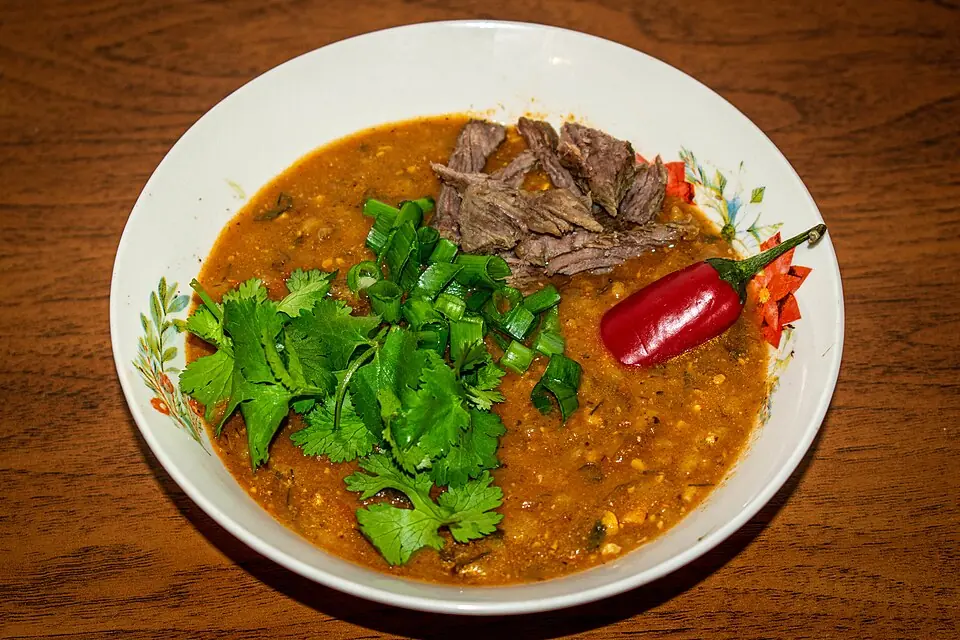
- Kharcho: 2 tsp for a pot of beef and walnut soup for six, stirred in with the walnuts for the last 15 minutes
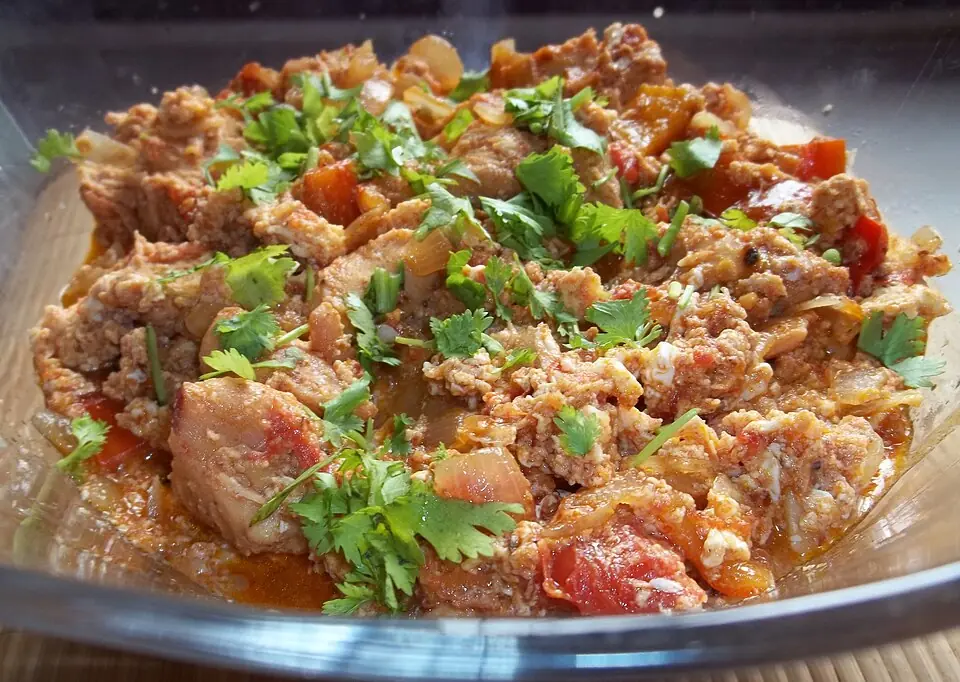
- Chakhokhbili: 1 1/2 tsp, added with the tomatoes so it simmers with the chicken for about 25 minutes
- Satsivi and other walnut sauces: 1 tbsp in place of separate blue fenugreek and marigold, pounded with the garlic
- Lobio: 1 tsp worked into the garlic and coriander paste before the beans get their last simmer
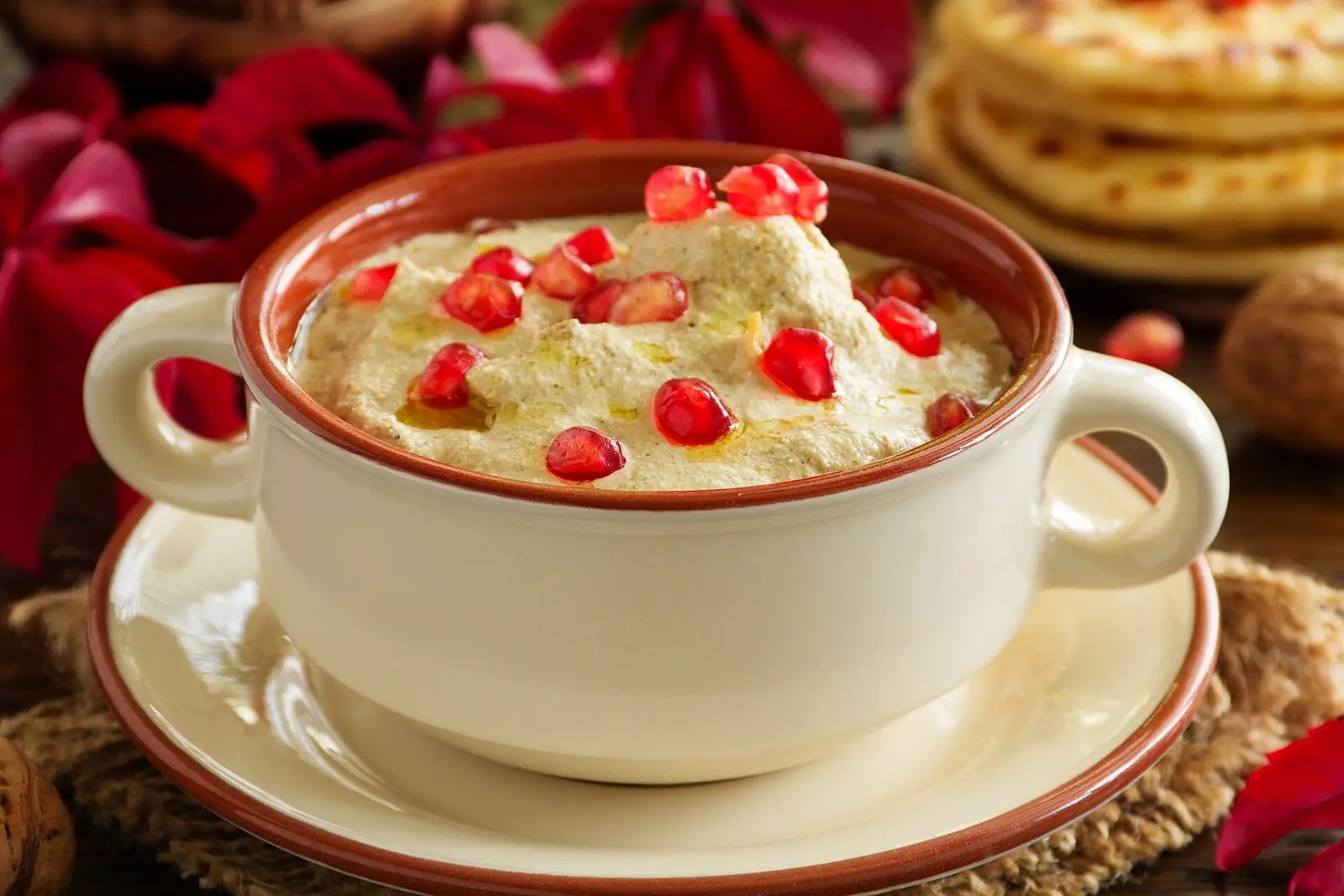
- Pkhali and badrijani nigvzit: about 2 tsp instead of the separate dried spices in the walnut paste
- Tomato satsebeli: just 1/2 tsp in the garlic paste, as a little goes a long way in a thin sauce
- Roast chicken, pork or potatoes: about 1 tbsp rubbed in with salt, crushed garlic and oil before they go in the oven
Make ahead and storage
Store the jar tightly closed in a dark, cool cupboard, well away from the hob, the kettle and sunny windowsills, as heat, light and steam all dull the herbs. Spoon it out with a dry spoon and never shake it straight over a steaming pot, or it clumps. It is at its most fragrant for about 3 months and fine to use for around 6; after that it does not spoil, it just tastes of less. For a bigger batch, keep the spare in a well-sealed jar in the freezer and top up the small one as you go.

Maspindzeli Travel, Tbilisi · private tours and cooking classes in Georgia · maspindzeli.ge · WhatsApp +995 598 74 74 54 · hello@maspindzeli.ge