- Visitors may drive on a valid foreign licence for up to one year from their last entry into Georgia. An International Driving Permit helps when the licence is not in Latin letters.
- Traffic keeps to the right. Cars may do 60 km/h in built-up areas, 90 km/h outside them and 110 km/h on motorways.
- Georgia's drink-drive threshold is 0.3 per mille. Cross it and you lose your licence for six months; above 0.7 per mille the ban is a year.
- Speeding fines start at 50 GEL (about $19) in 2026. Cameras are everywhere, and a rental firm passes every fine on to you.
- Tusheti and Shatili need a 4x4. On mountain sections named in a decree, snowflake-marked tyres are mandatory from 1 December, and the rule runs until 1 March.
Driving in Georgia is open to most visitors: a valid foreign licence is enough for up to a year, and traffic keeps to the right. Main roads are good, but the local style is fast and impatient, so drive defensively. The car limit is 60 km/h in towns, rising to 90 km/h on open roads and 110 km/h on motorways. The alcohol limit is 0.3 per mille, so plan on not drinking at all on driving days. Cameras watch most main roads, and fines follow the plate to whoever rented the car.
This guide covers the rules a visitor needs in 2026: licence and permit, speed and alcohol limits, seat belts and child seats, fines and the police. Then come the practical parts: insurance at the border for your own car, fuel prices, parking in Tbilisi and Batumi, road habits, 4x4 routes, the winter tyre rule and the steps after an accident. Figures come from Georgian law, the Interior Ministry and the Roads Department. If you would rather watch the views than the road, our private tours pair a professional driver with a guide who explains everything in your own language.
Driving in Georgia with a foreign licence: IDP rules for visitors
Georgia lets foreign visitors drive on the licence they already hold. The Interior Ministry's rules set the limit: you may drive until your licence expires, but for no longer than one year from your last entry into the country. Leave and come back, and the year starts again. People who settle here exchange the foreign card for a Georgian one at the ministry's Service Agency, in most cases without a test.
Georgia signed up to the 1968 Vienna Convention on Road Traffic, and its police see licences from Europe, the Gulf, Israel and North America every day. A licence printed in Latin letters is usually all you need at a roadside check. If yours uses another script, such as Arabic, Chinese or Thai, carry an International Driving Permit as a translation. It costs little at home and ends any debate.
| What to carry | Why |
|---|---|
| Your national driving licence (the original card) | Your right to drive, for up to a year from your last entry |
| International Driving Permit | Handy for licences in non-Latin scripts; some rental firms want one regardless |
| Passport | Police checks and the rental desk |
| Rental contract or the car's registration paper | Shows that you may use the car |
| Proof of travel insurance | Required of every foreign visitor; minimum cover 30,000 GEL |
Rental firms add their own conditions. Local companies usually hand keys to drivers from 21, the international brands from 23 or 25, and most want a licence held for a year or two. Our car rental pages list the deposit, the insurance excess and the papers for each class of car.
The points system applies to you too
Under the Law on Road Traffic, a foreign licence receives 100 points once it becomes valid in Georgia. Offences written up by an officer take points away, and at zero you may not drive in Georgia at all. Offences caught by a camera cost money but no points.
Georgia road rules: driving side, speed limits and alcohol
Georgians drive on the right and overtake on the left, as in most of Europe. Most cars have the wheel on the left, although you will meet plenty of right-hand-drive imports from Japan. Distances are in kilometres. Road signs follow the European pattern, and main direction signs carry place names in both Georgian and Latin letters.
Speed limits in Georgia
| Where | Limit for cars | Notes |
|---|---|---|
| Towns and villages | 60 km/h | Signs can raise it on wide city avenues |
| Residential zones | 20 km/h | Shown by the residential-zone sign |
| Roads outside built-up areas | 90 km/h | Most country and mountain roads |
| Motorways | 110 km/h | Such as the four-lane highway west of Tbilisi |
| Towing a light trailer | 80 km/h | On every road |
These are the national figures in Article 33 of the Law on Road Traffic. A posted sign always takes priority, and limits drop often near schools, villages and road works. The town limit applies from the place-name sign to the end-of-town sign, even where the houses thin out.
Drink-driving: the 0.3 per mille limit
The threshold sits at 0.3 per mille, meaning 0.3 g of alcohol in each litre of blood. Go over it and the Code of Administrative Offences takes your licence away for six months. Refuse a test, or blow above 0.7 per mille, and you lose it for twelve months. Getting caught again means fines of 2,000 to 3,000 GEL, and detention for days is possible. Kakheti hosts pour freely and toasts come fast, so name a sober driver or book one for wine days.
Lanes, phones, pedestrians and tunnels
- Outside towns, and on any road where more than 80 km/h is allowed, keep to the right. The left lane is for overtaking only.
- Holding a phone while driving is banned. The fine is 50 GEL (about $19) in 2026.
- People on a marked crossing have priority. Ignoring them costs 40 GEL (about $15).
- Headlights must be on in every tunnel, lit or not. The new motorway west of Tbilisi alone has dozens.
Seat belts and child car seats in Georgia
Georgian law makes the belt compulsory for the driver and the front passenger. If either goes without, the driver pays a fine of 50 GEL (about $19) in 2026. The law does not demand belts in the back, except for an adult holding a small child. A passenger without a belt is just as exposed in a crash, though, so buckle up in every seat. Check that the rear belts work before a long mountain drive.
Rules for children
- No child under 12 may ride in the front seat of a car.
- Children under 3 travel in the back in a child seat that suits their height and weight.
- The law still allows a child under 3 on the lap of a belted passenger aged 16 or over in the back. We never do it, and neither should you.
- Leaving a child under 6 alone in a parked car is against the law.
Beyond these points the law sets no booster rule for older children, and many local cars carry no child seat at all. Bring a light travel booster, or order seats with your rental car for about 8 to 13 GEL (about $3 to $5) a day in 2026. Cars booked through taxi apps rarely carry one. On our private tours we fit a suitable seat for every child free of charge, and we plan around children of every age, babies included.
Traffic fines, speed cameras and the police
Georgia runs a dense camera network, with several thousand police cameras on city streets and highways, many of them reading number plates. A camera fine is tied to the car, not the person driving it. On a rental car it reaches the company first, which pays it and then charges your card, often adding a handling fee.
| Offence | Fine in 2026 |
|---|---|
| Speeding by more than 15 and up to 30 km/h | 50 GEL (about $19) |
| Speeding by more than 30 and up to 50 km/h | 100 GEL (about $38) |
| Speeding by more than 50 km/h | 300 GEL (about $115) |
| Running a red light or ignoring a Stop or No Entry sign | 100 GEL (about $38) |
| Crossing a solid centre line | 50 GEL (about $19); 100 GEL if repeated within a year |
| Driver or front passenger without a seat belt | 50 GEL (about $19) |
| Holding a phone at the wheel | 50 GEL (about $19) |
| Breaking parking rules in Tbilisi, Batumi, Kutaisi and other big towns | 50 GEL (about $19) |
| Parking on a pavement or a crossing in those towns | 100 GEL (about $38) |
| No winter tyres on a listed road, 1 December to 1 March | 100 GEL (about $38) |
A fine is due within 30 days. Pay a speeding fine late and a surcharge of twice the amount, up to 500 GEL, is added. Fines are paid through banks, payment terminals and online services, never in cash to an officer.
Police stops
The officers you meet on the road belong to the Patrol Police, in marked cars with blue and red lights. Since the reform of the mid-2000s they have a good name for honesty, and offering a bribe is a crime. If you are waved over, stop, stay in the car and have your licence, passport and rental papers ready. Officers can breath-test you on the spot. Most stops are routine and take a minute or two.
Driving into Georgia in your own car: insurance at the border
Since 1 March 2018, every vehicle registered abroad needs Georgian compulsory third-party (TPL) insurance for its whole stay. The Compulsory Insurance Center sells it at the border crossings and online. The price depends only on the type of vehicle and the length of cover. Driving without it costs 100 to 200 GEL.
| Cover period | Car (2026) | Motorbike (2026) | Bus (2026) |
|---|---|---|---|
| 15 days | 30 GEL (about $12) | 20 GEL (about $8) | 45 GEL (about $17) |
| 30 days | 50 GEL (about $19) | 35 GEL (about $13) | 75 GEL (about $29) |
| 90 days | 90 GEL (about $35) | 70 GEL (about $27) | 140 GEL (about $54) |
| 1 year | 295 GEL (about $113) | 215 GEL (about $83) | 480 GEL (about $185) |
The policy pays other people for injury, up to 30,000 GEL per person, and for property, up to 25,000 GEL per injured party. It pays nothing towards your own car or your own injuries. Keep the vehicle's registration paper with you and, if the car is not in your name, a signed authorisation from the owner.
Most overland visitors drive in from Turkey at Sarpi on the Black Sea coast, or from Armenia. Since 2020 Azerbaijan has refused entry by land to most foreigners. A rental car from Georgia may cross into Armenia only with the firm's written permission, so ask before you book.
The car policy is separate from cover for you. Since the start of 2026, foreigners must also hold travel insurance of their own for the whole trip, worth 30,000 GEL or more.
Fuel prices in 2026 and parking in Tbilisi and Batumi
Fuel
Filling stations line every main road, most of them run by big chains such as Gulf, Wissol, SOCAR, Rompetrol and Lukoil. An attendant usually fills the tank for you. Name the grade and the amount, then pay at the counter by card or in cash. Prices move every few weeks and differ by only a few tetri between the chains.
| Fuel | Price per litre, November 2026 |
|---|---|
| Regular (92) | about 4.1 GEL (about $1.60) |
| Premium (95) | about 4.4 GEL (about $1.70) |
| Super (98) | about 4.7 GEL (about $1.80) |
| Diesel | about 4.9-5 GEL (about $1.90) |
Fuel prices rose during 2026: in August, petrol still cost roughly 3.6 to 3.8 GEL a litre. As a rough guide, a return drive from Tbilisi to Stepantsminda, ~310 km, burns about 25 litres in a small car. That is about 100 GEL (about $38) in 2026. Many Georgian cars run on natural gas from separate pumps, but rental cars take petrol or diesel.
Top up before every mountain trip. Stations get rare above the last big village, and some high valleys have none.
Parking in Tbilisi
Central Tbilisi has zonal hourly parking on signed streets, run by City Hall. The sign shows the zone, and the rate is usually 1 to 3 GEL (about $0.40 to $1.20) an hour in 2026. Pay in the city's parking app, a Georgian bank app or at a payment terminal, with the plate number and the zone code. Breaking the rules costs 50 GEL, or 100 GEL on a pavement or crossing, and the car can be towed.
Old Tbilisi's lanes are steep and narrow, and many guesthouses there have no parking at all. Ask about it when you book, or leave the car in a hotel garage in a newer district and walk.
Parking in Batumi
Batumi charges for street parking in the centre, through a company owned by the city. The system has changed more than once, and recent reports describe passes by the day or longer rather than hourly tickets, so read the signs or ask your hotel. In July and August spaces near the boulevard are scarce. In smaller towns and villages, street parking is usually free.
Road conditions: cows, overtaking and mountain roads
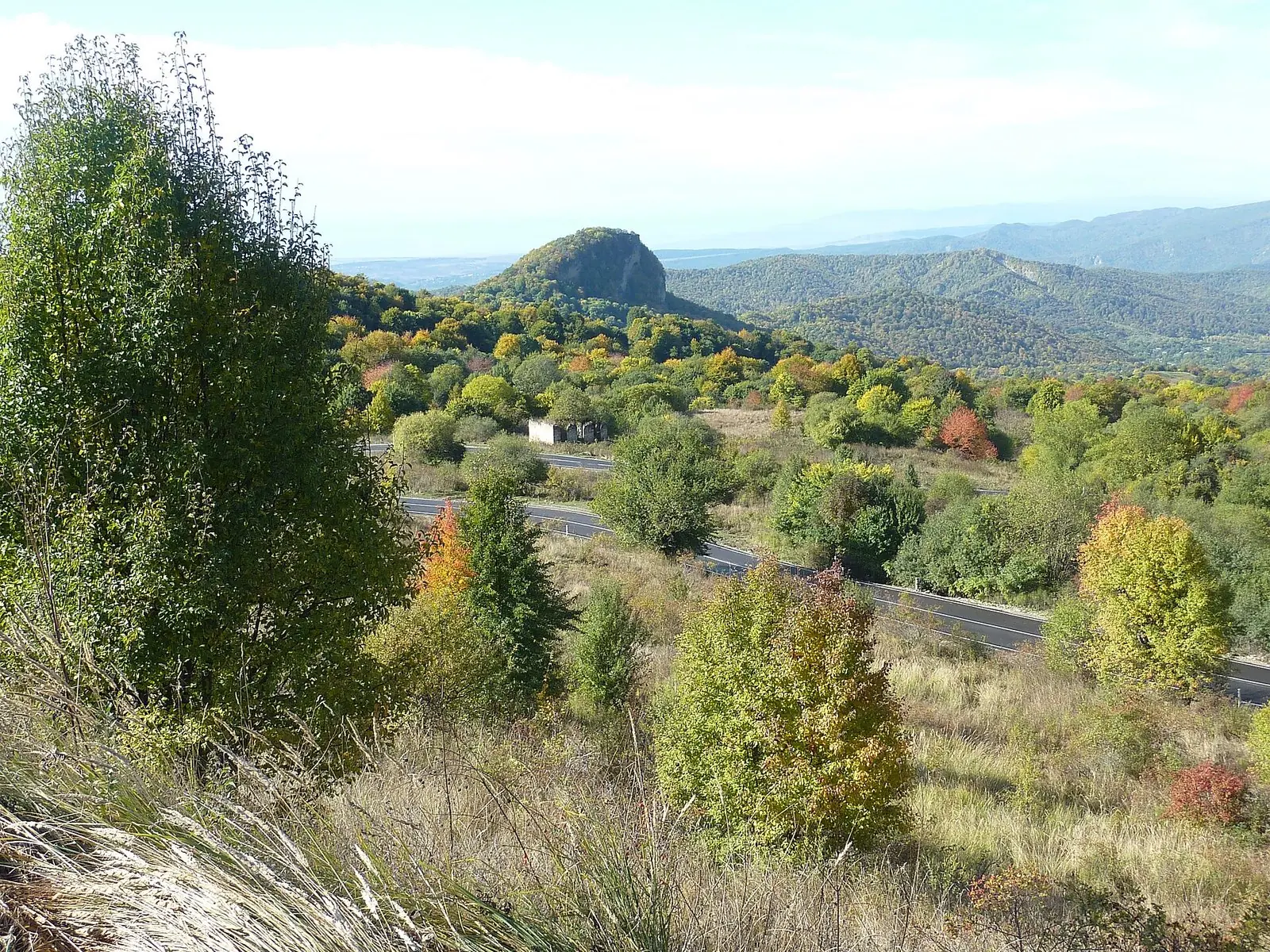
Georgia's main roads are better than many visitors expect. The highway from Tbilisi to the Black Sea now has four lanes for most of its length. The roads to Kazbegi, Kakheti, Borjomi, Vardzia and Mestia are all paved. Village lanes are another story, with potholes, faded markings and no street lights.
Local habits to expect
- Overtaking on blind bends and across solid lines. Leave a gap, stay right and let the fast cars go.
- Cows, buffalo, sheep and dogs on the road at any hour, with whole herds on the move in spring and autumn. Slow right down, because animals do not step aside.
- Minibuses and taxis stopping wherever someone waves. Watch the vehicle in front, not only the road.
- Few indicators and plenty of horn. A short toot often just means that someone is there.
- Dark villages and black cattle after sunset. Aim to arrive before nightfall, above all in the mountains.
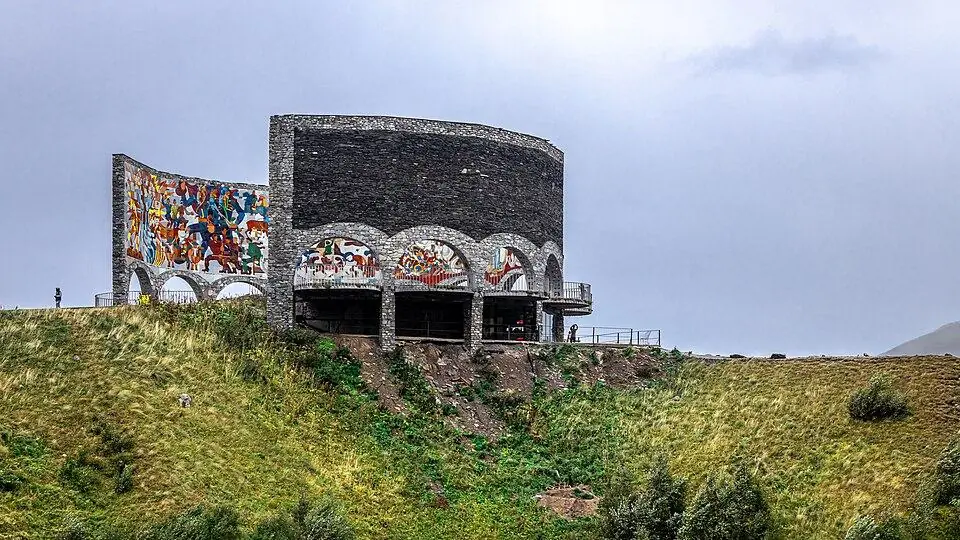
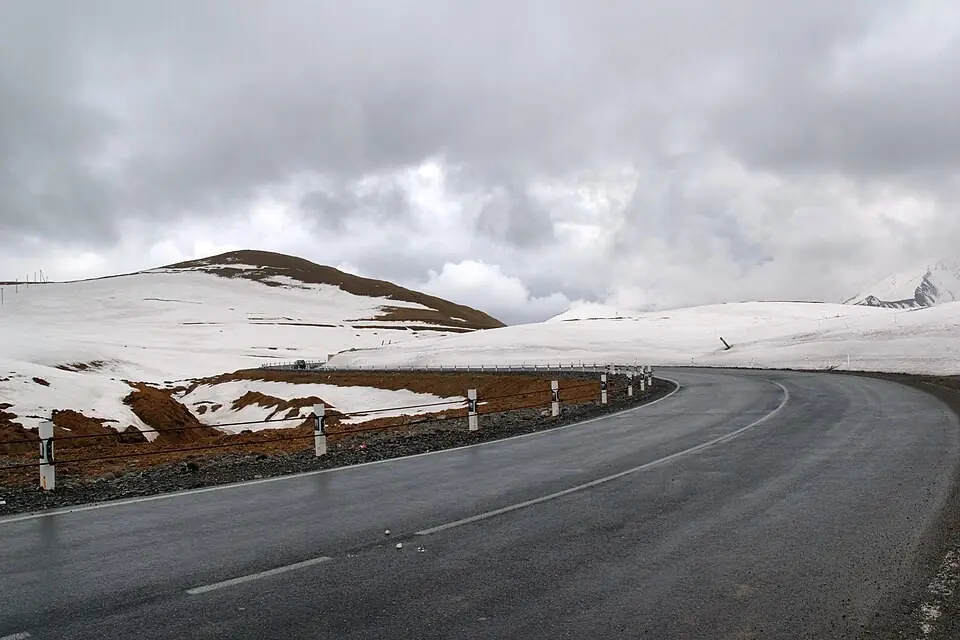
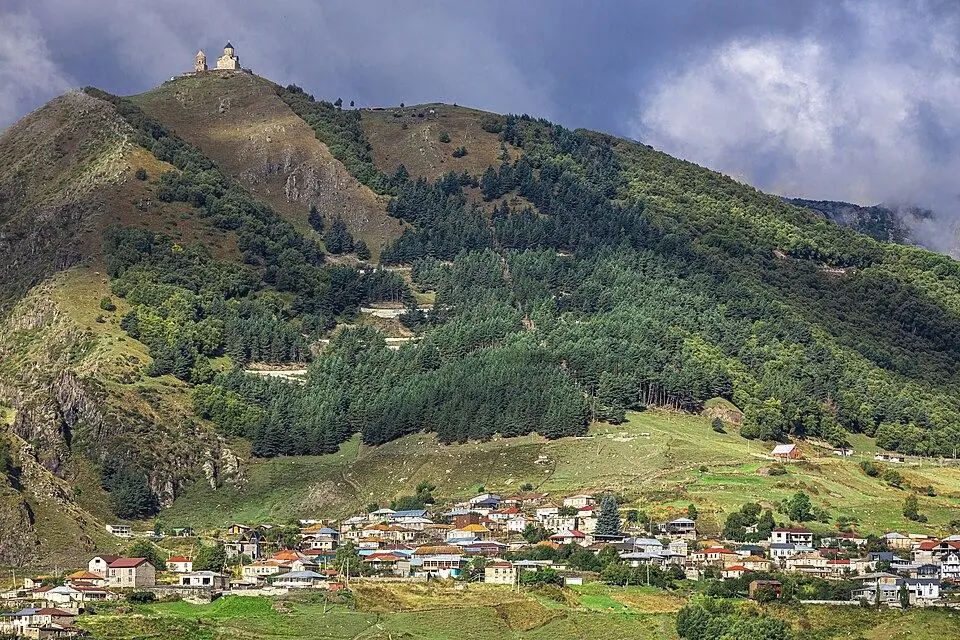
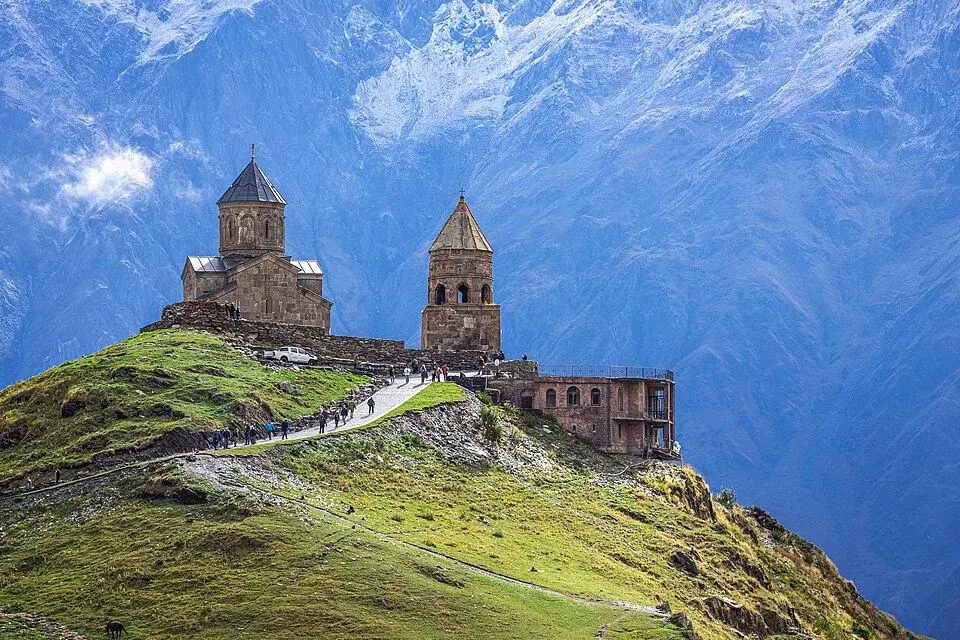
The Georgian Military Road to Kazbegi
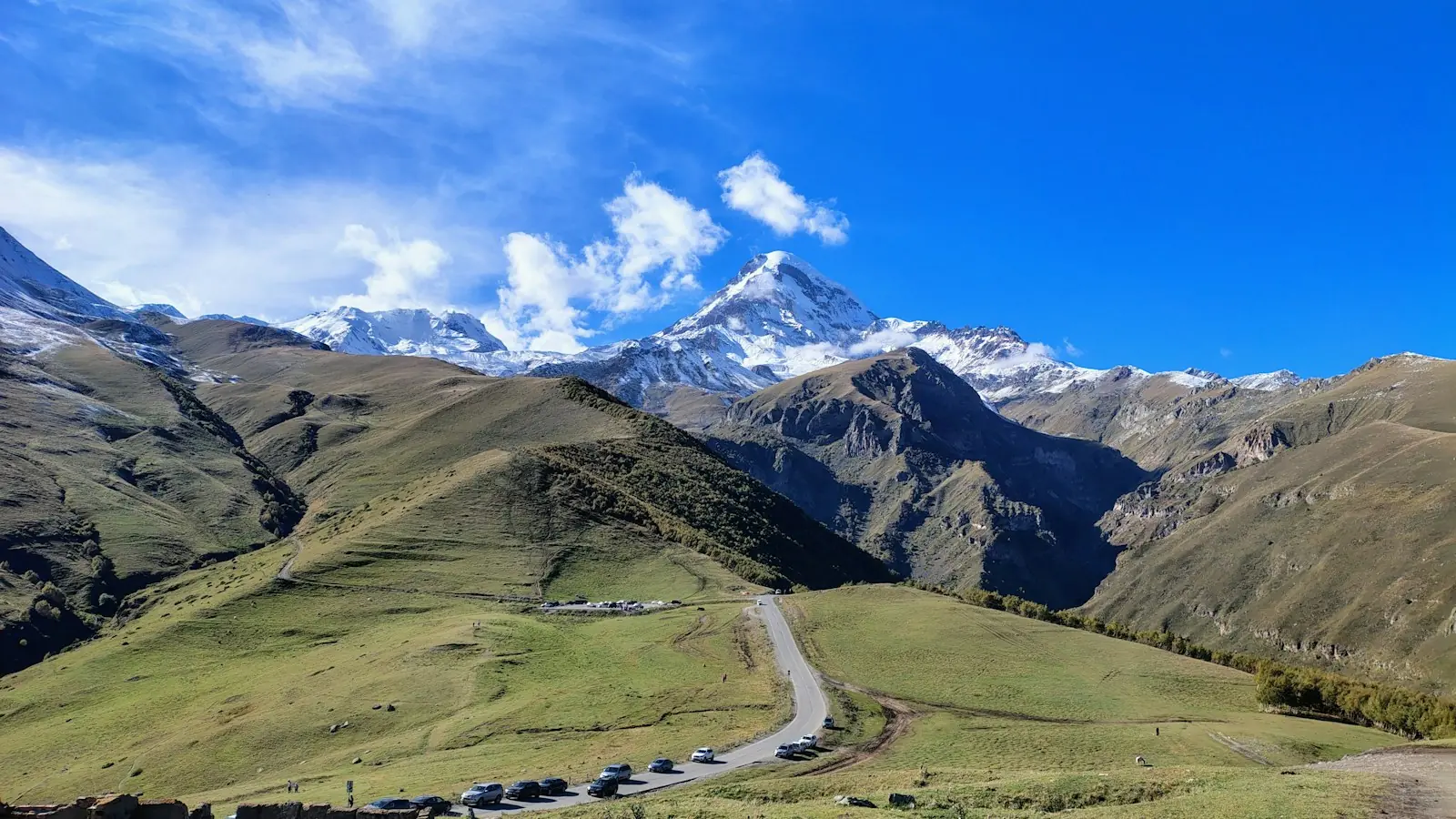
The busiest mountain drive runs north from Tbilisi to Stepantsminda, ~155 km and about three hours without stops. It is also the main truck route to the Russian border at Larsi, so expect long lines of lorries on the climb past Gudauri. The road peaks at the Jvari Pass, 2,379 m, between Gudauri and Kobi. There, avalanche danger can stop all traffic for hours or days between December and April. A bypass with long tunnels from Kvesheti to Kobi is under construction, with no opening date announced in autumn 2026.
On the hairpins between Mleta and Gudauri, use a low gear for the descent instead of riding the brakes. Overtake lorries only on a long, clear straight. Our guide to the Georgian Military Road lists the stops and viewpoints along the way, and the Tbilisi to Kazbegi guide adds the minibus and driver options.
The Rikoti motorway to the west
West of Tbilisi, the old climb over the Likhi range at the Rikoti Pass is history. The final section of the new motorway opened on 30 December 2025. It runs 52 km with four lanes, through 51 tunnels and over 97 bridges. Most of the drive from Tbilisi to Kutaisi is now dual carriageway. Lights must be on in the tunnels, cameras enforce the 110 km/h limit, and heavy snow can still slow the high section. For the full run to the coast, our Tbilisi to Batumi guide weighs the drive against the fast train.
Which roads in Georgia need a 4x4?
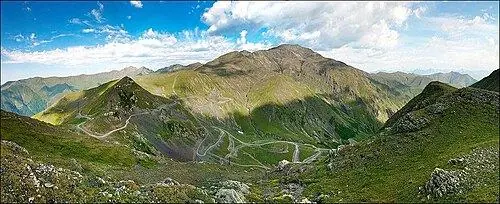
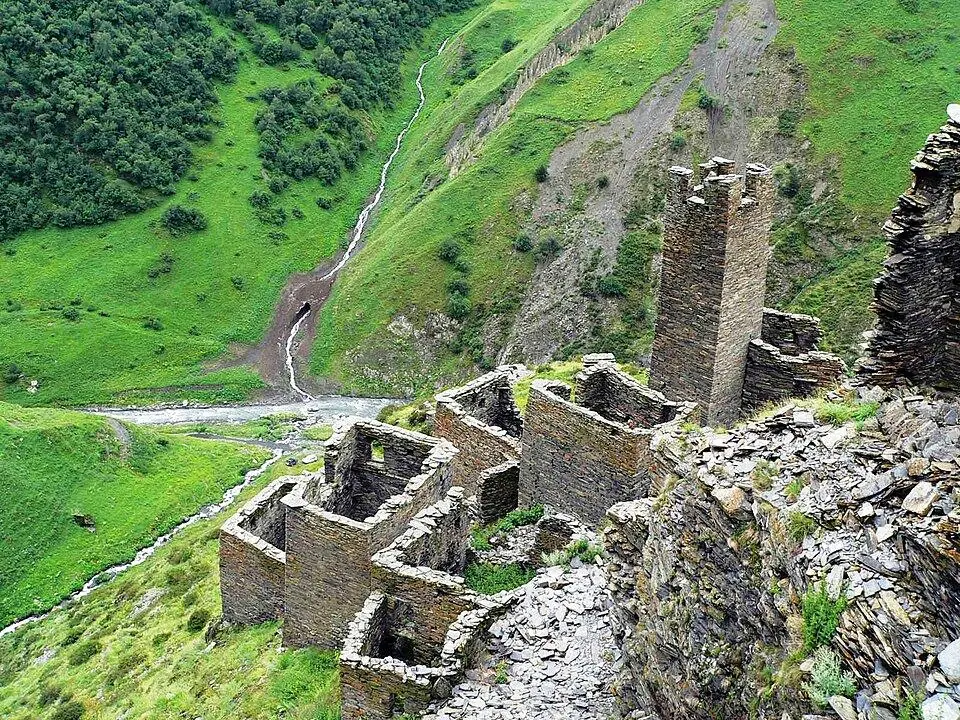
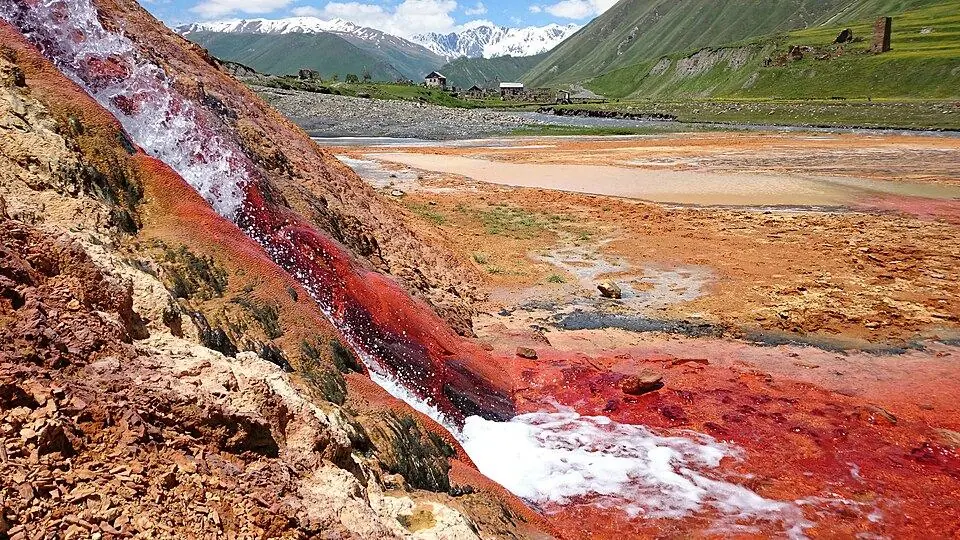
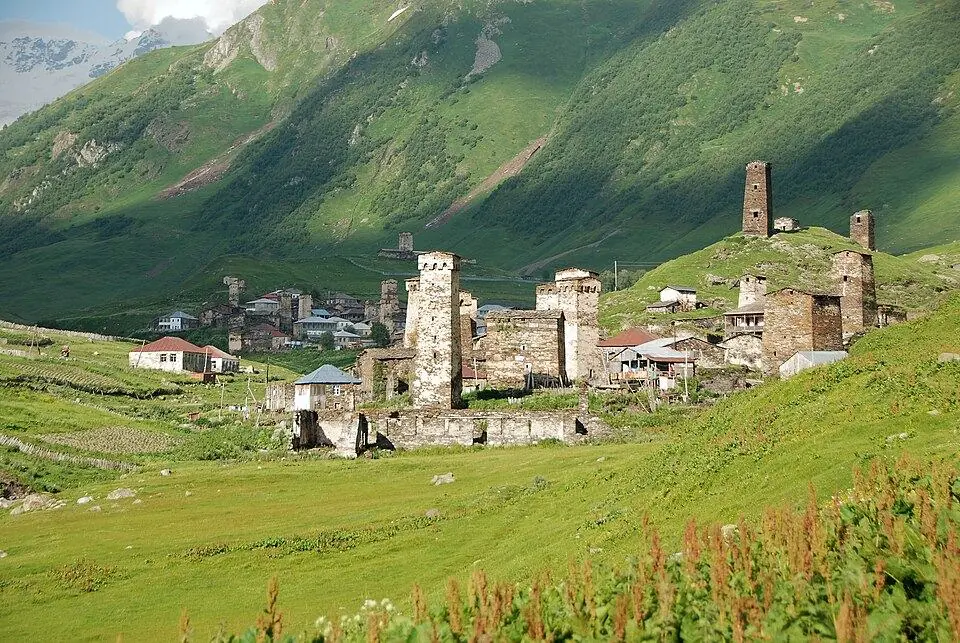
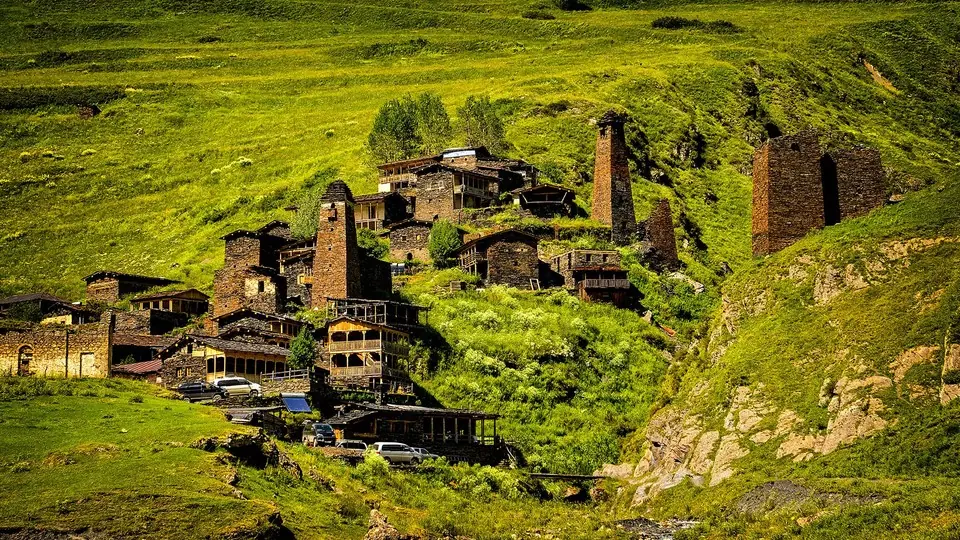
In summer an ordinary car reaches most of what visitors come for, from Kazbegi and Mestia to Ushguli, Vardzia and the Kakheti wine villages. A few roads are different. Whenever the roads to Tusheti and Shatili are open, the Roads Department admits only vehicles with drive on at least two axles. In practice that means a 4x4. Our road status page tracks the latest Roads Department notice for each pass.
| Road | Vehicle | Usual season | Good to know |
|---|---|---|---|
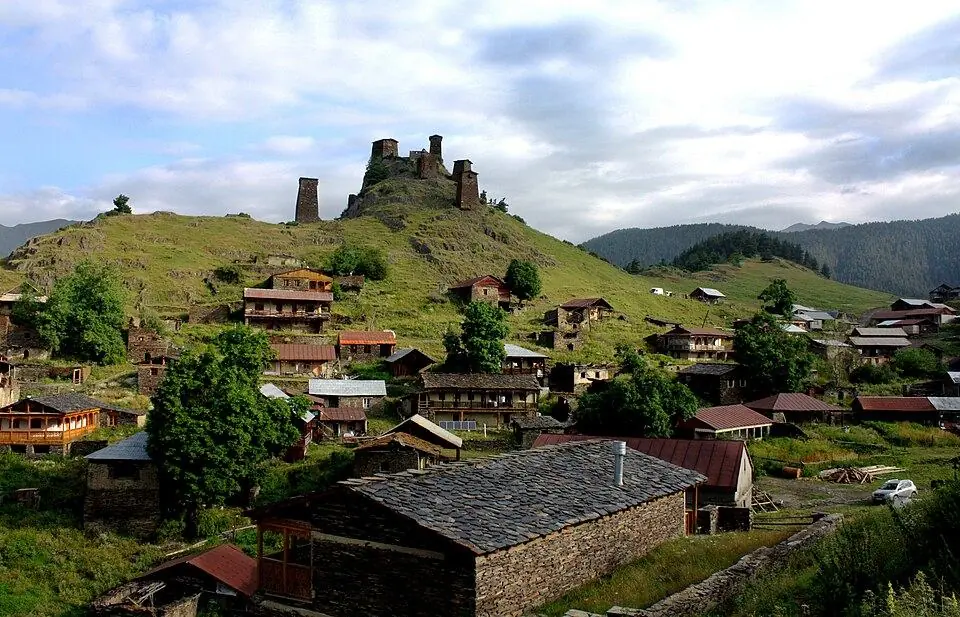
| Abano Pass to Omalo, Tusheti (~2,950 m) | 4x4 only | Late May or June to the first heavy snow in October | Unpaved, narrow, long drops; most rental contracts exclude it |
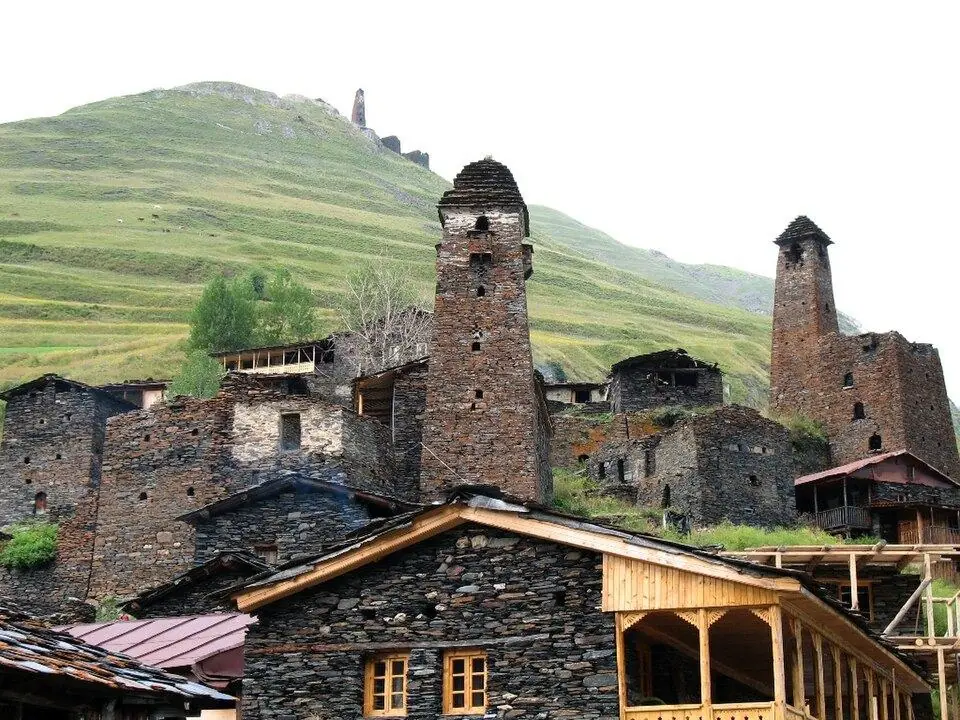
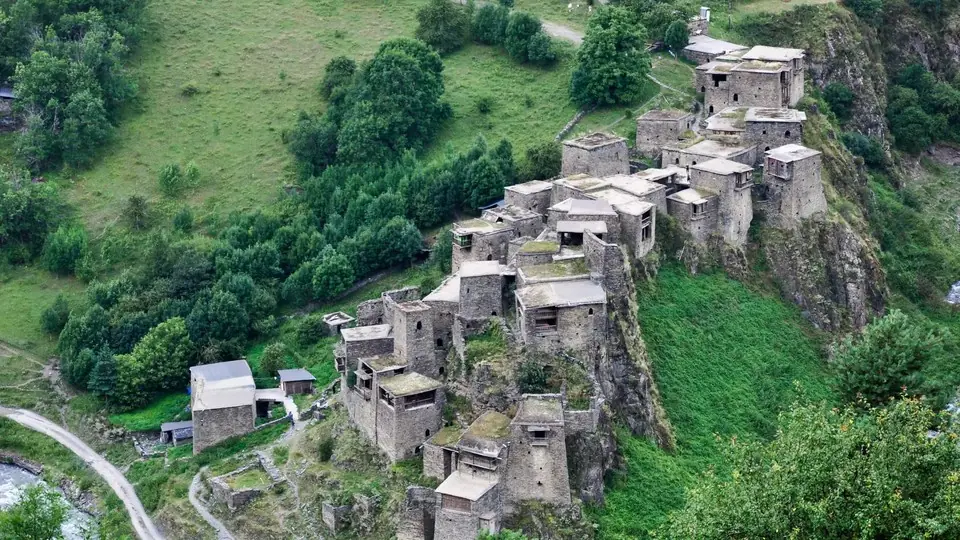
| Datvisjvari Pass to Shatili (2,676 m) | 4x4 only beyond Korsha | About June until mid-November, sometimes December | Gravel; snow can close it from October |
| Truso valley from Kobi | 4x4 or local driver | About May to November | Rocky track with river crossings after rain |
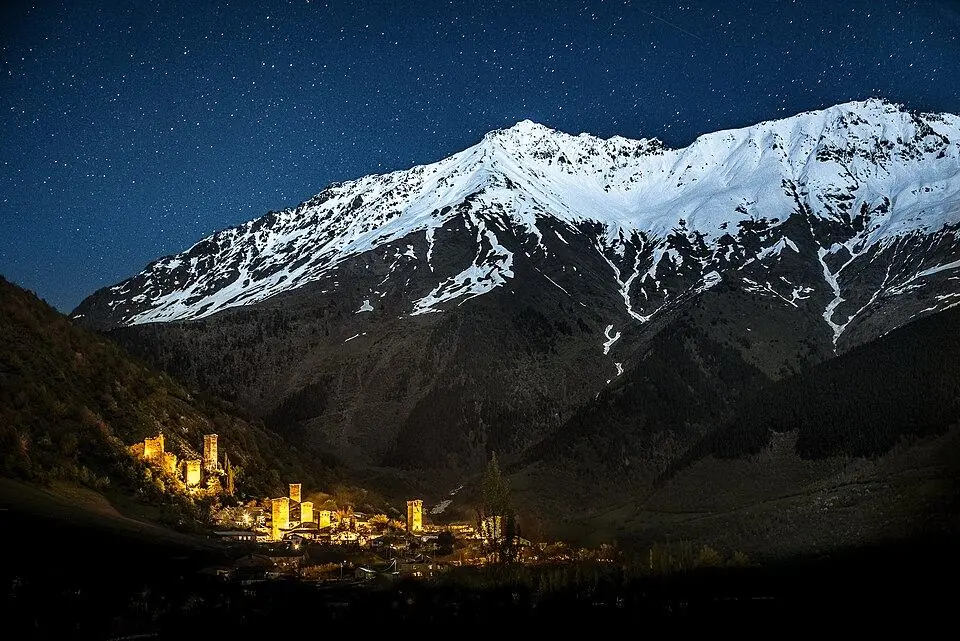
| Zagari Pass, Ushguli to Lentekhi | 4x4 advised | June to late October or November | Part concrete since 2025, rough elsewhere |
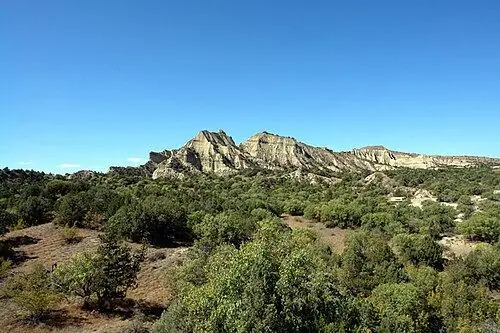
| Vashlovani National Park | 4x4 with a ranger or local driver | Spring and autumn are best | Remote steppe; no fuel and little phone signal |
| Mestia to Ushguli | Ordinary car in summer | Open all year | Winter notices often make chains compulsory |
Rental contracts are the other limit. Many firms forbid their cars on the Tusheti road, and some also ban Shatili, Truso, Juta or the Goderdzi Pass. Damage on a forbidden road is rarely covered, so read the contract before you plan a pass. If you want to drive gravel side valleys yourself, our 4x4 rental page shows which cars suit them.
For Tusheti, park your hire car in Kakheti and switch to a Tusheti driver who does the Abano road week in, week out. Our Tusheti 4x4 Adventure is built around exactly that.
Winter rules: tyres and chains from 1 December to 1 March
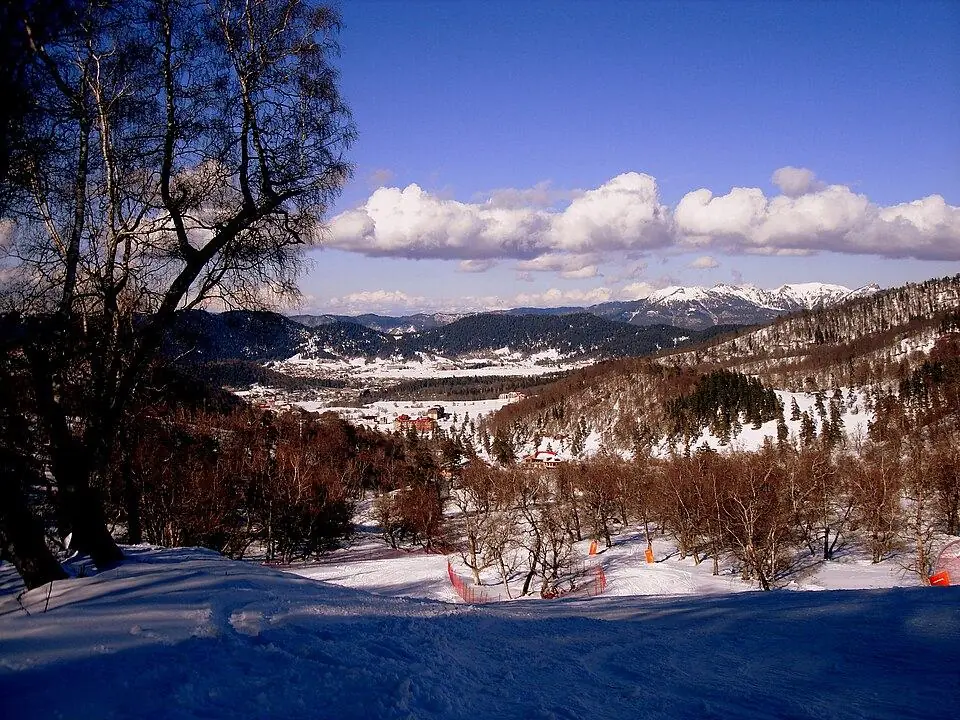
A government decree in force since January 2024 requires winter tyres on named mountain sections each year from 1 December until 1 March, and the Interior Minister can shift those dates. The list starts with the Military Road between Mleta and Kobi, so the whole Gudauri climb and the Jvari Pass are covered. It also names Borjomi to Bakuriani, the Enguri valley road to Mestia and Ushguli, the Gombori Pass to Telavi, Keda to Akhaltsikhe over Goderdzi and the Bakhmaro road. Stretches of the main highway near Rikoti are on it too.
- Each tyre must show the snowflake symbol.
- Tread must be at least 3 mm on a car, and 4 mm on a minibus or bus.
- Tyres must be under 10 years old, with a readable date of manufacture.
- In snow or ice, police can also demand chains on at least the driven wheels.
Police can turn you back at the start of a listed section, and the fine is 100 GEL (about $38) in 2026. Chains do not replace winter tyres, and you may need both. Rental firms fit winter tyres on request, and chains cost about 8 GEL (about $3) a day as an extra.
Beyond the legal minimum, respect the season. Snow can shut the Jvari Pass, the Goderdzi Pass and other high roads at short notice, and trucks then queue for hours. Look at the road status the night before and once more before you leave, drive only in daylight and keep a spare day in your plan.
What to do after a car accident in Georgia
- Stop and make the scene safe
Stop at once, switch on the hazard lights and put out the warning triangle. Leave the cars where they are: the law asks drivers not to move them or disturb any marks. - Check for injuries and call 112
One number, 112, reaches the police, an ambulance and the fire service. It is free from any phone, and its app also takes text messages. Give first aid if you can. - Wait for the Patrol Police
Stay at the scene until officers arrive and draw up the report. Write down the names and numbers of any witnesses. - Ring the rental company
Call the number on your contract straight away. Rental insurance normally pays only with a police report, so never settle in cash at the roadside. - A minor bump with no one hurt
The law lets the drivers agree a sketch of what happened, sign it together and report it at the nearest patrol police office. With a rental car, or any doubt, wait for the police instead. - If someone needs hospital
If you must leave to take an injured person to hospital, give your name and documents there, then report to the police.
Take photos of the cars, the plates and the road before anything moves. Keep the police report number, because your rental firm and your insurer will both ask for it.
Self-drive or a private driver-guide?
Driving yourself suits confident drivers who want to stop anywhere and change plans on a whim. It is less fun on a wine day, in a winter storm or on the Abano road. Many visitors mix the two: a hire car for Kakheti or the west, and a local driver for the mountains. Trains, minibuses and domestic flights cover the rest, and our page on getting around Georgia compares them leg by leg.
| Self-drive | Private tour with driver and guide | |
|---|---|---|
| Who drives | You, in Georgian traffic | A professional who knows the roads |
| Wine tastings | Not for the driver, with the 0.3 per mille limit | Everyone can taste |
| Mountain and 4x4 roads | Often banned by rental contracts | Covered, with the right vehicle |
| Winter | Your tyres, chains and timing | Handled by our team |
| Explanations | Your guidebook | A guide in your language |
| Fuel and parking | Yours to pay and find | Part of the quote |
Our private tours have no fixed dates and no limit on group size. Your guide uses your mother tongue, and we plan each day around the youngest travellers, whatever their age. Prefer to keep the wheel? Our Self-Drive Georgia trip books the car and every hotel, hands you a route book and keeps someone from our Tbilisi team on call day and night.
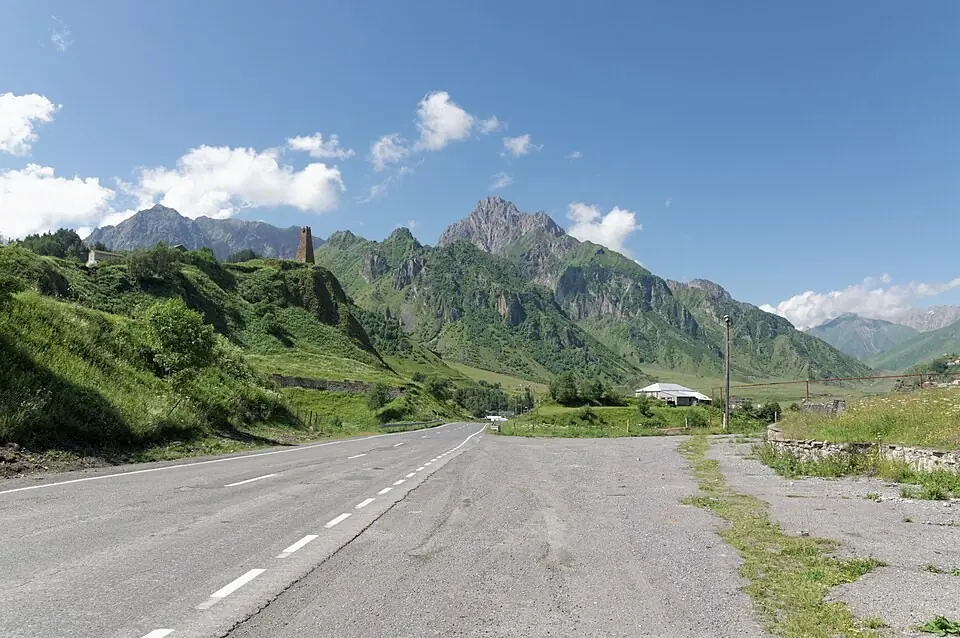
Rather be driven? Classic Georgia spends a week between Tbilisi, the Kazbegi mountains and the wine town of Sighnaghi, with your own driver and guide.
Driving in Georgia: FAQ
Can I drive in Georgia with a foreign driving licence?
Yes. A valid foreign licence lets you drive for up to one year from your last entry into Georgia, and never beyond its expiry date. People who stay longer swap it for a Georgian licence at the Interior Ministry's Service Agency.
Do I need an International Driving Permit to drive in Georgia?
Usually not, if your licence is printed in Latin letters. Carry one if your licence uses another script, or if your rental firm asks for it. It is cheap at home and avoids any argument at a police check.
Do Georgians drive on the left or the right?
On the right, with overtaking on the left. Steering wheels usually sit on the left, though you will see many right-hand-drive imports from Japan.
What are the speed limits in Georgia?
For cars it is 110 km/h on motorways, 90 km/h on roads outside towns, 60 km/h in built-up areas and 20 km/h in residential zones. Signs can set other limits. Speeding by more than 15 km/h costs from 50 GEL (about $19) in 2026.
What is the drink-driving limit in Georgia?
The cut-off is 0.3 per mille. Above it you lose your licence for six months, and for a year above 0.7 per mille or for refusing a test. In practice, do not drink at all on a driving day.
Are child car seats required in Georgia?
Children under 3 must ride in the back in a seat that fits their size, and no child under 12 may sit in front. The law has no booster rule for older children, but we recommend one. Rental firms supply seats for a small daily fee.
Is driving in Georgia safe for tourists?
The highways are in decent shape, yet locals drive fast, some overtake recklessly and animals wander onto the tarmac. Drive in daylight, keep your speed down and stay sober, and it is manageable for experienced drivers. In winter and on high mountain roads, a local driver is the safer choice.
Do I need a 4x4 to drive in Georgia?
Only for a few roads: Tusheti over the Abano Pass, Shatili in Khevsureti, the Truso valley and some remote tracks. An ordinary car handles the main sights in summer. In winter, good snow tyres do more for your safety than four-wheel drive.