- Georgia, the country in the Caucasus, has hot springs from Tbilisi to the lowlands of Samegrelo, and November to February is the best time to use them.
- Three are easy to reach and work all winter: Tbilisi's sulphur bathhouses, the radon baths in Tskaltubo near Kutaisi and Sairme's thermal pools.
- The wild springs at Dikhashkho and near Nokalakevi are free, but have no changing rooms or staff.
- In 2026 a Tbilisi public hall cost about 6-10 GEL (about $2-4) and the Borjomi forest pools about 15 GEL (about $5.50).
- If you have heart trouble or high blood pressure, or you are pregnant, ask a doctor before you use hot or radon baths.
Hot springs in Georgia, the country in the Caucasus, run from old city bathhouses to forest pools and steaming streams beside farm fields. The best known are the sulphur baths of Tbilisi, the radon baths of Tskaltubo near Kutaisi, and the warm pools of Sairme and Borjomi. Most work all year, and they are at their best from November to February. The air is cold then, the resorts are quiet, and steam hangs over the water. This guide covers Georgia the country, not the US state.
We start with why the country has so many springs, then compare the main ones in one table by water, warmth and distance from Tbilisi or Kutaisi. Sections on each spa town, the free open-air pools of Samegrelo and Imereti and the drinking-water resorts follow. The guide ends with winter roads, packing, private rooms against public pools, and plain health advice. Prices are 2026 figures where we have them, and they change often.
Why there are so many thermal springs in Georgia
Georgia sits where two plates of the earth's crust collide. The Arabian plate keeps grinding north into Eurasia. That slow squeeze lifted the Greater Caucasus in the north and the Lesser Caucasus in the south, and it split the rock with deep faults.
Rain and melted snow seep down those cracks. Deep down the rock is hot, so the water warms up and dissolves minerals and gases, then climbs back out along a fault as a spring. Water with hydrogen sulphide smells of eggs, as in Tbilisi. Water with carbon dioxide comes out fizzy, like Borjomi. At Tskaltubo it holds a trace of radon, a weakly radioactive gas.
Of the 2,000-plus mineral springs on official counts, most are cold drinking springs.
How the Soviet Union built the spa towns
Tbilisi grew up around its hot springs in the 5th century, but the big resorts are mostly Soviet. From the 1920s, spa care was part of state medicine. Trade unions gave workers vouchers for two or three weeks of baths, set meals and doctors. At its peak Tskaltubo drew about 125,000 guests a year.
When the USSR broke up in 1991, the system went with it. Many sanatoriums shut, some became homes for families who fled the war in Abkhazia, and only a few are spa hotels again.
Hot springs in Georgia compared: water, warmth and distance
Here are the main places in this guide, from the easiest to the wildest. Road distances are rounded.
| Place | Water | What you do | From Tbilisi / Kutaisi | Best for |
|---|---|---|---|---|
| Tbilisi (Abanotubani) | Sulphur, ~38-40°C | Private room or public hall, kisi scrub | In town / ~220 km, ~3 h | A first soak |
| Tskaltubo | Weak radon, 33-35°C | Short baths at Spring 6, Soviet spa park | ~235 km, ~3.5 h / ~14 km, 20 min | Spa history, a gentle bath |
| Sairme | Thermal pools, fizzy drinking springs | Indoor and outdoor pools, forest walks | ~235 km, ~4 h / ~50 km, 1 h | A night in the forest |
| Borjomi and Likani | Sulphur pools ~30-32°C; mineral water | Forest walk to open-air pools; spa hotel | ~165 km, 2.5-3 h / ~150 km, 2.5 h | Pools in the snow, plus Vardzia |
| Abastumani | Hot springs, up to ~48°C at source | Basic public pools, pine forest | ~235 km, ~4 h / ~225 km in winter | Quiet and cheap |
| Nunisi | Alkaline spring water | Forest spa hotel | ~160 km, ~2.5 h / ~85 km, 1.5 h | Rest in the national park |
| Utsera | Cold, fizzy drinking springs | Fill a bottle, forest walks | ~330 km / ~115 km, 2-2.5 h | Summer stays |
| Nokalakevi springs | Scalding at source, warm at the river | Stone tubs on the Tekhuri bank | ~290 km, 4.5 h / ~55 km, 1.25 h | A free wild soak |
| Dikhashkho | Sulphur, ~38°C | Two open pools in a field | ~240 km, 4 h / ~36 km, 1 h | A free soak at any hour |
| Sulori | Warm, up to ~38°C | Individual baths at a clinic | ~250 km, 4 h / ~40 km, 1 h | Local treatment; ask ahead |
Two names from old spa lists are missing. The national tourism site says Tsaishi near Zugdidi does not work as a resort at the moment. We could not confirm that the old spa at Menji near Senaki takes visitors either.
Tbilisi: sulphur baths in the capital
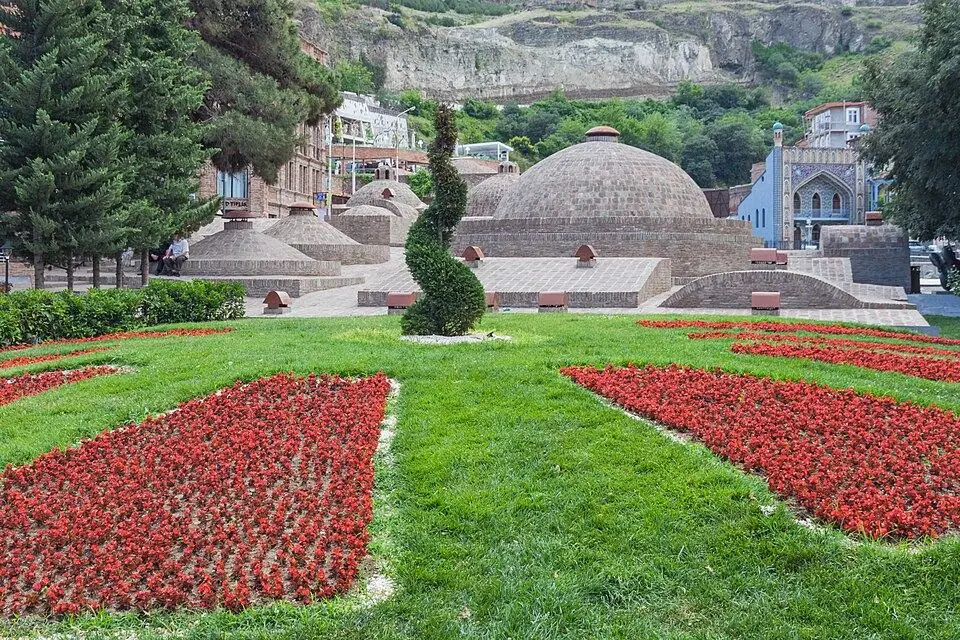
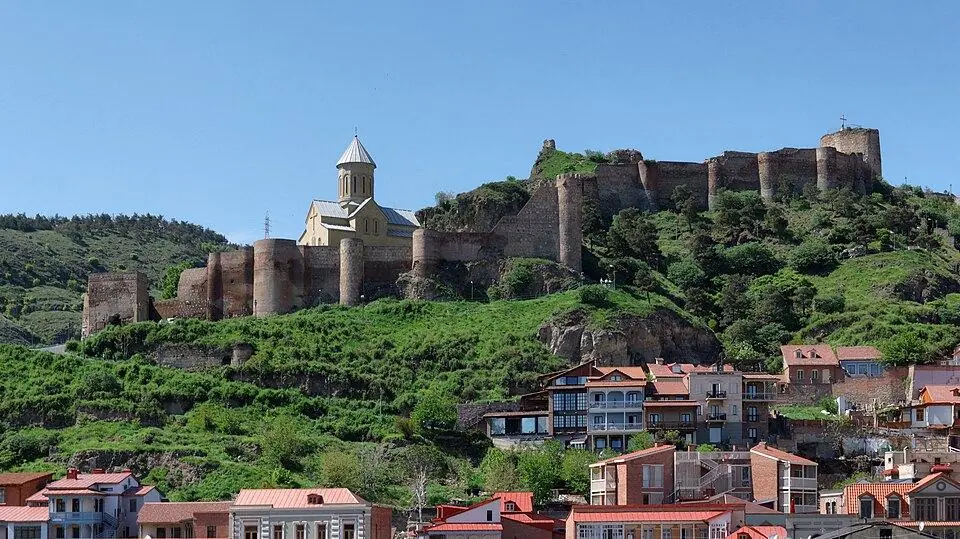
Most trips begin in Abanotubani, below Narikala in the Old Town, where hot sulphur water rises under brick domes at roughly 38-40°C. You either book a private room for your group, paid by the hour, with hot and cold pools, or share a single-sex public hall.
In 2026 an hour in a private room came to about 130-300 GEL (about $50-115), shared by the group. A place in a public hall was about 6-10 GEL (about $2-4) a head. Book private rooms ahead for winter evenings and weekends. Our guide to the Tbilisi sulphur baths compares the bathhouses and explains the house rules, so this part stays short.
Tskaltubo: radon baths and Soviet sanatoriums near Kutaisi
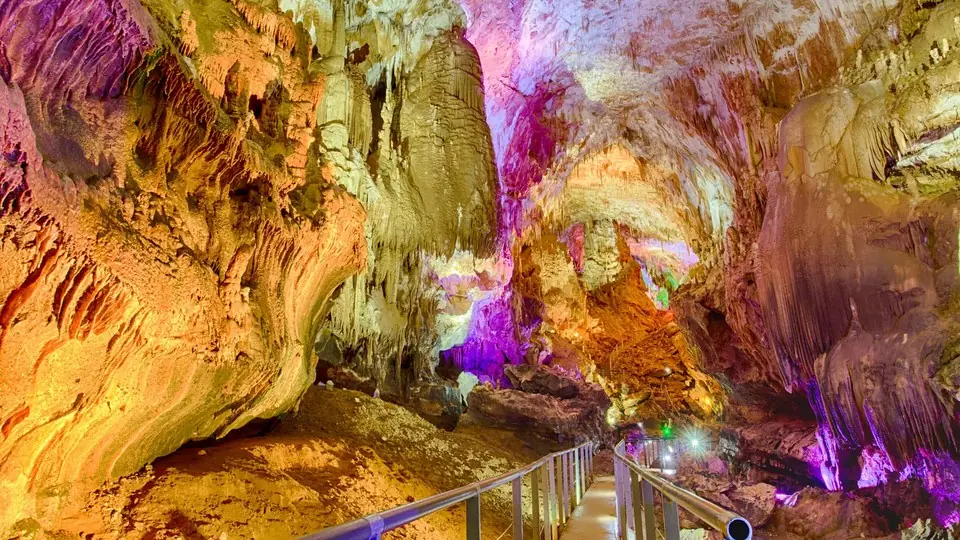
Tskaltubo lies about 20 minutes north-west of Kutaisi. Its water leaves the ground at 33-35°C, clear, with no smell and a weak dose of radon. The baths fill straight from the springs and drain as they go, so nothing is pumped or heated. It feels warm rather than hot, and children may bathe from the age of 3. Bathhouses and sanatoriums from the 1930s to the 1980s ring its 78 ha park.
Bathhouse No. 6 (Spring 6): where to take a bath
The largest working bathhouse is No. 6, now called Spring 6. Behind its columns are shared pools and about 50 private bath rooms. Stalin had his own bath here, a bright room with mosaics that staff sometimes show on request. Bathhouse No. 2, run by a nearby spa hotel, also still works.
Besides treatment courses, reception sells single baths of about 10-15 minutes; ask the price on the day.
Restored spa buildings and abandoned sanatoriums
The former military sanatorium reopened as Tskaltubo Spa Resort, and the colonnaded Magnolia cafe was restored in 2019. Spa hotels such as Legends and Tskaltubo Plaza sell radon baths with their rooms.
Much of the rest is empty. Bathhouse No. 8, a round building of 1959 with its bath cubicles set in a ring, stands derelict. Sanatoriums such as Medea and Metalurgi are shells, and other blocks are still lived in. Look from outside and ask before you photograph people.
Our private Kutaisi caves and monasteries day stops for lunch in Tskaltubo, and we can add a bath at Spring 6. Name your date and head count, and we pair you with a guide who knows your language.
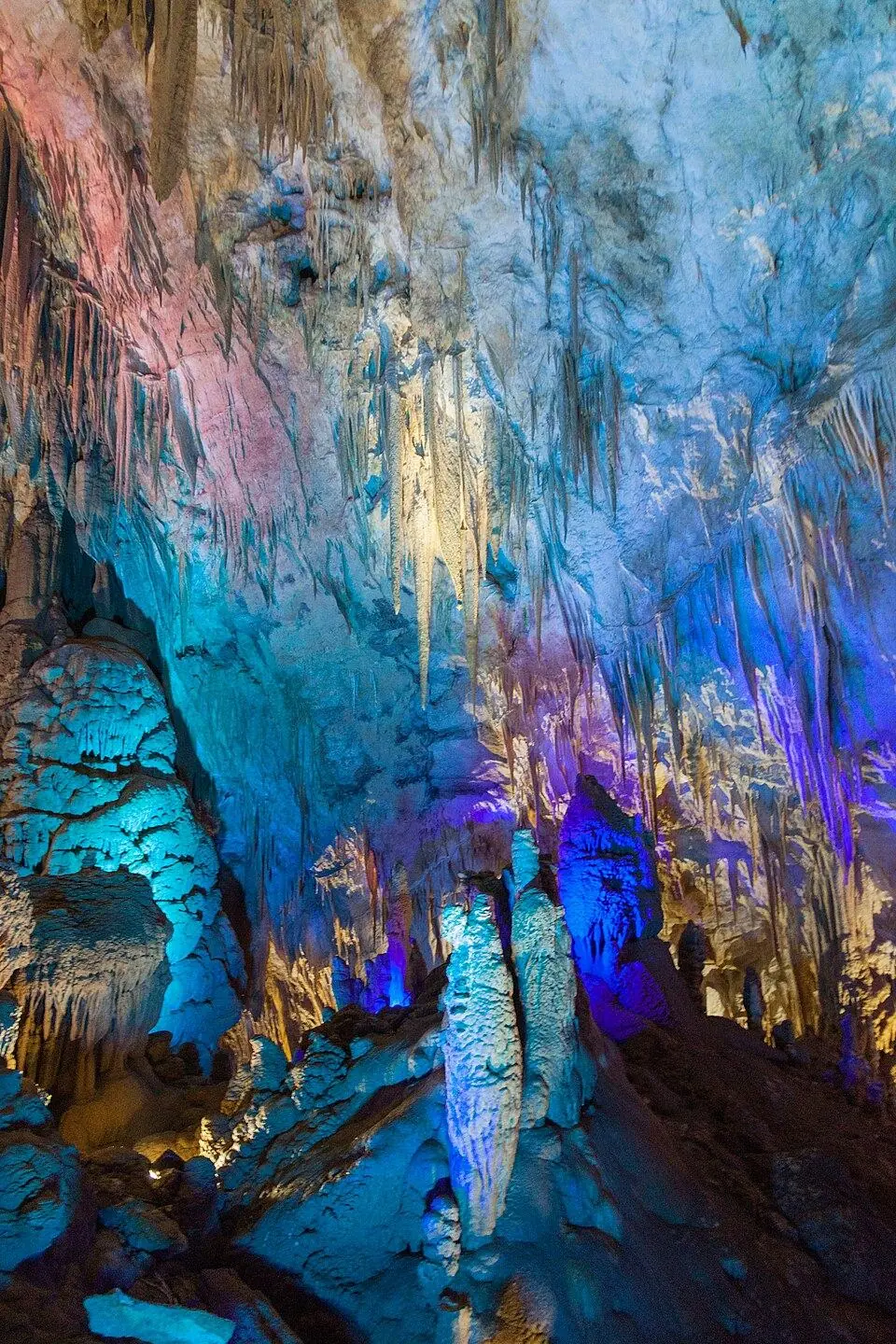
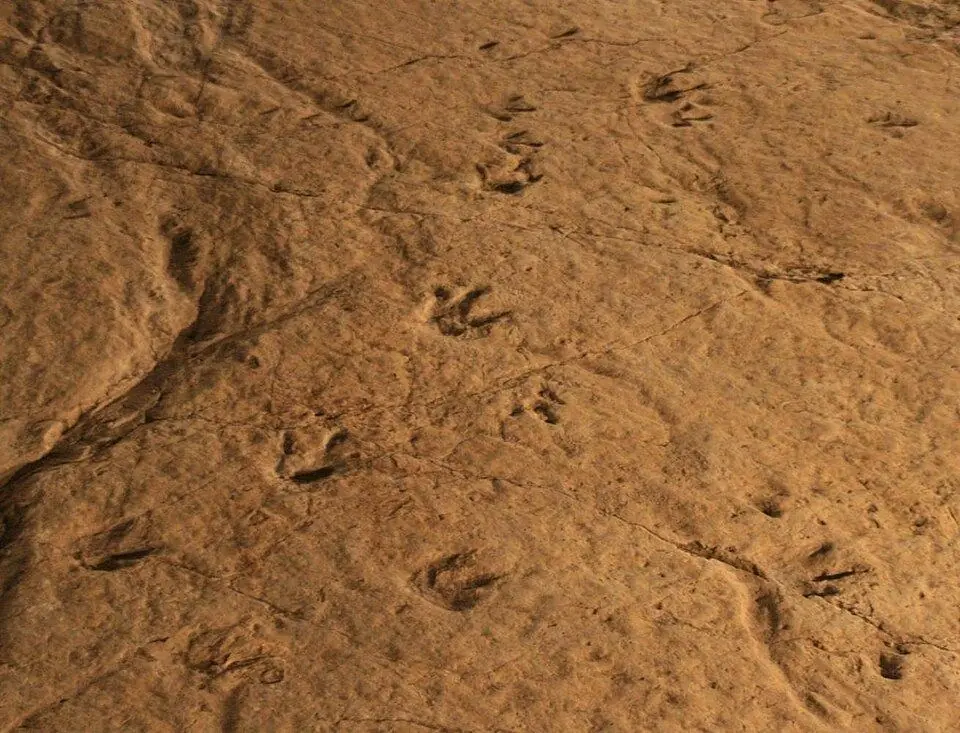
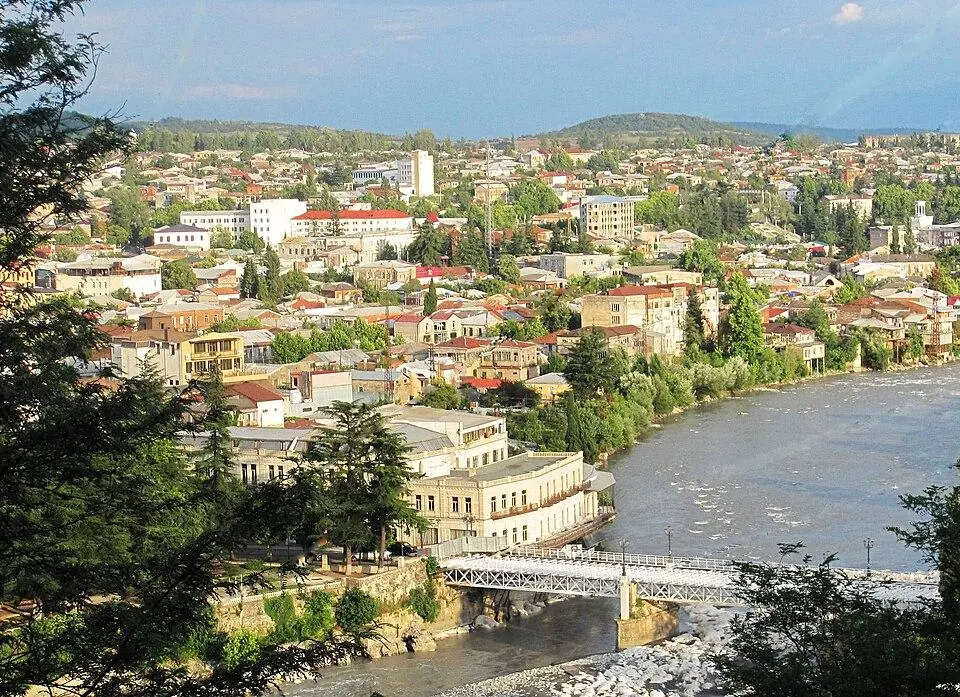
Sairme: thermal pools and drinking springs in the forest
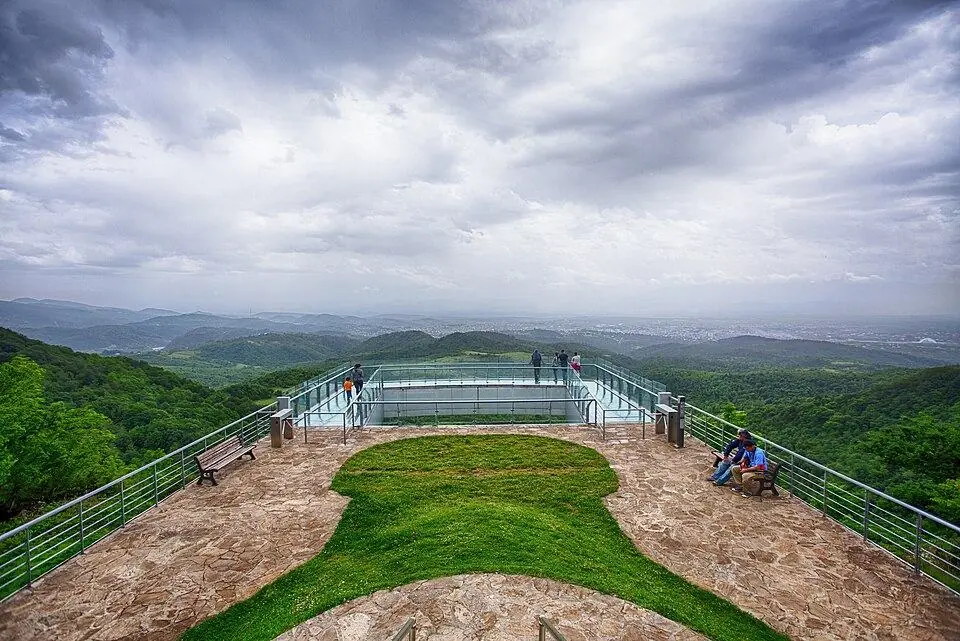
Sairme lies at ~950 m in a wooded valley of Baghdati municipality, about an hour south of Kutaisi. In the resort, pavilions by the stream pour out fizzy mineral water, free for anyone with a cup. A short drive down the valley, a domed spa holds indoor and outdoor thermal pools, a children's pool, saunas and a salt room.
Ensana, a European spa chain, now runs the main hotel, Sairme South, with a free hourly shuttle to the pools for its guests. Day visitors buy a ticket at the door, so check the 2026 price and hours on arrival. In cold months the outdoor pool is sometimes drained, while the indoor one keeps going.
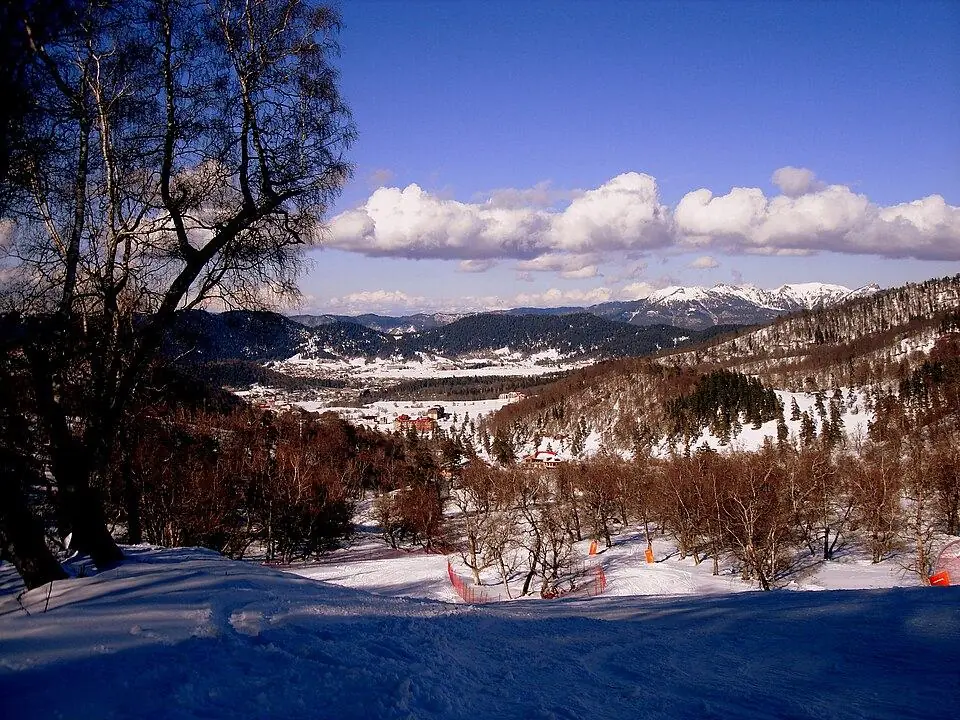
Winter is calm, with snow on the firs and few guests midweek. The road from Kutaisi through Baghdati is paved and open all year. The Zekari Pass road on to Abastumani needs a 4x4 in summer, and snow usually shuts it from about December to March.
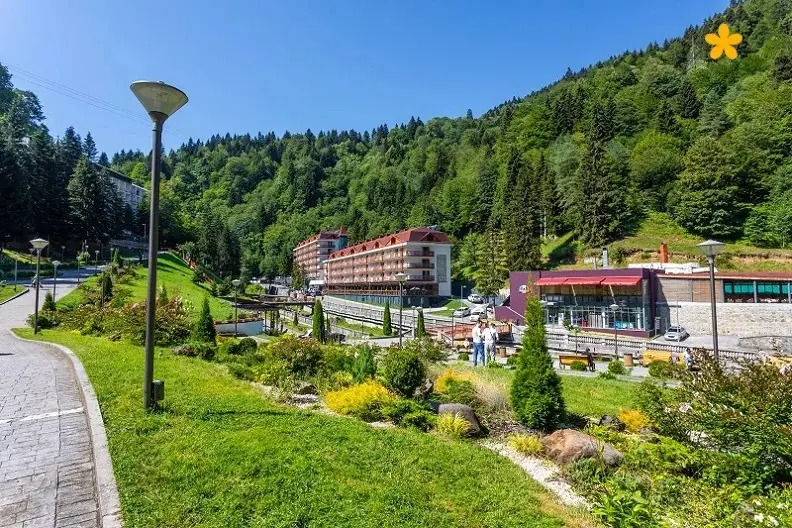
Borjomi and Likani: open-air pools and a spa hotel
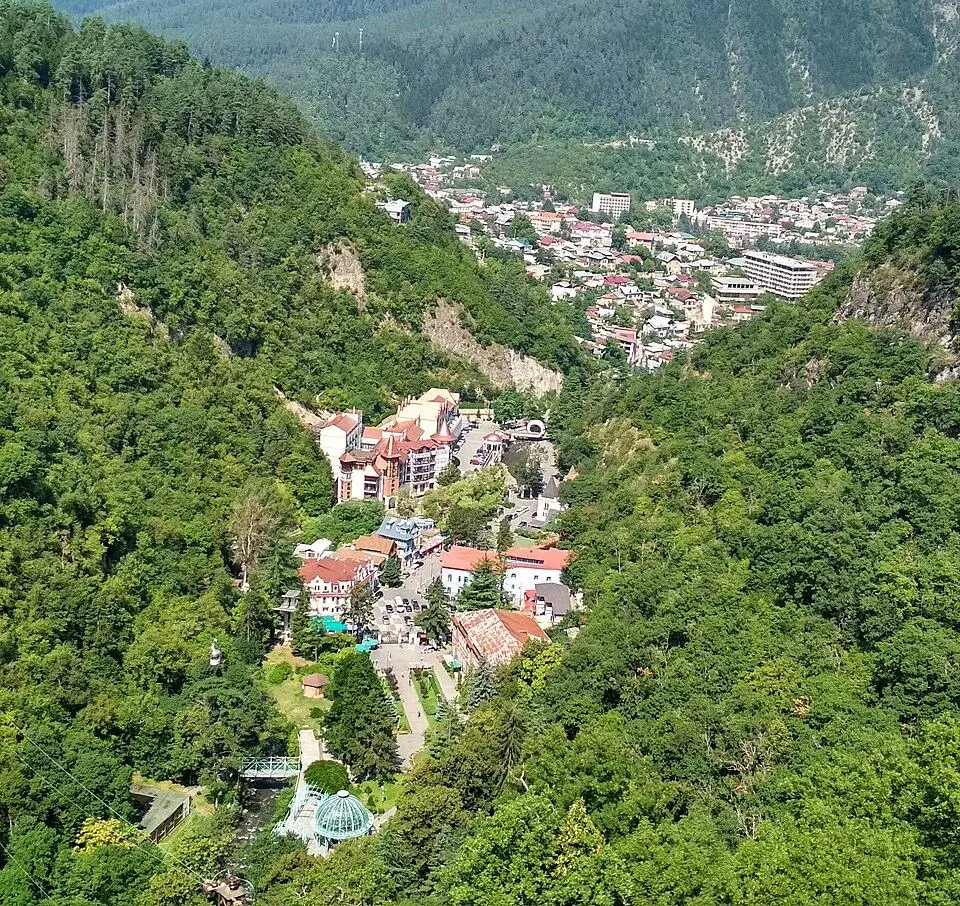
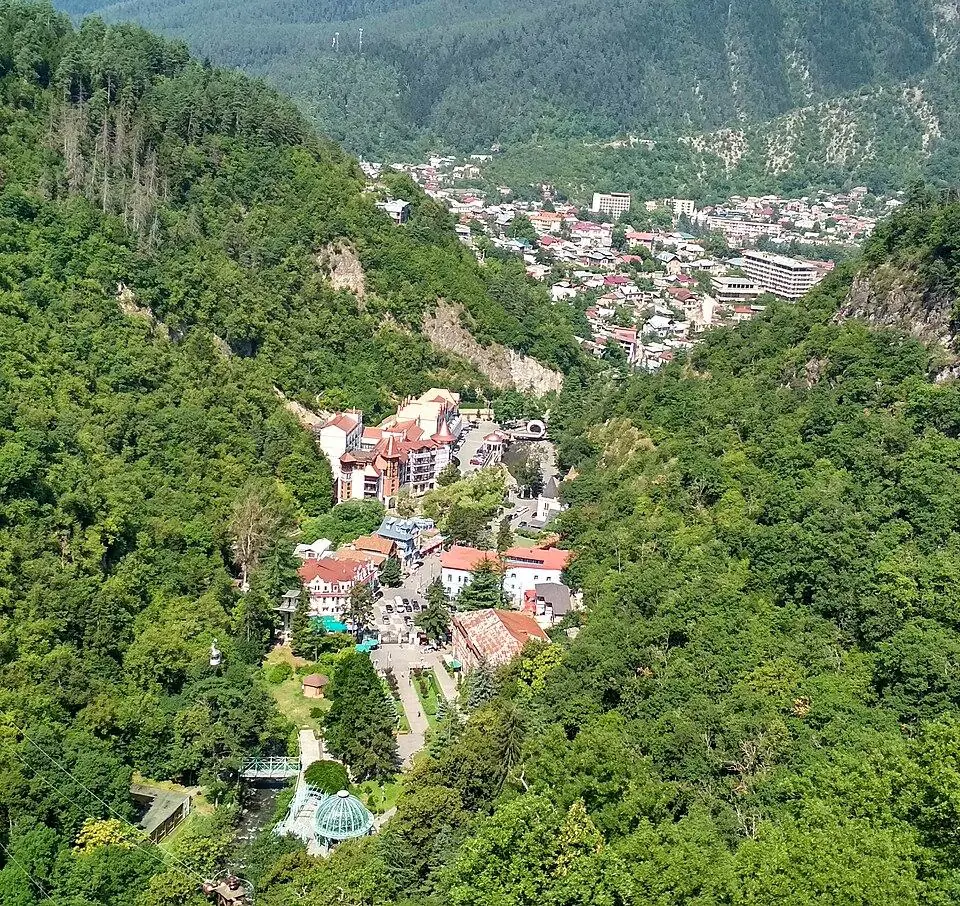
Borjomi is known for drinking water, but you can bathe there too. From the Central Park gate, a path and then a forest track of ~2.5-3 km lead to the Borjomi sulphur pools, a few open-air pools at about 30-32°C. In 2026 entry was about 15 GEL (about $5.50), paid on top of the park ticket. Our Borjomi travel guide covers the walk and the town.
In Likani, Borjomi's western suburb, the Borjomi Likani resort hotel offers its guests mineral-water baths and treatments. The Romanov palace next door is closed for restoration, so you see it only from outside.
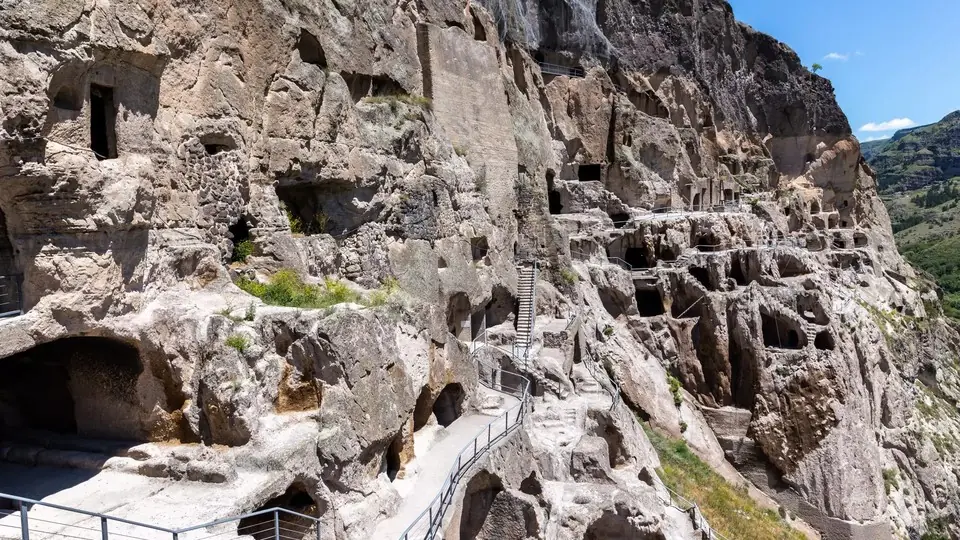
Our two-day private tour from Tbilisi to Borjomi and Vardzia starts at the spring in Central Park, and you can trade a stop for the pools. Vardzia stays open in winter, with only a small part closed after the 2026 rockfall. As on all our tours, the date and group size are up to you, and the guide speaks your language.
Quiet spa towns in Georgia: Abastumani, Nunisi and Utsera
Abastumani: simple pools in a pine gorge
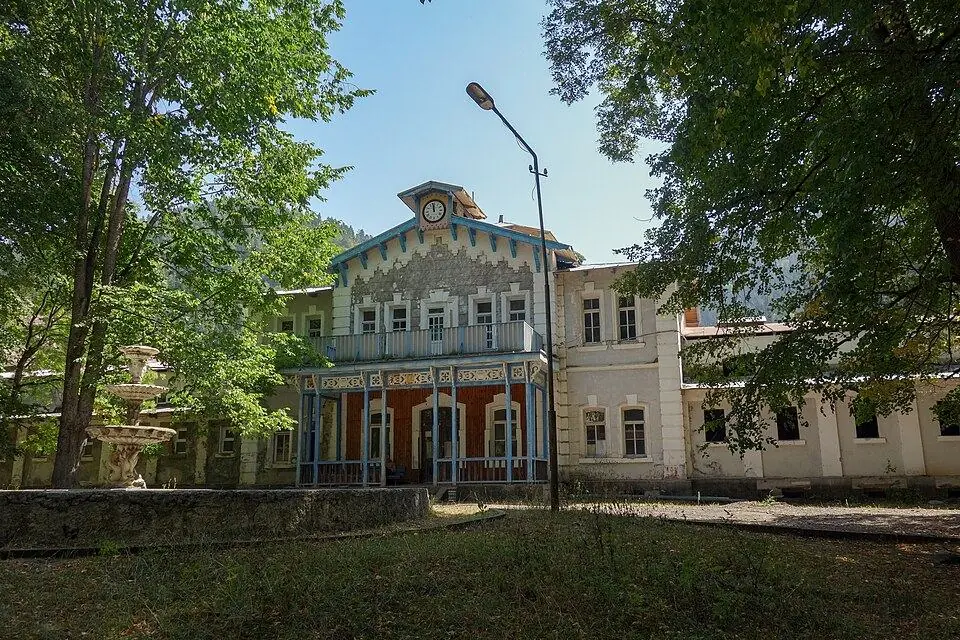
Abastumani sits at ~1,340 m in pine forest, ~27 km west of Akhaltsikhe. Its springs come out hot, up to ~48°C, and feed plain public pools with changing rooms and little else. The old bathhouse of the Romanov grand duke who lived here has been under repair, so ask whether it has reopened. In winter, come by the Akhaltsikhe road, not the Zekari Pass.
Nunisi: a forest spa near Kharagauli
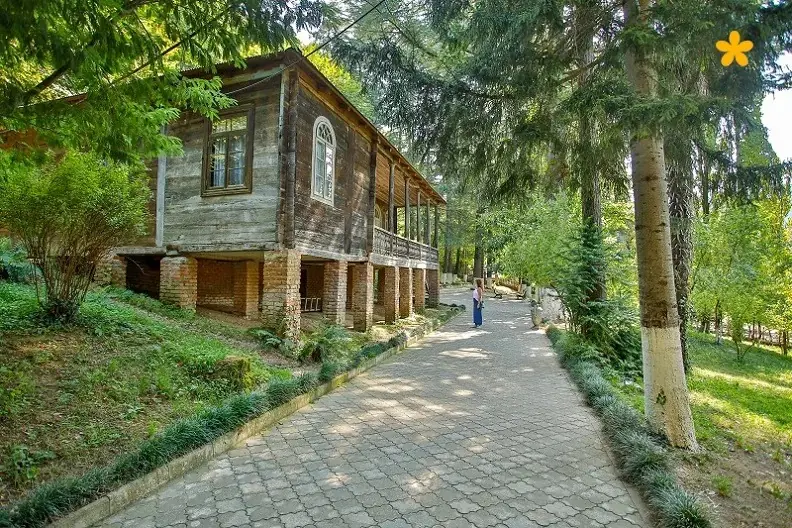
Nunisi is a small spa in Kharagauli municipality, at ~750 m in the forest belt of Borjomi-Kharagauli National Park. A resort has worked here since 1856. Its alkaline water goes into baths, and Georgians have long come for skin complaints. The springs now feed a forest spa hotel, so plan to stay the night. Zvare mineral water comes from the same hills.
Utsera, Nabeglavi and the drinking springs
Not every spa here is about hot water. Utsera, at ~1,050 m above Oni in Racha, is a drinking resort with cold, fizzy springs at small pavilions. It is busy in July and August and very quiet in winter, so call ahead. Shovi, higher up the valley, was a spa of the same kind; most of it has been closed since the mudflow of August 2023.
Nabeglavi in Guria is similar: a bottled water you can taste at its source on the summer road to Bakhmaro.
Wild hot springs in Samegrelo and Imereti: Nokalakevi, Dikhashkho, Sulori
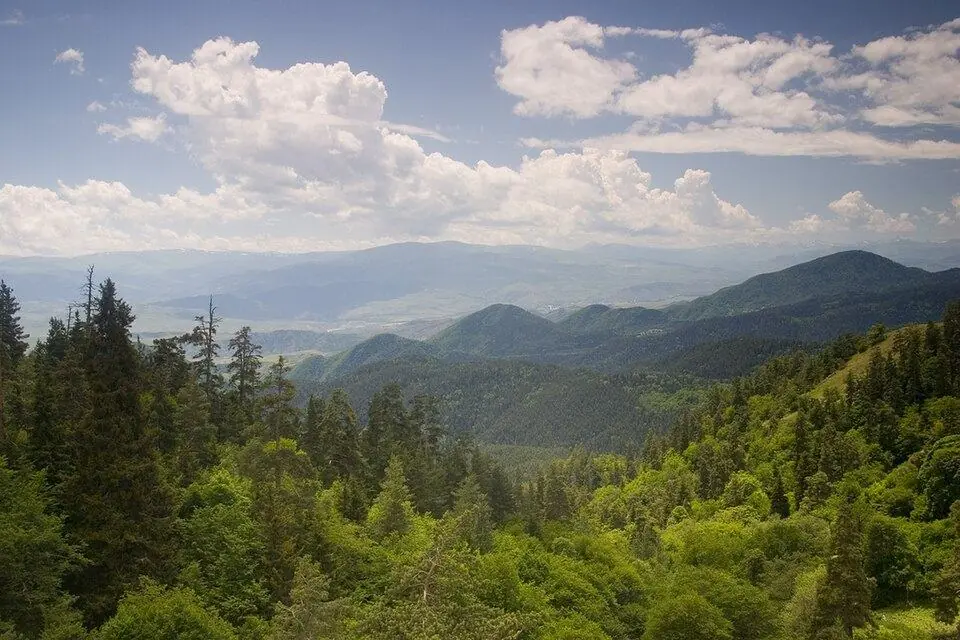
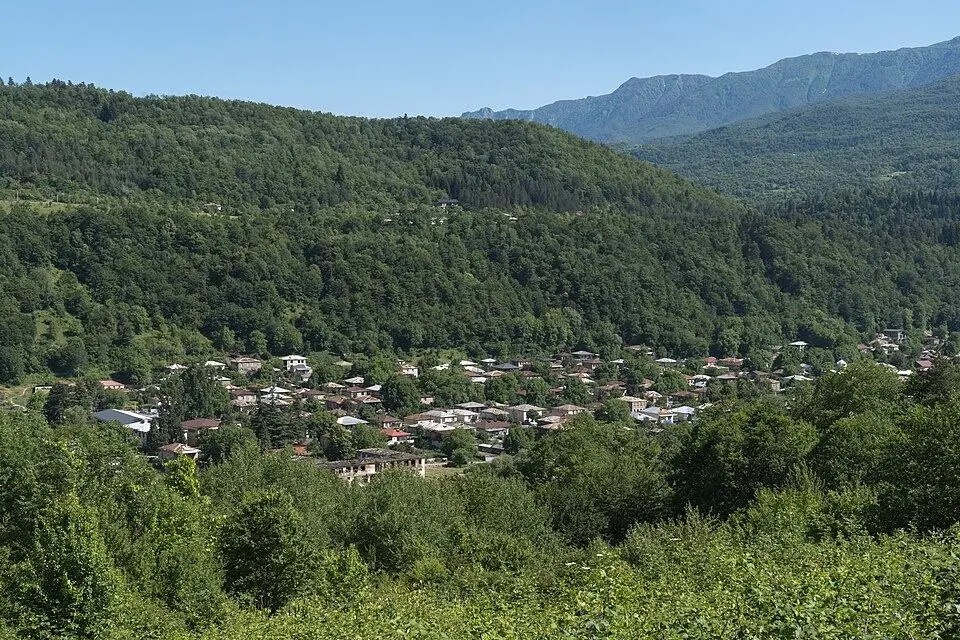
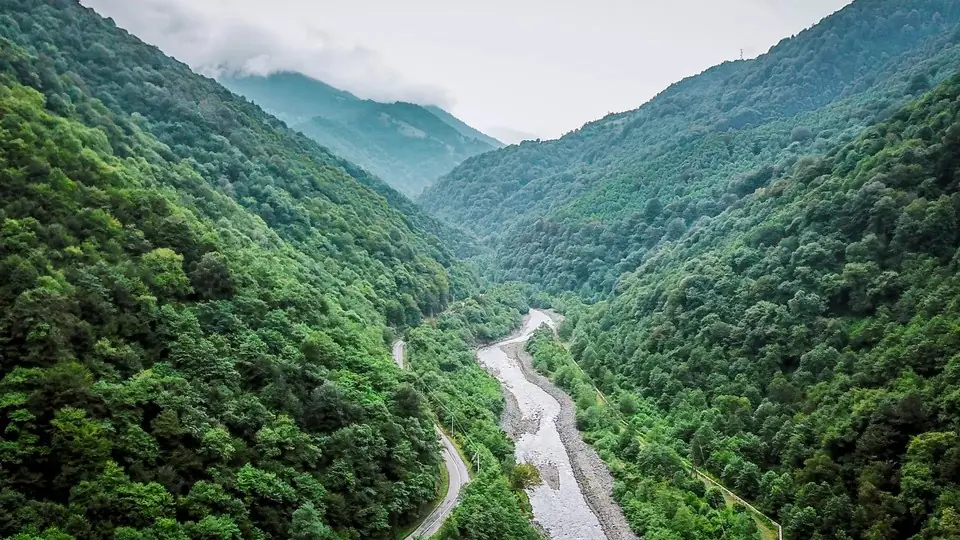
West of Kutaisi, three springs need no ticket. Locals pack them on summer evenings, but in winter you may be alone.
Nokalakevi: hot water on the Tekhuri river
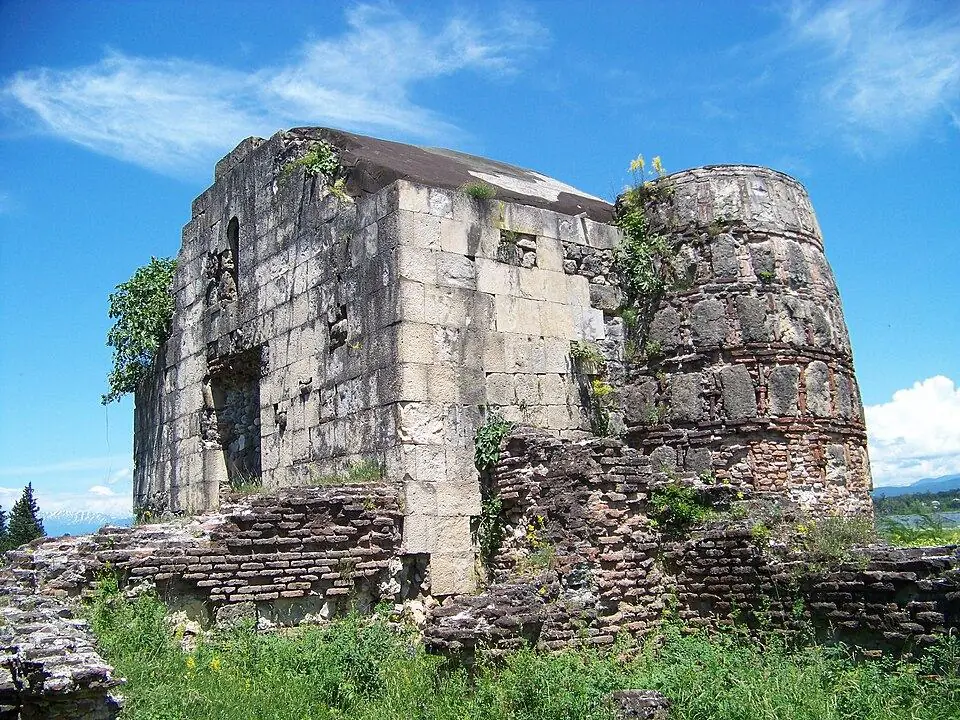
About 1 km up the Tekhuri from the ruined fortress of Nokalakevi, two old boreholes release water far too hot to touch. Over time it has coated the bank in a white travertine crust, and a thin hot stream trickles down it into the river.
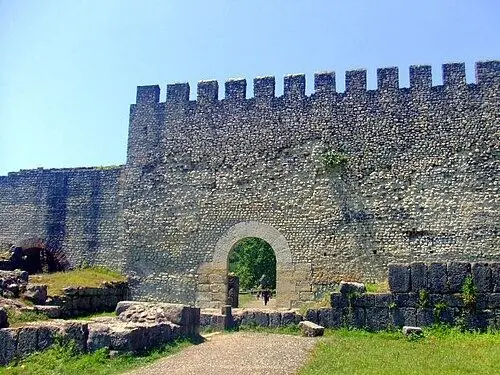
Keep away from the source. People bathe lower down, in small tubs of piled river stones where the hot stream mixes with cold river water. A local man also pipes spring water into a few tubs for a small fee. There are no changing rooms or toilets. After heavy rain the river can cover the pools, and its current is strong. The fortress walls and site museum are a short drive downstream.
Dikhashkho: an open pool in a field
Near the village of Dikhashkho in Vani municipality, a sulphur spring at about 38°C fills two small pools in open farmland. The regional tourism office lists it as free at any hour. Expect a wooden changing hut at most, and no toilets. It is ~36 km from Kutaisi, close to the Vani Archaeological Museum.
Sulori: a small bath clinic near Vani
At Sulori, 11 km from Vani, warm water of up to about 38°C seeps from a cliff, and a small polyclinic runs 32 individual baths. It is a local treatment centre, not a tourist spa, so ask a Georgian speaker to phone first.
Winter spa trips in Georgia: roads, packing and private rooms
- Roads: the E60 from Tbilisi to Kutaisi crosses the Rikoti Pass, open all winter but slow in snow. The western lowlands, at about 100-200 m, rarely see snow.
- Mountain spas: Sairme (~950 m), Borjomi (~800 m) and Abastumani (~1,340 m) get a real winter. Use winter tyres, carry chains after storms and skip the Zekari Pass until late spring. Our Georgia in winter guide has the tyre rules.
- Swimwear: pack an old suit, since sulphur leaves a smell in fabric, and leave silver jewellery behind, because sulphur turns it black.
- Towel and shoes: day visitors should bring a towel, plus water shoes for slippery mineral crust, and a hooded poncho helps when you change outdoors.
- Cash and papers: carry lari for small fees, and proof of travel insurance. Georgian law has asked foreigners since 1 January 2026 to hold a policy covering medical care and accidents for at least 30,000 GEL.
Private rooms or public pools?
Spas in Georgia handle privacy in different ways. In Tbilisi, couples, families and first-timers usually take a private room, while the public halls are single-sex. Tskaltubo offers a private tub or a shared pool in the same bathhouse. Sairme, Borjomi and Abastumani have shared pools, and at the wild springs everyone bathes together in swimwear. Keep it low-key in these village spots.
Health and safety at thermal baths in Georgia
Resorts list many conditions the baths are said to help, but we make no medical claims. Treat a soak as rest, and ask your own doctor first if you:
- have heart disease or high or low blood pressure, or have had a heart attack or stroke, since hot water puts strain on the heart;
- are pregnant, which covers hot pools and radon baths alike;
- have a serious illness or recent surgery, or take medicine for your heart or blood pressure.
Children overheat faster than adults, so keep their dips short. For everyone, soak for about 10-15 minutes at a time, then cool off and drink water. Skip the hot pool after a big supra with wine and chacha. Climb out straight away if you feel faint or sick.
At wild springs, keep back from the scalding boreholes, never bathe alone and stay out of a high river. In Tskaltubo, stick to the time the staff set for your bath. Strong mineral water is salty, so drink a glass, not a bottle, if your doctor has you on a low-salt diet.
Hot springs in Georgia: FAQ
Are there hot springs in Georgia (the country)?
Yes. Georgia in the Caucasus has more than 2,000 mineral springs. You can bathe in Tbilisi, Tskaltubo, Sairme, Borjomi and Abastumani, and at wild springs near Nokalakevi and Dikhashkho.
What are the best spa resorts in Georgia?
Tskaltubo for its Soviet bathhouses and Sairme for thermal pools in the forest. Borjomi suits a soak on a sightseeing trip, and Abastumani is the quiet, cheap option.
Can you bathe in Tskaltubo without staying at a hotel?
Usually, yes. Spring 6, the old Bathhouse No. 6, sells single baths at reception as well as treatment courses. Ask the price on the day.
Are the hot springs in Georgia open in winter?
Bathhouses and spa hotels work all year. Outdoor pools may be drained in the cold, and wild springs can flood after rain.
Which hot springs in Georgia are free?
The pools at Dikhashkho near Vani and the springs on the Tekhuri river near Nokalakevi. Drinking from the springs in Sairme and Utsera is free too.
Is the radon in Tskaltubo's water safe?
Tskaltubo's water is only weakly radioactive, and the resort uses it in short, timed sessions for people aged 3 and up. If you are pregnant or have a health condition, ask a doctor before you book.
Do I need swimwear at Georgian hot springs?
Yes, almost everywhere, since resort pools and wild springs are mixed. Only in a Tbilisi private room or single-sex public hall do some people bathe without it.