Penovani Khachapuri Recipe
ფენოვანი ხაჭაპური
A home penovani khachapuri recipe: shop-bought all-butter puff pastry folded into square envelopes around salty Imeretian cheese and sulguni, glazed with yolk and baked until crisp and deep gold. Six bakery-size pastries in about 75 minutes, with a from-scratch dough in the variations.
Recipe by the Maspindzeli team in Tbilisi · Updated 16 Nov 2026 · Made everywhere in Georgia, above all in street bakeries
Full recipe with the timeline, timers and US measures: maspindzeli.ge/recipes/penovani-khachapuri/
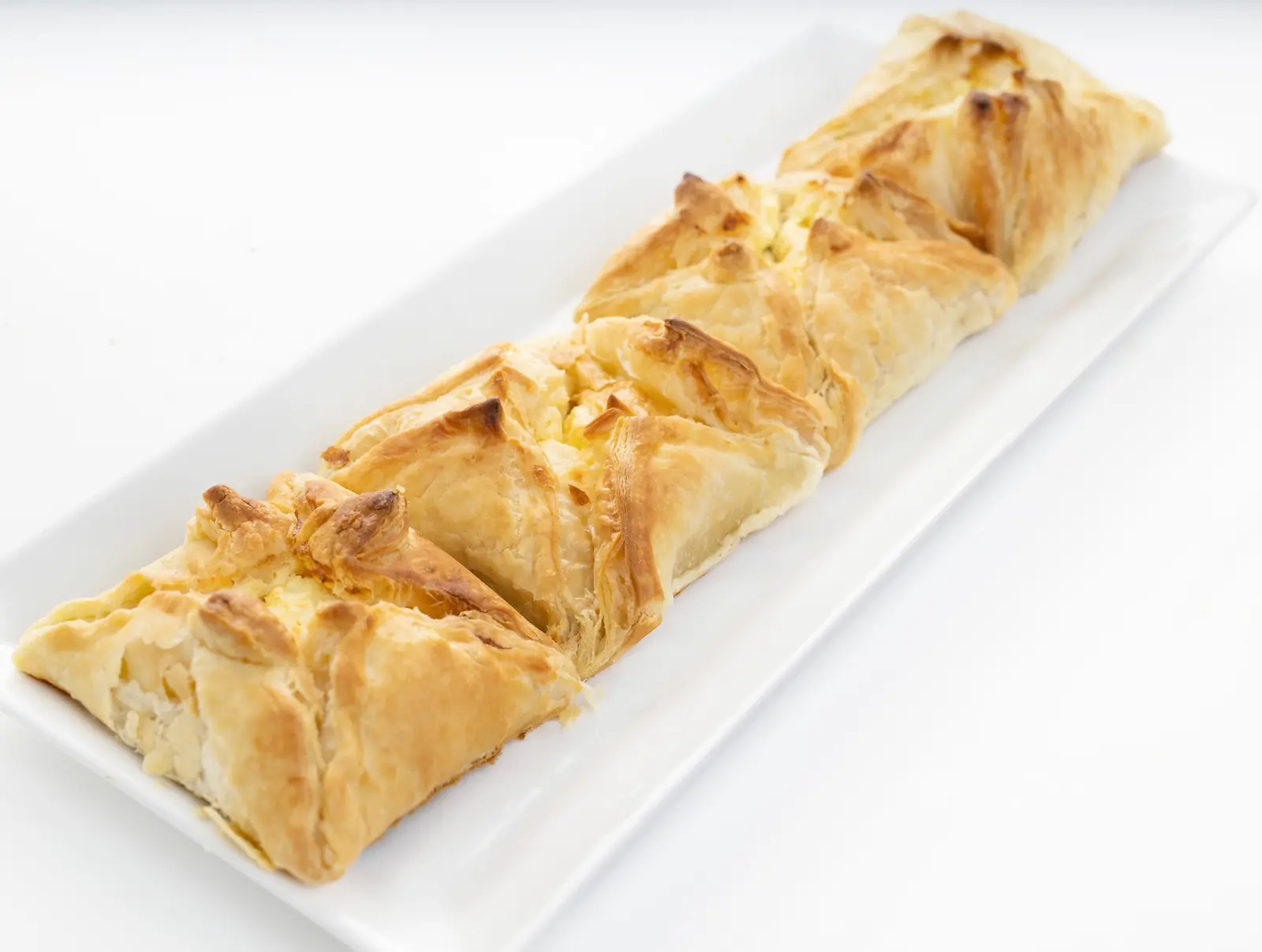
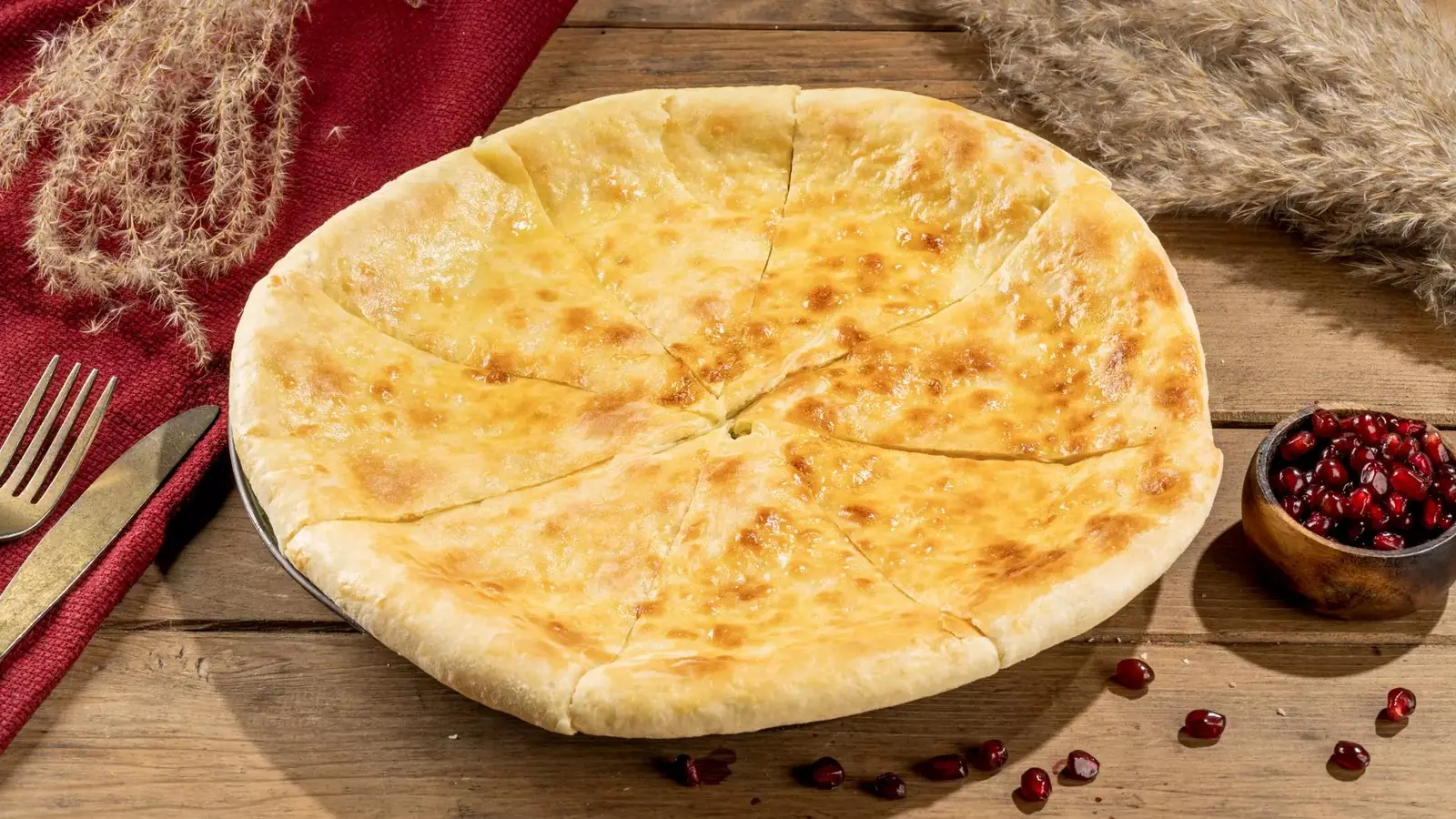
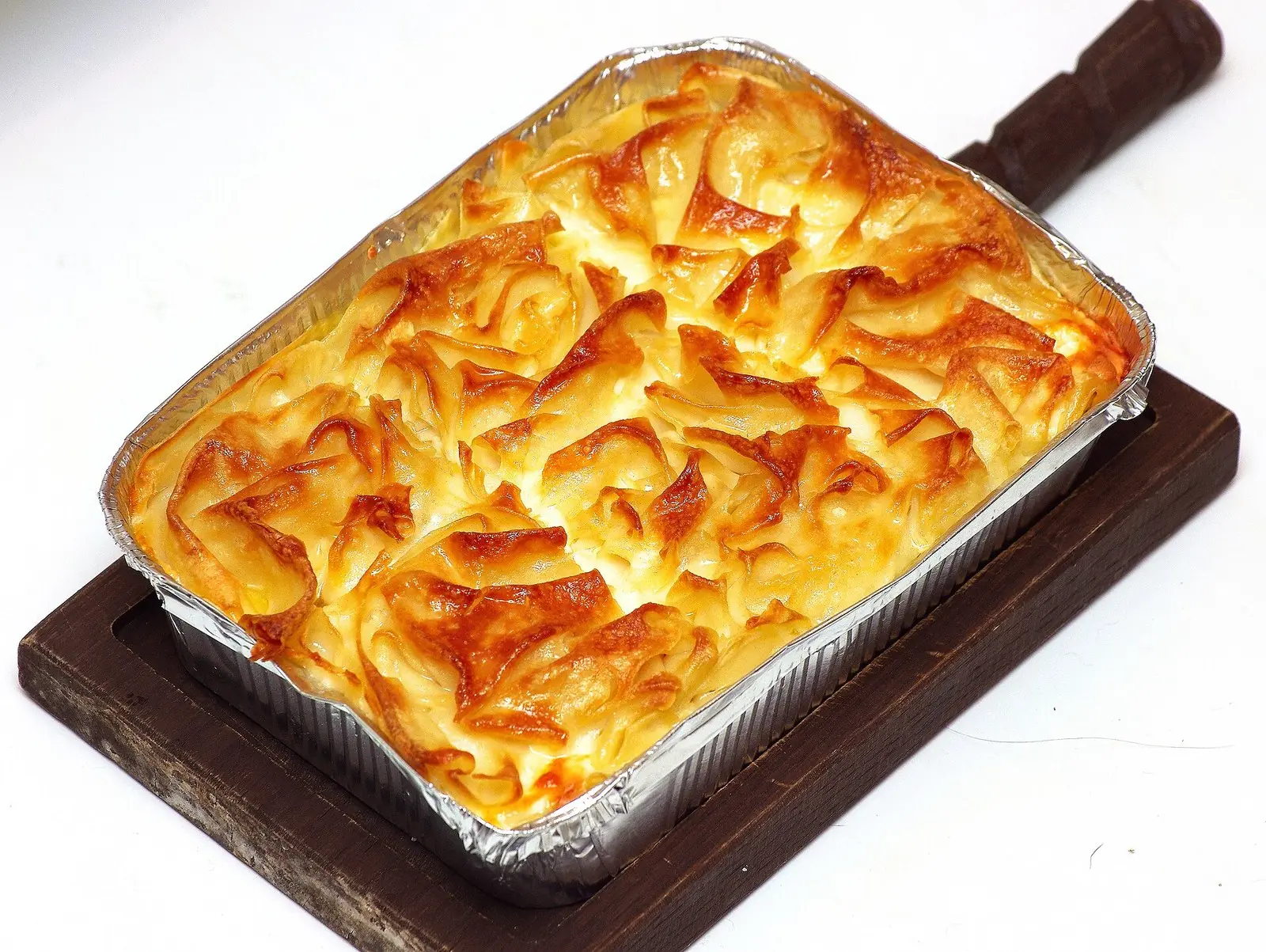
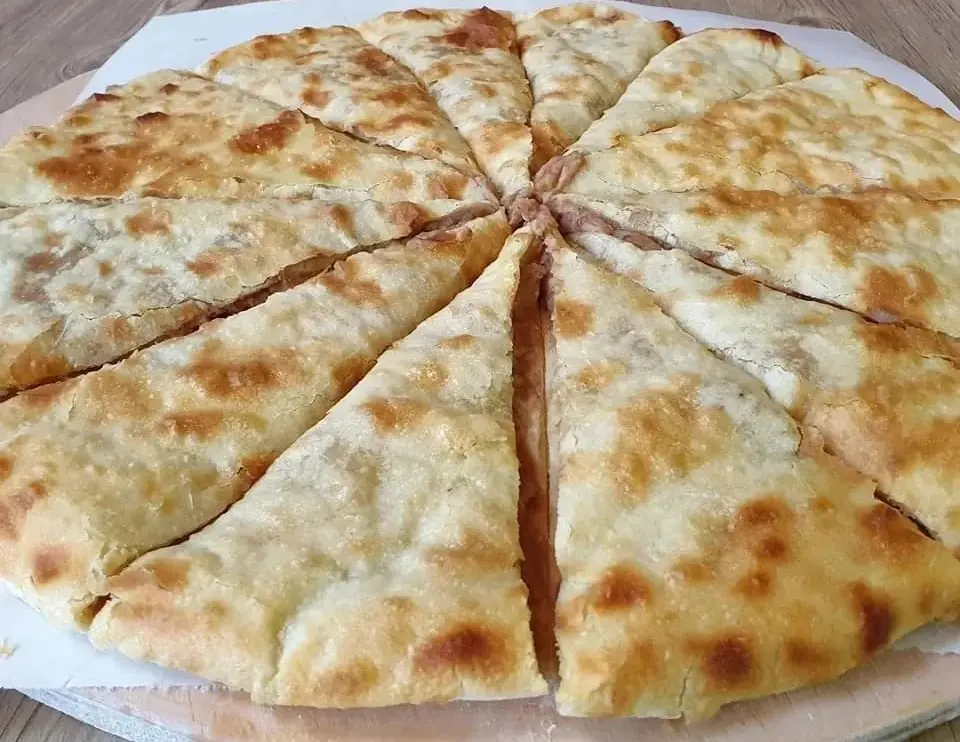
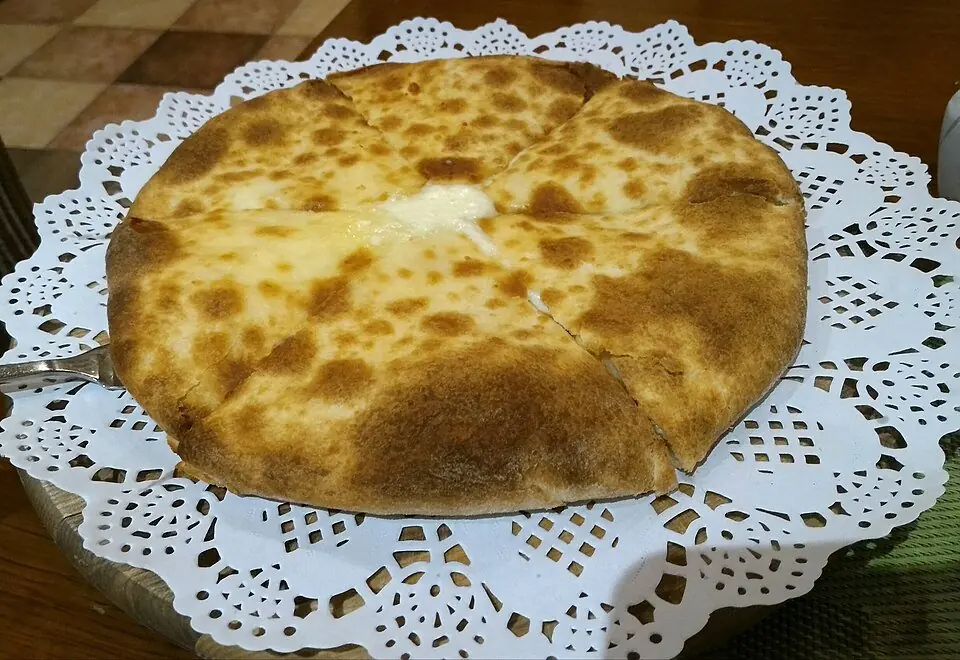
This penovani khachapuri recipe gives you the flaky cheese squares that sit in the window of nearly every Georgian bakery. Thin puff pastry is folded like an envelope around Imeretian cheese and sulguni, brushed with egg yolk and baked until the layers crackle and the filling turns soft and stretchy. Its Georgian name, ფენოვანი, simply means layered, and you will also find it spelt khachapuri penovani, fenovani khachapuri or just puff pastry khachapuri.
In Georgia it is everyday food on the go: a warm square with coffee for breakfast, or a cheap bite between errands. Many families bake it at home as well, and Georgian recipe sites mostly start from ready-made puff dough, as this method does. So if you are wondering how to make penovani khachapuri on a weeknight, plan on about an hour and a quarter and no special skill. Cooks who laminate their own butter dough will find that version in the variations; the story of the dish and its regional cousins is in our khachapuri guide.
Timeline: what to do, and when
1 h 15 min from start to table · 33 min hands-on · 20 min waiting
Each bar is one step. Hands-on Waiting, while the oven, the pot or the dough does the work. Steps that sit inside a wait are done in parallel.
Recipe
Penovani Khachapuri
Ingredients
Pastry
Cheese filling
Glaze
Amounts are scaled. Times stay about the same, but a bigger pot takes a little longer to come to the boil.
Contains: gluten (wheat), milk, egg.
You will need
- Large baking tray, about 30 x 40 cm, or two smaller ones
- Baking paper
- Rolling pin
- Sharp knife or pizza wheel, and a ruler
- Coarse grater
- Mixing bowl and a fork
- Pastry brush
- Wide spatula
Method
- Mix the filling10 min hands-on· start here
Crumble the Imeretian cheese between your fingers into small pieces and grate the sulguni on the coarse side of the grater. Taste a little: it should be pleasantly salty on its own, since the pastry brings no salt. Beat the egg, fork it through the cheese and divide the filling into 6 portions of about 75 g. In a cup, beat the yolk with the milk for the glaze.
- Roll and cut the pastry8 min hands-on· starts at +10 min
Line the tray with baking paper. On a lightly floured worktop, roll the cold pastry into a rectangle of about 32 x 48 cm, roughly 3 mm thick. Trim the edges straight, then cut 6 squares of 16 cm. Press the knife or wheel straight down instead of dragging it, so the cut edges stay open and can rise.
- Fill and fold the envelopes12 min hands-on· starts at +18 min
Set a portion of filling in the centre of each square and pat it into a disc about 8 cm across, keeping the border clear. Brush the bare border lightly with a little of the glaze. Fold two opposite corners in so their points meet over the middle, then fold in the other two, letting them overlap slightly. Pinch firmly along the edges where the flaps meet so no cheese can escape, and space the envelopes 4 to 5 cm apart on the tray.
- Chill and heat the oven15 min waiting· starts at +30 min
Put the tray in the fridge for 15 minutes, or the freezer for 10, so the butter in the pastry firms up again. Meanwhile switch the oven on at 200 °C / 390 °F, or 180 °C / 355 °F with the fan, and set a shelf in the middle.
- Glaze the tops3 min hands-on· starts at +45 min
Press the four points in the middle of each envelope down once more. Brush the tops with the yolk glaze, keeping it off the cut sides of the pastry.
- Bake22 min waiting· starts at +48 min
Bake for 20 to 25 minutes, turning the tray round after 15 if your oven colours unevenly. They are done when well puffed and a deep golden brown on top, and the base looks browned and crisp when you lift a corner with the spatula.
- Rest and serve5 min waiting· starts at +1 h 10 min
Leave the penovani on the tray for 5 minutes, because the melted cheese inside is scalding, then serve warm.
About 550 kcal per pastry (1 of 6). This is an estimate from standard values for the ingredients, not a lab figure.
Penovani is hand food. Hold it in a paper napkin, bite in from a corner and expect flakes down your front; in Tbilisi people eat it standing by the bakery window or on the walk to work. It is still good at room temperature, but the first half hour, before the cheese sets, is when it shines.
Tips, swaps and variations
Tips from your host
- Work with cold pastry. The layers lift because the butter between them turns to steam in a hot oven. If the sheet turns soft, sticky or stretchy while you fold, slide it onto a tray and chill it for 10 minutes before you carry on.
- Keep the glaze off the cut edges. Egg that runs down the sides glues the layers together and the envelopes rise lopsided, so brush the tops only and wipe away any drips.
- Dry wet cheese first. Very fresh Imeretian cheese, or mozzarella from a tub, can weep water and leave the base soggy. Wrap it in a clean tea towel and squeeze hard before you mix the filling.
- Adjust the salt with the cheese, not the salt cellar. If a pinch of filling tastes too sharp, swap part of it for unsalted curd cheese or extra mozzarella; if it tastes flat, add more sulguni or a little crumbled feta.
- Be patient with the colour. Pale pastry is still raw in the inner layers, so wait for a deep golden top and check that the underside is brown and firm.
- Ready-rolled sheets come in many sizes. Cut the largest even squares you can, 14 to 16 cm, share the filling between them, and lay the trimmings flat on top of each other (never squashed into a ball) to roll out one more small pastry.
Variations and swaps
- Homemade butter dough, as many Georgian families make it (allow about 3 extra hours): mix 250 g plain flour and 1/2 tsp salt with 1 egg beaten with 1 tbsp white wine vinegar (some cooks use vodka) and about 80 ml iced water, to a firm, smooth dough. Rest it in the fridge for 20 minutes. Divide 200 g soft but cool butter, or half butter and half margarine, into three. Roll the dough out about 5 mm thick, spread it with a third of the butter, fold the four sides in like an envelope, wrap and chill for 30 to 40 minutes. Roll, butter, fold and chill twice more, then rest it for an hour before using it exactly like the bought pastry. It makes about 600 g, slightly more than you need, and keeps for 2 to 3 days in the fridge.
- Yeasted layered dough: some households and bakeries use a soft yeast dough instead. It is risen, rolled out, spread with a thick layer of soft butter, stretched as thin as possible, rolled up into a coil and chilled for several hours or overnight. The result is lighter and more bread-like than puff pastry, which suits a large tray pie.
- One big tray pie: roll the pastry into two rectangles of about 25 x 35 cm, lay one on baking paper and spread the filling to within 2 cm of the edges. Cover with the second sheet, press the edges together, prick the top all over with a fork and glaze it. Give it 30 to 35 minutes at the same oven setting as the envelopes, then cut it into squares while warm.
- Cheese outside Georgia: for the 400 g of Georgian cheese use about 250 g of firm, low-moisture block mozzarella, grated, plus 150 g crumbled feta. A couple of spoonfuls of ricotta or curd cheese make the filling softer, closer to fresh Imeretian cheese. Shops selling Russian, Ukrainian or Caucasian food often have suluguni and brynza.
- With herbs: a small handful of chopped dill, or a little fresh coriander, mixed into the cheese is a common home touch.
- Richer filling: some Georgian recipes work 50 to 100 g of soft butter into the cheese along with the egg. It bakes creamier, though the pastry is already rich.
- Little triangles for a party: cut the pastry into 10 cm squares, put a heaped tablespoon of filling on each, fold them corner to corner and seal the edges with a fork. Bake for 12 to 15 minutes.
Serve it with
- Black tea or coffee, the usual partner at breakfast
- Cold tarragon or pear lemonade, a Tbilisi favourite with cheese pastries
- Sliced tomatoes and cucumbers with spring onions and a few sprigs of herbs
- A plate of mzhave (Georgian pickles) against the richness of the pastry
- A bowl of lobio, for a simple lunch
Make ahead and storage
Penovani is at its finest in the first hour out of the oven, when the layers still crackle. Leftovers can stay out on the day you bake them; after that, wrap them and refrigerate them for a maximum of two days. Revive them on a wire rack in a 180 °C / 355 °F oven for 6 to 8 minutes, which brings back some of the crunch, whereas a microwave makes the pastry limp. You can also prepare them ahead: open-freeze the folded, unglazed envelopes on the tray, pack them into a bag once hard and keep them for up to 2 months. Glaze and bake from frozen, adding 5 to 8 minutes.

Maspindzeli Travel, Tbilisi · private tours and cooking classes in Georgia · maspindzeli.ge · WhatsApp +995 598 74 74 54 · hello@maspindzeli.ge