Kuchmachi Recipe
კუჭმაჭი
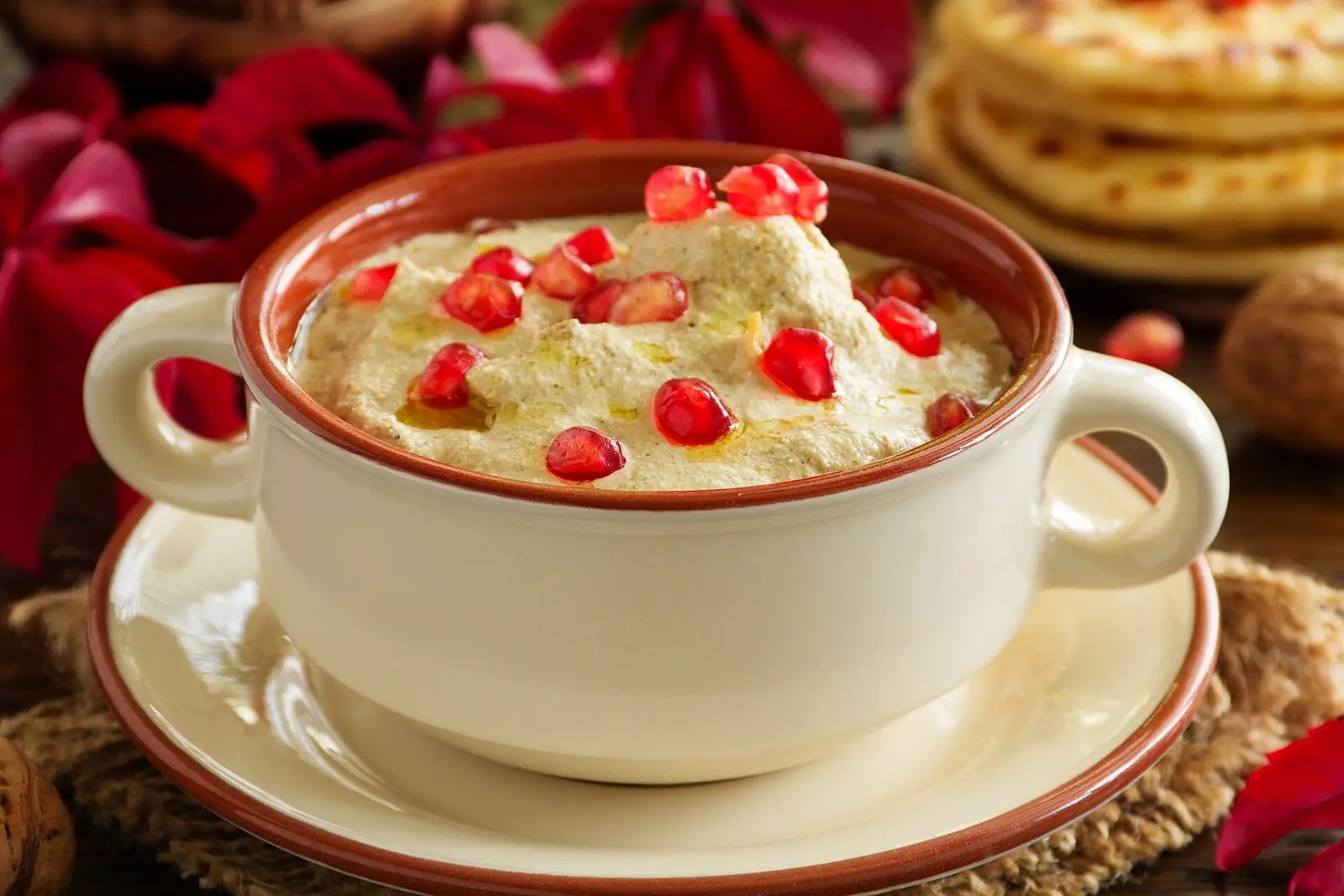
A home-style kuchmachi recipe: chicken gizzards, hearts and livers simmered soft, diced and coated in a garlicky walnut paste with Georgian spices, then scattered with pomegranate seeds. A favourite starter on the supra tables of western Georgia.
Recipe by the Maspindzeli team in Tbilisi · Updated 16 Nov 2026 · From Western Georgia, especially Imereti and Samegrelo
Full recipe with the timeline, timers and US measures: maspindzeli.ge/recipes/kuchmachi/
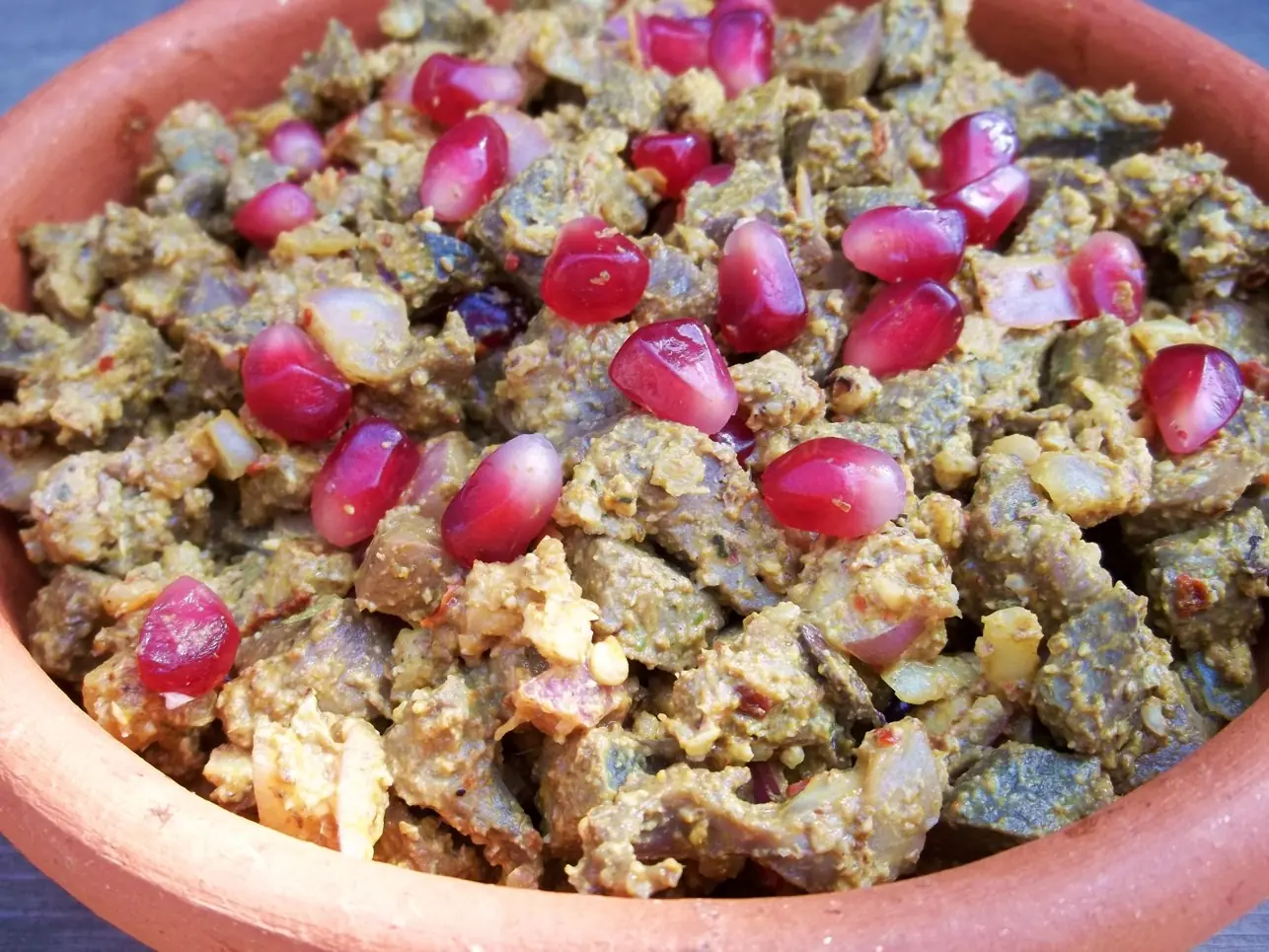
This kuchmachi recipe makes the everyday home version: chicken giblets simmered until soft, cut small and stirred through a thick paste of walnuts, garlic, vinegar and spices, with pomegranate seeds on top. Georgian cookbooks and recipe sites usually call it kuchmachi nigvzit, which means kuchmachi with walnuts. It tastes rich, earthy and sharp at the same time, and it is one of the starters that crowd the table at a supra.
In Georgian the word kuchmachi also simply means giblets, so recipes list a kilo of kuchmachi as an ingredient, and every household has its own mix. Imereti is known for a cold version made with pork or veal heart and liver under plenty of walnuts, and in many families pork kuchmachi belongs to winter, when a pig is killed before New Year. Samegrelo serves it hot and spicy, fried with onion and eaten with ghomi. Chicken giblets are the easiest choice, in Georgia and abroad: they are cheap, sold everywhere and tender in an hour or so.
Georgians eat kuchmachi warm or at room temperature with mchadi or fresh bread, herbs and pickles. The steps below are for the chicken version; the pork, veal and Megrelian versions are under Variations.
Timeline: what to do, and when
2 h 35 min from start to table · 1 h 35 min hands-on · 30 min waiting
Each bar is one step. Hands-on Waiting, while the oven, the pot or the dough does the work. Steps that sit inside a wait are done in parallel.
Recipe
Kuchmachi
Ingredients
Giblets
Onions
Walnut paste
To finish
Amounts are scaled. Times stay about the same, but a bigger pot takes a little longer to come to the boil.
Contains: walnuts (tree nuts).
You will need
- Large saucepan (about 4 litres)
- Sieve or colander
- Frying pan
- Mortar and pestle, food processor or meat grinder
- Sharp knife and a chopping board kept for raw meat
- Slotted spoon and a large mixing bowl
- Probe thermometer (optional, for the livers)
Method
- Clean the giblets15 min hands-on· start here
Rinse the giblets in cold water, cut each gizzard in half, wash out any grit and peel off any yellow lining still stuck inside. Trim the fat and pale tubes from the top of the hearts, slit them open and rinse out any blood. Separate the livers into lobes, pull away white sinew and fat, cut out every green-stained patch and put the livers back in the fridge. Wash the board, knife and your hands in hot soapy water.
- Blanch the gizzards and hearts10 min hands-on· starts at +15 min
Put the gizzards and hearts in the large saucepan, pour in enough cold water to cover and heat it over a high flame. Once it boils, let it bubble for 3 minutes while grey scum rises, then tip everything into a sieve, rinse the giblets under the tap and wash out the pan.
- Start the broth5 min hands-on· starts at +25 min
Return the gizzards and hearts to the clean pan with about 1.5 litres of fresh cold water, the bay leaves, peppercorns and 1 tsp salt. Bring back to the boil, skim off any foam, then turn the heat down until the surface barely shivers and set the lid ajar.
- Simmer until tender1 h waiting· starts at +30 min
Simmer gently for about 60 minutes, topping up with boiling water if the giblets poke above the surface. The gizzards decide when you move on: a knife should slide into the thickest one with little resistance. Large or older gizzards can need 15 to 30 minutes more.
- Fry the onions15 min hands-on· starts at +35 min, during step 4
Meanwhile, warm the oil in the frying pan over medium-low heat. Add the onions and let them soften for 12 to 15 minutes, stirring every minute or so, until translucent and lightly golden but not brown, then take the pan off the heat.
- Make the walnut paste15 min hands-on· starts at +50 min, during step 4
Pound the garlic cloves and some coarse salt to a paste in the mortar, then add the walnuts in batches and pound them to a fine, slightly oily crumb (a food processor works too, or feed them through a meat grinder two times). Work in the coriander seed, blue fenugreek, marigold, savory, chilli and vinegar. The paste will be stiff; the broth loosens it later.
- Seed the pomegranate and chop the herbs10 min hands-on· starts at +1 h 5 min, during step 4
Halve the pomegranate across its equator. Turn one half cut face down in your palm above a bowl and give the back of it sharp taps with a heavy wooden spoon, letting the seeds rain through your fingers; repeat with the other half and remove any white pith. Chop the coriander or parsley.
- Poach the livers10 min waiting· starts at +1 h 30 min
Slide the livers into the simmering pot and cook gently for 8 to 10 minutes. Cut the largest piece open: it must be firm and brown all the way through, with no blood and nothing raw-looking in the centre. With a probe thermometer, the centre should reach at least 70 °C / 160 °F and stay there for 2 minutes.
- Drain and cool10 min waiting· starts at +1 h 40 min
Lift all the giblets onto a tray with the slotted spoon and keep about 300 ml of the broth. Leave the giblets for 10 minutes, until cool enough to handle, and throw away the bay leaves and peppercorns.
- Dice the giblets10 min hands-on· starts at +1 h 50 min
Cut the gizzards into pieces about 1 cm across, since they stay a little chewy, and the hearts and livers into slightly larger 1.5 cm pieces.
- Dress the kuchmachi10 min hands-on· starts at +2 h
Beat about 150 ml of the warm broth into the walnut paste until it is like thick porridge. Tip the giblets and the onions with their oil into the mixing bowl, add the walnut mixture and turn everything over until each piece is coated. Taste and adjust with salt, chilli or a few drops more vinegar: it should taste bright and well seasoned.
- Leave to rest20 min waiting· starts at +2 h 10 min
Set the bowl aside on the worktop for 20 minutes while the giblets absorb the dressing. The sauce thickens as it stands; stir in another spoonful or two of broth so it coats the pieces without running.
- Finish and serve5 min hands-on· starts at +2 h 30 min
Heap the kuchmachi onto a platter or into a clay dish, shower the pomegranate seeds and chopped herbs over it, and bring it to the table warm or just cooled.
About 530 kcal per serving (1 of 6). This is an estimate from standard values for the ingredients, not a lab figure.
At a supra kuchmachi arrives with the first round of starters. Take a spoonful onto your plate beside some bread or mchadi and pick at it between toasts; it is rich, so a little goes a long way.
Tips, swaps and variations
Tips from your host
- Be strict with the livers. A green patch is bile from the gall bladder, and even a small piece turns the whole bowl bitter, so cut it out with a little liver around it.
- Do not skip the first boil and rinse. It takes away the scum and most of the strong giblet smell, so the broth you save for the sauce tastes clean.
- Let the gizzards set the pace, not the clock. Underdone gizzards are rubbery and no amount of walnut sauce will hide it.
- Taste a walnut before you start. Stale walnuts are bitter or rancid and spoil the dish; buy from a shop that sells a lot of them and store them in the fridge or freezer.
- Mix the giblets with the walnut paste while they are still warm. They take up the seasoning far better than cold ones.
- Buy giblets that look glossy and firm and smell clean, and cook them within a day or freeze them straight away. Defrost frozen packs in the fridge, never on the worktop.
Variations and swaps
- Imeretian pork or veal kuchmachi: use 500 g pork or veal heart and 500 g liver. Trim the heart and simmer it whole until tender, which takes 1.5 to 2 hours, adding the liver, cut into two or three thick pieces, for the last 25 to 30 minutes, until no pink is left in the middle. Dice, dress with 250 to 300 g walnuts and serve it cold, the Imeretian way.
- Lungs, kidneys and spleen: in Georgia butchers sell the whole set of pig or calf offal and many cooks put some of everything in. Lungs are hard to buy abroad and may not be sold as food in the United States, so use extra heart instead. Kidneys need their white core cut out before cooking.
- Megrelian hot kuchmachi: leave out the walnuts. Simmer beef heart, plus lung or tripe where you can buy them, for 2 to 3 hours until tender, adding the beef liver for the last 40 minutes. Dice everything and rub it with a paste of chilli, garlic and salt pounded with ground coriander seed, blue fenugreek and savory. Fry plenty of sliced onion in pork fat or oil, add the seasoned offal, stir until sizzling and serve very hot with ghomi, fresh coriander, raw onion rings and pomegranate.
- Served hot in a clay dish: many restaurants bring kuchmachi to the table hot. Warm the dressed giblets in a frying pan with about 100 ml broth over low heat for 3 to 5 minutes, stirring, until steaming throughout, then spoon into a heated ketsi and add the pomegranate.
- Raw onion: many Georgian cooks stir in finely chopped raw onion instead of fried. Use one small red onion for a sharper, crunchier kuchmachi.
- Spice shortcut: replace the blue fenugreek, marigold and savory with 2 tsp khmeli suneli, keeping the coriander seed and chilli. Marigold is mostly there for its golden colour, so leaving it out changes the taste very little.
- No fresh pomegranate: buy a tub of ready seeds, or swap the vinegar for 3 tbsp pomegranate juice or 1 tbsp pomegranate molasses. Lemon juice works too.
Serve it with
- Mchadi (cornbread) or ghomi, the maize porridge of western Georgia
- Shoti or tonis puri bread
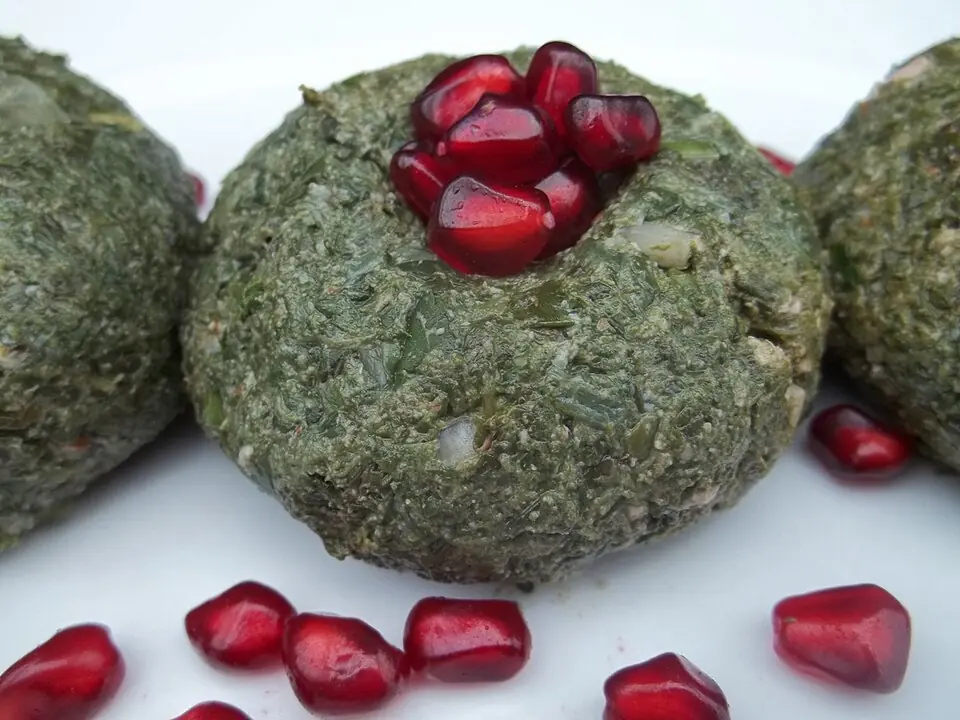
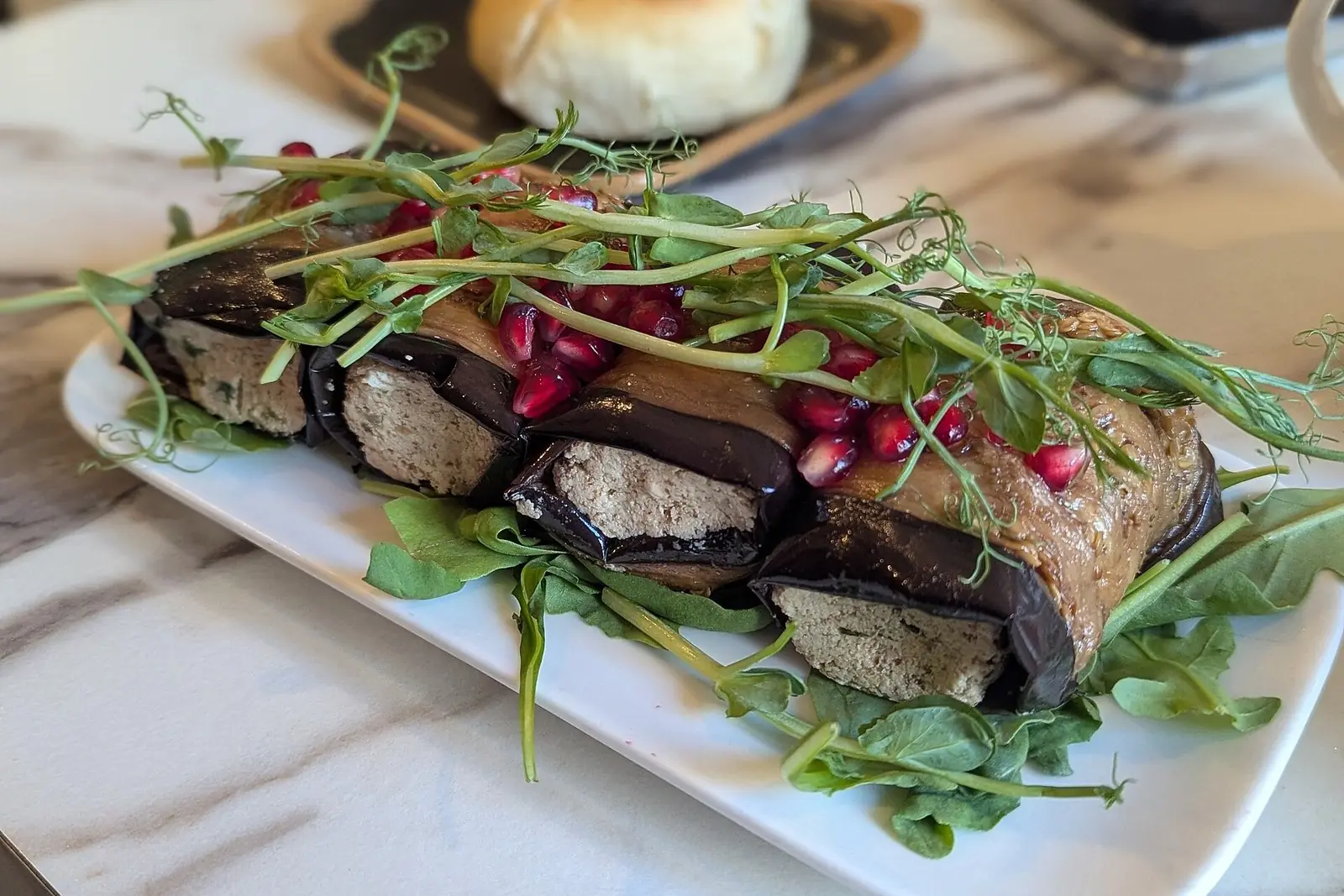
- Other cold starters: pkhali, aubergine rolls with walnuts, pickles
- Fresh herbs such as tarragon and purple basil, with spring onions and radishes
- Dry Imeretian white wine such as Tsitska or Tsolikouri
Make ahead and storage
Covered in the fridge, kuchmachi keeps for up to 2 days; leave the pomegranate off any portion you plan to keep. Chill leftovers within 2 hours of cooking. The walnut sauce sets firm when cold, so let it stand out for half an hour and loosen it with a little freshly boiled broth or water, or reheat it gently in a pan until hot right through. The finished dish does not freeze well, because the walnut sauce turns grainy once thawed.


Maspindzeli Travel, Tbilisi · private tours and cooking classes in Georgia · maspindzeli.ge · WhatsApp +995 598 74 74 54 · hello@maspindzeli.ge