- For a first trip, plan 7 to 10 days and travel in late May, June, September or early October, when the cities, the mountains and the vineyards are all pleasant.
- A week covers Tbilisi, Kazbegi and Kakheti in the east; ten days to two weeks add Kutaisi, Svaneti and the Black Sea coast in the west.
- Citizens of 91 countries need no visa, but every foreign visitor must also hold a health and accident policy, insured for 30,000 GEL or more, that runs for the whole stay.
- Fly into Tbilisi for most airlines or Kutaisi for Wizz Air, then move around by private driver, train, shared minibus or the Bolt app.
- Georgia is safe for most visitors and good value, and the main things to prepare for are mountain roads, church dress and long feasts with many toasts.
This Georgia travel guide is where to start if it is your first time in Georgia, the small country in the Caucasus. In short: come for 7 to 10 days, aim for late spring or early autumn, and build the trip around the capital, the high valleys of Kazbegi and the vineyards of Kakheti. Entry is simple for most passports, though insurance is now compulsory. Distances are short, food is a joy and prices are fair.
Each section below is brief on purpose. It gives the few facts that matter at that step of your trip planning, then points to our full guide on the subject. For quick dos and don'ts, read our Georgia travel tips as well. Our team of guides and drivers lives in Tbilisi and checks these figures for 2026. Prices change, so take every number as a guide, and confirm rules with the official sources before you fly.
Georgia travel guide: the country and your trip in brief
Georgia is a small republic in the South Caucasus, with a Black Sea coast on its western side. The Greater Caucasus forms its northern edge with Russia. Turkey and Armenia border it on the south, and Azerbaijan on the east. It covers about 69,700 km², somewhat smaller than Austria, and some 3.9 million people live here, over a third of them in Tbilisi. In one day you can drive from snowy peaks to semi-desert, vineyards and a humid, green coast. Georgians speak their own language and write it in their own script. Most are Orthodox Christians, and old churches crown hills all over the country. Russia occupies two regions, Abkhazia and the Tskhinvali region (South Ossetia), so leave them out of your plans. For the map and the neighbours, see where is Georgia, and for flags, plugs and holidays, see our Georgia country facts.
| Planning question | Short answer for 2026 | Full guide |
|---|---|---|
| When should I go? | From late May through June, or September into mid-October | Best time to visit Georgia |
| How long? | A week to 10 days; the average visitor stays 5.6 nights | 3, 5, 10 and 14-day itineraries |
| Do I need a visa? | Not for 91 nationalities, for stays up to a year | Visa and entry requirements |
| Is insurance needed? | Yes, for every foreign visitor: 30,000 GEL of cover or more | Visa and entry requirements |
| Where do I land? | Tbilisi (TBS) for most airlines, Kutaisi (KUT) for Wizz Air | Flights to Tbilisi |
| How do I get around? | Private driver, train, marshrutka or Bolt | Getting around Georgia |
| What does it cost? | About 100-450 GEL ($40-175) a day per person, by style | Georgia travel cost |
| How do I stay online? | A Magti, Silknet or Cellfie SIM or eSIM | eSIM and SIM cards |
| Who do I call in an emergency? | 112, for police, ambulance, fire and rescue | Is Georgia safe |
When to go to Georgia: the seasons in brief
Georgia is open all year, but the mountains decide what you can do in each month. Use this table to match the season to your plans.
| Season | Good for | Keep in mind |
|---|---|---|
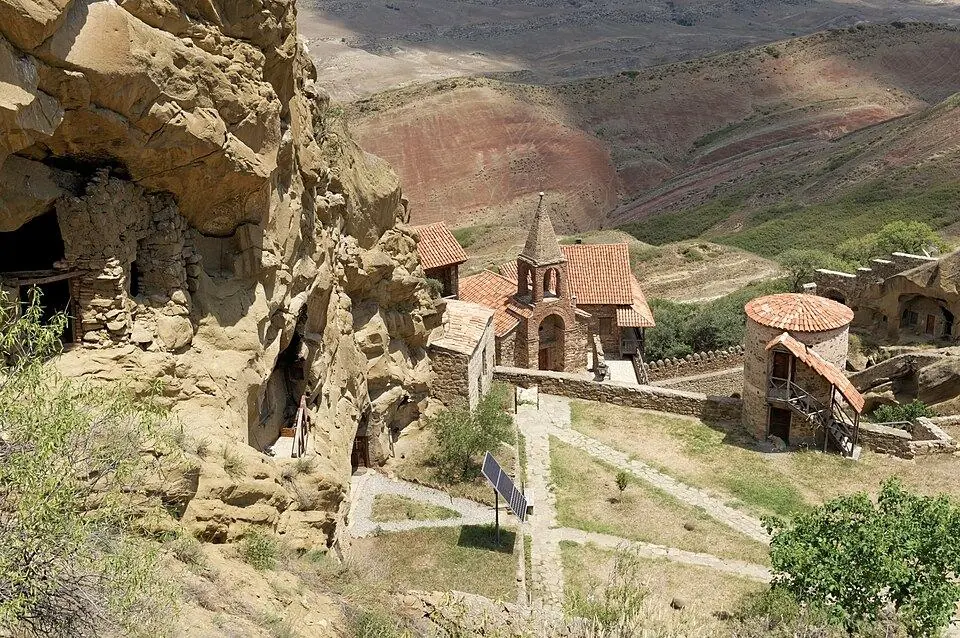
| Spring (March to May) | Tbilisi, Mtskheta, cave towns, David Gareja, orchards in bloom | Snow lingers above ~2,200 m into June; Easter weekend is busy |
| June | Kazbegi in flower, first mountain walks, the start of beach season | Afternoon thunder is common over the peaks |
| July and August | Long treks in Svaneti, Tusheti and Khevsureti, swimming in the Black Sea | Tbilisi often passes 32°C; August is the busiest month |
| September to mid-October | The grape harvest, autumn colour, clear days in the hills | The Tusheti road closes some time in October |
| November | Quiet cities, new wine, lower prices | Short days; rain on the coast; first snow on the passes |
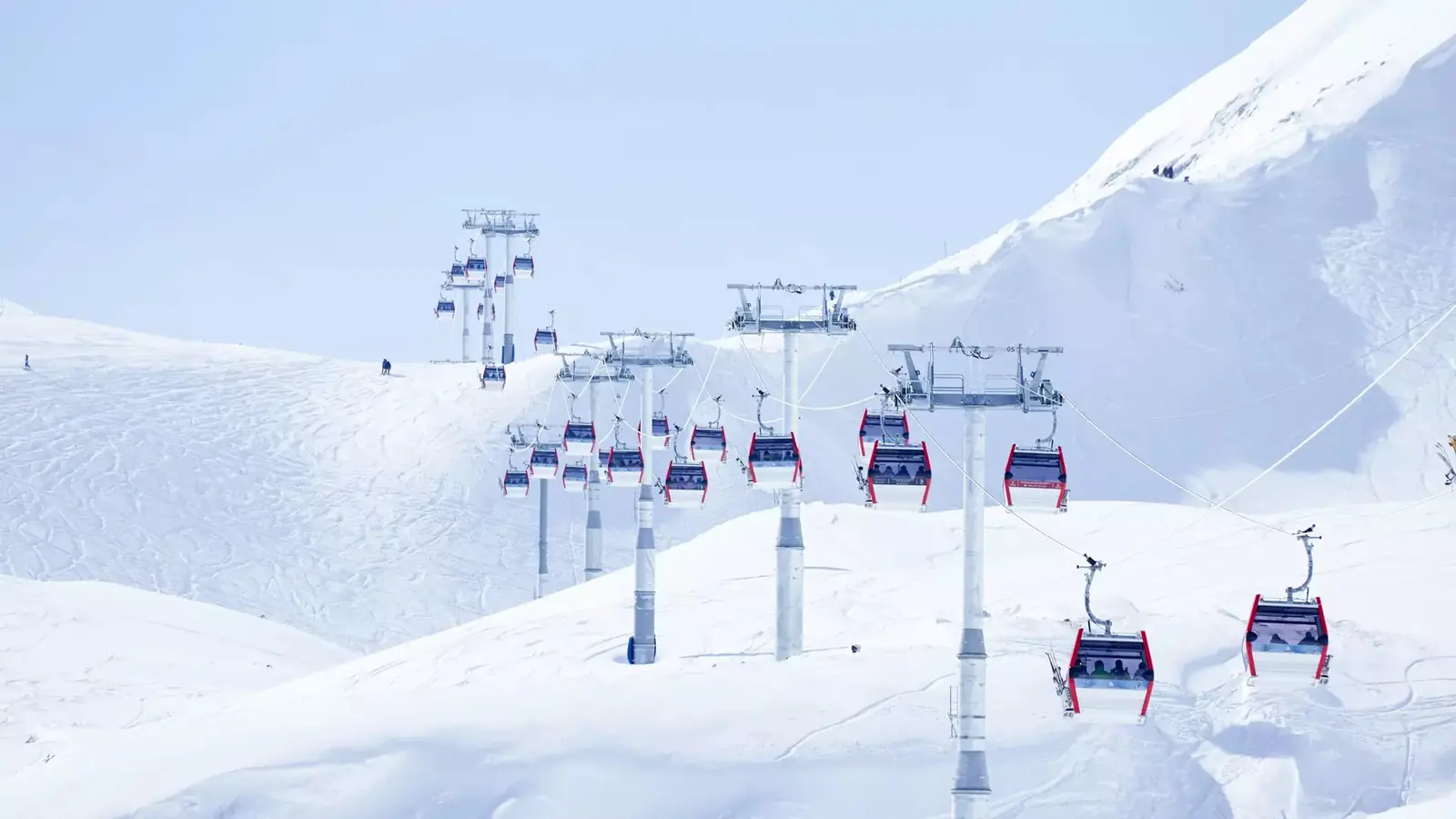
| December to March | Skiing in Gudauri, Bakuriani and Svaneti; New Year in Tbilisi | High roads can shut for hours after a storm |
If you only want one rule, book late May, June, September or the first half of October. Those weeks suit a trip that mixes the capital, a mountain valley and wine country. July and August are for hikers and beach lovers. Winter is for skiers and for anyone happy with cold, quiet cities.

For weather month by month, festivals and crowds, read our guide on the best time to visit.
How many days in Georgia? Sample routes for a first trip
Official surveys put the average visit at 5.6 nights in 2025. That is enough for the east, but a week to ten days feels much less rushed. The west, with Kutaisi, Svaneti and the coast, adds at least four days. Pick the length first, then the route.
- 3 days: Tbilisi plus two day trips
Sleep in the capital all three nights. Spend one day on foot in the Old Town, one on the road north to Kazbegi and one among the Kakheti vineyards. The day-by-day plan is in our guide to 3 days in Georgia. - 5 days: the east at an easier pace
Sleep one night in Stepantsminda, below Kazbek, and one in Sighnaghi, so the long drives come in shorter pieces. Our guide to 5 days in Georgia sets out each day. - 7 days: the classic first week
A full week adds Mtskheta, Gori and the rock-cut town of Uplistsikhe without rushing. It is the route we suggest most often, and our 7-day itinerary gives the drive times and stops. - 10 days: east and west
Cross west to Kutaisi, spend three nights in Mestia and finish with a night by the sea in Batumi. Expect ~1,600 km on the road. See our plan for 10 days in Georgia. - 14 days: every main region once
Two weeks take in the Kakheti cellars, Kazbegi, Vardzia, Borjomi, Kutaisi, Svaneti and the coast, on a one-way route of ~1,850 km from Tbilisi to Batumi. The full route is in our guide to two weeks in Georgia.
Short on time but based in the capital? Our list of day trips from Tbilisi shows what fits into a single day.
The regions of Georgia, one line each
On a first visit, Tbilisi plus two or three regions is plenty. Here is what each main area offers, with the guide to read next.
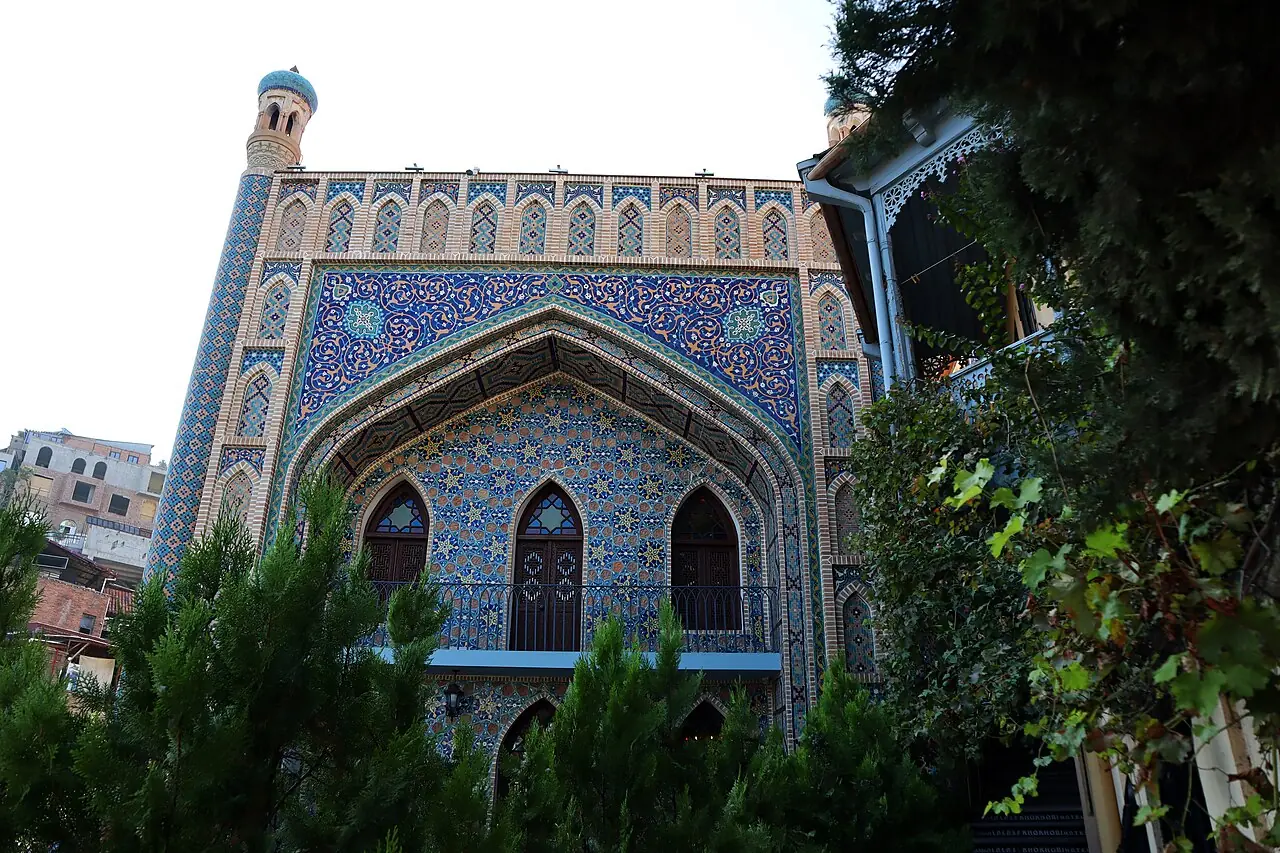
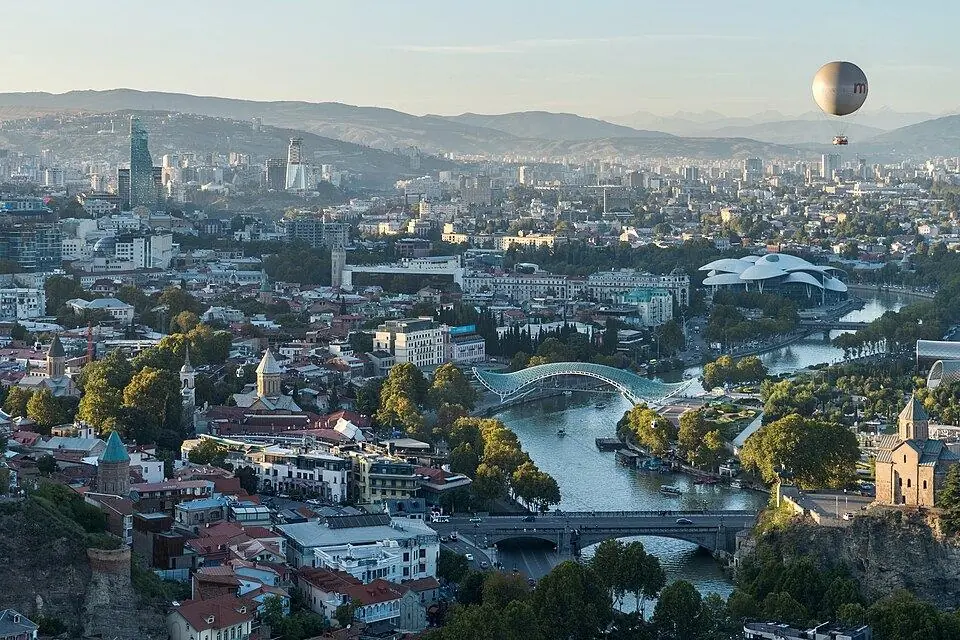
- Tbilisi: the capital on the Mtkvari river, with sulphur baths, carved wooden balconies and a lively food and wine scene. Give it two or three days, and see things to do in Tbilisi.
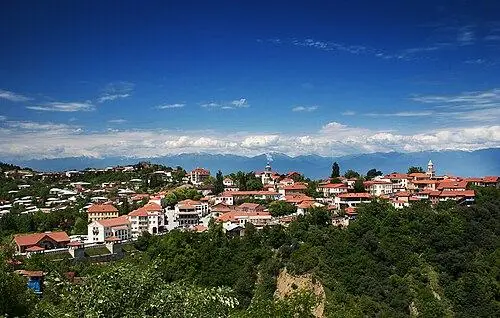
- Kakheti: the wine country east of the capital, with Sighnaghi on its hilltop, Telavi and many family cellars, about 1.5 to 2 hours away. Read our Kakheti travel guide.
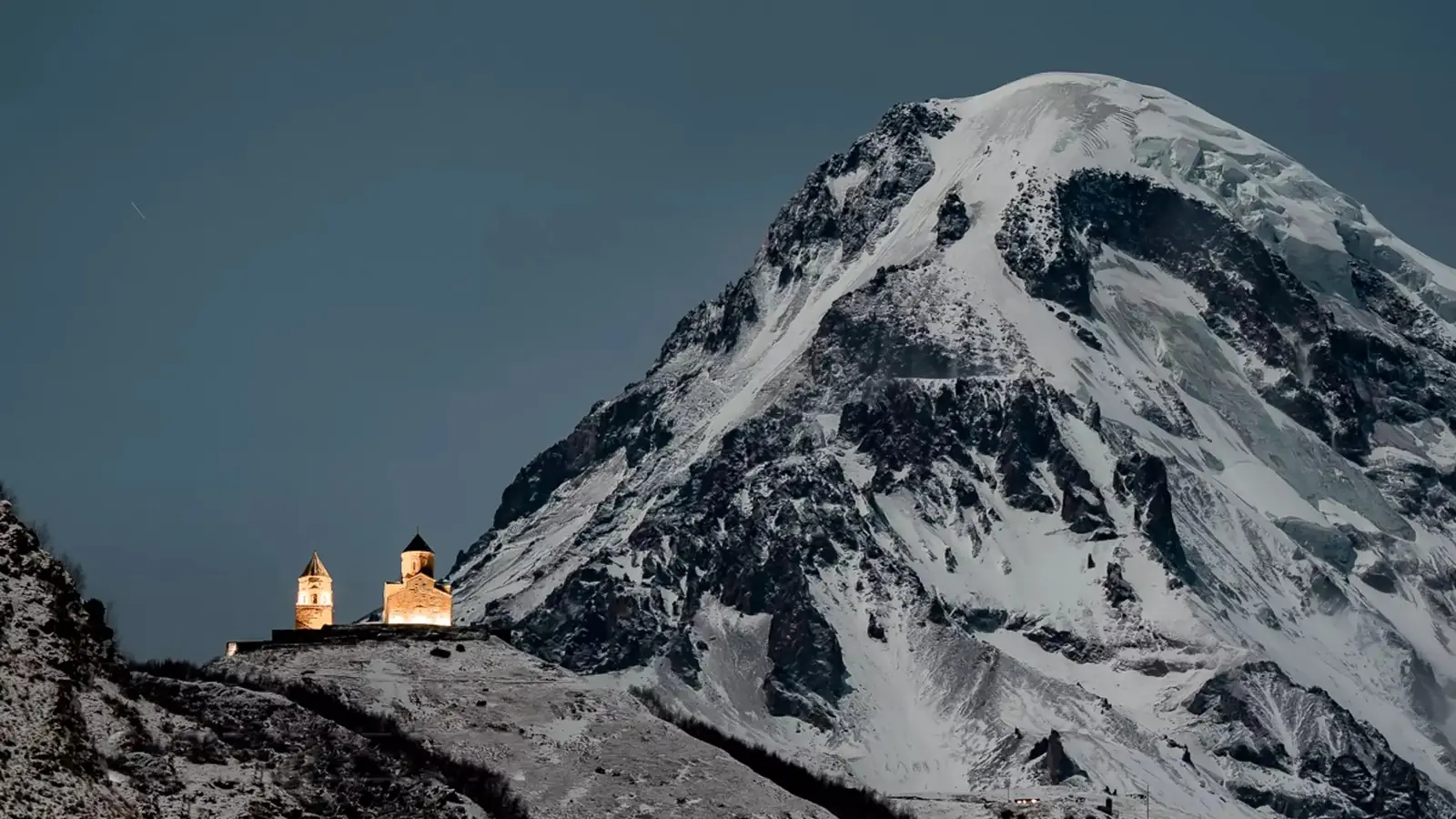
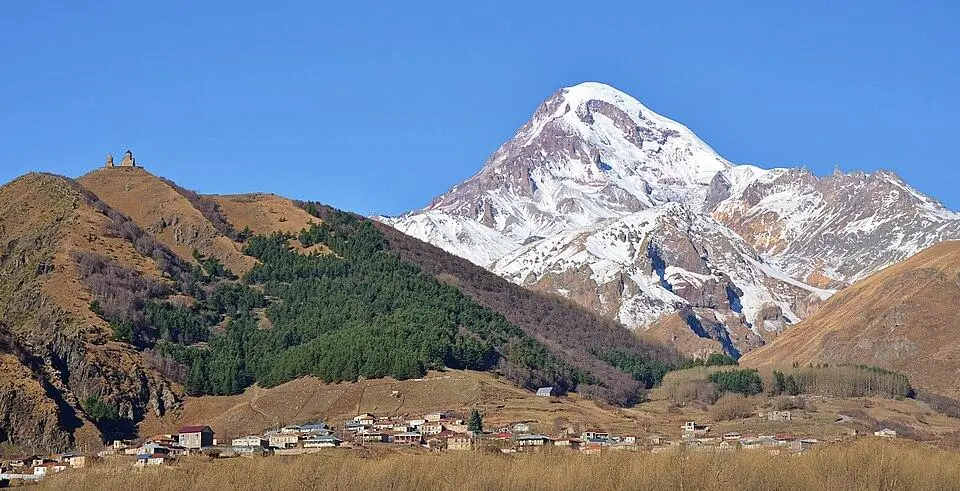
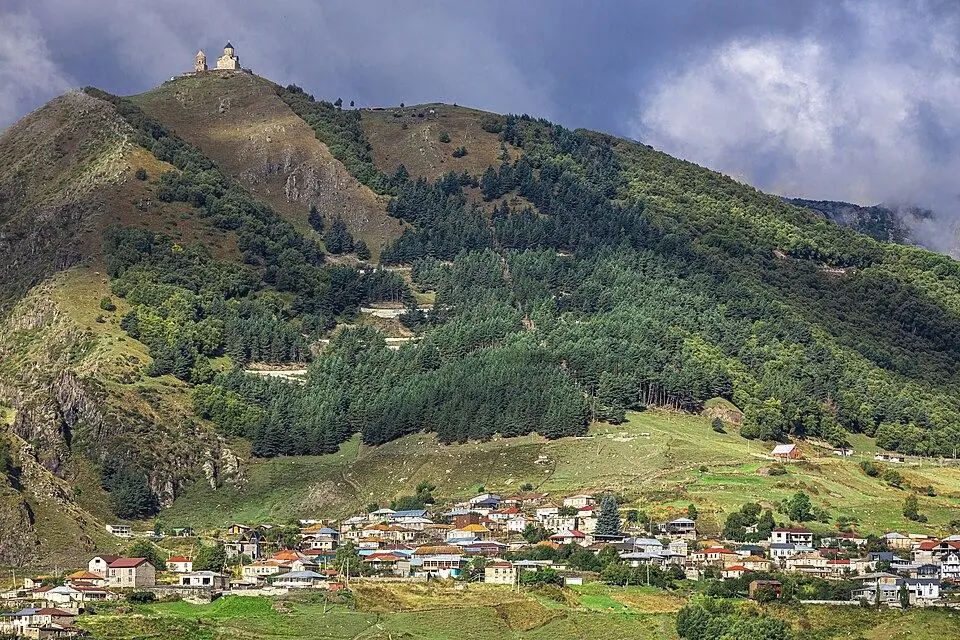
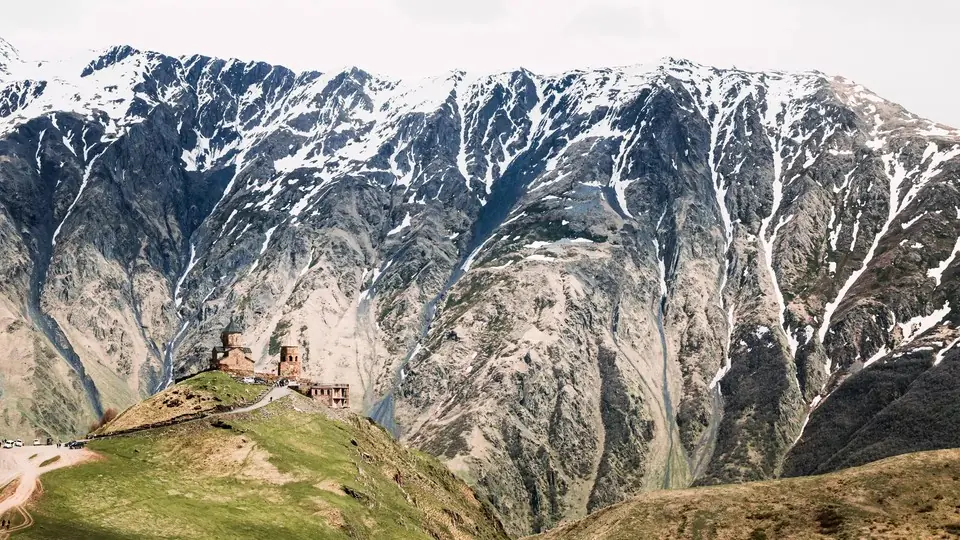
- Kazbegi: high valleys near the Russian border, where Gergeti Trinity Church stands at 2,170 m below Mount Kazbek (5,054 m), about 3 hours north. Read our Kazbegi travel guide.
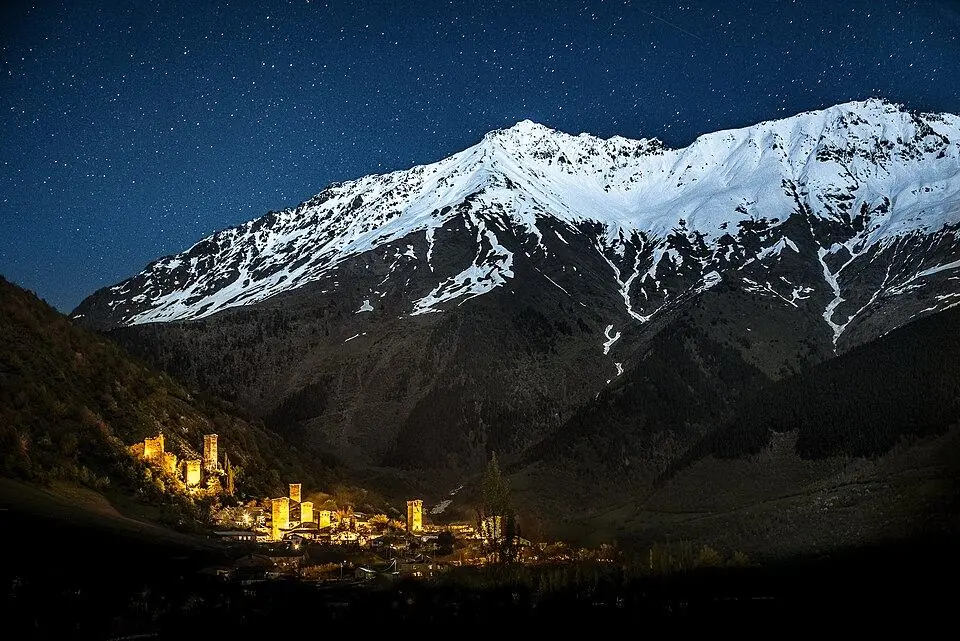
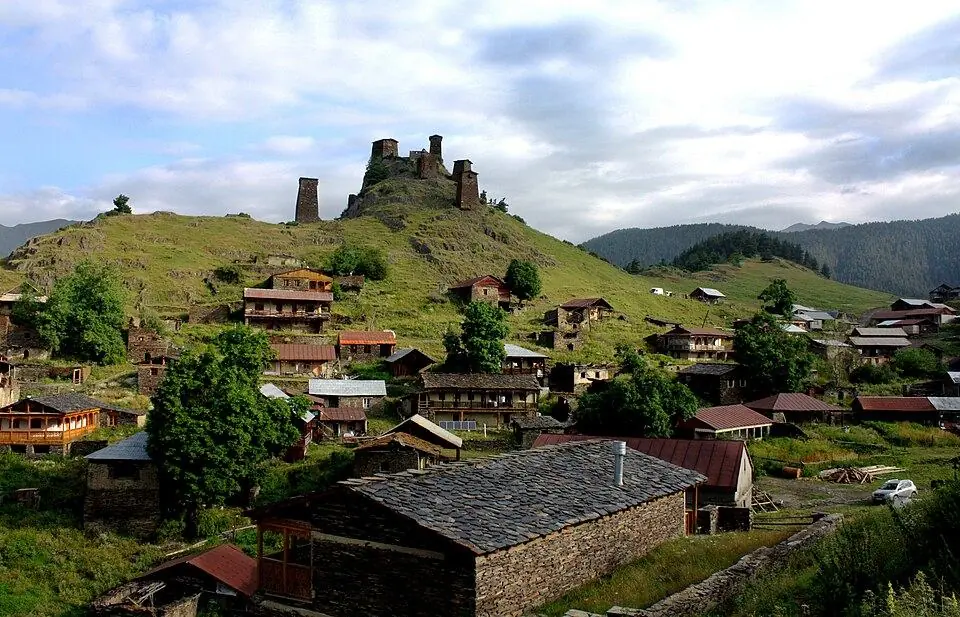
- Svaneti: the far north-west, with stone defence towers in Mestia and Ushguli and the country's highest peaks. Plan three nights at least, and read our Svaneti travel guide.
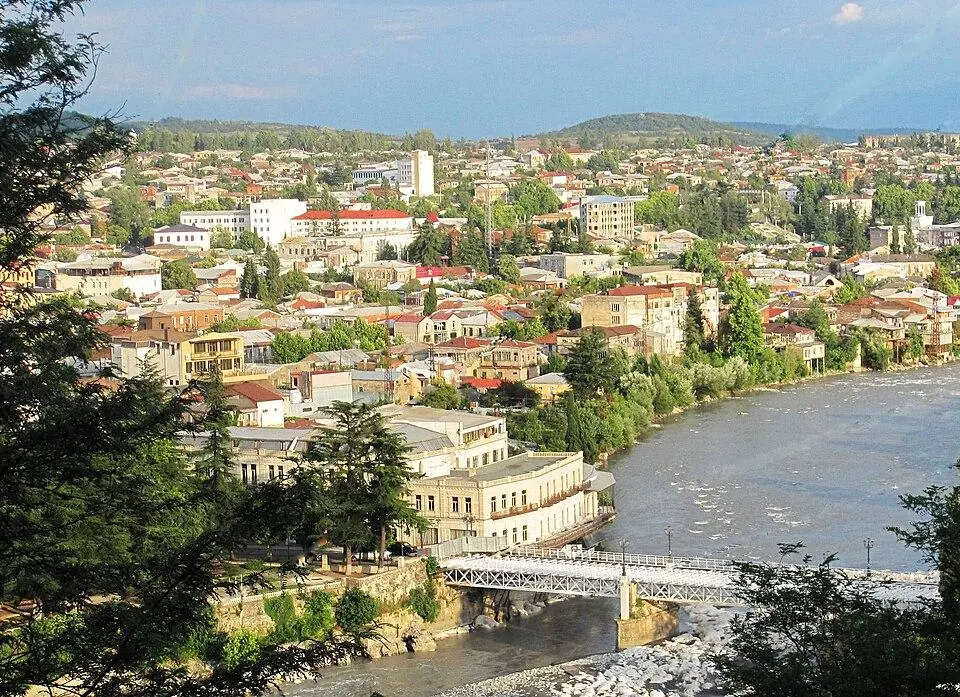
- Imereti and Kutaisi: the main city of the west, with Gelati Monastery, Prometheus Cave and the Martvili and Okatse canyons nearby. Read our Kutaisi travel guide.
- Adjara and Batumi: the Black Sea coast, with a long seaside promenade, a large botanical garden and green hills behind. Read our Batumi travel guide.
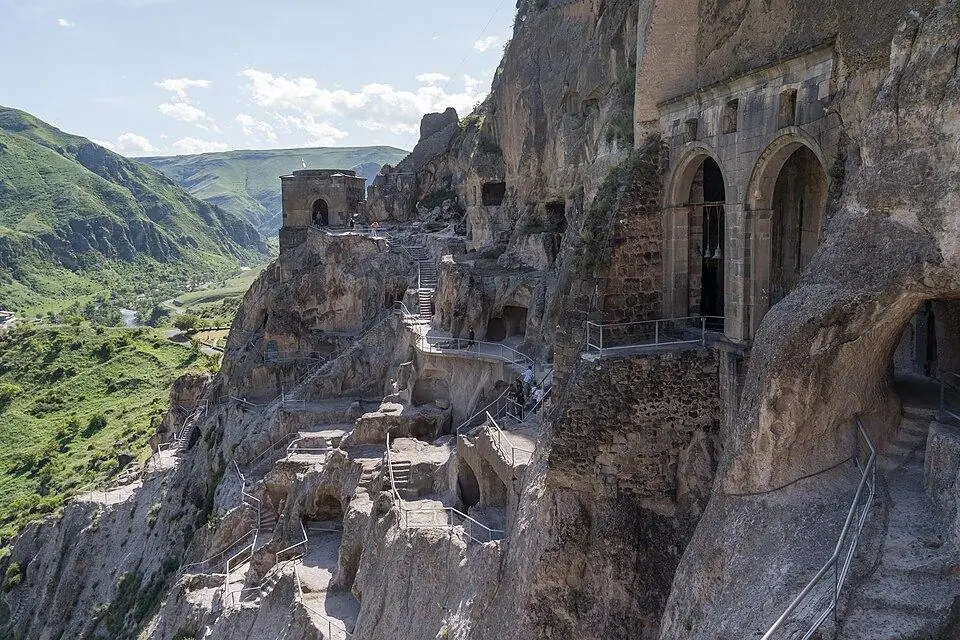
- Samtskhe-Javakheti: the south, with the spa town of Borjomi and the cave city of Vardzia, which is mostly open (only a small part has been shut since a 2026 rockfall). Read our Borjomi travel guide.
- Racha: a quiet mountain area north-east of Kutaisi, known for semi-sweet Khvanchkara wine, lakes and old churches. Read our Racha travel guide.
- Tusheti: remote high pastures in the north-east, open to cars only from about June to early October on a rough 4x4 road over the Abano Pass. Our Tusheti travel guide covers the road, villages and treks. The Tusheti 4x4 Adventure tour shows how to fit it in.

Visa, insurance and entry rules for 2026
Getting in is easy for most travellers, but one rule from 2026 still surprises people at the airport desk.
- Visa: entry is visa-free for citizens of 91 countries and territories, including Australia, Canada, the UK, the US and every EU state, for as long as 12 months.
- Other passports: most other passport holders use the online e-visa. A valid visa or residence card from the US, the UK, the Schengen area or another approved country allows 90 days in any 180 instead.
- Insurance: for foreigners, travel insurance has been compulsory since 1 January 2026. Your policy must cover health and accidents, with a limit of 30,000 GEL (about $11,500) or higher, and run for every day you are in Georgia. Airlines may ask to see it before you board.
- Passport: it must stay valid for your whole visit. E-visa holders need extra months, and the next country on your route may ask for more.
- Land borders: crossings from Turkey, Armenia and Russia are open. Azerbaijan's land border has been shut to most visitors since 2020.
Our guide to the entry requirements lists every rule, with links to the official sites.
Getting to Georgia: flights, airports and land routes
Most visitors arrive by air. Georgia has three international airports, and the right one depends on your airline and your route.
- Tbilisi (TBS) is the main gateway, ~17 km from the centre. About 40 airlines fly here direct from more than 50 cities. Bus 337 runs into town for about 1 GEL (under $1) in 2026, and a Bolt ride is about 25-40 GEL (about $10-15). Arrival details are in our Tbilisi airport guide.
- Kutaisi (KUT) is Wizz Air's base, with low fares from all over Europe and many night landings. Coaches to Tbilisi take about 4 hours and cost about 25-30 GEL (about $10-12) in 2026. See our Kutaisi airport guide.
- Batumi (BUS) sits ~7 km from the old town on the coast. Most of its routes run in summer. See our Batumi airport guide.
No airline flies non-stop from North America, so plan one change, often in Istanbul, Doha or Dubai. Overland, you can come in from Turkey at Sarpi, from Armenia, or from Russia. Airlines, routes and the cheapest months are in our guide to flights to Tbilisi.
Getting around Georgia: drivers, trains, minibuses and Bolt
Distances look short on the map, but mountain roads wind and slow you down. Choose your transport by route.
- Private driver
This is the easiest way to stop at sights between towns. In 2026 a car with a driver costs about 200-450 GEL (about $75-175) a day, shared by everyone in it. - Train
Rail is best for the long run between east and west. Express trains cover Tbilisi to Batumi in about 4 hours, and a second-class seat is about 35 GEL (about $13) in 2026. You buy with your passport, up to 20 days ahead. See trains in Georgia. - Marshrutka
Shared minibuses link almost every town for low fares, paid in cash. They are cheap and frequent, but they skip the sights along the way. - Taxi apps
In Tbilisi, Batumi and Kutaisi, book on Bolt and you see the fare before you ride. Read Bolt in Georgia for fares and tips. - Self-drive
Main roads are fine if you drive with care. Some mountain routes need a 4x4, and listed passes require winter tyres in the cold months. - Small planes
Light aircraft fly from Natakhtari, near Tbilisi, to Mestia and Ambrolauri, but only in good weather. Book one, and keep a road plan in case it is cancelled.
Every option, with routes and travel times, is compared in our guide to getting around Georgia.
Money, SIM cards and internet
Money and daily costs
Georgia uses the lari (GEL), and a US dollar bought about 2.6 lari in late October 2026. Cards work in towns, but carry cash for minibuses, markets and village guesthouses. Day budgets in 2026 run from about 100-170 GEL (about $40-65) for backpackers up to about 250-450 GEL (about $95-175) for mid-range comfort. Real prices for rooms, meals and transport are in our guide to trip costs. For cards, ATMs and changing cash, read money in Georgia.
Phones and internet
The three mobile networks are Magti, Silknet and Cellfie. Bring your passport, because every SIM is registered to its owner. Tourist packs run from about 10 to 50 GEL (about $4 to $19) in 2026, and all three networks also sell a local eSIM. EU free roaming stops short of Georgia, so check your home plan before you land. Magti reaches furthest into the mountain valleys, but no network covers the high passes, so save offline maps. Packs and prices are compared in our guide to the SIM card in Georgia.
Is Georgia safe for a first-time visitor?
Yes, Georgia is safe to visit for most travellers. Serious crime against tourists is rare, and the usual trouble is small: pickpockets in crowds and drivers who overcharge. The real risks are on the roads, where overtaking is bold, and on high trails, where the weather turns within the hour. Street protests have gathered in central Tbilisi since late 2024. They rarely touch sightseeing, but keep your distance. Dial 112 for any emergency: it connects you to police, medics, firefighters and mountain rescuers.
For scams, driving, mountain risks, solo travel and health, read our full guide: is Georgia safe?
Georgian food, wine and local customs
What to eat and drink
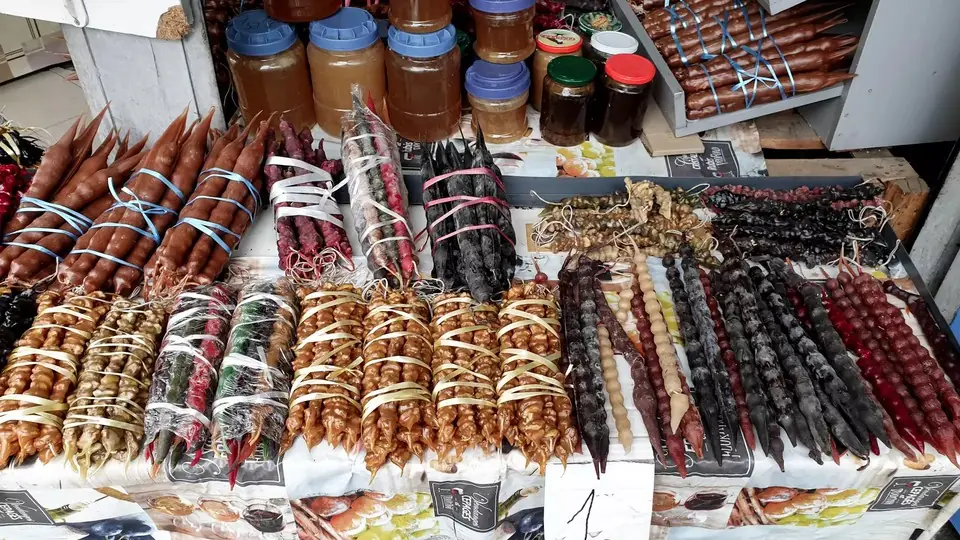
Food is the highlight of many trips. In 2025, about 89% of foreign visitors tried Georgian food and wine, the most common activity in the official survey. Start with khachapuri, the cheese bread, and khinkali, the juicy dumplings eaten by hand. Walnut, herb and bean dishes make life easy for vegetarians. Each region adds its own, such as the kubdari meat pie of Svaneti or the boat-shaped cheese bread of Adjara. Our Georgian food guide goes region by region.
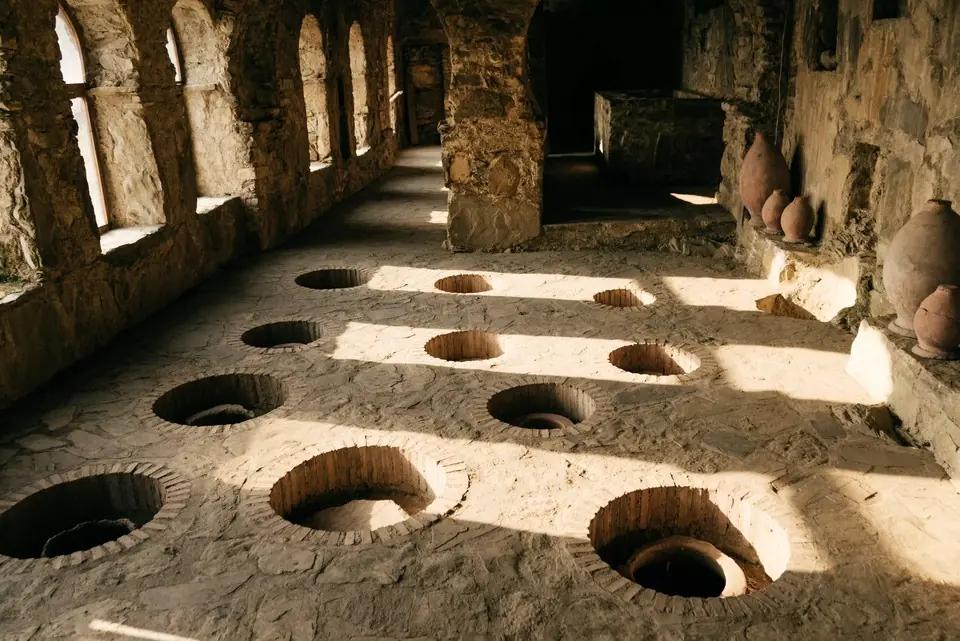
Wine here goes back about 8,000 years, and many families still make it in qvevri, clay jars buried in the ground. The method has been on UNESCO's list of intangible heritage since 2013. Try a dry Saperavi red and an amber wine, made from white grapes left on their skins. Kakheti is the easiest place to visit cellars, above all during the harvest from mid-September to mid-October. Start with our Georgian wine guide.
Church dress, the supra and tipping
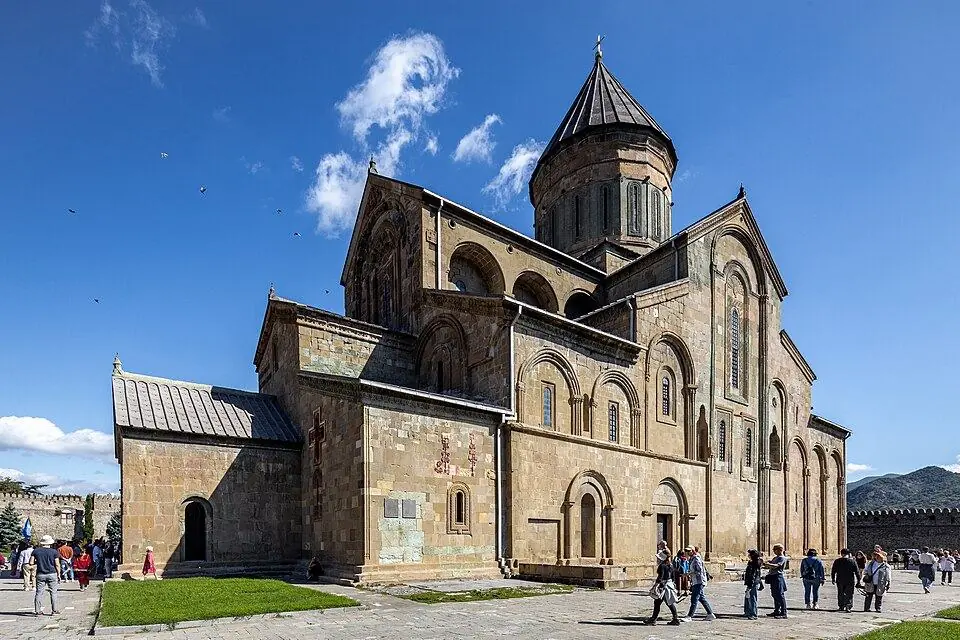
- Churches: cover your shoulders and knees, and women add a headscarf. Some monasteries also ask women to wear a skirt, and the busy ones keep wraps by the door. Speak quietly, and ask before you take photos.
- The supra: a Georgian feast is led by the tamada, the toastmaster. Drink only after a toast, never between toasts, and a small sip is fine. Our supra guide explains the order of the toasts.
- Tipping: look at the bill first, since many restaurants add a service charge of 10-18%. If there is none, about 10% is usual. Guides and drivers are thanked at the end of a tour, and our guide to tipping in Georgia gives the amounts.
Georgia trip planning with a local team
Prefer someone else to handle the drivers, tickets and road reports? We can plan the whole trip for you. We run private tours only. You choose the date, and any group size is welcome. We pair you with a local driver used to mountain roads and a guide in your language. On treks we supply the tents, horses and gear. Two routes suit most first-timers.
Highlights of Georgia fits Tbilisi, a night in Kazbegi, Kakheti and the cave town of Uplistsikhe into five days.
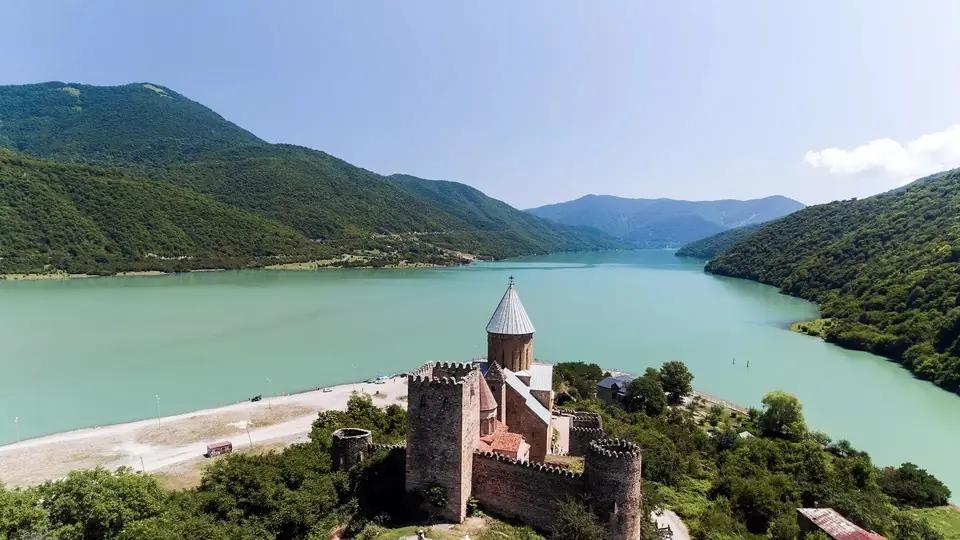
Classic Georgia takes seven days, with two nights in the mountains and a last night among the vineyards of Sighnaghi.
Either route can be changed day by day. For prices by group size, see our guide to the cost of a private tour.
Georgia travel guide FAQ: first time in Georgia
Is Georgia a good country for a first trip?
Yes. It is compact, good value and simple to enter, and most people are warm toward visitors. In a week you can see an old capital, high mountains and wine villages. The only extra paperwork is the compulsory health and accident insurance.
How many days do you need in Georgia?
Plan at least five days for the east and a week to ten days for a relaxed first trip. Two weeks let you see every main region once. Svaneti alone needs three nights to be worth the long drive.
What is the best month for a first trip to Georgia?
June and September are the surest choices for a mixed trip. Both bring warm days, open mountain roads and fewer crowds than August. Choose July or August only if long treks or the beach come first.
Do I need a visa or travel insurance to visit Georgia?
Visitors from 91 countries, among them all EU members, Britain, the USA, Canada and Australia, need no visa for stays of up to a year. Other passports need an e-visa unless they hold a valid US, UK or Schengen visa. All foreign visitors also need insurance for health and accidents, worth 30,000 GEL or more, for each day of the trip.
Should I fly into Tbilisi or Kutaisi?
Fly into Tbilisi if your trip is mostly in the east or you use a full-service airline. Kutaisi suits Wizz Air fares and trips that start in the west. It is about 4 hours by coach from the capital, so an open-jaw ticket often works best.
Can you travel around Georgia without a car?
Yes. Trains link Tbilisi with Kutaisi and Batumi, shared minibuses reach most towns, and Bolt works in the big cities. A private driver for the day fills the gaps, such as the sights between towns.
Is Georgia safe for first-time visitors?
Yes, in general. Tourists rarely meet crime, and the main risks are fast drivers and sudden mountain weather. Keep away from street protests in central Tbilisi, and save 112 in your phone.
Can I combine Georgia with Armenia on one trip?
Yes, and it is a popular pairing. Buses, shared taxis and a train every other day link Tbilisi with Yerevan, and the drive takes about 5 to 6 hours. Allow at least four extra days for the main sights of Armenia, and see our guide to border crossings for each route.