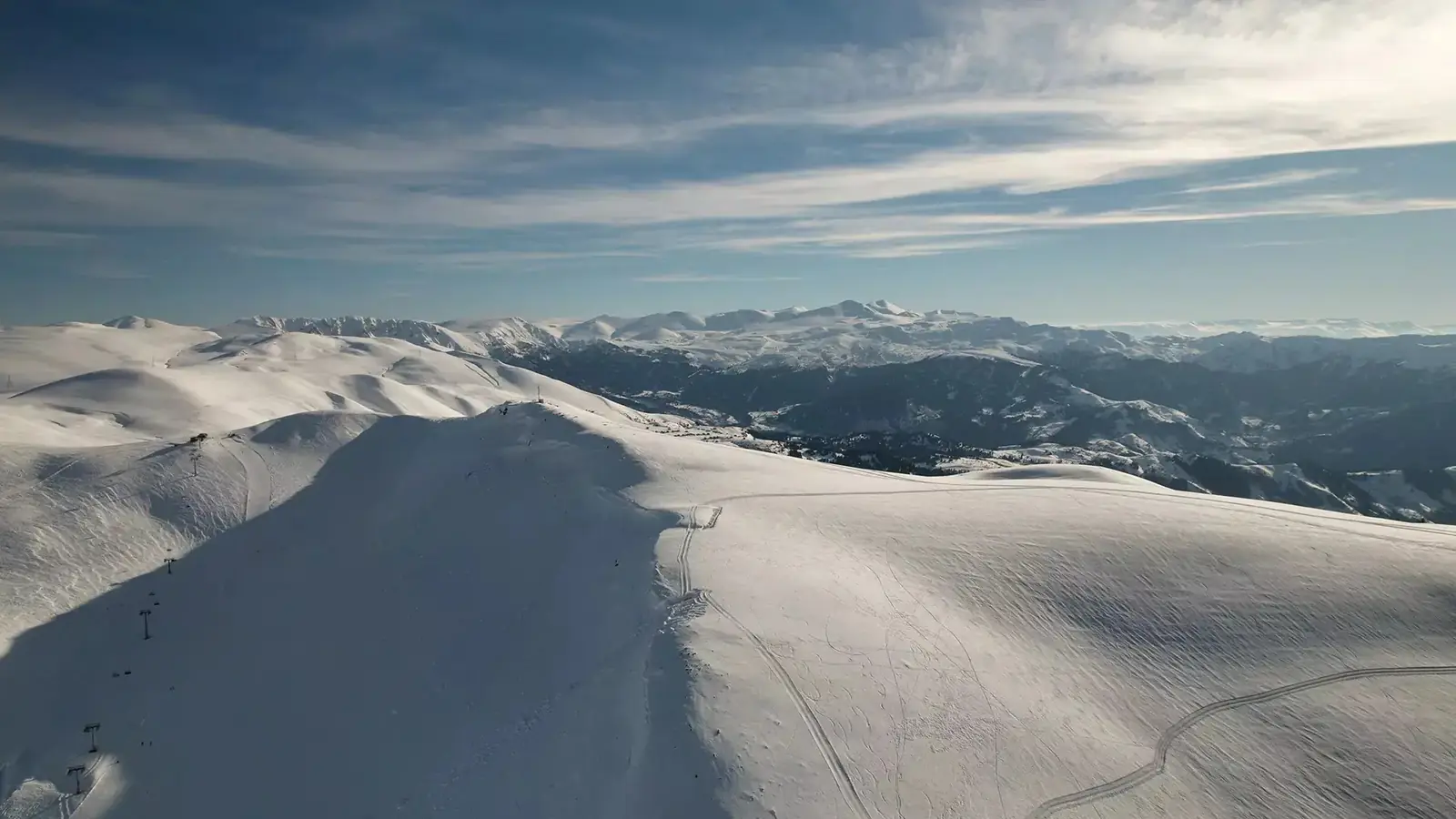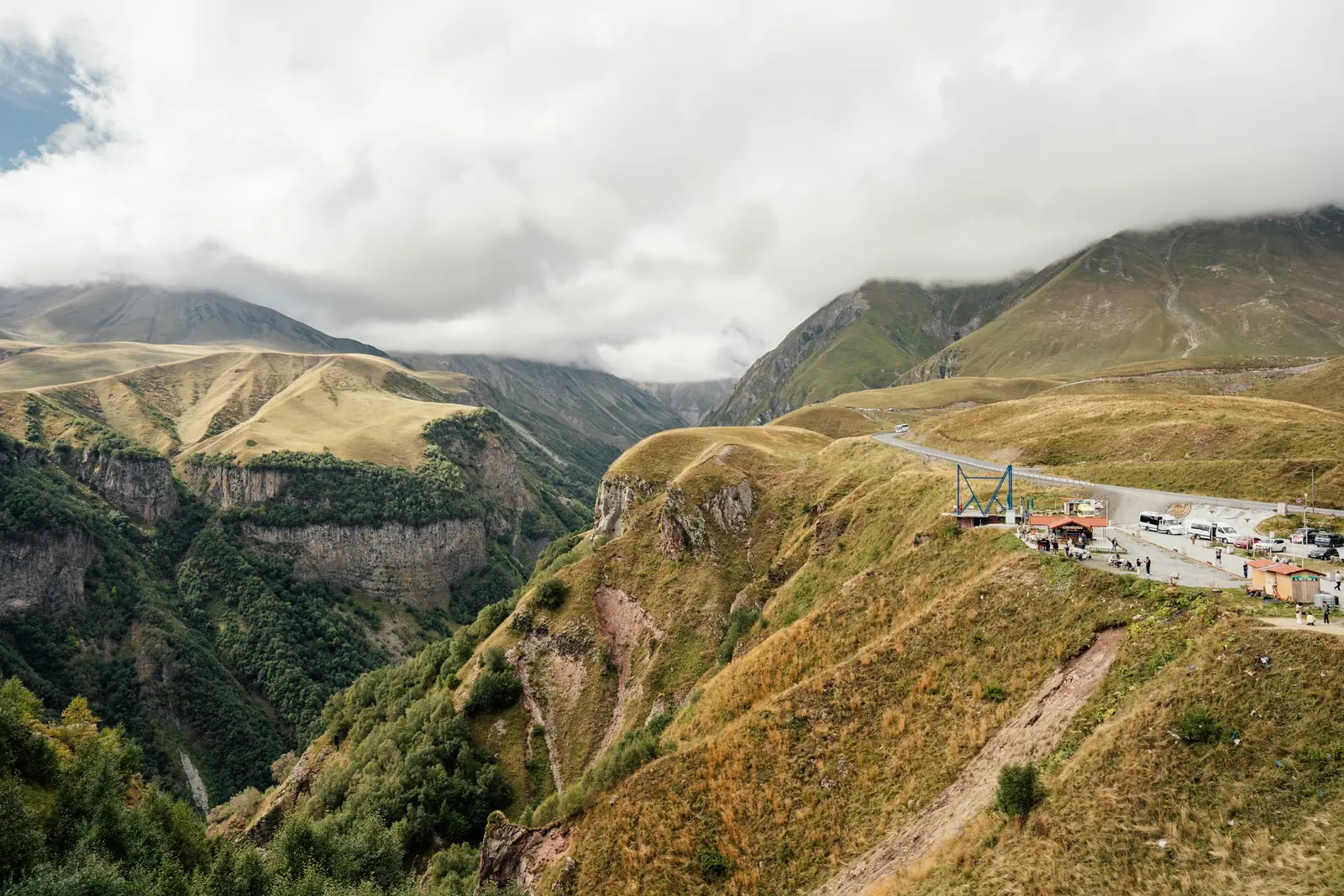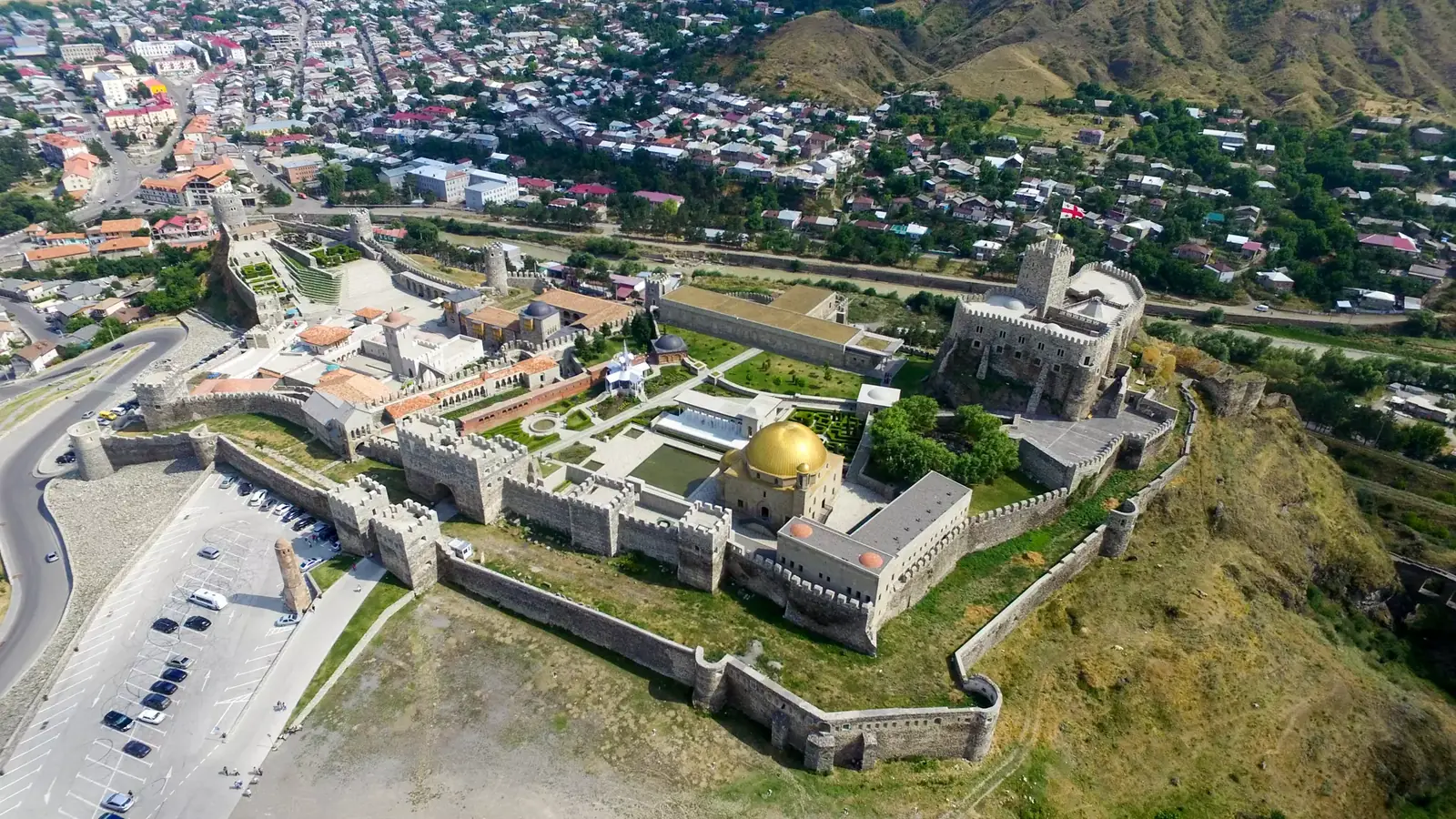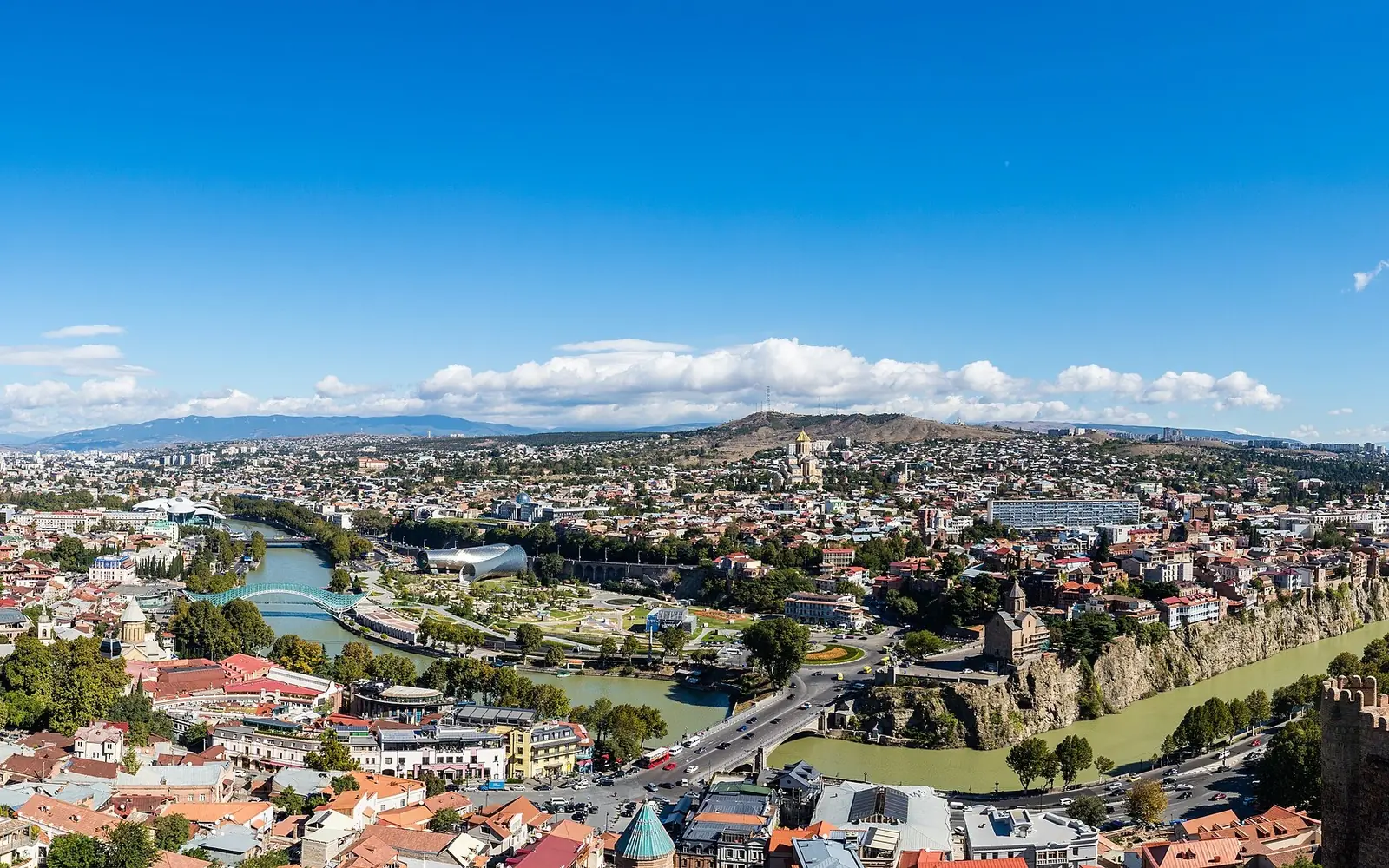
- This photo journey shows Georgia in 39 pictures across 10 regions, from the old town of Tbilisi to the Svan towers of Ushguli and the Batumi seafront.
- For most of the country, the best photo season runs from late September to mid-October, when the air is clear and the leaves start to turn.
- Tusheti and Khevsureti can only be reached by road from about June to early autumn, so plan those pictures for July to September.
- Shoot mountains early in the day: in summer, cloud often gathers on the main Caucasus ridge by late morning.
- Ask before you photograph people or church interiors, and check the drone rules before you fly: drones of 250 g or more must be registered online.
Georgia photos show a small country that changes its scenery every couple of hours on the road. In a single week you can frame carved balconies in Tbilisi, a lone church below Mount Kazbek, a town cut into rock and the Black Sea coast. This page is a photo journey through Georgia in 39 pictures, grouped by region. Each one comes with a caption and the best light or season to take it yourself.
Every picture sits on a place card, so a tap takes you to that place's own page with directions, history and the best time to go. Each photo is either free-licensed or used with permission, and its author is named on our photo credits page. After the ten regions you will find our tips on light, seasons, drones and etiquette, and then answers to the questions travellers ask us most.
Tbilisi in pictures: balconies, sulphur baths and the river at night
Tbilisi is the easiest place to start, because the old town is compact and full of texture. Wooden balconies lean out over steep lanes, brick domes cap the bathhouses of Abanotubani, and Narikala's walls follow the ridge overhead. April to June and September to November give soft light without the summer heat. From June to August, go out early: by about 10:00 the sun is harsh and the lanes get busy. After sunset the river, the bridges and the churches are lit, which makes blue hour the city's best moment.
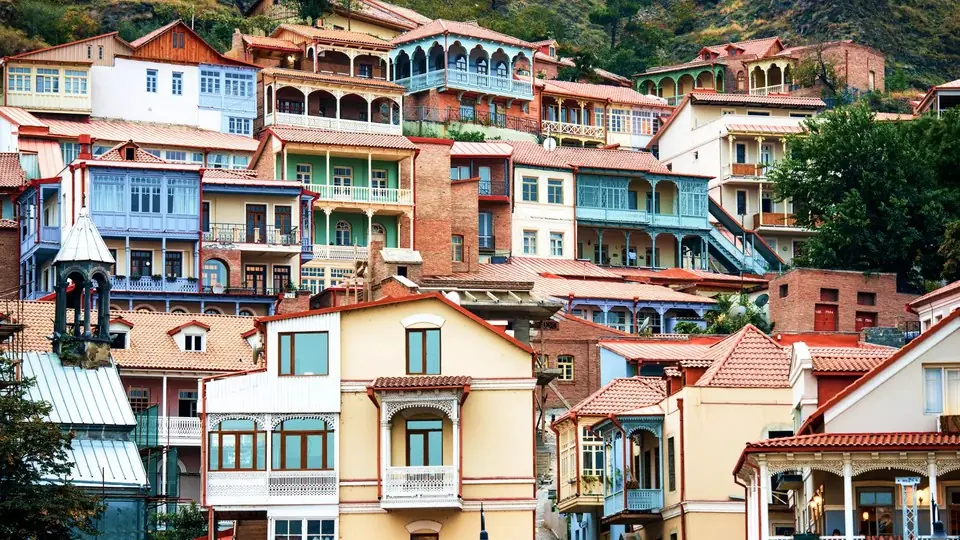 Photo: georgia.travel
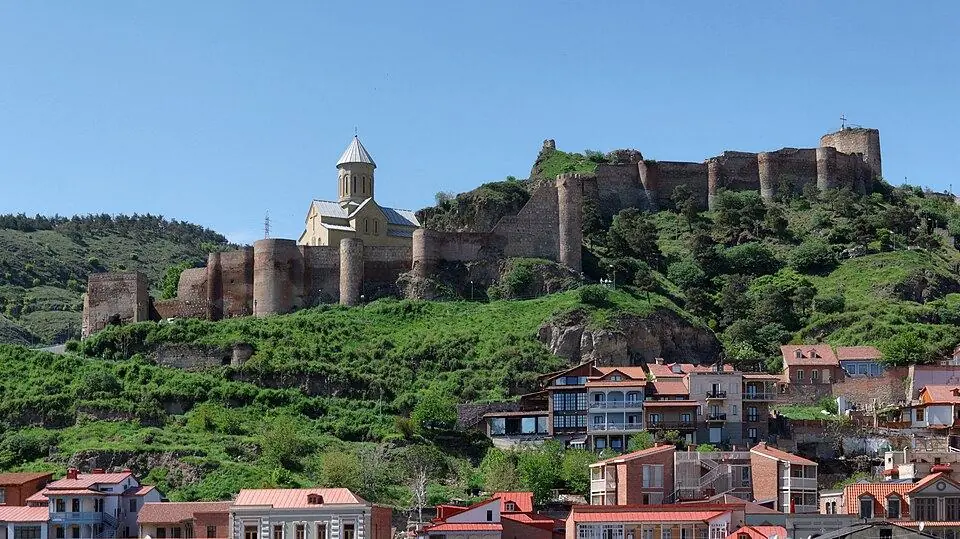 Photo: Alexxx1979, CC BY-SA 4.0
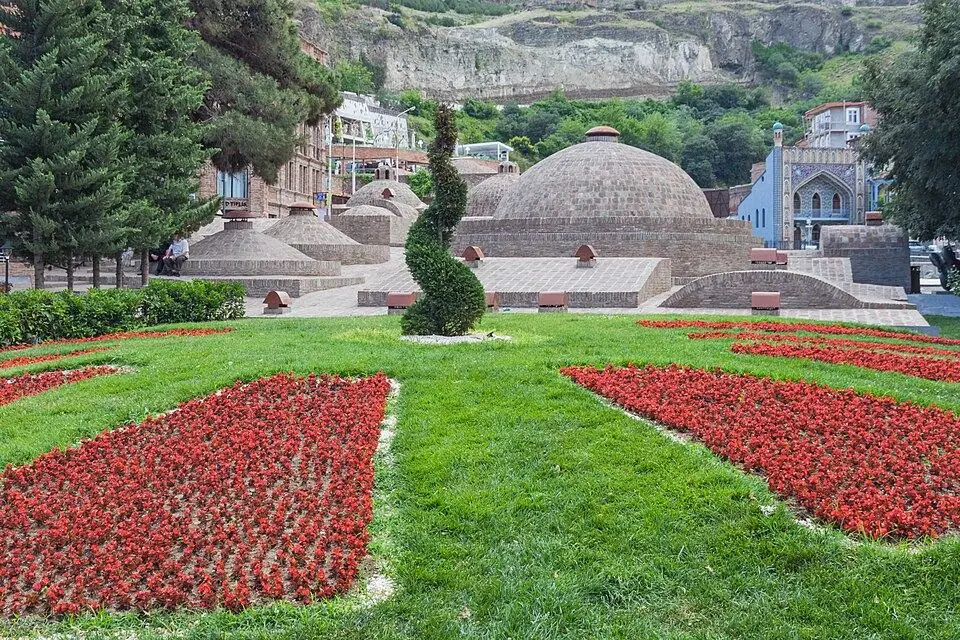 Photo: Marcin Konsek, CC BY-SA 4.0
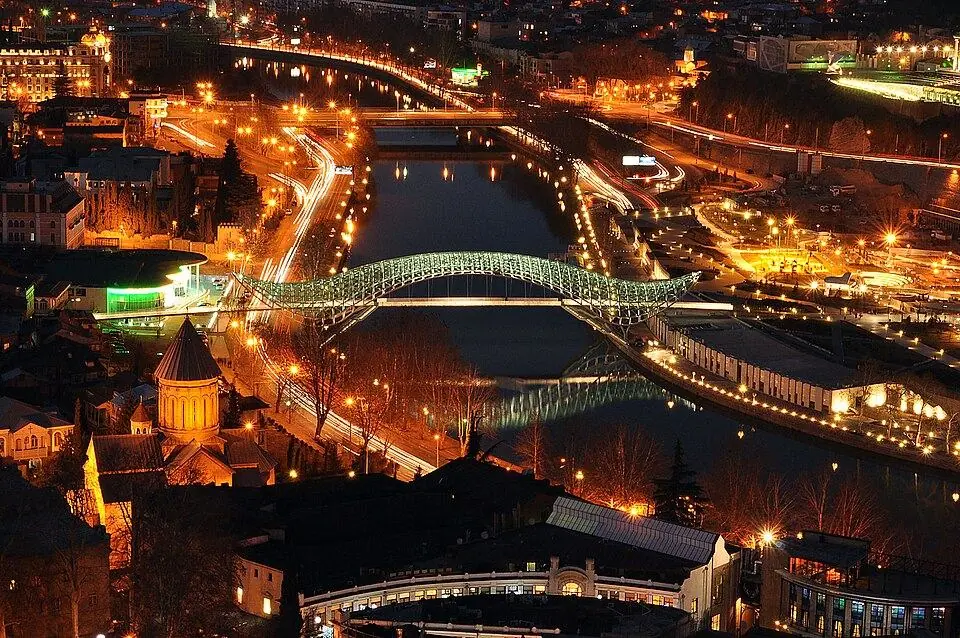 Photo: ako-aleko, CC BY-SA 3.0
- Sololaki and the old town: carved and painted balconies stacked one above another up a steep slope. Late afternoon side light picks out the woodwork.
- Old Tbilisi below Narikala: the fortress walls and the domed St Nicholas church above the rooftops of Kala on a clear day. Return after dark, when floodlights come on along the walls.
- Abanotubani: the low brick domes of the bathhouses behind beds of red flowers, with the blue tiled front of the Orbeliani bath on the right. The square is calmest in the early morning.
- Bridge of Peace: the glass and steel footbridge glowing over the Mtkvari, with streaks of car lights on both banks, seen from high above the old town. Be in place before sunset and shoot through blue hour.
Mtskheta and Kartli photos: Jvari, Svetitskhoveli, Uplistsikhe and Dashbashi
Kartli, the land around and west of the capital, is the old heart of the Georgian kingdom, and its pictures are mostly about stone. Jvari stands alone on its hill above Mtskheta, the cathedral town where the Aragvi joins the Mtkvari. Further west, Uplistsikhe is a whole town carved into pale sandstone. It glows in low sun and looks flat and grey at noon. South-west of Tbilisi, the Tsalka plateau hides the deep basalt gorge of Dashbashi. Spring and autumn suit the whole region. In July and August, shoot in the two hours after sunrise and the two before sunset.
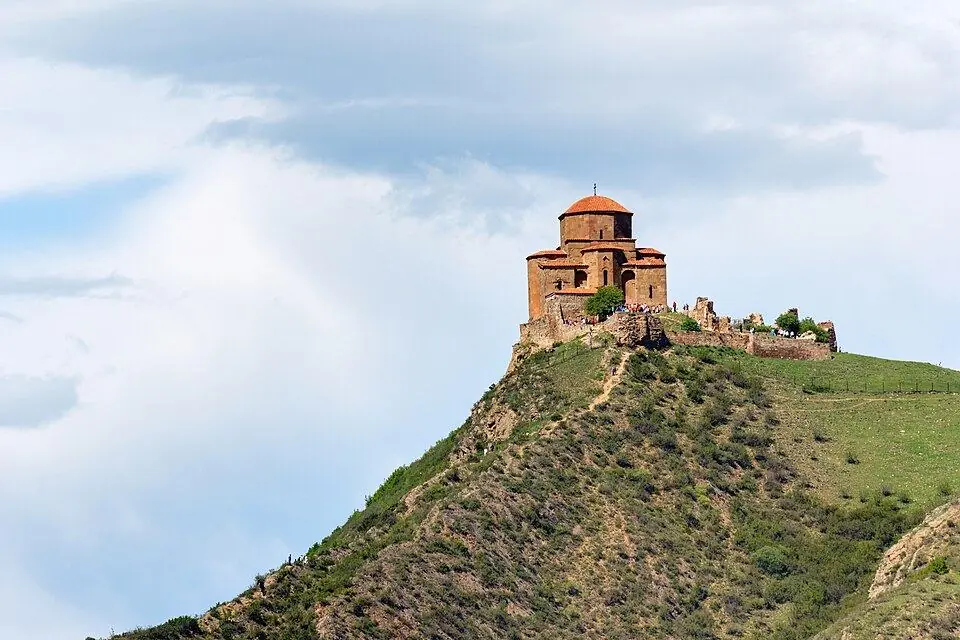 Photo: Alexxx1979, CC BY-SA 4.0
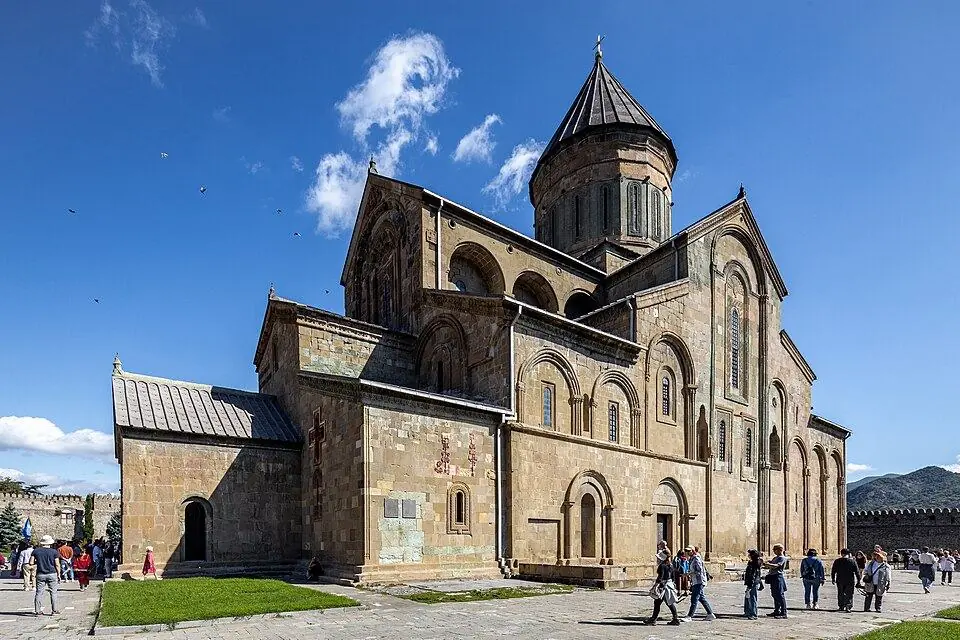 Photo: Supanut Arunoprayote, CC BY 4.0
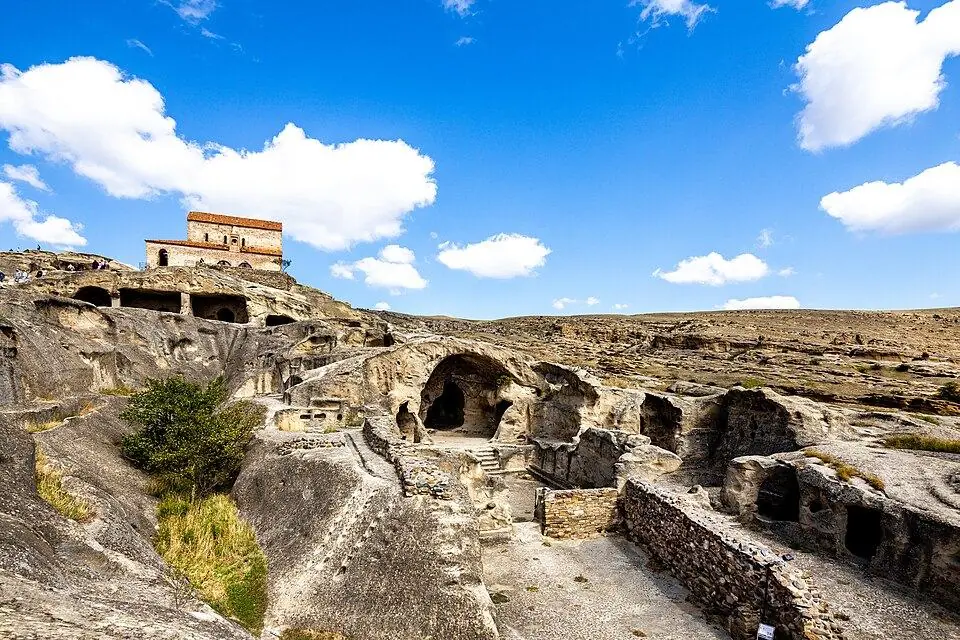 Photo: Supanut Arunoprayote, CC BY 4.0
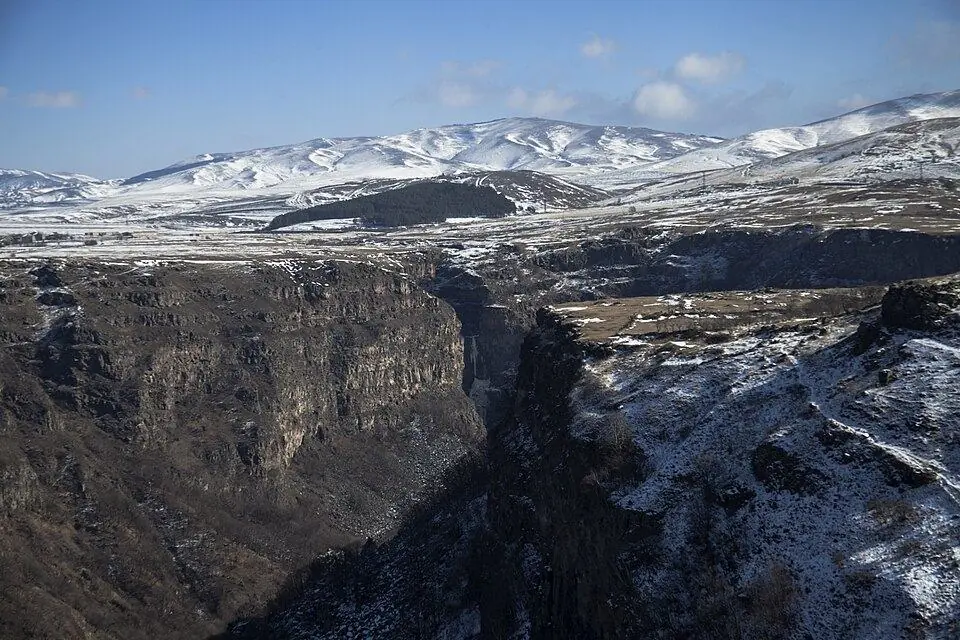 Photo: Paata vardanashvili, CC BY-SA 4.0
- Jvari Monastery: the late 6th-century church alone on its grassy summit under rolling cloud. Go at sunrise or sunset, and pick a clear day for the view down to the two rivers.
- Svetitskhoveli Cathedral: the 11th-century cathedral, its tall drum and arcaded stone walls in bright sun, with visitors crossing the yard. Weekday mornings are calmer than Sundays, when crowds come for the liturgy.
- Uplistsikhe: rock-cut halls, stairs and doorways in the sandstone, with the medieval church on the crest above. In summer, get there as the gates open or in the last hours before closing, when shadows give the rock depth.
- Dashbashi Canyon: dark basalt walls slicing into a snowy plateau, with white hills on the skyline. This is its winter face; May to October is the season for the canyon trail and the glass bridge.
Kazbegi and the Georgian Military Road in photos
The road north from Tbilisi climbs from a reservoir and a castle to bare high valleys in about three hours. Ananuri comes first, above the Zhinvali Reservoir. The road then crosses the Jvari Pass and drops into Kazbegi, the most photographed corner of the Georgian Caucasus. Here Gergeti Trinity Church sits on its ridge below Mount Kazbek, 5,054 m. June to October brings green slopes and open trails. January to March gives snow scenes, though heavy snowfall sometimes shuts the pass for a few hours. Cloud often builds over the peaks after midday, so mornings are your best chance.
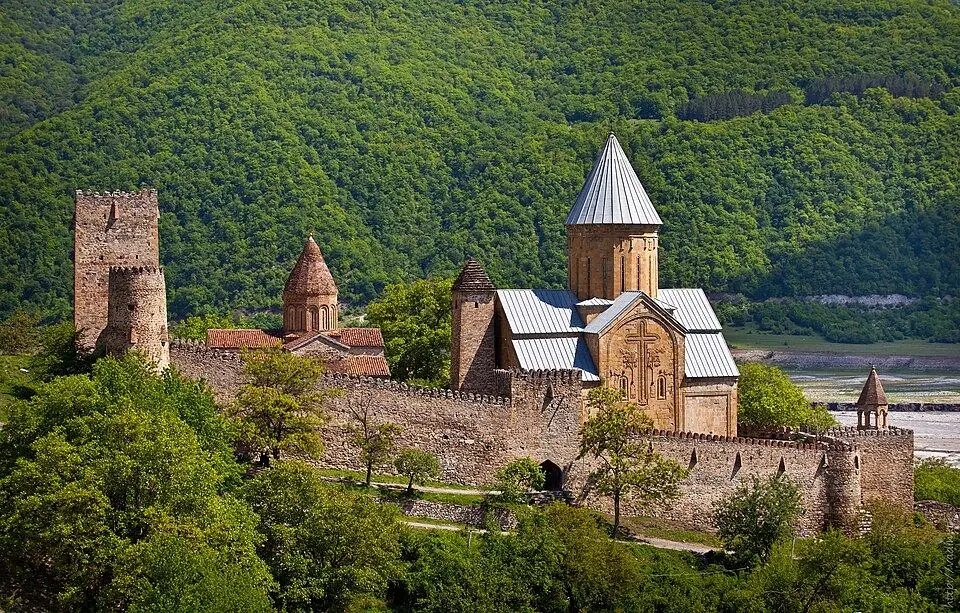 Photo: Vadim Tolbatov, CC BY-SA 3.0
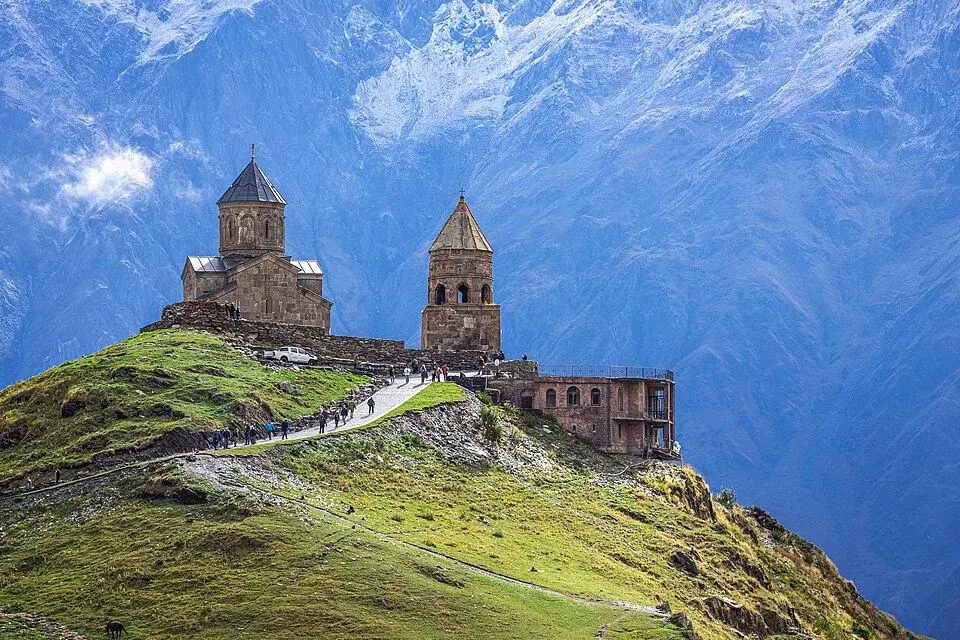 Photo: Supanut Arunoprayote, CC BY 4.0
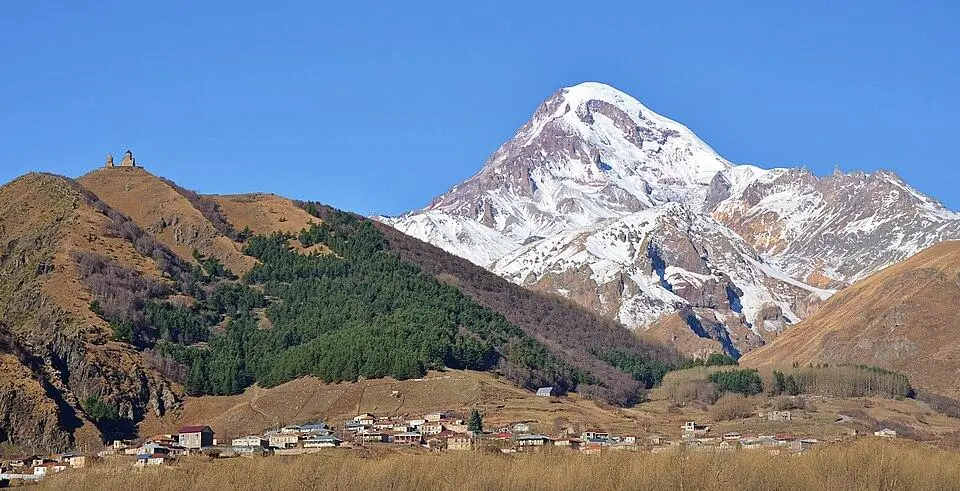 Photo: georgia.travel
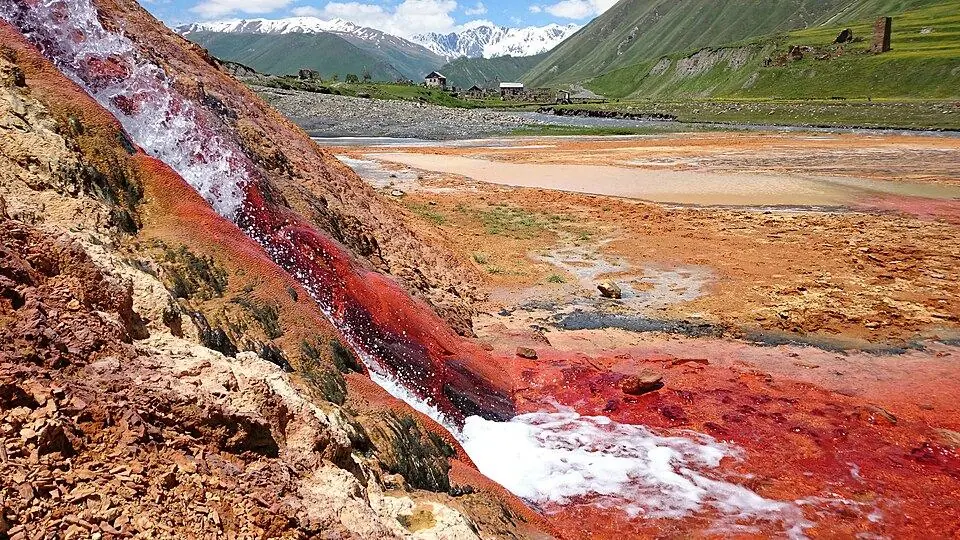 Photo: Nino19682210, CC BY-SA 4.0
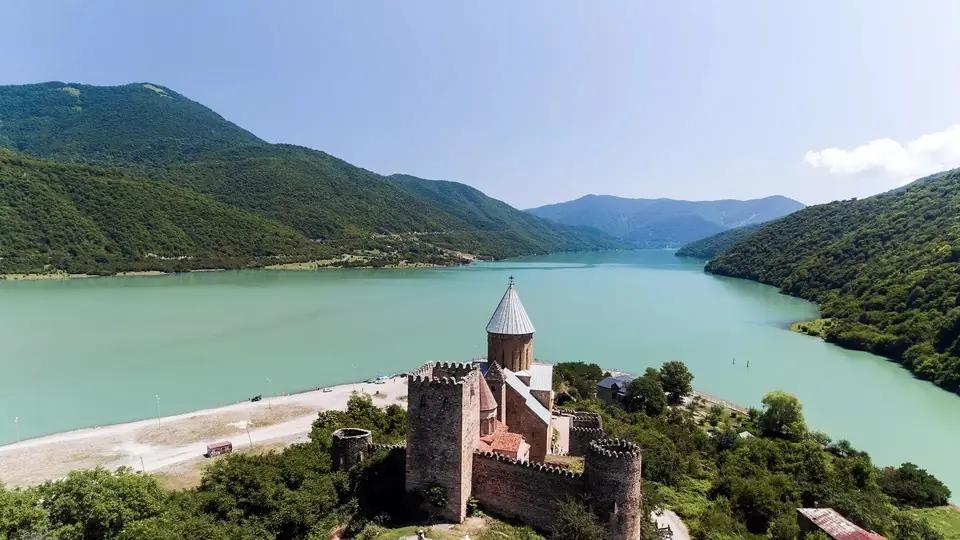
- Ananuri: the 17th-century castle with its two churches and square watchtower, set against a slope of fresh green forest. Morning light suits it, in spring or autumn.
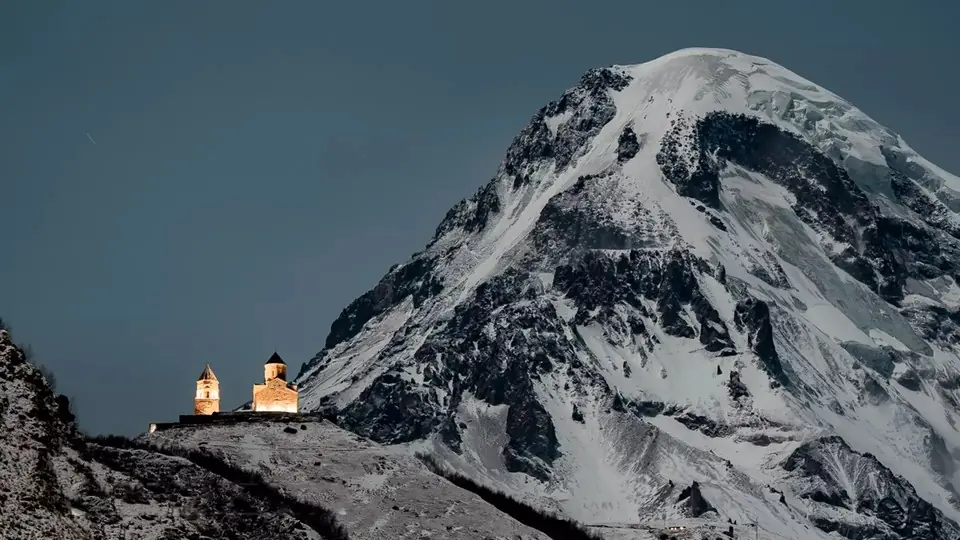
- Gergeti Trinity Church: the 14th-century church and bell tower on their grassy ridge at 2,170 m, with a snow-streaked mountain wall behind. Be there at sunrise, May to October, ahead of the day trippers.
- Juta: the jagged Chaukhi peaks above steep slopes of grass and pine, with a wooden house on the hillside. From late June to September, late afternoon light is warmest on the rock.
- Truso Valley: mineral water spilling over red and orange travertine, with snowy peaks and an old tower behind. June to October; a polarising filter cuts the glare on the wet rock.
Two nights in Stepantsminda are built into our Classic Georgia tour, which means a sunrise at Gergeti on top of Tbilisi, Uplistsikhe and Kakheti. You travel only with your own party, on dates you pick, and your guide talks you through each stop in your language.
Kakheti in pictures: vineyards, monasteries and the David Gareja desert
Kakheti, the wine region in the east, is open and wide. The Alazani Valley lies flat between two ranges, and on clear days the snowy Greater Caucasus fills the sky behind the vines. Sighnaghi looks across the valley from a ridge on its western side, and mist often lies below its walls at dawn. Harvest time, from the middle of September well into October, fills the villages with baskets, tractors and smoke from the chacha stills. In the far south, on the border with Azerbaijan, David Gareja sits among bare, striped hills. Go there in spring or autumn: summer middays are very hot and the light is hard.
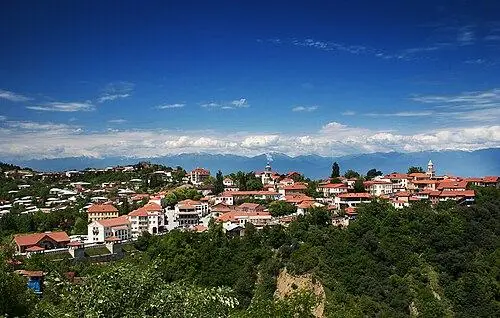 Photo: Levan Gokadze, CC BY-SA 2.0
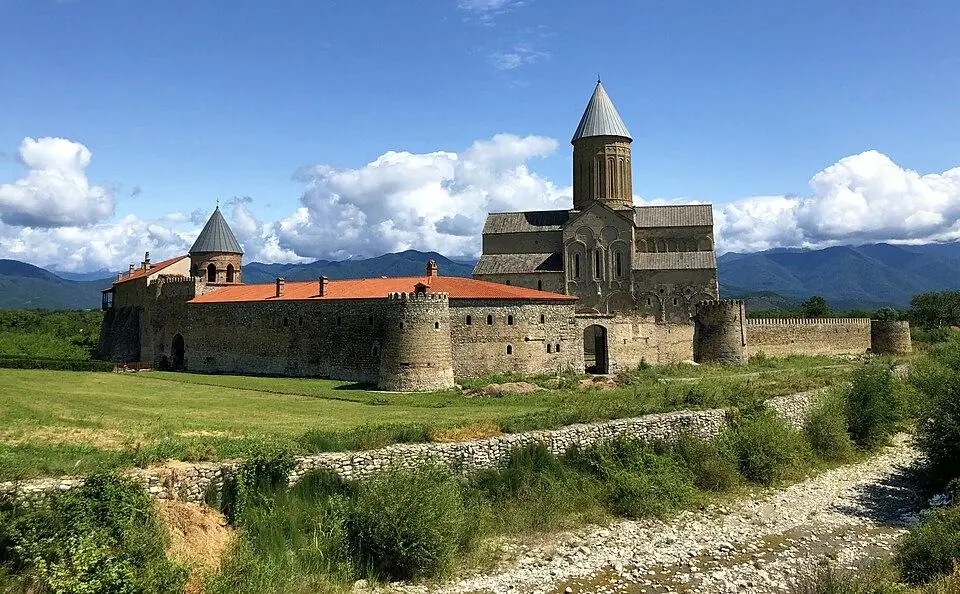 Photo: Max Benidze, CC BY-SA 2.0
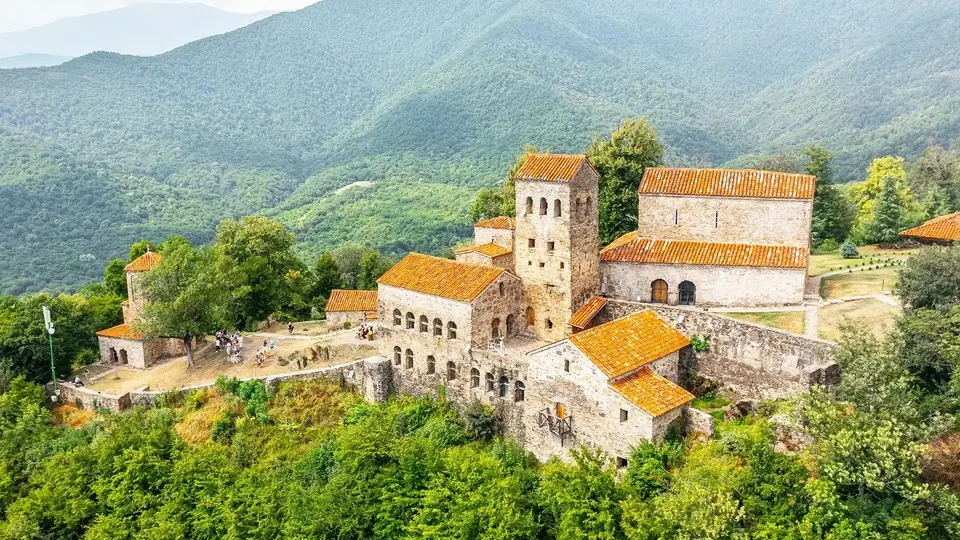 Photo: georgia.travel
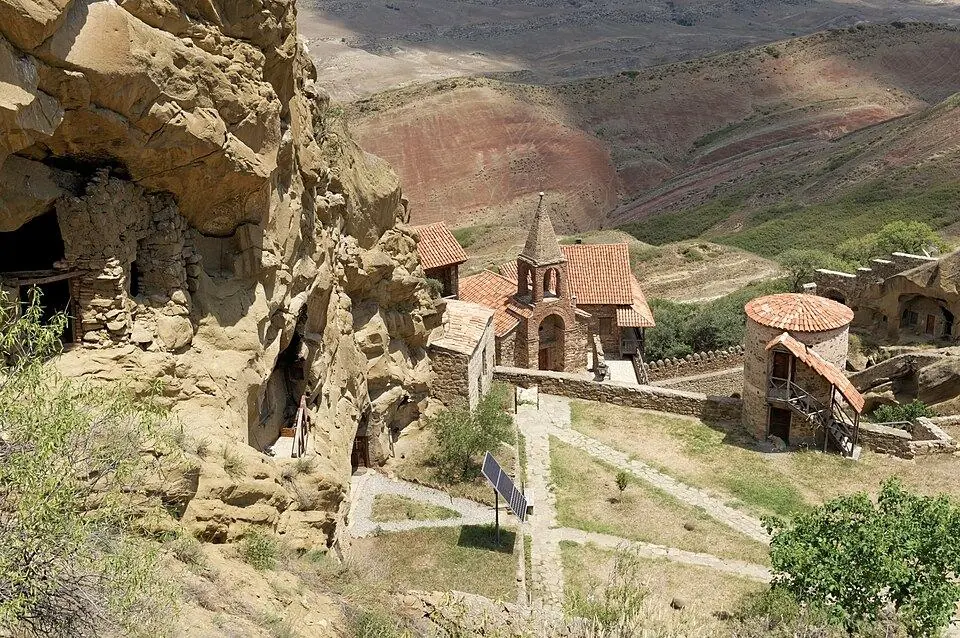 Photo: Vyacheslav Argenberg, CC BY 4.0
- Sighnaghi: red roofs and church towers along the ridge, with a line of snowy peaks floating above the clouds. Stay the night for sunrise over the valley; spring and early autumn are the best seasons.
- Alaverdi Monastery: the 11th-century cathedral, about 55 m tall, rising inside its walls with blue mountains behind. Mornings are calm, and late September brings pilgrims for the Alaverdoba feast.
- Nekresi Monastery from the air: orange tiled roofs, a stone tower and walls on a forested hilltop. Clear mornings open up the view; if you plan to fly a drone, ask the monks first.
- David Gareja: the Lavra courtyard below cliffs full of cave cells, with red and green striped hills beyond. April to May and September to October; skip the summer midday.
Tusheti and Khevsureti photos: tower villages of the high Caucasus
These two remote regions on Georgia's northern edge are the hardest to reach and among the most rewarding to photograph. Both have stone defence towers, slate roofs and summer pastures, with few modern buildings to spoil the frame. Getting into Tusheti means one rough 4x4 road across the Abano Pass (~2,950 m), normally passable between early June and early October. Shatili, in Khevsureti, lies beyond the 2,676 m Datvisjvari Pass. July to September is the safe window for both. Mornings tend to be clearest, and afternoons often cloud over.
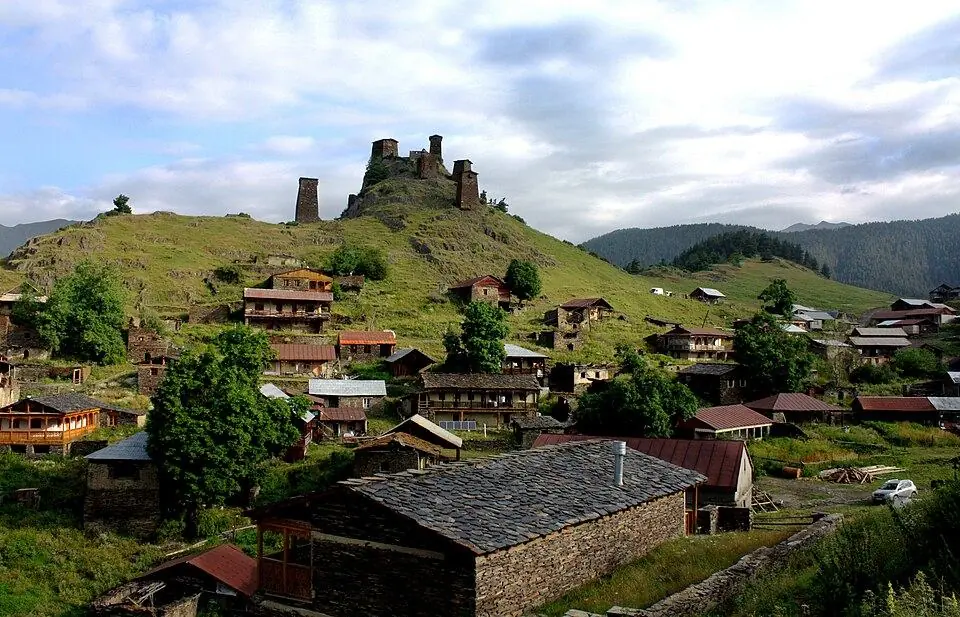 Photo: Abramia Giorgi, CC BY-SA 4.0
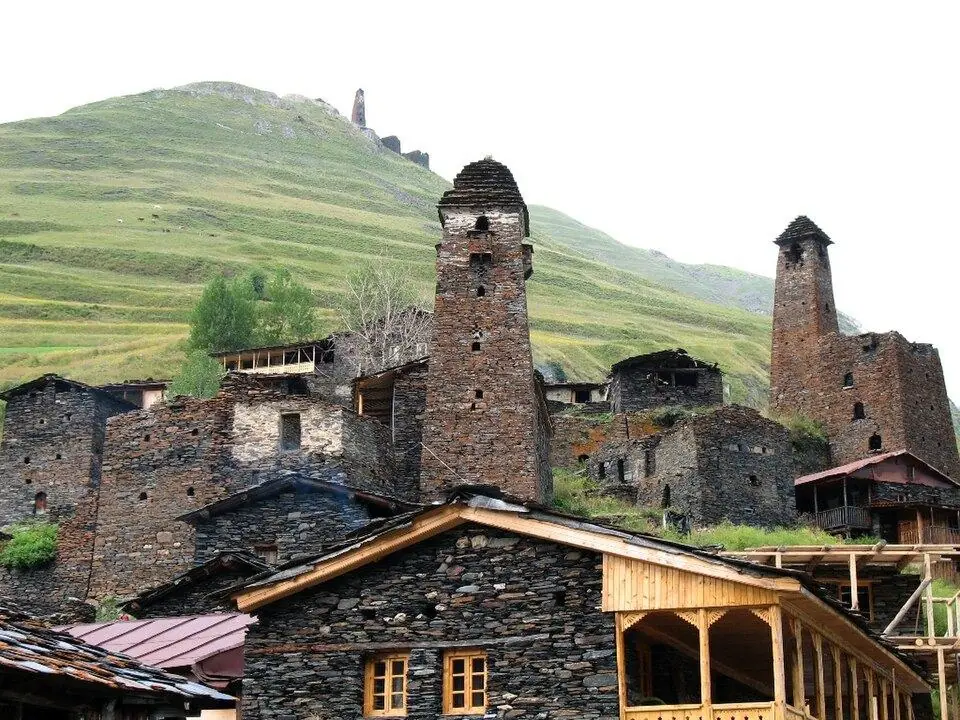 Photo: Lidia Ilona, CC BY 2.0
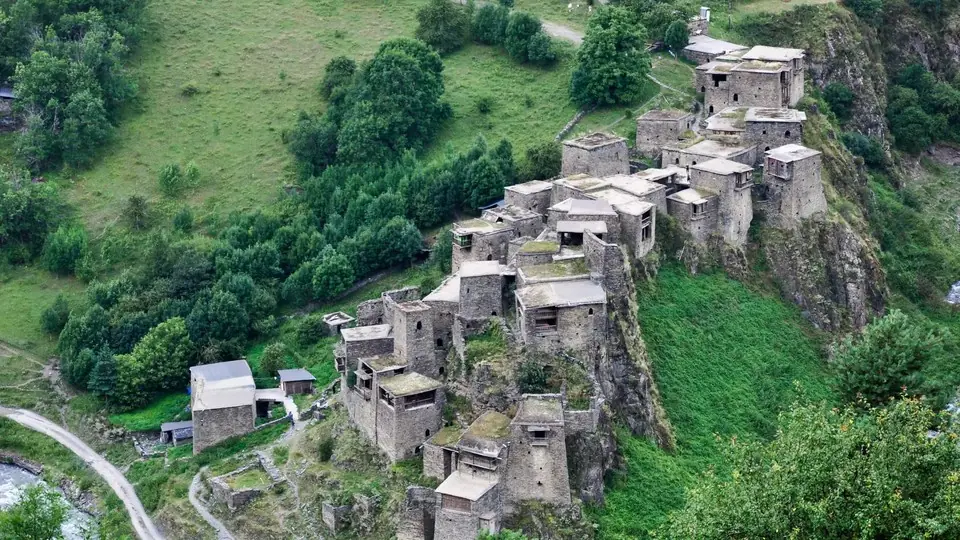 Photo: georgia.travel
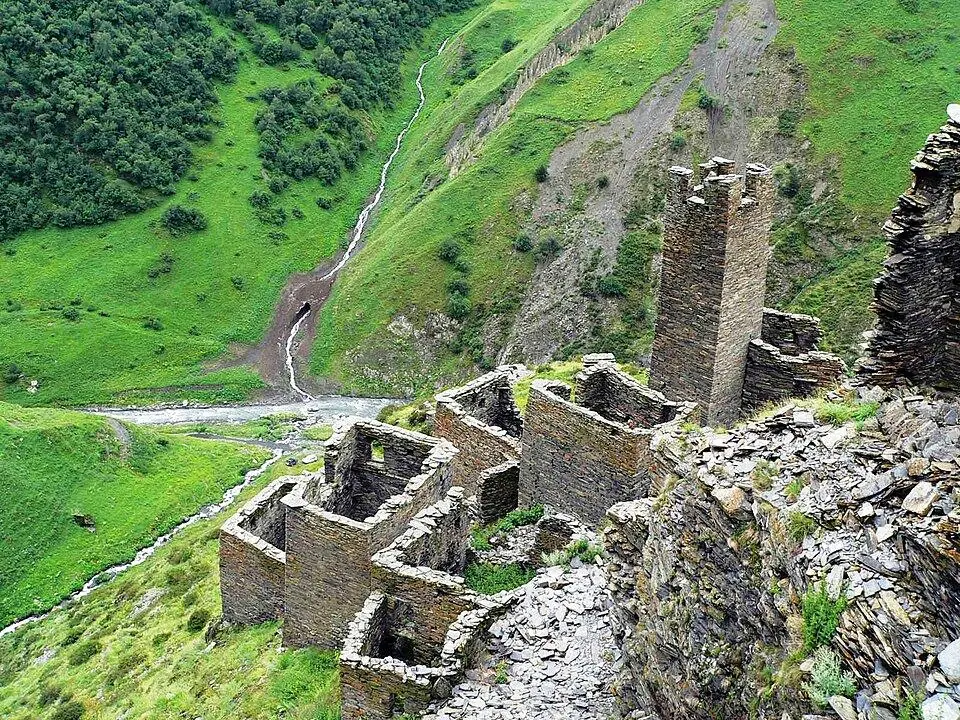 Photo: Giorgimailo, CC BY-SA 4.0
- Omalo: wooden balconies and slate roofs in Upper Omalo, below the restored Keselo towers on the hilltop. Low evening sun is kind to the stone from July to September.
- Dartlo: tall slate towers and stone houses at about 2,000 m, with a green slope rising behind. Overcast days like this one show the detail in the dark stone.
- Shatili: dozens of joined stone towers and houses stepping down a rock spur above the river. Visit from July to September, when the road over the pass is usually open.
- Mutso: ruined towers along a rocky ridge at about 1,880 m, high above the Andaki river. It is a steep climb from the road, so carry a light kit and plenty of water.
Svaneti in pictures: Svan towers, Ushba and glacier lakes
Upper Svaneti, in the north-west, is a UNESCO-listed land of tower villages below the highest peaks in Georgia. Local families built the towers across many centuries, from around the 9th to the 18th, and most rise about 20 to 30 m. Mestia, about 1,500 m up, is the base, and the road from Zugdidi stays open all year. June to early October is the season for green valleys and mountain lakes. Late September adds gold birches, and January to March brings deep snow. As in Kazbegi, the peaks are often clearest in the first hours after sunrise.
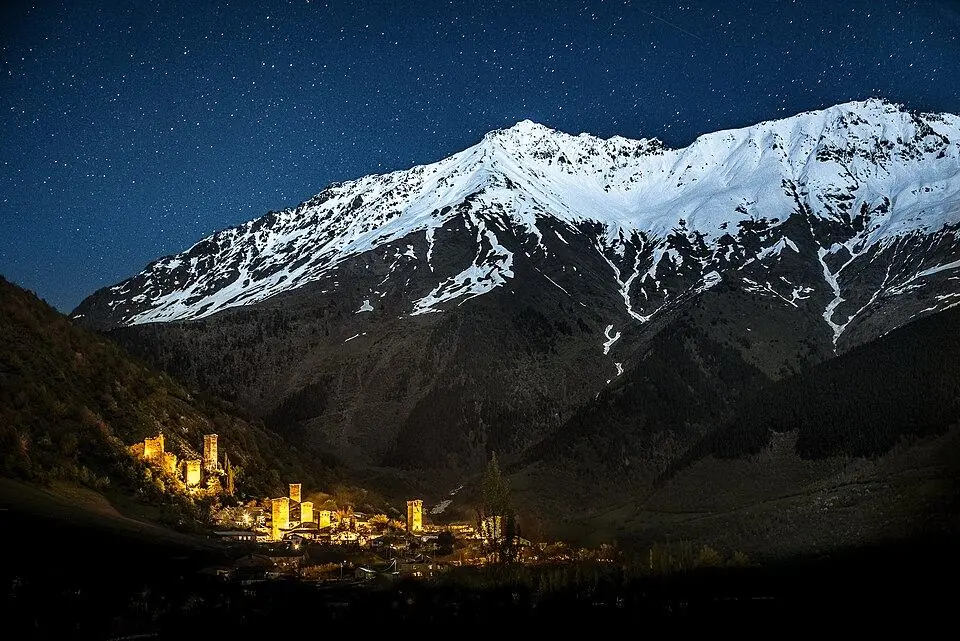 Photo: Q-lieb-in, CC BY-SA 4.0
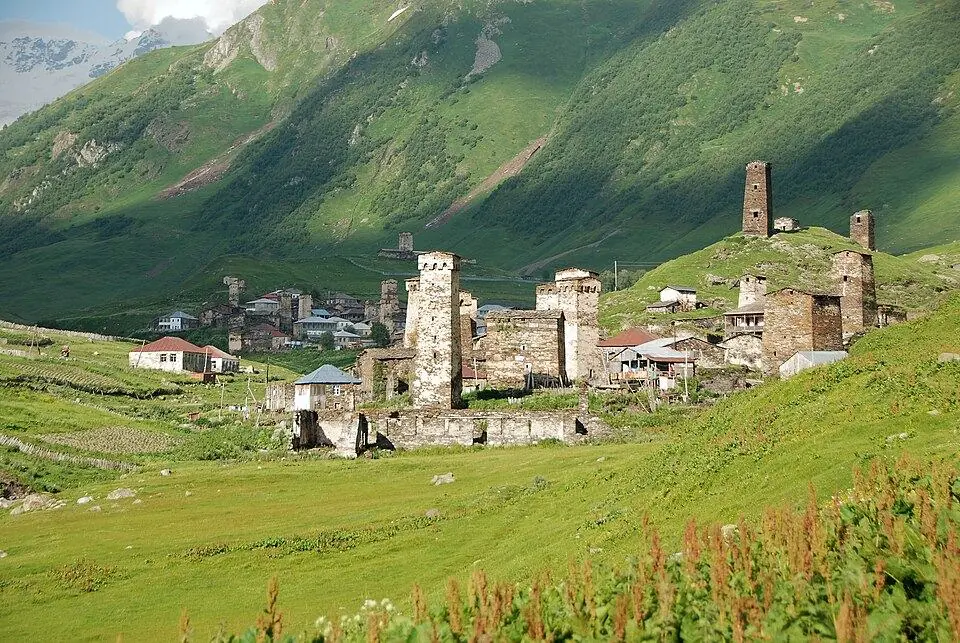 Photo: Florian Pinel, CC BY-SA 3.0
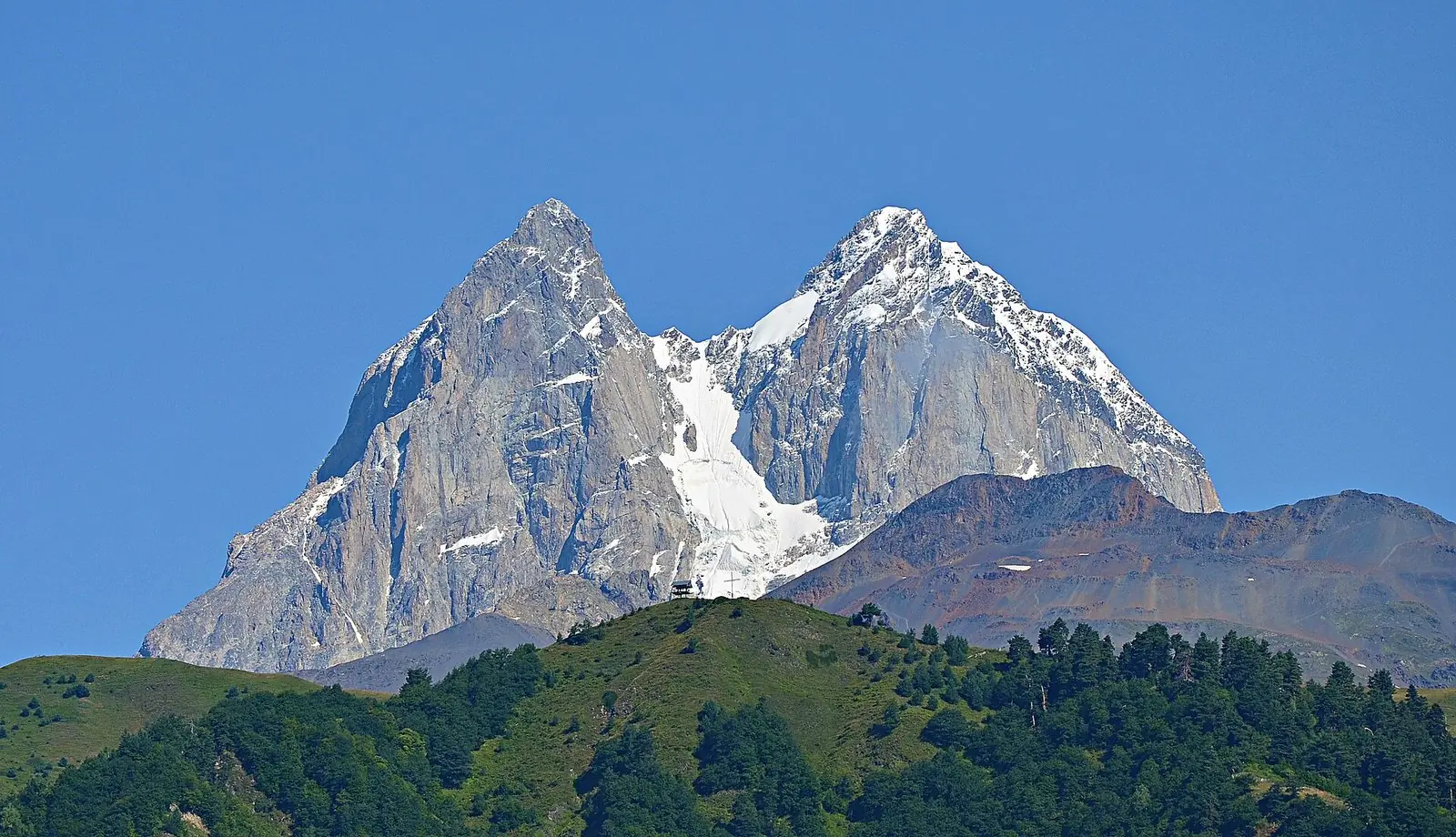 Photo: MaxBenidze, CC BY-SA 4.0
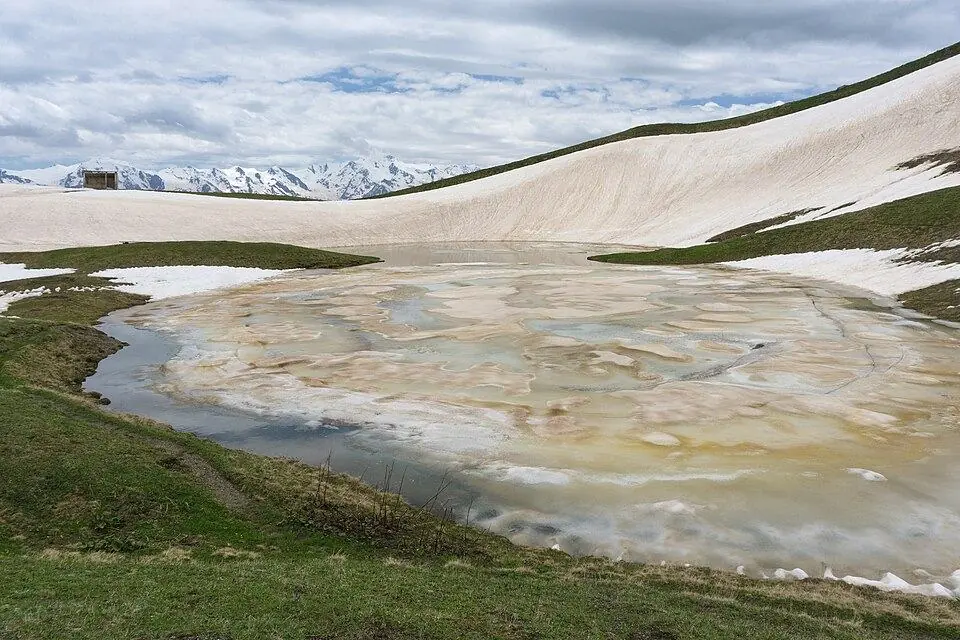 Photo: Alexey Komarov, CC BY-SA 4.0
- Mestia at night: floodlit towers under a sky full of stars, with a snowy massif above the town. Pick a clear, still night and bring a tripod.
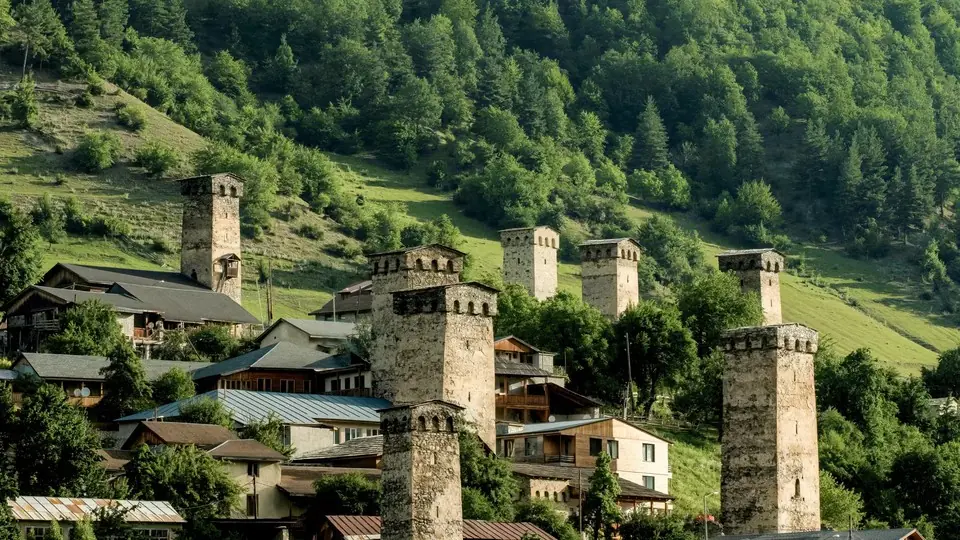
- Ushguli: stone towers and houses in a summer meadow at about 2,100 m, with wildflowers in front. June to September; the peaks behind are often in cloud by noon.
- Mount Ushba: the twin granite horns, 4,710 m, with a snow couloir between them, above a dark forested ridge. Clear mornings from June to September give the sharpest view.
- Koruldi Lakes: one of the lakes at about 2,740 m, still half frozen in June, with snowbanks and far peaks. By July the ice has gone, and calm mornings may bring a reflection of Ushba.
Our Grand Tour with Svaneti gives you three nights in Mestia and a full day in Ushguli, plus Kazbegi, Kakheti and the coast at Batumi. As with all our tours, you choose the dates.
Racha photos: carved churches and a mountain lake
Racha, in the upper Rioni valley, gets far fewer visitors than Svaneti or Kazbegi, so you will often have the frame to yourself. Its pictures are about carved stone and deep forest. Nikortsminda and Barakoni are covered in some of the richest facade carving in the country. Coming from Kutaisi, the road crosses the Nakerala Pass, with Shaori Lake on the plateau just below. May and June are lush and green. Mid-October to early November brings the strongest autumn colour.
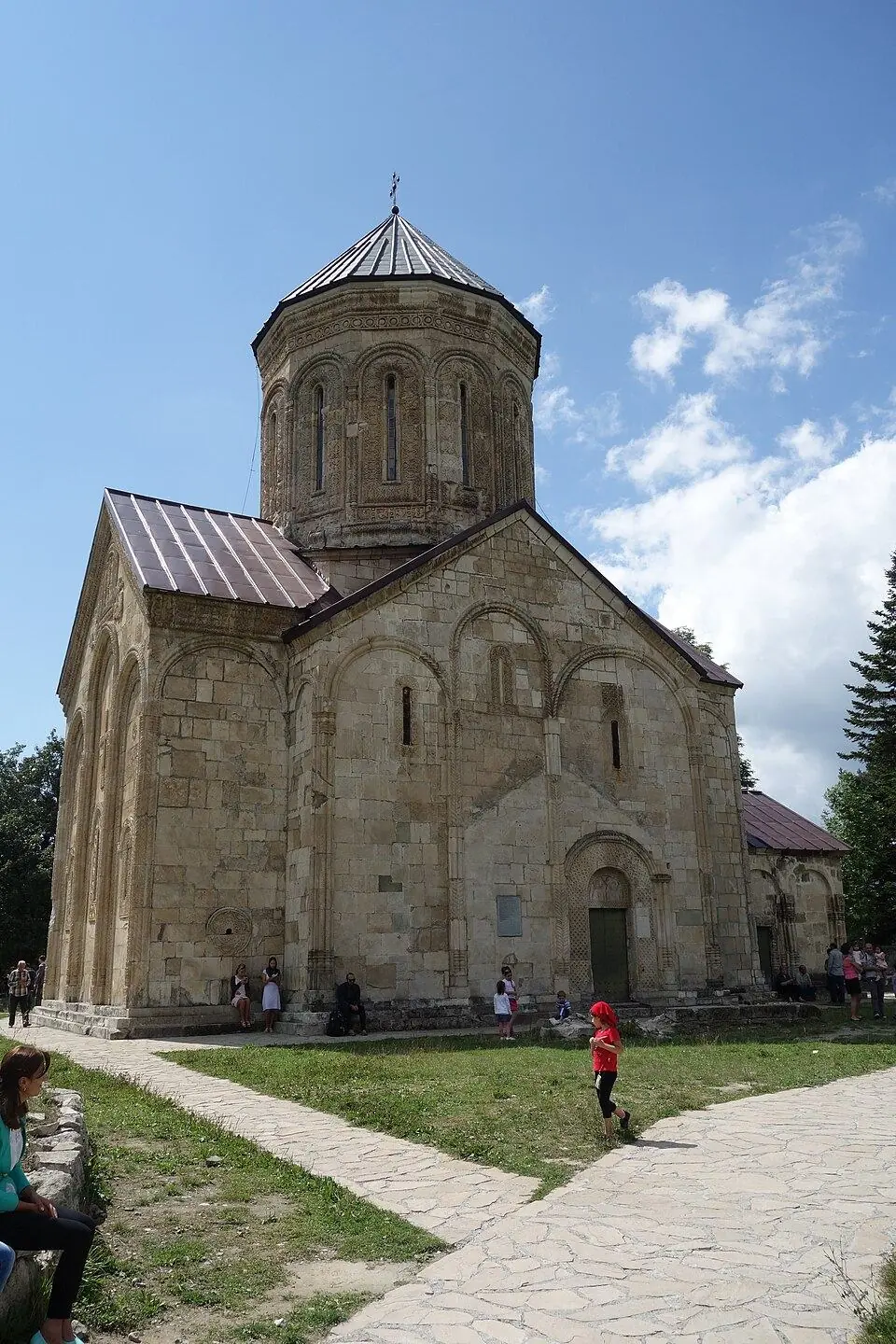 Photo: Yasuhiro Kojima, CC BY-SA 2.0
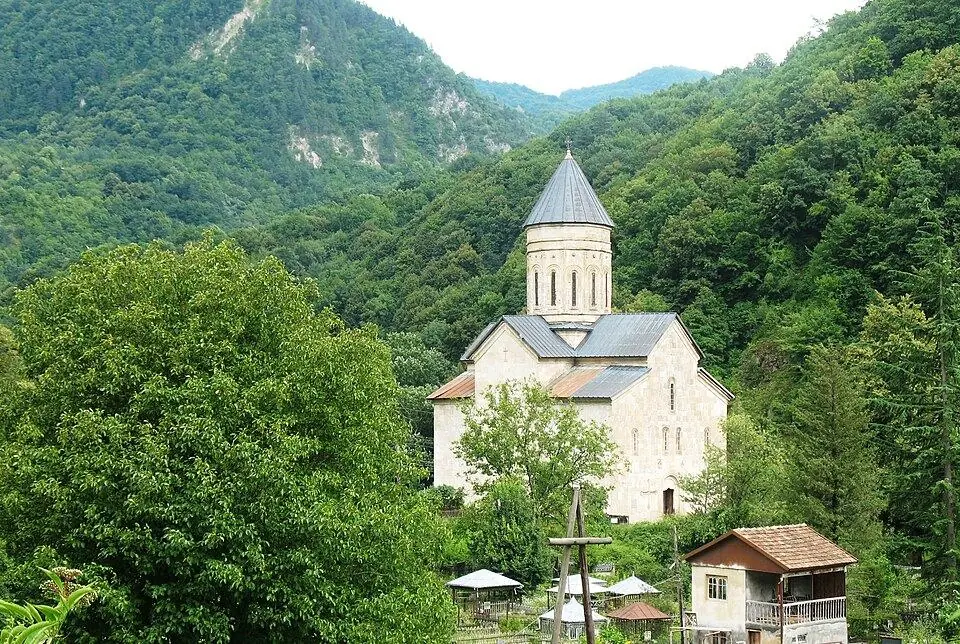 Photo: G.N., CC BY-SA 3.0
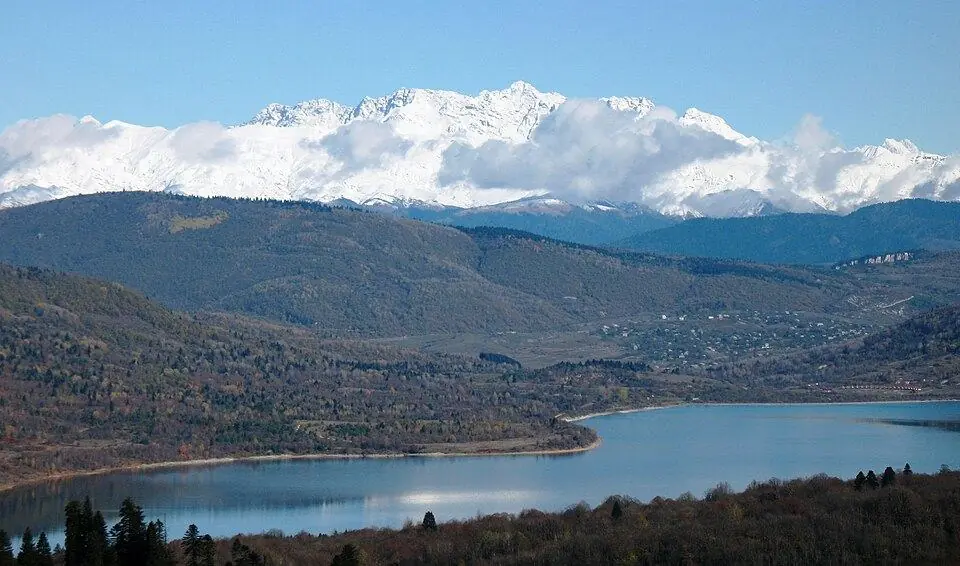 Photo: G.N., CC BY-SA 3.0
- Nikortsminda Cathedral: the carved walls and tall drum of the church built from 1010 to 1014, on a bright summer day. Low side light early or late in the day makes the carving stand out.
- Barakoni Church: the pale 18th-century church above a deep green gorge, with a village house in front. Late afternoon light suits it from May to October.
- Shaori Lake: the reservoir at about 1,130 m, with snow-covered peaks rising behind the hills. Come in autumn for colour, or in spring while snow still lies on the range.
Imereti and Samegrelo in pictures: Gelati, Katskhi and the canyons
West of the Likhi range the air grows humid and the hills turn a deeper green. Around Kutaisi, Imereti pairs UNESCO-listed Gelati with odd sights such as the Katskhi Pillar. Samegrelo, next door, has the turquoise water of Martvili Canyon. Rain falls often here, so make use of it: soft grey light suits stone churches and wet forest. April to June is the greenest time. Late October and early November bring autumn colour to the canyons. Narrow gorges get direct sun only around the middle of the day.
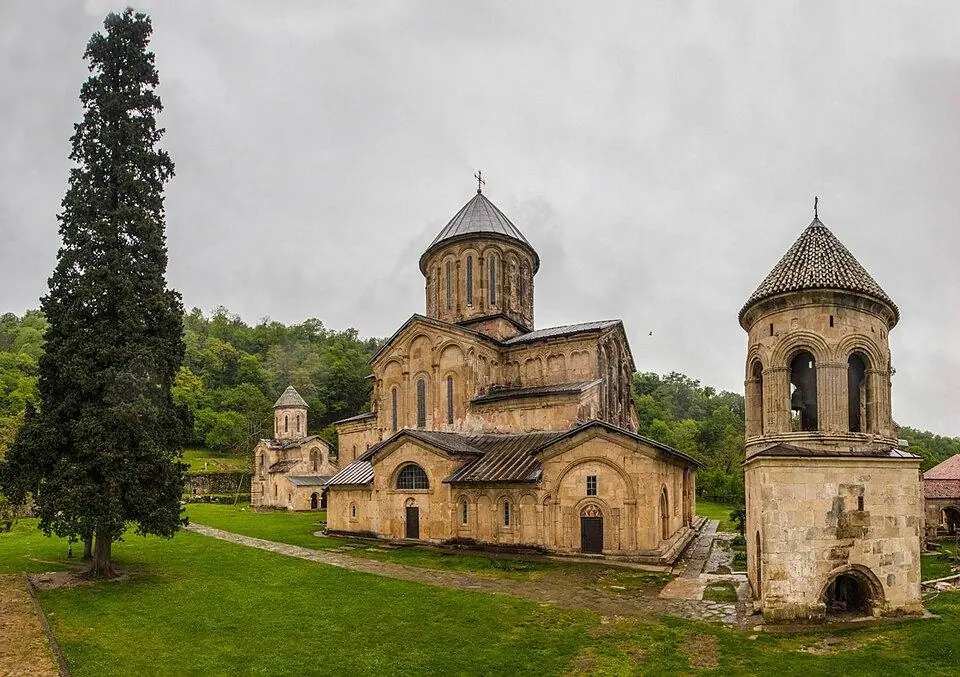 Photo: Ihor Burliai, CC BY-SA 3.0
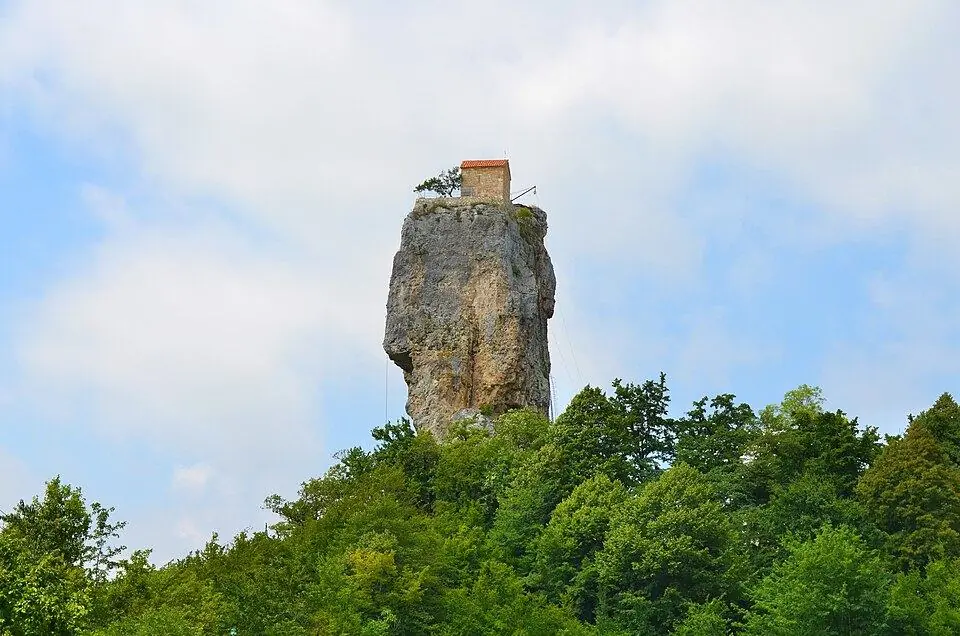 Photo: Jaba1977, improvements by Giorgi Balakhadze, CC BY-SA 4.0
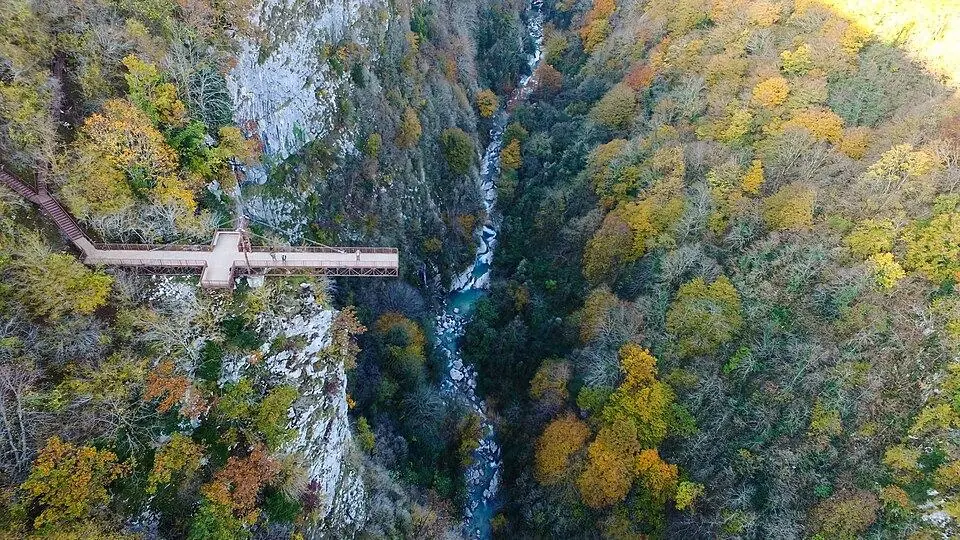 Photo: Paata vardanashvili, CC BY-SA 4.0
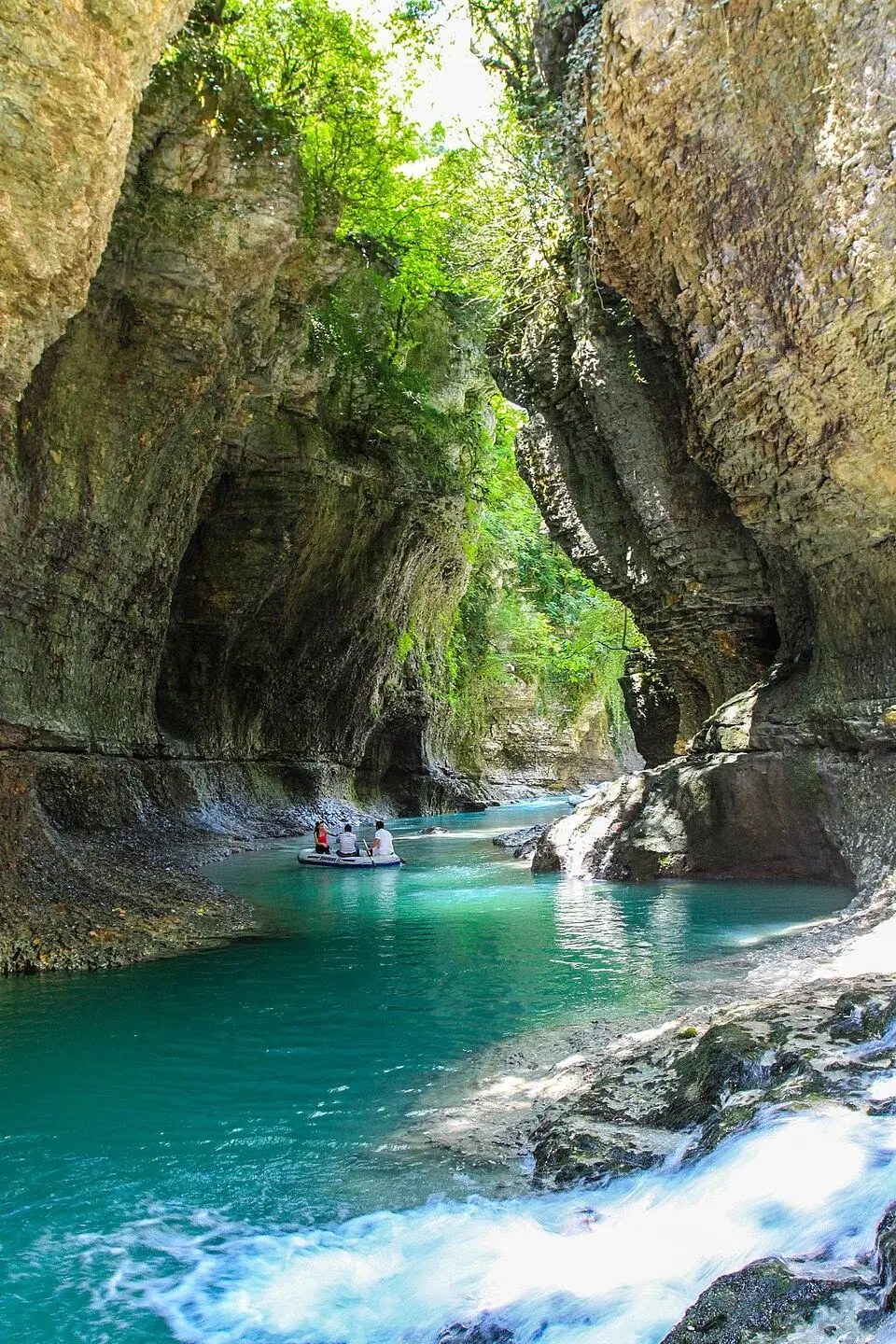 Photo: Paata vardanashvili, CC BY-SA 4.0
- Gelati Monastery: the 12th-century church, its bell tower and a tall cypress under a grey sky. Mornings are quiet all year, and overcast light avoids hard shadows on the walls.
- Katskhi Pillar: the limestone column, about 40 m high, with its tiny church on top, rising out of the forest near Chiatura. April to October, from the path at its foot.
- Okatse Canyon from the air: the metal walkway jutting out over a gorge of autumn trees, with the river far below. Late October to early November for this colour.
- Martvili Canyon: a small boat on turquoise water between overhanging limestone walls. Choose a sunny day around midday, when light reaches the water; boats do not run in rain.
Samtskhe-Javakheti photos: Vardzia, Rabati and the volcanic lakes
In the south, the Mtkvari cuts a deep gorge through dry hills before the land rises to the high, treeless Javakheti plateau. The subjects here are cave cities, fortresses and wide lakes above 2,000 m. Vardzia, a 12th-century cave monastery, is cut into a cliff above the river. Rabati Castle in Akhaltsikhe and Khertvisi Fortress make easy stops on the way there. May and June bring green slopes and wildflowers, while September and October are dry and clear. Winter on the plateau is long and cold, and the lakes freeze.
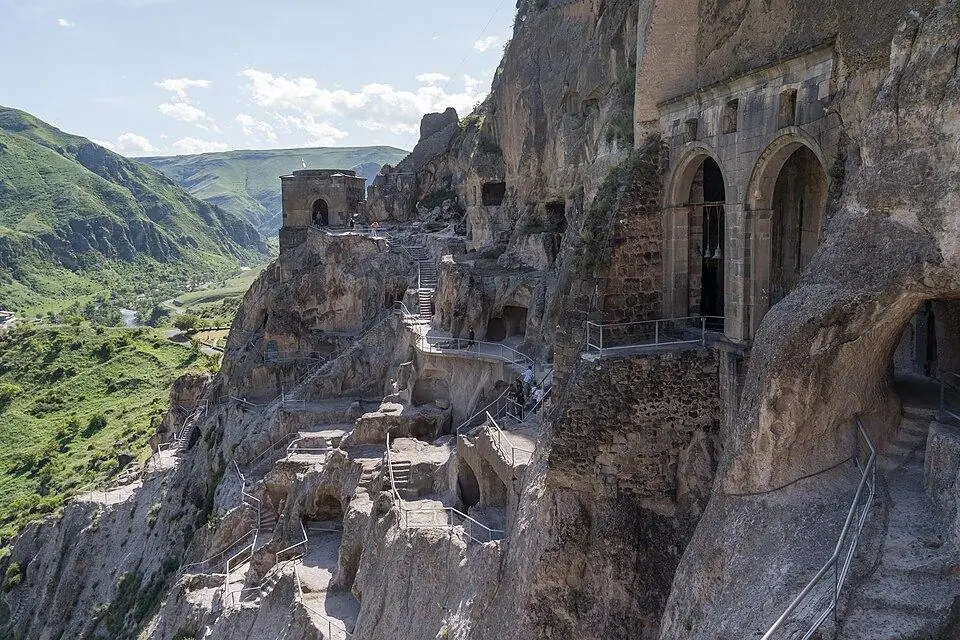 Photo: Alexkom000, CC BY 4.0
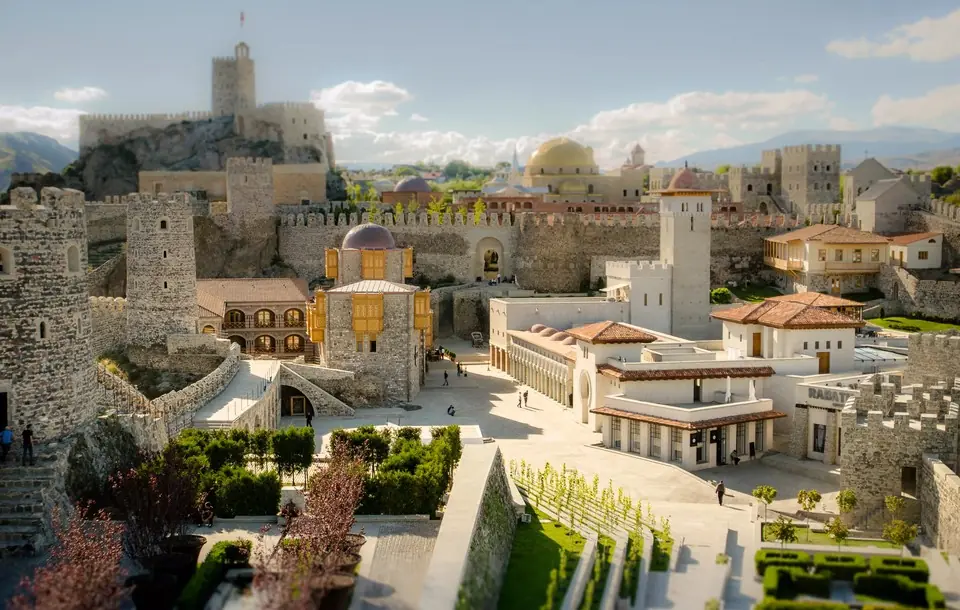 Photo: georgia.travel
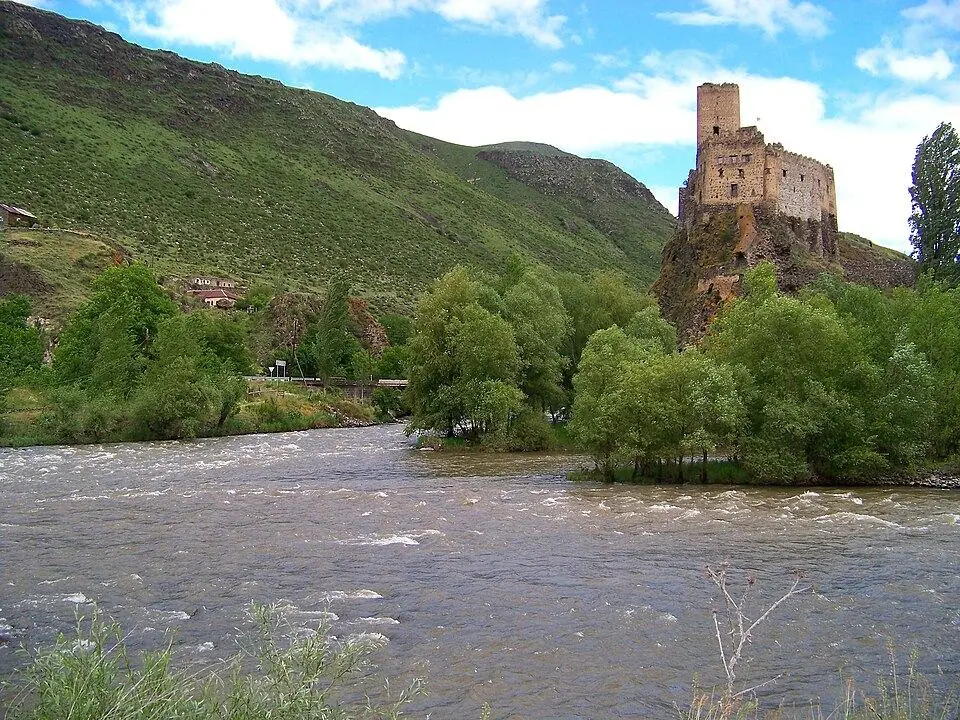 Photo: Jaba1977, improvements by Giorgi Balakhadze, CC BY-SA 4.0
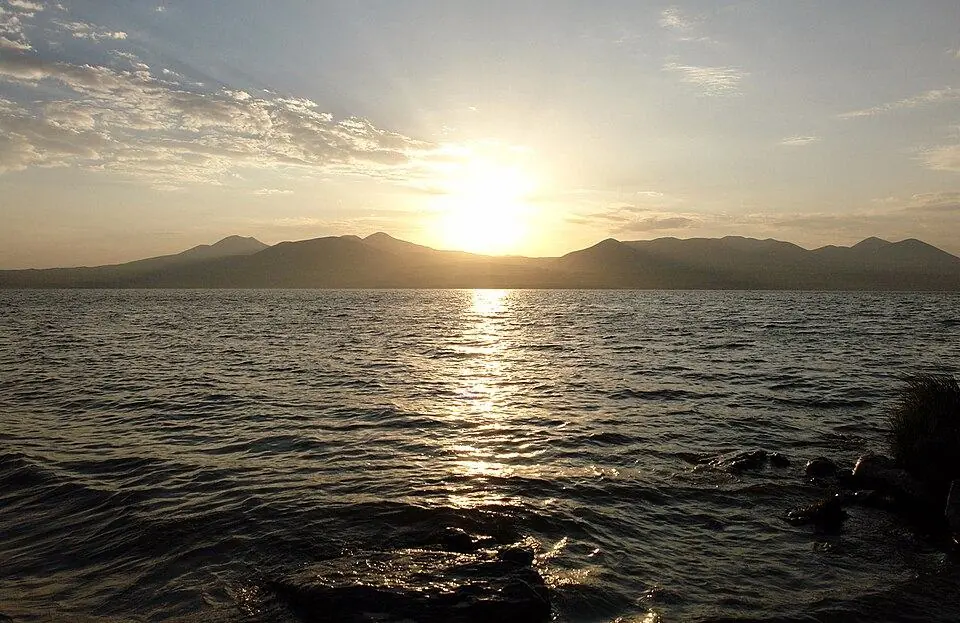 Photo: Paata Vardanashvili, CC BY 2.0
- Vardzia: cave halls, arches and stairways cut into the cliff, with the green valley beyond, in late May. Spring and early autumn are kindest; in July and August, come as early as you can.
- Rabati Castle: the golden dome of the mosque among restored towers, arcades and walls, lit by warm sun. Late afternoon is best in any season.
- Khertvisi Fortress: walls and a tall tower on a rock above a fast, swollen river in spring. Late afternoon light suits it all year.
- Paravani Lake: low sun over Georgia's largest lake, at 2,073 m, with volcanic hills in silhouette. June to September; pack a warm layer, as the plateau wind bites even in summer.
Adjara and the Black Sea coast in pictures
Adjara, in the south-west, puts a subtropical coast and high mountains within a few hours of each other. Batumi has a modern skyline along the sea, and the Botanical Garden on the Green Cape looks straight down on the water. South of the city, Gonio guards the mouth of the Chorokhi with Roman walls. Inland, the road climbs through forest towards Goderdzi and Green Lake. The coast is humid and often hazy in summer. The clearest days come in autumn and after winter rain, when snow sits on the mountains behind Batumi.
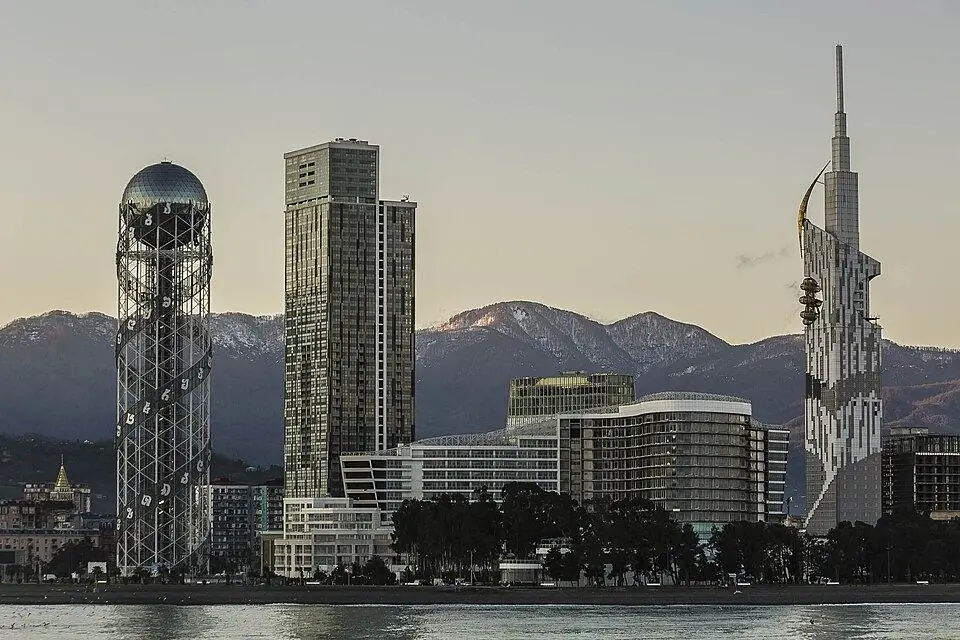 Photo: Commander, U.S. Naval Forces Europe-Africa/U.S. 6th Fleet, Public domain
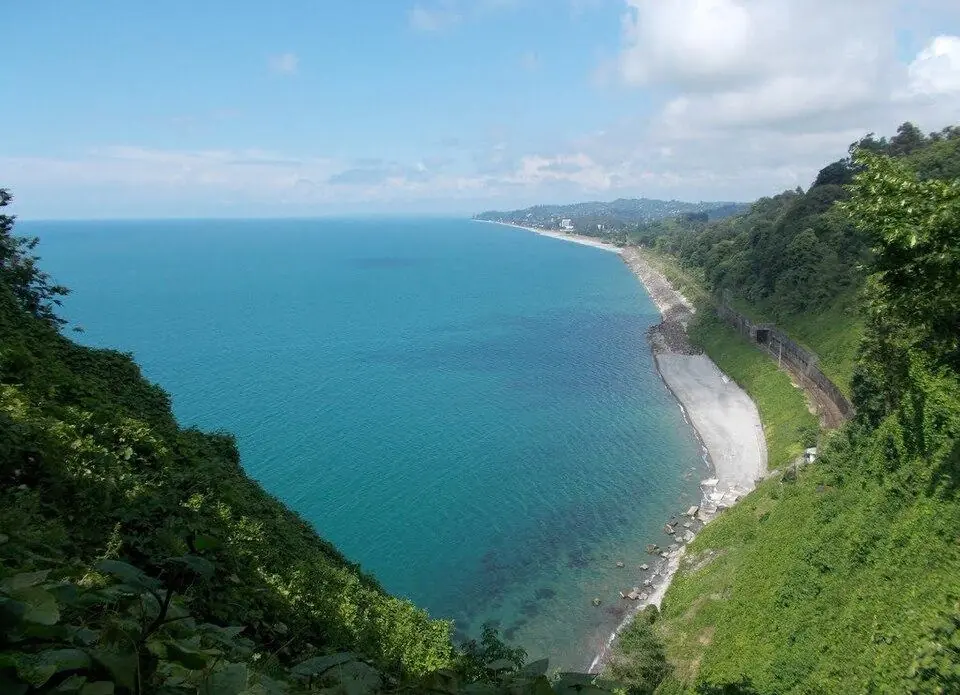 Photo: Archil Kikvadze, CC BY 3.0
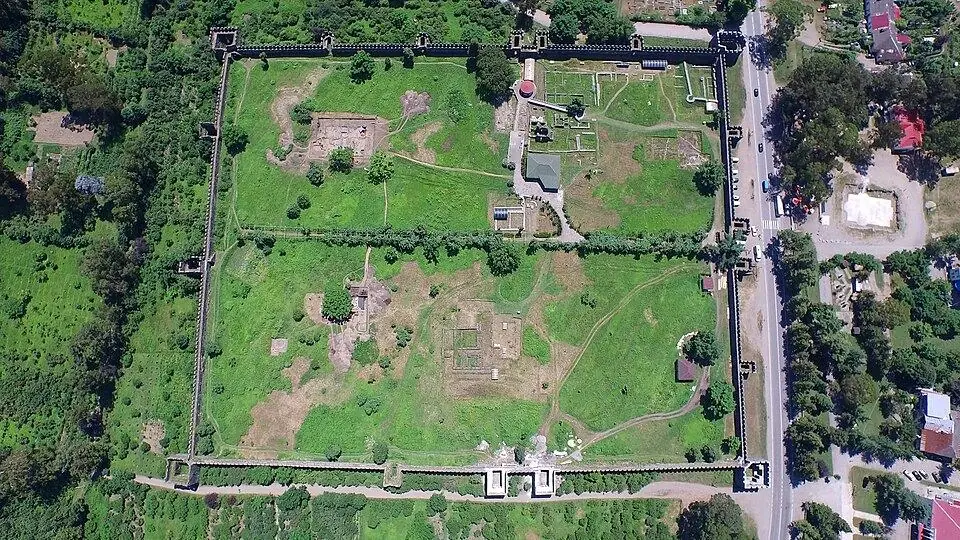 Photo: კოლხი, CC BY-SA 4.0
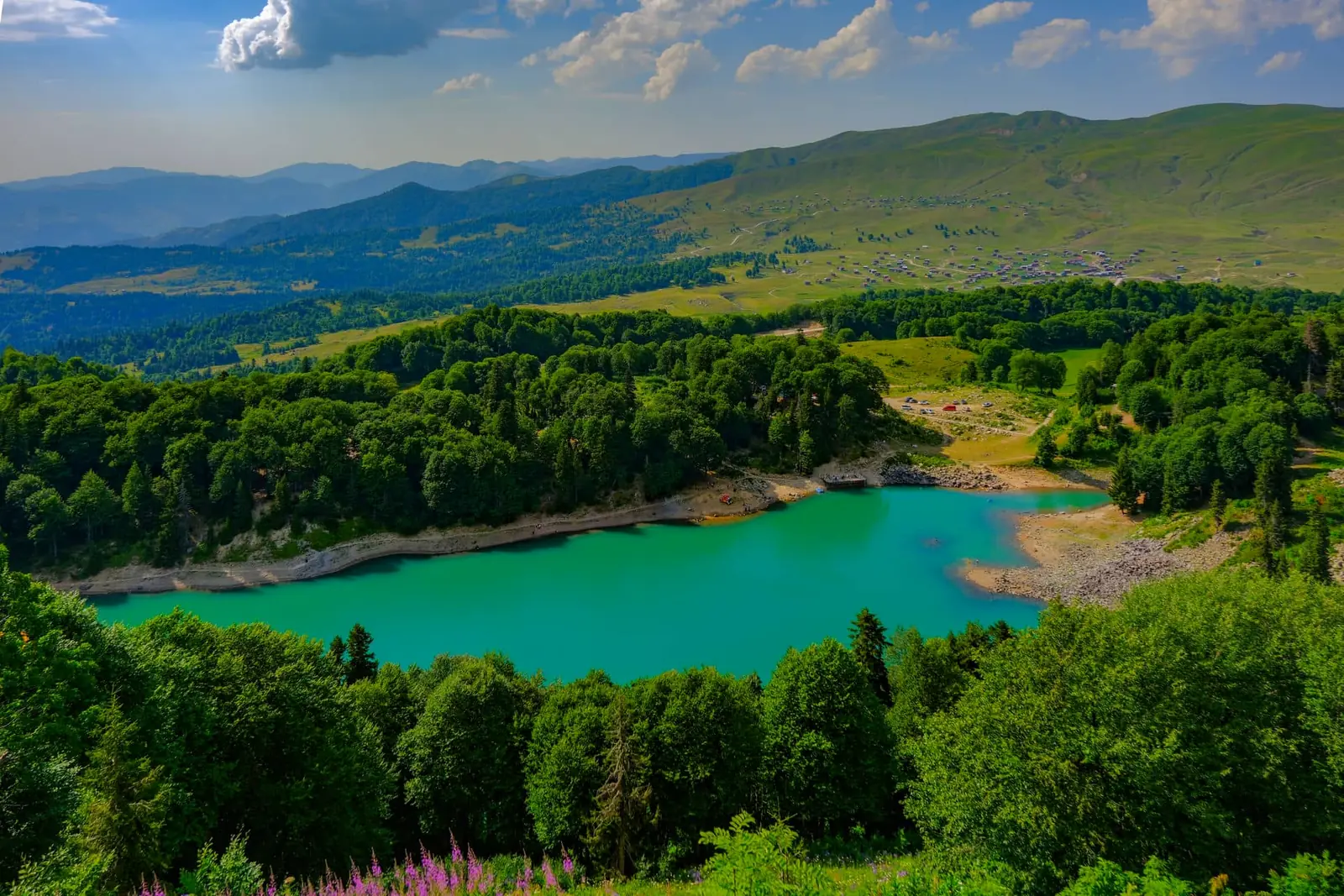 Photo: Zakaria Chelidze / visitajara.com
- Batumi: the 130 m Alphabetic Tower and the seafront high-rises, with snowy mountains behind, on a clear winter day. December to March gives this view; shoot across the water in low light.
- Batumi Botanical Garden: the view along the shore, with turquoise water, a pebble beach and the railway line under green cliffs. April to June for flowers, September to November for mild, clear days.
- Gonio Fortress from the air: the rectangle of Roman walls and towers around grassy excavations. In summer, the low sun of early morning or late afternoon is kinder than noon.
- Green Lake: the turquoise lake at about 2,060 m, ringed by forest, with pink fireweed in front and high pastures behind. Snow usually leaves the access track by June and returns after early October.
Tips for taking your own Georgia photos: light, seasons, drones and people
You do not need a big camera to bring home good pictures of Georgia. A phone does well in towns and churches. A camera with a zoom lens helps in the mountains, where peaks stand far from the road. What matters most is timing, so here is how the seasons and the light work across the country.
Best season for photos by region
| Region | Best months for photos | Light to aim for | Access notes |
|---|---|---|---|
| Tbilisi | April to June, September to November | Blue hour after sunset | Lanes are quiet before about 9:00 |
| Mtskheta and Kartli | April to June, September to October | First and last two hours of daylight | Uplistsikhe is very hot at a summer midday |
| Kazbegi | June to October; January to March for snow | Sunrise at Gergeti | Jvari Pass can close for hours after snow |
| Kakheti | May to June; mid-September to November | Dawn over the Alazani Valley | Harvest from mid-September into October |
| Tusheti and Khevsureti | July to September | Morning, before cloud builds | Abano Pass road usually early June to early October |
| Svaneti | June to early October; January to March for snow | Early morning on the peaks | Mestia road open all year |
| Racha | May to June; mid-October to early November | Low side light on carved walls | From Kutaisi over the Nakerala Pass |
| Imereti and Samegrelo | April to June; late October to November | Midday in canyons, soft grey light for churches | Canyon boats stop in rain |
| Samtskhe-Javakheti | May to June; September to October | Late afternoon | Plateau lakes freeze in winter |
| Adjara and the coast | May to June, September to October, clear winter days | Evening on the coast | Green Lake track usually clear of snow June to early October |
Golden hour and blue hour
Georgia keeps one clock all year, UTC+4, with no summer time. In Tbilisi, the sun rises at about 5:25 and sets at about 20:40 in late June. In late December it rises at about 8:25 and sets at about 17:35. Golden hour is roughly the first hour after sunrise and the last before sunset. Blue hour is short, about 20 to 30 minutes after sunset, so be in place before the sun goes down. Deep valleys in the mountains fall into shade well before the official sunset.
In summer, heat haze softens distant views, and cloud tends to gather on the main ridge from late morning. Autumn air is the clearest of the year. After a day of rain, the next morning is often the sharpest of all.
Drones
A drone needs more planning than a camera. Since 2021, the Civil Aviation Agency has required operators of drones of 250 g or more to register online at uas.gov.ge and pass a short online test. Check the current rules, and how they apply to visitors, before you pack one. Never fly near airports, military sites, border zones or the occupation line around Abkhazia and the Tskhinvali region. At churches and monasteries, ask the clergy first and accept a no. In national parks, check with the visitor centre before take-off.
Photographing people and churches
Most Georgians are happy to be photographed, but ask first, with a smile and a nod at your camera. At markets, buying something first helps. Never photograph soldiers, police or border posts. In churches, look for a sign at the door. Many ban photos inside, and some allow them without flash. If there is no sign, ask the candle seller or a priest. Never take pictures during a service. Dress modestly, with shoulders and knees covered. Women normally wear a headscarf, and a basket of loan scarves often waits at the entrance. Our guide to religion in Georgia explains the rest of church etiquette.
If you would rather have someone plan every shoot, our Georgia Photography Tour sets each session for first and last light, led by a working photographer. It runs for nine days, from Old Tbilisi and the Kakheti harvest to Kazbegi and Ushguli. As a private trip, it runs on your dates with only your own group.
Georgia photos: frequently asked questions
What does Georgia (the country) look like?
Georgia fits a lot into a small area. The north is a wall of snowy Caucasus peaks with stone tower villages below. The east has wide vineyards and semi-desert, and the west has green hills, canyons and a subtropical Black Sea coast. Tbilisi mixes old balconies and church domes with modern glass.
What are the most famous pictures of Georgia?
The classic shot is Gergeti Trinity Church on its ridge below Mount Kazbek. Close behind come the Svan towers of Ushguli and Mestia, the balconies and baths of Old Tbilisi, the cave city of Vardzia and Jvari above Mtskheta. The turquoise water of Martvili Canyon is a newer favourite.
When is the best time to take photos in Georgia?
Late September to mid-October is the best all-round window, with clear air, autumn colour in the mountains and the harvest in Kakheti. June and July suit high meadows and wildflowers. For snow scenes, go to Kazbegi or Svaneti between January and March.
Can I fly a drone in Georgia?
Yes, but register first if your drone weighs 250 g or more: the agency's online system at uas.gov.ge includes a short test. Rules can change, so look them up before the trip. Keep away from airports, borders, military sites and crowds, and ask before flying near a church or monastery.
Can you take photos inside Georgian churches?
It depends on the church. Many post a no-photo sign, others allow pictures without flash, and almost none welcome cameras during a service. If there is no sign, ask the priest or the person selling candles.
Can I take pictures of local people in Georgia?
Usually, yes, as long as you ask first. People in villages and markets tend to be friendly about it, and some may invite you in for coffee. Do not photograph soldiers, police or border posts.
Can I use these Georgia country photos on my own website?
Each picture has its own author and licence, listed on our photo credits page. Many carry Creative Commons licences that allow reuse if you credit the author and follow the licence terms. A few are used with special permission and may not be reused, so check each one before you copy it.
Do I need a photography tour to get good pictures of Georgia?
No. Any private tour can be planned around the light, with early starts and long midday breaks. If you want a photographer to set up each shoot for you, our nine-day Georgia Photography Tour does exactly that.